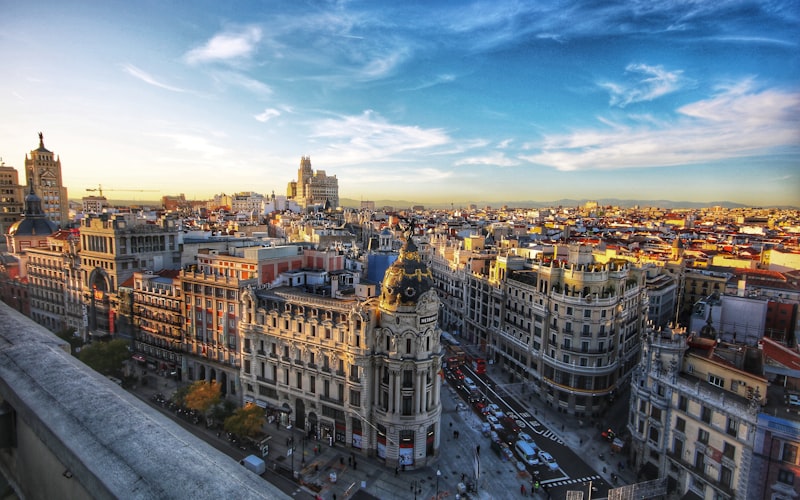


Before You Travel to Spain
Five things every smart traveler sorts before booking.
- 1
Passport valid 6+ months from entry date
Most countries refuse entry on passports expiring within six months. Renew now if you're close.
- 2
Visa requirements for Spain
Some are visa-free, some require an e-visa filed days ahead, some need an embassy appointment.
- 3
Travel insurance booked
A hospital visit in Spain can run $4,000-15,000 without cover. Credit card insurance usually excludes alcohol-related incidents.
- 4
eSIM data plan ready before landing
Airport SIM kiosks need your passport and overcharge tourists. Install an eSIM in 60 seconds, online before you fly.
- 5
Accommodation reserved in the right district
The wrong neighborhood means a 45-minute taxi every night. Map the venues first, then book.
City Guides in Spain
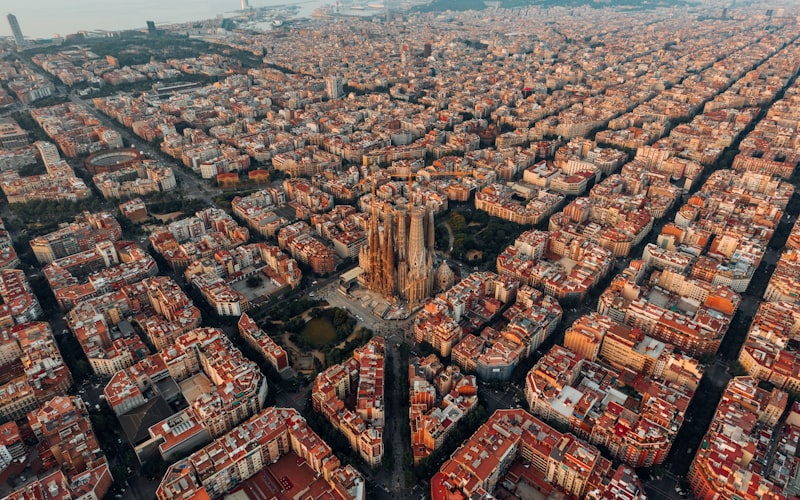
Barcelona
City guide to adult nightlife in Barcelona, covering El Raval, safety, tourist scams, and the cultural context of Spain's most-visited city.
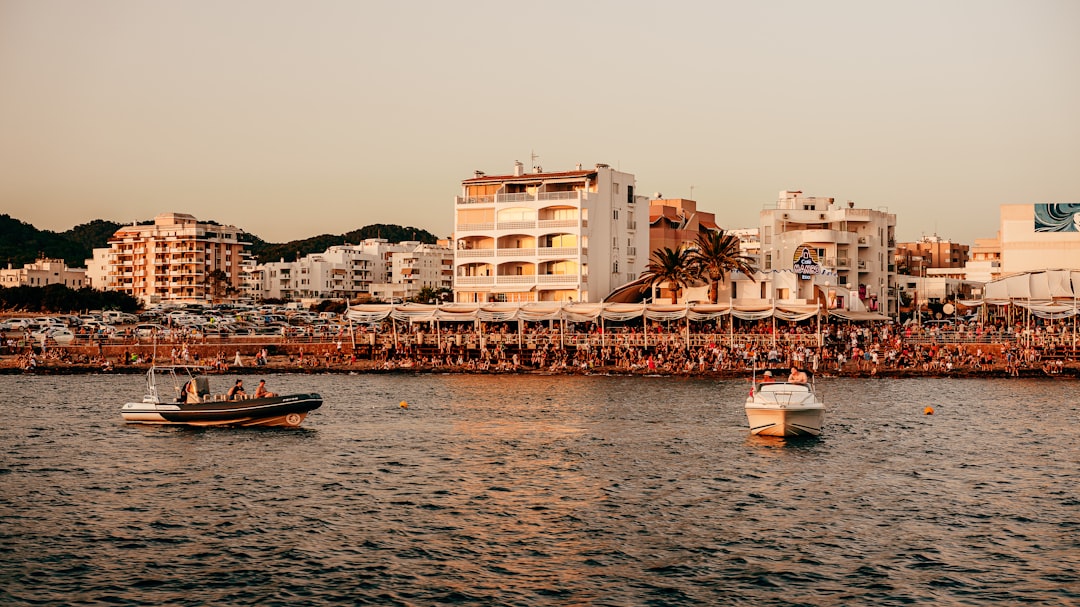
Ibiza
City guide to nightlife on Ibiza, covering the club scene, San Antonio, Ibiza Town, safety, and practical tips for the party island.
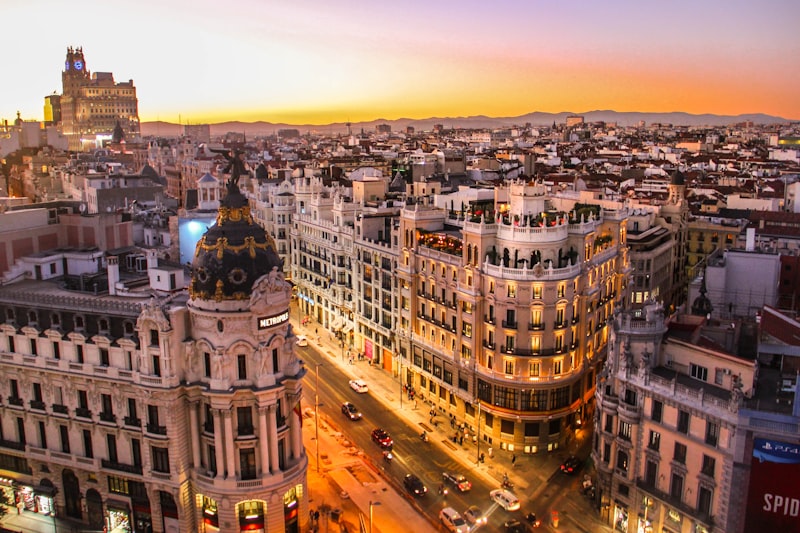
Madrid
City guide to adult nightlife in Madrid, covering entertainment zones, safety, cultural context, and practical tips for Spain's capital.
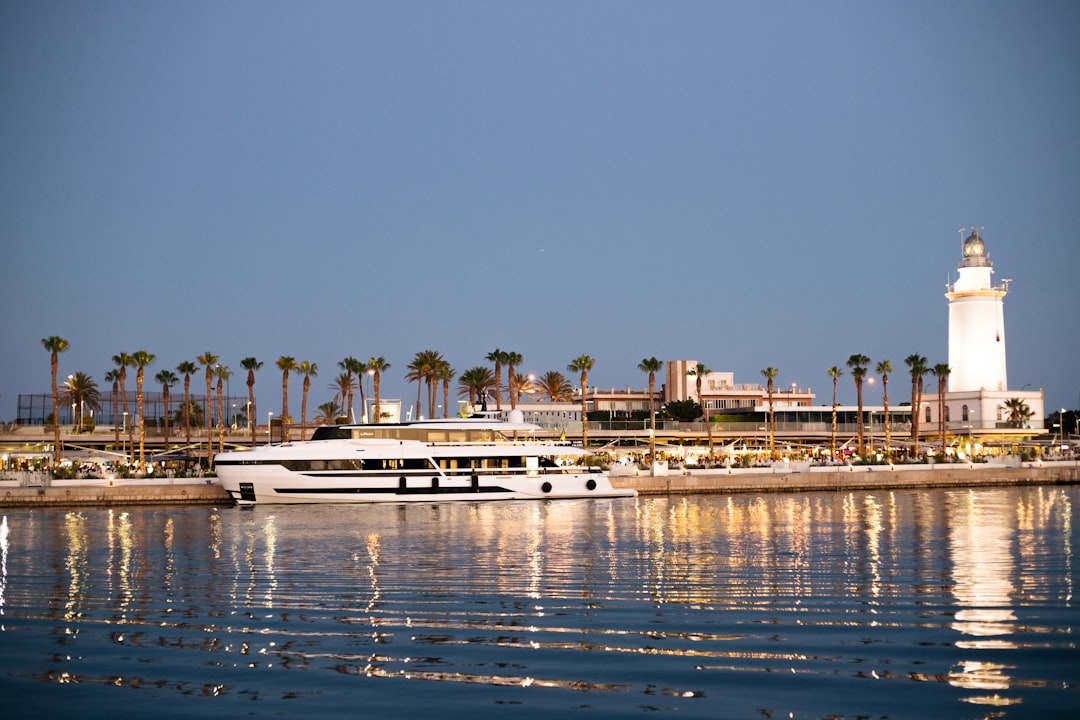
Malaga
City guide to nightlife in Malaga, covering the historic center, Costa del Sol context, safety, and practical tips for this growing Mediterranean destination.
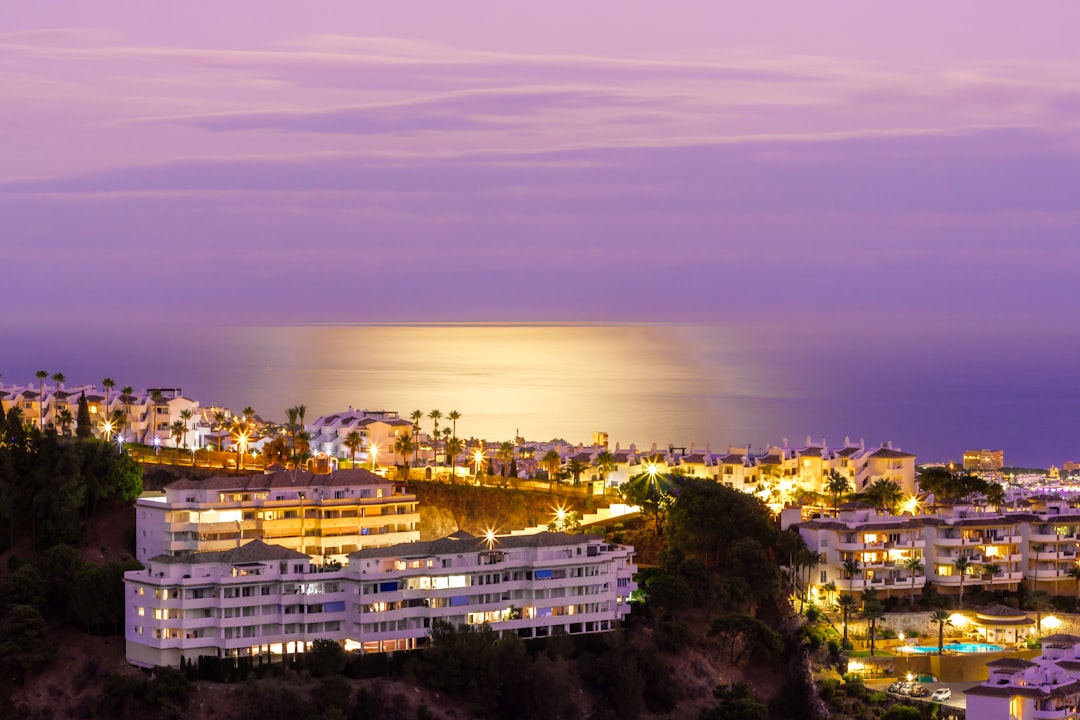
Marbella
City guide to nightlife in Marbella and Puerto Banus, covering the luxury club scene, safety, costs, and practical tips for the Costa del Sol's upscale destination.
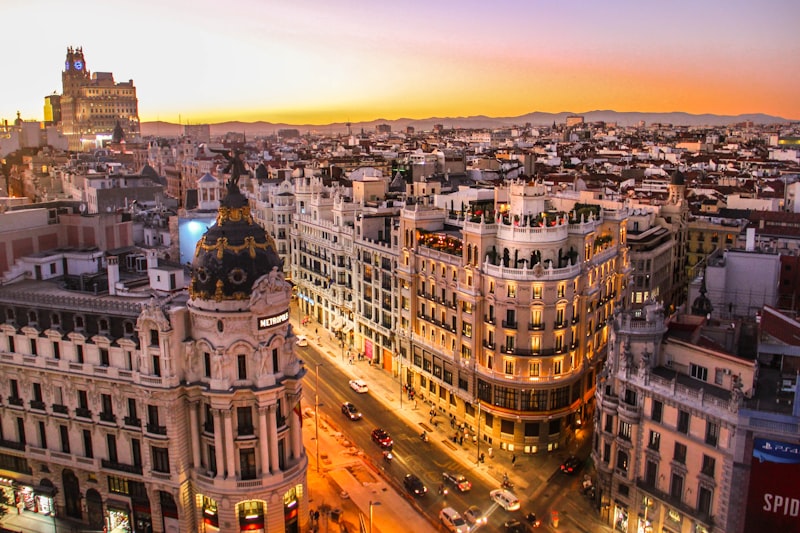
Sevilla
City guide to nightlife in Sevilla, covering the Alameda de Hercules, flamenco culture, safety, and practical tips for Andalusia's capital.
Compare hotels in Spain
Hotels, hostels, and short-term rentals across the country's main nightlife cities.
Legal Framework
Spain occupies a legal gray zone when it comes to adult entertainment. Prostitution itself is not criminalized. No law prohibits the exchange of sexual services between consenting adults. But here's the catch: Spain also hasn't created any regulatory framework to govern it. There's no licensing system, no registration requirement, no health mandate for workers.
Information verified through local contacts as of March 2026.
What is illegal: profiting from someone else's sex work (proxenetismo), trafficking, and exploitation. The 1995 Penal Code reforms decriminalized individual sex work while keeping third-party profiting punishable by 2 to 5 years in prison. In practice, enforcement of the third-party provisions is inconsistent and often depends on whether authorities can demonstrate coercion or exploitation.
Brothels exist in a particularly strange legal space. Operating a brothel is technically facilitating prostitution for profit, which falls under proxenetismo. Yet thousands of "clubs de alterne" and pisos (private apartments) operate across the country with minimal interference. Municipal governments issue business licenses to these establishments as "entertainment venues" or "hostess bars," creating a de facto tolerance system without formal legalization.
Enforcement Reality
Enforcement varies wildly by region. Spain's 17 autonomous communities each handle policing differently, and attitudes toward adult entertainment range from active tolerance to periodic crackdowns.
Catalonia (Barcelona's region) has attempted the most regulation, passing ordinances that restrict street-based sex work in certain zones. Barcelona's 2012 civic ordinance imposed fines on both clients and workers for street transactions, pushing much of the visible trade indoors. Madrid takes a more laissez-faire approach in practice, despite periodic political rhetoric about abolition.
Police attention focuses on trafficking networks, exploitation of minors, and unlicensed establishments that generate complaints from neighbors. Licensed clubs de alterne that operate quietly and pay their taxes rarely face enforcement action. Street-based work draws the most police attention, particularly in tourist zones where it generates complaints.
The Guardia Civil handles enforcement on highways and in rural areas, where roadside clubs (called "puticlubs" colloquially) operate along major routes. Some of these have operated for decades without significant interference.
Cultural Context
Spanish attitudes toward adult entertainment reflect the country's broader relationship with personal freedom. After nearly four decades under Franco's conservative dictatorship (1939-1975), Spain's transition to democracy brought a cultural explosion of personal liberties. The "movida madrilena" of the late 1970s and 1980s was partly a reaction against decades of repression, and that spirit of personal freedom still shapes Spanish attitudes today.
Most Spaniards take a pragmatic view. Surveys consistently show that a majority favors some form of regulation over either full criminalization or the current unregulated status quo. The debate in Spain centers on whether to adopt the Nordic model (criminalizing clients), the German model (full regulation), or something uniquely Spanish. Meanwhile, the industry operates in its legal limbo.
Religion plays a diminishing role. Spain is nominally Catholic, but church attendance has dropped sharply since the 1990s. Younger Spaniards are overwhelmingly secular, and moral arguments against adult entertainment carry less weight than practical concerns about worker safety and public order.
Venue Types
Spain has several distinct venue categories, each with different norms and price points.
Clubs de alterne are the most common format. These are licensed bars or nightclubs where hostesses work. Customers buy drinks (often at marked-up prices) and can negotiate private services. Larger clubs outside city centers may have private rooms on-site. Entry is typically free or EUR 10-20, with drink prices ranging from EUR 10-30. Services are negotiated separately, usually EUR 50-150 depending on location and specifics.
Pisos (apartments) are private flats where one or several workers receive clients by appointment. They advertise online through classified sites and directories. Prices range from EUR 50-200 per session. The piso model has grown significantly since Barcelona's street work restrictions pushed the trade indoors.
Roadside clubs (puticlubs) line major highways between cities, particularly in Catalonia, Valencia, and Andalusia. These are larger establishments, sometimes resembling motels, with bars and private rooms. They're visible from the road with neon signage. Prices tend to be lower than urban venues, typically EUR 40-80.
Street-based work exists in specific zones in major cities, though it has declined significantly in Barcelona and Madrid due to municipal ordinances. Where it persists, rates start around EUR 20-50. Workers are predominantly immigrant women, and this segment faces the most police attention and the highest safety risks.
Escort services operate through online platforms and agencies. This is the most expensive category, with rates starting at EUR 150-300 per hour in major cities and climbing significantly for high-end services.
Costs
Spain sits in the middle range for Western Europe. Cheaper than London or Paris, more expensive than Prague or Budapest.
A beer (caña, roughly 200ml) at a regular bar costs EUR 2-3. In Madrid and Barcelona, a full pint runs EUR 4-6. Cocktails cost EUR 8-14 at standard bars, EUR 12-20 at upscale venues. Wine is excellent and cheap by European standards; a glass of decent Rioja costs EUR 3-5 at most restaurants.
Eating out is affordable compared to Northern Europe. Tapas portions run EUR 3-8 each. The "menu del dia" (daily set menu with starter, main, dessert, and drink) is one of Europe's best lunch deals at EUR 10-16, available at most restaurants on weekdays. Dinner at a mid-range restaurant costs EUR 15-25 per person.
Transport is efficient and affordable. Madrid's metro charges EUR 1.50-2.00 per trip. Barcelona's T-Casual card gives 10 rides for EUR 11.35. Taxis charge EUR 1.10-1.30 per kilometer in most cities. Cabify and Uber (where available) offer similar rates. Spain's high-speed AVE trains connect Madrid to Barcelona in 2.5 hours for EUR 25-60 if booked in advance.
Hotels range from EUR 15-30 for hostel dorms, EUR 40-70 for budget, EUR 70-130 for mid-range, and EUR 130-300+ for upscale. Prices spike during major events (La Mercè in Barcelona, San Isidro in Madrid, Feria de Abril in Sevilla) and throughout summer along the coast.
Dating Culture
Spain runs on a social clock that confuses most Northern Europeans and Americans. Dinner starts at 9:30 or 10 PM. Going out means leaving the house at midnight. Clubs don't fill up until 2 AM. If you're trying to meet people at a bar at 8 PM, you'll be drinking alone.
Spanish dating is warm, physical, and direct. Kissing on both cheeks is a standard greeting between men and women, even on first meeting. Physical touch during conversation is normal and doesn't carry the same signals it might in Scandinavia or the UK. Spaniards flirt openly, and the line between friendliness and romantic interest can be hard for outsiders to read.
Men are generally expected to make the first move, though this is shifting among younger, urban Spaniards. Paying for dates is less rigidly expected than in Latin America, but offering to pay on the first few dates is still the norm. Splitting the bill happens naturally as relationships develop.
Family matters enormously. Many Spaniards live with their parents well into their 30s (partly economic, partly cultural), which has practical implications for dating. Don't be surprised if your date suggests a hotel. It's not a red flag; it's a housing situation.
Regional differences are real. Andalusians are more outgoing and expressive. Catalans are more reserved initially. Madrilenos fall somewhere in between. Basques and Galicians have their own distinct social temperaments. Generalizing about "Spanish" dating culture is like generalizing about "American" culture; New York and Alabama aren't the same, and neither are Barcelona and Sevilla.
Foreign men get mixed reactions. Spain receives over 80 million tourists annually, and locals in major cities are accustomed to international visitors. Speaking some Spanish goes from "nice" to "almost required" outside of Barcelona and Madrid's most tourist-heavy zones. Even basic effort is noticed and appreciated.
Common mistakes: being too aggressive or pushy (Spaniards flirt, but consent culture is strong), arriving too early to social events, not understanding the siesta rhythm, and assuming that physical warmth equals romantic interest.
Dating Apps
Tinder dominates across Spain. Badoo, which was founded by a Russian-born entrepreneur but headquartered in London, has deep roots in Spain and maintains a large user base, particularly outside major cities and among slightly older demographics. Bumble has grown steadily since 2020 and is popular with educated urban Spaniards. Hinge is newer and still building its user base in Spain.
Spanish profiles lean visual. Good photos matter more than clever bios. Many Spanish users write minimal bios or none at all. Group photos are common, which can make identifying the actual user a challenge.
Language shapes your experience significantly. In Barcelona and Madrid, English-language profiles get reasonable traction with locals who work in international environments. In Sevilla, Malaga, or smaller cities, a Spanish-language profile will double or triple your match rate. Even a bilingual bio signals that you're making an effort.
Scam activity on Spanish dating apps is lower than in Southeast Asia or Eastern Europe but not absent. The most common patterns involve profiles that quickly move to WhatsApp and eventually request money, or "date" invitations to specific venues where drink prices are astronomical. Catfishing exists but is relatively easy to verify through video calls, which most genuine Spanish users are happy to do.
Response times on Spanish apps tend to be slow by American standards. Don't read into it. Spaniards aren't glued to their phones the way Americans often are, and a 24-hour gap between messages is normal, not a rejection signal.
Key Cities
Madrid is Spain's capital and largest city, with a sprawling nightlife scene centered around the Sol-Gran Via corridor. The city never sleeps (locals say "Madrid no duerme"), and the entertainment district stretches from Calle Montera near Sol through Gran Via and into the neighborhoods of Malasana, Chueca, and La Latina. Adult entertainment is concentrated around Calle Montera and the streets immediately surrounding it.
Barcelona is Spain's second city and its biggest tourist draw, receiving over 12 million international visitors annually. The adult entertainment scene is concentrated in El Raval (the historic Barrio Chino), though municipal crackdowns have pushed much of the street-level activity indoors. La Rambla and its surrounding streets form the primary nightlife corridor.
Ibiza is a unique case. The island's identity is built around nightlife and hedonism, with world-famous superclubs like Pacha, Amnesia, and Ushuaia operating from May through October. The adult entertainment scene is smaller and more discreet than in Madrid or Barcelona, but it exists alongside the mainstream club culture.
Malaga serves as the gateway to the Costa del Sol and has undergone significant regeneration over the past decade. The historic center has transformed into a lively nightlife zone, and the city attracts a growing digital nomad community alongside traditional tourism.
Marbella is the luxury end of Spain's Costa del Sol. Puerto Banus is the primary nightlife zone, catering to a wealthy international clientele with bottle-service clubs and high-end venues.
Sevilla is Andalusia's capital and offers a more traditionally Spanish nightlife experience. The Alameda de Hercules area is the main bar and nightlife district, with a younger, more local crowd than the tourist-heavy centers of Madrid and Barcelona.
Safety Considerations
Spain is one of Europe's safer countries for travelers. Violent crime rates are low by Western standards, and nightlife districts in major cities are generally safe to walk through, even late at night. That said, tourist-heavy areas attract property crime:
- Pickpocketing is rampant on La Rambla in Barcelona, around Sol in Madrid, and in most major tourist zones. Carry minimal cash and keep your phone in a front pocket
- Drink spiking occurs, particularly in club environments. Watch your glass, and don't accept drinks from strangers
- Use Cabify, Uber (in Madrid), or official taxis. Unlicensed "pirate taxis" operate near clubs in some cities
- Spain's healthcare system is excellent. EU citizens can use the European Health Insurance Card (EHIC). Non-EU visitors should carry travel insurance. Emergency treatment is provided regardless of insurance status
- Drug possession for personal use has been decriminalized in Spain, but consumption in public spaces can result in fines of EUR 601-30,000. Police apply this at their discretion
- Emergency number 112 works nationwide and operators speak multiple languages
Common Scams
Clip joints near tourist areas: Small bars near Sol in Madrid or Las Ramblas in Barcelona lure tourists with promises of cheap drinks, then present bills for EUR 200-500. Bouncers block the door. Pay by card if you can (easier to dispute later) and avoid any venue where a tout on the street invited you in.
Watered-down drinks: Some lower-end venues serve weak or alcohol-free drinks at full price, particularly in areas catering to tourists. If your "double whiskey" tastes like water, it probably is.
The flower/bracelet scam: Common near Las Ramblas and in Madrid's tourist center. Someone hands you a flower or ties a bracelet on your wrist, then demands payment. Firmly decline any unsolicited items pressed into your hands. This isn't dangerous, but it's persistent and annoying.
Fake police: Individuals claiming to be plainclothes police ask to inspect your wallet for "counterfeit bills." Real Spanish police will show identification and never ask to handle your money on the street. If this happens, suggest walking together to the nearest police station.
Taxi meter games: Some taxi drivers in tourist areas "forget" to start the meter or take scenic routes. Confirm the meter is running when you get in. Airport transfers have fixed rates in most Spanish cities (EUR 30 from Madrid-Barajas to the center, EUR 39 from Barcelona El Prat).
What Not to Do
- Do not engage with street touts who promise deals at nearby venues. If they're recruiting on the street, the venue needs you more than you need it
- Do not carry large amounts of cash, especially in Barcelona. Pickpockets are skilled professionals
- Do not photograph workers at any venue without explicit consent
- Do not confuse Spain's relaxed social attitudes with a lack of boundaries. Consent culture is strong and taken seriously
- Do not assume everyone speaks English. Outside major tourist zones, Spanish is essential
- Do not eat dinner at 7 PM and expect to experience the real nightlife. Spain's social clock starts late; adapt to it
- Do not drive after drinking. Spain's legal BAC limit is 0.05%, and enforcement is strict, especially around nightlife zones and during holiday weekends
- Do not leave drinks unattended in clubs or bars
Sources
- U.S. Department of State: Spain Travel Advisory - Entry requirements, safety alerts, and local law summary
- UK Foreign, Commonwealth & Development Office: Spain Travel Advice - Safety, health, and legal information for travelers
- Australian Government Smartraveller: Spain - Travel advisory and practical information
Get the Legal Status PDF, 50 countries
Newsletter signup coming soon. Check back shortly.
Spain Map
Emergency Information: Spain
- Emergency:
- 112
- Tourist Police:
- 091 (Policia Nacional) or 092 (Policia Local)
- Embassy Note:
- Most embassies are in Madrid. Consulates operate in Barcelona, Malaga, and other major cities.
Other Options in the Area
Albania
Albania's nightlife is small but growing fast, centered on Tirana's Blloku district where the former communist elite's residential quarter has become a strip of cocktail bars and clubs. Extremely cheap and largely undiscovered by mass tourism.
Bosnia and Herzegovina
Sarajevo's Ottoman-era old town hides a growing bar scene where craft cocktails cost less than a coffee in Vienna. Low prices, warm hospitality, and a post-war cultural renaissance make Bosnia a Balkan sleeper.
Croatia
Zagreb and Split offer a growing nightlife scene with Mediterranean beauty, Adriatic coastline bars, and an unregulated but tolerated adult entertainment industry.
Greece
Athens, Mykonos, and Crete offer Mediterranean nightlife with beautiful women. The escort scene is smaller than Western Europe but growing, with summer island parties as a bonus.
Similar Countries in Other Regions
Countries with a similar overall score to Spain (3.5) but in different parts of the world.
Azerbaijan
3.5Caucasus
An oil-rich Caspian nation where conservative Muslim traditions sit alongside Baku's cosmopolitan bar scene, waterfront clubs, and a nightlife shaped by petrodollars and regional tourism.
China
3.5East Asia
Guide to nightlife across mainland China, Hong Kong, and Macau covering bar districts, KTV culture, legal context, costs, and practical tips for foreign visitors.
Cuba
3.5Caribbean
Havana's Malecon and Vedado offer a unique scene shaped by economics and isolation. Rock-bottom prices, genuine connections, and a fading old-world atmosphere found nowhere else.
Was this guide helpful?