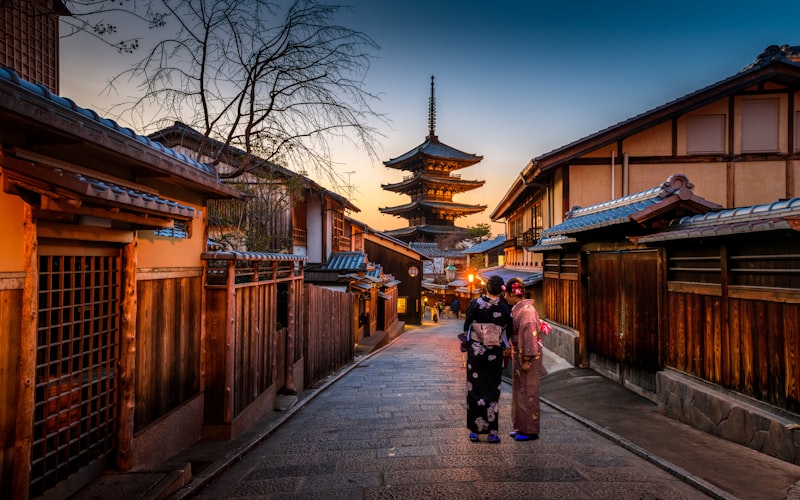


Before You Travel to Japan
Five things every smart traveler sorts before booking.
- 1
Passport valid 6+ months from entry date
Most countries refuse entry on passports expiring within six months. Renew now if you're close.
- 2
Visa requirements for Japan
Some are visa-free, some require an e-visa filed days ahead, some need an embassy appointment.
- 3
Travel insurance booked
A hospital visit in Japan can run $4,000-15,000 without cover. Credit card insurance usually excludes alcohol-related incidents.
- 4
eSIM data plan ready before landing
Airport SIM kiosks need your passport and overcharge tourists. Install an eSIM in 60 seconds, online before you fly.
- 5
Accommodation reserved in the right district
The wrong neighborhood means a 45-minute taxi every night. Map the venues first, then book.
City Guides in Japan
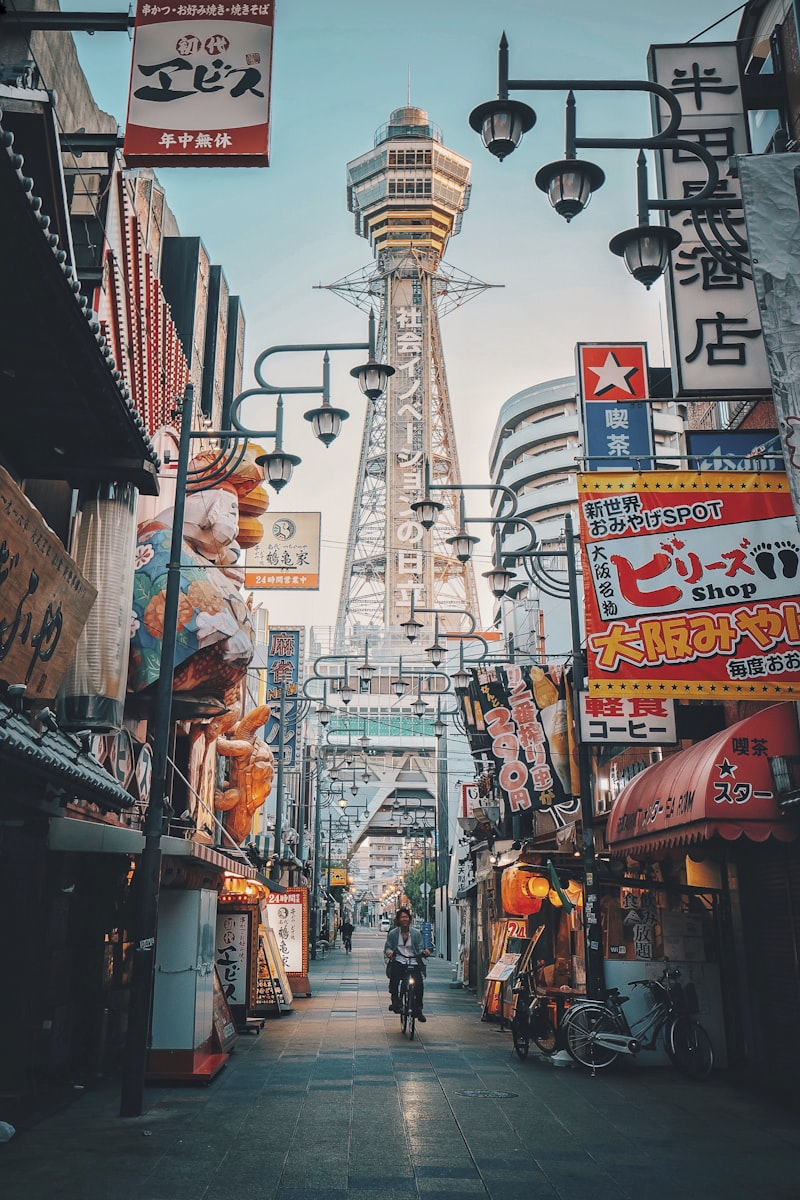
Osaka
City guide to adult nightlife in Osaka, covering entertainment districts, legal context, safety information, and cultural norms.
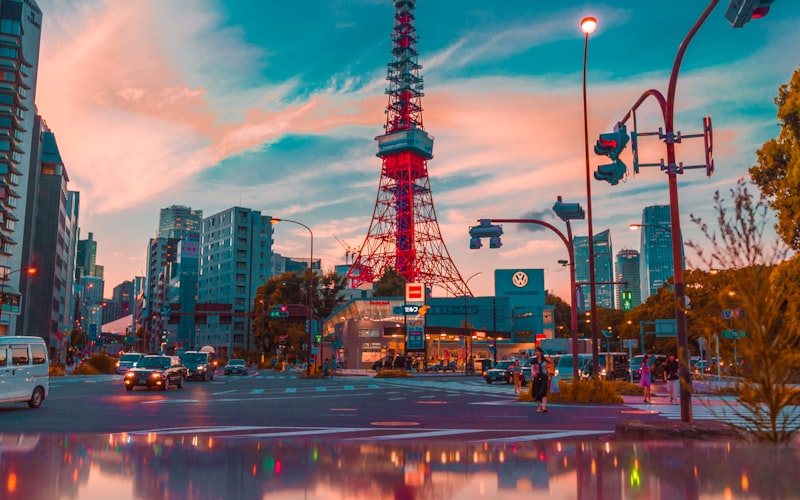
Tokyo
City guide to adult nightlife in Tokyo, covering Kabukicho, legal context, cultural norms, and practical advice.
Compare hotels in Japan
Hotels, hostels, and short-term rentals across the country's main nightlife cities.
Legal Framework
Japan's legal framework for adult entertainment is characterized by a defining distinction: the Anti-Prostitution Act of 1956 prohibits "prostitution" as defined by the law, but the definition is narrowly construed. The law specifically criminalizes vaginal intercourse for payment, while other forms of adult entertainment operate in legal gray areas.
This guide reflects conditions observed during our February 2026 visit.
This narrow definition has given rise to a vast "fuzoku" (adult entertainment) industry that offers a wide spectrum of services. These businesses operate legally under the Businesses Affecting Public Morals Regulation Act (Fueiho), which requires licensing and regulates operating hours, locations, and advertising.
The Fueiho creates a tiered licensing system. Different categories of businesses, from hostess bars to soaplands to massage establishments, each have their own regulatory requirements and permitted activities.
Enforcement Reality
Enforcement in Japan is methodical and bureaucratic. Licensed establishments that operate within their designated category face minimal issues. Violations of operating hours, location restrictions, or licensing terms are taken seriously and can result in license revocation.
Japan has very low tolerance for street solicitation, which is actively policed in entertainment districts. The police maintain a visible presence in nightlife areas, with koban (police boxes) serving as fixed points of community policing.
Foreign visitors should be aware that some establishments openly refuse entry to non-Japanese patrons. This practice, while controversial, is generally tolerated by authorities. Establishments that cater to international visitors tend to be concentrated in specific areas and are usually identifiable by English-language signage.
Cultural Context
Japan's relationship with adult entertainment is complex and deeply embedded in the culture. The industry is massive, estimated at several trillion yen annually, and socially compartmentalized. There is a sharp distinction between public propriety and private behavior.
The concept of "tatemae" (public face) versus "honne" (true feelings) is central to understanding how Japanese society approaches adult entertainment. The industry exists openly in designated areas while being largely absent from public discourse.
Japanese nightlife has a strong emphasis on hospitality, customer service, and ritual. Even adult entertainment establishments prioritize these values, creating experiences that are distinctly Japanese in their attention to protocol and presentation.
Costs
Japan is expensive. The country consistently ranks among the world's priciest nightlife destinations, though the yen's weakness against the dollar and euro in recent years has made things more accessible for foreign visitors.
Hostess bars (kyabakura) charge a set fee of 5,000-10,000 JPY for about an hour, plus drinks at 1,500 JPY each and a service charge of 10-30%. A typical visit runs 15,000-30,000 JPY. Girls bars can escalate faster, sometimes hitting 40,000-55,000 JPY for 90 minutes once service charges and tax are added.
Soaplands, Japan's primary full-service adult entertainment format, range from about 21,700 JPY for 60 minutes at budget establishments to 85,000-120,000 JPY at ultra-premium venues. Typical mid-range sessions of 110-120 minutes cost 25,000-35,000 JPY.
At the affordable end, Golden Gai's tiny bars in Shinjuku charge 500-2,000 JPY cover with drinks at 700-1,500 JPY. Karaoke costs 200-650 JPY per 30 minutes depending on the time of day. Love hotels charge 5,000-11,500 JPY for a short rest and 6,500-15,000 JPY overnight.
Food is reasonable outside of entertainment venues. A bowl of ramen costs 800-1,000 JPY. Gyudon at chain restaurants runs 400-600 JPY. Budget izakaya chains offer draft beer from 300-500 JPY and all-you-can-drink plans for 1,500-2,500 JPY.
Tokyo Metro fares run 180-330 JPY per ride. A 24-hour pass costs 700 JPY. IC cards (Suica/Pasmo) are available for purchase and make transit seamless.
Hotels near entertainment districts start at 3,000-5,000 JPY for capsule hotels, 10,000-18,000 JPY for business hotels, and 25,000-50,000 JPY for upscale options.
Dating Culture
Japan's approach to romantic relationships is structured and gradual by Western standards. The "kokuhaku" (confession) system is still the norm: one person formally tells the other they have feelings and asks to begin dating. Until this confession happens, the relationship isn't considered official, no matter how many dates you've been on. This can catch foreigners off guard, as casual dating without defined status is less common here.
Men typically pay on early dates, though "warikan" (splitting the bill) is increasingly common among younger Japanese, especially in urban areas. Physical contact progresses slowly. Hand-holding is fine once you're dating, but kissing in public is uncommon and draws stares. PDA beyond hand-holding is considered poor manners rather than romantic.
Family involvement comes later in the relationship. Meeting someone's parents signals serious intent and usually implies marriage is being discussed. This step carries weight and shouldn't be treated casually.
Foreign men attract curiosity but also caution. The "gaijin hunter" label gets thrown around online, but the phenomenon is overstated. Most Japanese women who date foreigners do so for the same reasons anyone dates anyone. The real barrier is language. Without conversational Japanese, the dating pool narrows significantly to those who speak English, which is a small subset of the population.
Age gap relationships face more scrutiny here than in Southeast Asia. A gap of more than five or six years draws social judgment, and gaps beyond ten years are uncommon outside of entertainment settings.
Common mistakes foreigners make:
- Being too physically forward too quickly, especially on first or second dates
- Not understanding indirect communication: a Japanese "maybe" or "it's a little difficult" often means "no"
- Assuming English fluency based on basic greetings
- Ignoring subtle social cues that indicate discomfort or lack of interest
- Treating kokuhaku as optional and assuming mutual interest equals a relationship
Dating Apps
Pairs is Japan's most popular serious dating app, with millions of active users looking for long-term relationships. It requires identity verification and a Japanese phone number, which limits foreign access. Tapple is popular with younger Japanese users in their twenties and also skews toward relationships. The app "with" uses personality diagnostics to match users and appeals to the psychology-minded crowd.
Tinder operates in Japan but leans more casual and hookup-oriented than its domestic competitors. Bumble has a growing presence, particularly among internationally minded Japanese and resident foreigners. Both have more English-language profiles than Japanese-market apps.
Most Japanese dating apps require phone verification with a Japanese number. Prepaid SIM cards with SMS capability work, but this is a barrier for short-term visitors.
Japanese dating apps emphasize relationship intentions over casual encounters. Profile photos tend to be modest, and bios focus on hobbies and personality rather than appearance. Don't expect the same directness you'd find on Western apps.
One notable risk: religious cult recruitment through dating apps is a documented problem, particularly in Tokyo. If a match quickly steers conversation toward a seminar, self-improvement workshop, or group meeting, disengage. This is a known pattern associated with groups like the Unification Church and others.
Key Cities
Tokyo is the center of Japan's adult entertainment industry. Kabukicho in Shinjuku is the country's largest entertainment district, with over 3,000 establishments offering every category of licensed entertainment. Roppongi attracts a more international crowd with English-friendly bars. The Yoshiwara district in Taito-ku is the historic center of the soapland industry. Ikebukuro and Ueno have their own smaller entertainment zones.
Osaka has Tobita Shinchi, a unique and well-preserved traditional red-light district that operates on a photographic display system and is emphatically not open to photography. Osaka's Shinsekai area has a more working-class character. The Namba area, including Dotonbori and the Misono Building, has the highest concentration of hostess bars and adult entertainment. Osaka's nightlife is generally more affordable and welcoming than Tokyo's.
Fukuoka has the Nakasu district, one of Japan's largest entertainment zones, built on a sandbar in the Naka River. Nakasu is more compact than Kabukicho and has a different character, mixing traditional yatai (food stalls) with modern entertainment venues.
Nagoya has the Sakae entertainment district with a mix of hostess bars and licensed venues. Sapporo has the Susukino district, Hokkaido's primary entertainment zone, active year-round and particularly lively during the February Snow Festival.
Safety Considerations
Japan is exceptionally safe by global standards. Violent crime rates are among the lowest in the world, and the police maintain a visible, community-oriented presence through the koban (police box) system. However, nightlife districts have their own considerations:
- Drink spiking does occur, particularly in unregulated establishments. Watch your beverages
- Credit card fraud has been reported at some venues. Carry cash and agree on prices in advance
- Language barriers can lead to serious misunderstandings about pricing or services. A translation app is not optional, it's a necessity
- Intoxication is common in entertainment districts. Trains of drunk salarymen are a regular sight. Be mindful of your own consumption
- Trains stop running around midnight in most cities. Taxis during peak late-night hours can be expensive and extremely scarce. Plan your return transport or be prepared for a 5 AM start to the first trains
- Lost property is almost always returned in Japan. If you lose something on a train, check with station staff the next day
Common Scams
Catch system (kyakuhiki): Touts in entertainment districts approach foreigners with offers of cheap drinks or attractive companionship at nearby bars. These establishments present bills of 30,000-100,000+ JPY. Intimidation may be used to enforce payment. This is the primary risk in districts like Kabukicho and Roppongi. The only defense is to never engage with touts.
Excessive seating charges: Some venues charge steep "table charges" or "service charges" not mentioned upfront. These can add 20-40% to any quoted base price. Always confirm the complete pricing structure, including service charges and tax, before sitting down.
Fake "free" entry: Establishments advertising "no cover charge" compensate with mandatory drink minimums, inflated drink prices, or other hidden fees.
Time overrun charges: Venues operating on a time-charge system (like all-you-can-drink plans) may not warn you when your time expires. Overstaying triggers premium extension charges.
What Not to Do
- Do not follow touts (kyakuhiki). This is the single most important safety rule in Japanese entertainment districts
- Do not assume that English will be understood. Learn key phrases or carry a translation app
- Do not become heavily intoxicated. Losing control is both a personal risk and a cultural faux pas
- Do not attempt to take photographs inside any establishment. This is universally prohibited
- Do not attempt to enter establishments that indicate "Japanese only." Forced entry creates police involvement
- Do not discard trash on the street. Japan has strict cleanliness norms; carry your trash until you find a bin
- Do not carry excessive cash. Bring only what you plan to spend and leave the rest at your hotel
Sources
- U.S. Department of State: Japan Travel Advisory - Entry requirements, safety alerts, and local law summary
- UK Foreign, Commonwealth & Development Office: Japan Travel Advice - Safety, health, and legal information for travelers
- Australian Government Smartraveller: Japan - Travel advisory and practical information
Get the Legal Status PDF, 50 countries
Newsletter signup coming soon. Check back shortly.
Japan Map
Emergency Information: Japan
- Emergency:
- 110 (police) / 119 (ambulance)
- Tourist Police:
- Police boxes (koban) located throughout cities
- Embassy Note:
- Most embassies are in Tokyo. Consulates operate in Osaka, Nagoya, Fukuoka, and Sapporo.
Related Destinations
China
Guide to nightlife across mainland China, Hong Kong, and Macau covering bar districts, KTV culture, legal context, costs, and practical tips for foreign visitors.
Mongolia
Nightlife guide to Mongolia, covering the bar and club scene in Ulaanbaatar, safety concerns, cultural norms, and what visitors should expect from one of Asia's lesser-known capitals.
South Korea
Seoul's Gangnam room salons, Itaewon's international nightlife, and a booking culture unlike anywhere else. Expensive, tech-forward, and deeply coded in social hierarchy.
Taiwan
Taipei's Linsen North Road hostess bars, Xinyi district clubs, and a KTV culture shaped by Japanese influence. High safety, moderate costs, and a nightlife scene that rewards patience and cultural awareness.
Similar Countries in Other Regions
Countries with a similar overall score to Japan (3.7) but in different parts of the world.
Moldova
3.7Eastern Europe
Moldova's nightlife is concentrated in Chisinau, where Soviet-era infrastructure meets a growing bar scene. Low prices, attractive women, and minimal tourist infrastructure define the experience.
Bulgaria
3.7Eastern Europe
Sofia's underground clubs and Sunny Beach's mega-venues make Bulgaria a growing Eastern European nightlife destination. Cheap drinks, attractive women, and a legal gray area that keeps things loosely unregulated.
Greece
3.7Southern Europe
Athens, Mykonos, and Crete offer Mediterranean nightlife with beautiful women. The escort scene is smaller than Western Europe but growing, with summer island parties as a bonus.
Was this guide helpful?