

Before You Travel to Cuba
Five things every smart traveler sorts before booking.
- 1
Passport valid 6+ months from entry date
Most countries refuse entry on passports expiring within six months. Renew now if you're close.
- 2
Visa requirements for Cuba
Some are visa-free, some require an e-visa filed days ahead, some need an embassy appointment.
- 3
Travel insurance booked
A hospital visit in Cuba can run $4,000-15,000 without cover. Credit card insurance usually excludes alcohol-related incidents.
- 4
eSIM data plan ready before landing
Airport SIM kiosks need your passport and overcharge tourists. Install an eSIM in 60 seconds, online before you fly.
- 5
Accommodation reserved in the right district
The wrong neighborhood means a 45-minute taxi every night. Map the venues first, then book.
City Guides in Cuba
Havana
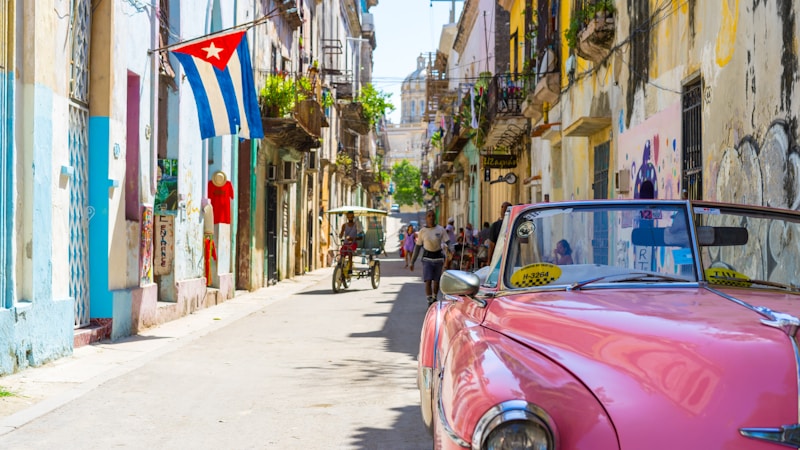
City guide to nightlife in Havana, covering entertainment areas, safety advice, and practical information for the Cuban capital.
Santiago de Cuba
City guide to nightlife in Santiago de Cuba, covering the cultural capital's entertainment scene, safety, and practical advice.
Compare hotels in Cuba
Hotels, hostels, and short-term rentals across the country's main nightlife cities.
Legal Framework
Prostitution is illegal in Cuba under the country's penal code. The law criminalizes both selling and buying sex, and penalties can include fines, detention, or prison terms of up to four years. Pimping and operating a brothel carry heavier sentences. Cuba's government has periodically launched enforcement campaigns, particularly in areas popular with foreign tourists.
Based on on-the-ground reporting from February 2026.
In practice, the legal reality is more complicated than the statute books suggest. The phenomenon of "jineterismo" (from the word "jinetera/jinetero," roughly translating to "hustler") blurs the line between dating, companionship, and transactional relationships. Many Cubans seek out relationships with foreigners that combine genuine personal connection with economic benefit. This grey area makes strict legal definitions difficult to apply, and authorities often focus enforcement on visible, street-level activity rather than private interactions.
Cuban law treats any sexual activity involving minors with extreme severity. The government cooperates with international agencies on trafficking cases, and foreign nationals convicted of exploitation face harsh sentences in Cuba's prison system, which is notably difficult by any standard.
Enforcement Reality
Enforcement follows a cyclical pattern. The government launches crackdowns every few years, usually before major events or in response to political pressure. During these campaigns, police sweep known gathering areas, detain individuals, and increase surveillance in tourist zones. Between campaigns, enforcement is lighter and more selective.
Police in Cuba have broad discretionary power. Officers can detain individuals without formal charges for up to 72 hours, and the legal system offers few protections during this period. Foreigners aren't exempt from detention, though they're less likely to be held for extended periods.
Hotels and casas particulares (private homestays) are required to register all guests with local authorities. Bringing a Cuban national to your accommodation requires that person to present their ID, which is logged. This system gives the government a record of who is spending time with foreign visitors. Some accommodations refuse to allow unregistered Cuban guests entirely.
Cultural Context
Cuba's social reality is shaped by decades of economic isolation and a government-controlled economy where average state salaries hover around 4,000 CUP per month (roughly $15 USD at informal exchange rates). This economic reality drives much of the social interaction between Cubans and foreign visitors. Many Cubans see connections with foreigners as a path to material goods, hard currency, or even emigration.
Cuban culture is deeply social, musical, and expressive. Salsa, son, and rumba aren't just entertainment; they're the rhythm of daily life. People gather in parks, along the Malecon, and in casa de la musica venues to dance, drink rum, and socialize. Nightlife starts late and moves at a relaxed pace.
The concept of "jineterismo" exists on a wide spectrum. At one end, it's straightforward sex work. At the other, it's a Cuban who genuinely enjoys your company but also appreciates that you can afford a restaurant meal that costs more than their monthly salary. Most interactions fall somewhere in the middle, and reading the situation correctly requires cultural awareness and honesty about the dynamic at play.
Dating Culture
Cuban dating culture is warm, direct, and socially open. Cubans are famously flirtatious and outgoing, and romantic interest is expressed freely in everyday life. The "piropo" (a street compliment, ranging from poetic to crude) is deeply embedded in the culture and directed at everyone regardless of age or appearance. It's not considered harassment in the local context, though visitors may find it surprising.
Men are traditionally expected to pay when dating. Cuba's economic reality gives this expectation unusual weight: average state salaries sit around USD 30-50 per month, so even a simple restaurant meal or a few drinks represents a significant expense. Small gestures that cost little by foreign standards carry real meaning here. Public displays of affection are completely normal. Cuban couples are openly affectionate in parks, on the Malecon, and everywhere else.
Family involvement comes early and naturally, mostly because multi-generational households are the norm. You'll meet someone's parents, grandparents, and cousins quickly, not because the relationship is moving fast, but because everyone lives under the same roof. Privacy is a genuine luxury in Cuba.
The economic gap between foreign visitors and Cubans creates a complex dynamic that's impossible to ignore. Nearly all foreigner-Cuban relationships have an economic dimension, whether acknowledged or not. "Jineterismo" (a broad term covering everything from friendly guiding to romance scams) is a survival strategy for many Cubans. The line between genuine interest and economic motivation is often genuinely blurry, and many interactions contain elements of both. Cuban women and men show strong interest in foreigners, driven by a mix of real curiosity and the possibility of economic improvement or emigration.
Foreign visitors commonly make a few predictable mistakes. Not understanding the economic context leads to unrealistic expectations. Assuming that all attention is genuine without any transactional element is naive, but assuming it's all fake is equally wrong. Flashing relative wealth (expensive phones, designer clothes, casually paying for everything) attracts the wrong kind of attention. Not learning basic Spanish limits you to interactions with people who specifically seek out tourists, which skews the dynamic further.
Dating Apps
Cuba's internet infrastructure is limited, and this shapes the dating app situation entirely. WiFi access is concentrated at ETECSA hotspots (public parks and plazas) and costs about 1 USD per hour. Home internet exists but remains uncommon and slow. Many Cubans simply can't afford regular internet access.
Tinder is available and some Cubans use it, but the experience is nothing like app dating in well-connected countries. People log in during WiFi park sessions, swipe for a bit, then go offline until their next visit. Matches move slowly. WhatsApp is the primary communication tool once you've exchanged numbers, partly because it uses less data than other platforms.
Foreign visitors often meet people organically rather than through apps. Cuba is one of the last places where in-person social interaction dominates. Bars, music venues, parks, and the Malecon are where connections happen. If you do use dating apps, be aware that some profiles are specifically designed to connect tourists with "dates" who are seeking financial support, phone credit top-ups, or visa opportunities. This isn't universal, but it's common enough to warrant attention.
Key Cities
Havana is the capital and by far the most visited city in Cuba. Its nightlife is concentrated in three main areas: Habana Vieja (Old Havana), Vedado, and along the Malecon seafront boulevard. Havana has the widest range of bars, clubs, live music venues, and restaurants on the island. It's also where enforcement is most visible and where jinetero/jinetera activity is most concentrated around tourist areas.
Santiago de Cuba is the island's second city and its cultural capital, located on the southeastern coast. Santiago is the birthplace of son music and has a strong Afro-Cuban cultural identity. The nightlife scene here revolves around live music rather than clubs or bars. It's far less touristy than Havana, which means more authentic experiences but also less infrastructure for foreign visitors.
Safety Considerations
Cuba is one of the safest countries in Latin America and the Caribbean for violent crime. Armed robbery and assault against tourists are rare. The primary risks are petty scams, overcharging, and theft of unattended belongings.
- Carry only the cash you need for the evening and leave valuables in a hotel safe
- Cuba is a cash-only economy; bring euros or Canadian dollars for exchange (US dollars carry a surcharge)
- Credit cards from US banks don't work anywhere in Cuba due to sanctions
- Internet access is limited to ETECSA WiFi hotspots and requires prepaid cards; don't rely on being connected
- Medical facilities are basic by Western standards; bring any medications you'll need from home
- Tap water isn't safe to drink; stick to bottled water
- Emergency services: police 106, fire 105, ambulance 104
- The US Embassy in Havana has limited capacity and may not be able to provide full consular services to US citizens
Common Scams
The friendly guide: Someone approaches you on the street, speaks good English, and offers to show you around or take you to a "real Cuban" restaurant or bar. The destination charges inflated prices, and the guide receives a commission. Decline politely and find your own way.
Fake cigar deals: Someone offers you "genuine" Cuban cigars at a fraction of the store price, claiming they work at a factory. The cigars are fakes made from banana leaves or floor sweepings. Buy cigars only from official La Casa del Habano stores.
The casa particular redirect: A taxi driver or street contact tells you the accommodation you've booked is closed, full, or has a problem, then redirects you to another place where they earn a commission. Call your accommodation directly if this happens.
Currency confusion: With the unification to CUP, there's less room for currency scams than before. Still, count your change carefully and make sure you understand the exchange rate before any transaction. Some sellers quote prices in USD to tourists but expect payment in CUP at an unfavorable rate.
The romance scam: A Cuban develops what appears to be a genuine romantic connection, then begins requesting money for family emergencies, phone credits, or other needs. These requests often continue and escalate long after you've left the island.
What Not to Do
- Do not photograph military installations, police, or government buildings; this can lead to detention and confiscation of your device
- Do not engage with anyone who appears to be underage; Cuba's government treats this seriously and prison conditions are harsh
- Do not carry or use illegal drugs; Cuban drug laws carry heavy sentences and there is no tolerance for foreigners
- Do not criticize the Cuban government loudly in public; while tourist conversations are generally ignored, discretion is wise
- Do not assume every friendly interaction is a scam, but don't assume it's free of economic motivation either
- Do not leave your accommodation without your passport or a copy of it; police can request ID at any time
- Do not rely on being able to contact your embassy quickly; communications infrastructure is limited
- Do not change money on the street unless you're confident in the rate and the legitimacy of the bills you're receiving
Sources
- U.S. Department of State: Cuba Travel Advisory - Entry requirements, safety alerts, and local law summary
- UK Foreign, Commonwealth & Development Office: Cuba Travel Advice - Safety, health, and legal information for travelers
- Australian Government Smartraveller: Cuba - Travel advisory and practical information
Get the Legal Status PDF, 50 countries
Newsletter signup coming soon. Check back shortly.
Cuba Map
Emergency Information: Cuba
- Emergency:
- 106
- Embassy Note:
- Many Western embassies are in Havana. US citizens should note the US Embassy has limited services.
Also Worth Considering
Antigua and Barbuda
A guide to nightlife in Antigua and Barbuda, covering St. John's bar scene, English Harbour venues, local laws, costs, safety, and cultural norms on this twin-island Caribbean nation.
Aruba
Aruba's nightlife centers on the resort strip along Palm Beach, with hotel bars, casinos, and a handful of clubs. Prostitution is illegal, the scene is small, and safety requires basic awareness. A guide to going out on the island.
Bahamas
The Bahamas nightlife revolves around Nassau and Paradise Island, where casino resorts, beach clubs, and downtown bars create a scene that ranges from high-end to local. Cable Beach and Bay Street offer distinct experiences at Caribbean-high prices.
Barbados
Barbados nightlife centers on the south coast's Saint Lawrence Gap, a short strip of bars and clubs catering to tourists and locals alike. Expect high prices, a safe atmosphere by Caribbean standards, and a small but consistent scene shaped by rum culture and soca music.
Similar Countries in Other Regions
Countries with a similar overall score to Cuba (3.5) but in different parts of the world.
Azerbaijan
3.5Caucasus
An oil-rich Caspian nation where conservative Muslim traditions sit alongside Baku's cosmopolitan bar scene, waterfront clubs, and a nightlife shaped by petrodollars and regional tourism.
China
3.5East Asia
Guide to nightlife across mainland China, Hong Kong, and Macau covering bar districts, KTV culture, legal context, costs, and practical tips for foreign visitors.
Croatia
3.5Southern Europe
Zagreb and Split offer a growing nightlife scene with Mediterranean beauty, Adriatic coastline bars, and an unregulated but tolerated adult entertainment industry.
Was this guide helpful?