
Entertainment Districts
Pick a neighborhood to start exploring
Centro Habana
2/5RiskyDistrict guide to Centro Habana, the dense residential neighborhood between Habana Vieja and Vedado with local bars, live music, and Afro-Cuban culture.
4 nightlife spots listed
Malecon
3/5ModerateGuide to Havana's Malecon seawall promenade, the city's main social gathering spot and nightlife area, with safety tips and cultural context.
4 nightlife spots listed
Vedado
3/5ModerateDistrict guide to Vedado in Havana, the residential neighborhood with Fabrica de Arte Cubano, jazz clubs, rooftop bars, and Calle 23.
6 nightlife spots listed
District Map of Havana
Pick a district to recenter the map and see hotels nearby.
Where to stay in Havana
Compare hotels and rentals across the city's nightlife districts.
See places to stay and current pricesOverview
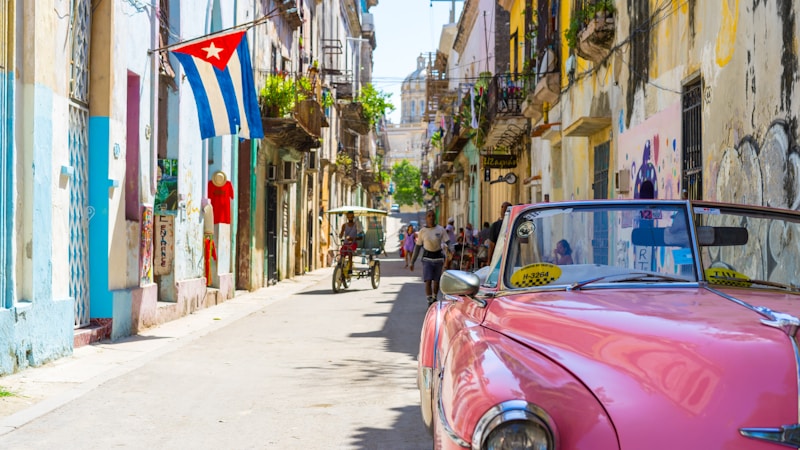
Havana is a city of roughly two million people, spread along Cuba's northwestern coast. Its crumbling colonial architecture, 1950s American cars, and live music pouring from open doorways create an atmosphere that's genuinely unlike anywhere else in the Caribbean. The city moves at its own pace, shaped by decades of isolation that have preserved its character while limiting its development.
We spent 3 days in Havana researching this guide.
The nightlife scene is built around music. Salsa, son, jazz, and rumba are played live in venues ranging from grand theaters to tiny bars with three plastic chairs. Drinking is cheap, rum is the national spirit, and the social culture encourages late nights and spontaneous interaction. For visitors, Havana feels immediately welcoming. It's also a city where the economic gap between tourists and locals shapes nearly every encounter.
Legal Context
Prostitution is illegal under Cuban law. Havana, as the country's main tourist destination, sees the most visible enforcement activity. Police periodically sweep areas popular with foreign visitors, and undercover officers operate in known meeting spots. Cubans found in the company of foreigners late at night may be stopped and questioned.
Hotels and casas particulares must register all guests. Bringing a Cuban national to your room requires their ID to be recorded. Some accommodations won't allow it at all. This registration system gives authorities visibility into who is spending time with foreign visitors.
The line between social interaction and transactional encounters is genuinely blurry in Havana. Many Cubans seek connections with foreigners for a mix of reasons: companionship, curiosity, economic benefit, or the hope of future opportunities. Understanding this dynamic doesn't require cynicism, but it does require honesty.
Key Areas
Habana Vieja (Old Havana)
The colonial heart of the city and the center of Havana's tourist infrastructure. The streets around Plaza Vieja, Plaza de la Catedral, and Calle Obispo are lined with bars, restaurants, and live music spots. La Bodeguita del Medio and El Floridita are the famous Hemingway-linked bars (tourist-priced but worth one visit). Smaller venues on side streets offer better music and lower prices. This is where most tourists spend their evenings, and it's also where jinetero activity is most visible.
Vedado
The more modern, residential neighborhood west of Habana Vieja. Vedado has a different feel: wider streets, mid-century apartment blocks, and a local Cuban atmosphere. The area around Calle 23 (La Rampa) and the Hotel Nacional has clubs, bars, and live music venues that draw a more mixed crowd of Cubans and tourists. Fabrica de Arte Cubano, a converted cooking-oil factory turned cultural center, is Havana's most talked-about nightlife destination. Entry is around 100 CUP. Vedado's scene is less tourist-focused and more rewarding for those who want to experience Havana beyond the postcard version.
The Malecon
Havana's famous five-mile seafront boulevard is one of the great public gathering spaces in the Americas. Every night, hundreds of people sit along the seawall to socialize, drink rum, play guitar, and watch the waves. It's free, it's democratic, and it's the best place to feel the pulse of the city. The Malecon runs from Habana Vieja through Centro Habana and into Vedado, and different stretches attract different crowds. It's generally safe but watch your belongings, and avoid the most isolated sections late at night.
Centro Habana
The dense residential neighborhood between Habana Vieja and Vedado. Centro Habana isn't a tourist district, and it shows: narrow streets, crowded buildings, and minimal infrastructure for visitors. There are some bars and music venues worth seeking out, but this area requires more street awareness than the main tourist zones. It's where you'll find a more unfiltered version of Havana, for better and worse.
Safety
Havana is safe by Caribbean and Latin American standards. Violent crime against tourists is uncommon, and the heavy police presence in tourist areas acts as a deterrent. The main risks are petty crime and scams.
- Keep your phone, wallet, and camera close, especially in crowded areas around Habana Vieja
- Don't walk along unlit sections of the Malecon alone after midnight
- Avoid Centro Habana at night unless you know where you're going
- Havana's streets are poorly lit and sidewalks are often broken; watch your step after dark
- Medical facilities are limited; bring a basic first-aid kit and any prescription medications
- There are no ATMs that accept US-issued cards; bring enough cash for your entire stay
- Save the emergency number (106) and your embassy contact in your phone before going out
Cultural Norms
Cubans are direct, warm, and socially confident. Conversation flows easily, and it's normal for strangers to strike up a chat. Music and dancing are part of social life at every level. If you're in a bar with live music, dancing is expected; standing still in the corner marks you as a tourist more than anything else.
Spanish is the language of Havana. English is spoken by some workers in tourist areas, but outside Habana Vieja and the main hotels, you'll need at least basic Spanish. Even a few phrases change how people interact with you.
Tipping is appreciated and expected in tourist-facing settings. Tip in CUP or small USD bills. Musicians who play at your table expect a small tip. A 10% tip at restaurants is standard.
Social Scene
Havana's social life is spread across several distinct neighborhoods, each with its own character. The city's music culture means nearly every venue has live performers, and salsa dancing isn't performative here. It's how people socialize. Showing up and moving to the music matters more than technique.
Vedado is the residential and cultural neighborhood where Havana's more interesting social life happens. Calle 23 (known as La Rampa) is lined with bars and music spots. La Zorra y El Cuervo is Havana's best jazz club, located in a basement on La Rampa with live performances most nights. The area around the Universidad de La Habana has a younger, more local atmosphere during the day.
Habana Vieja (Old Havana) is the tourist center, with bars and restaurants concentrated around Plaza Vieja and along Calle Obispo. Live music plays everywhere. El Floridita and La Bodeguita del Medio are the famous Hemingway bars; they're touristy and overpriced, but the daiquiris at El Floridita are genuinely good. Smaller venues on the side streets offer better value and more authentic performances.
The Malecon is Havana's 8 km seawall, and it's the city's primary social space. Locals gather here every evening, especially on weekends, to drink cheap rum, play guitar, and talk. It's free, it's open to everyone, and it's where Havana's real social life plays out. Different stretches attract different crowds, from families to university students to couples.
Fabrica de Arte Cubano (FAC) is a converted oil factory in Vedado that now serves as Havana's cultural hub. It combines art exhibitions, live music, film screenings, and bars under one roof. Entry costs about 2 USD. It's open Thursday through Sunday and draws a mix of Cubans and foreigners. This is probably Havana's best single venue for a night out.
Casa de la Musica (Miramar) hosts live salsa and timba bands with serious dancing. This is where Cubans go, not tourists. The energy is high and the dancing is at a level that will humble most visitors. Cover charges vary depending on who's performing.
During the day, the Parque Central area is a social gathering point, and the streets around the university in Vedado have a relaxed, youthful feel good for afternoon conversation over coffee.
Local Dating Notes
Havana is where most foreigner-Cuban relationships begin. The Malecon is the classic meeting point, especially in the evening when the seawall fills with people. Be aware that "jineteros" (male hustlers) and "jineteras" (female hustlers) are often skilled at creating connections that feel genuine but have economic motives. This doesn't mean all attention is fake. Many encounters are a genuine mix of personal interest and economic hope. Maintaining awareness of this dynamic, without becoming paranoid about it, is the right balance.
Scam Warnings
The cigar hustle: Someone approaches you claiming to work at a cigar factory and offers you "genuine" Cohibas or Montecristos at a fraction of the shop price. These are always fakes. Real Cuban cigars are only guaranteed authentic from official La Casa del Habano stores. This is Havana's most common tourist scam.
The restaurant redirect: A friendly local offers to take you to an "amazing" restaurant or bar that "only Cubans know about." The venue is real but charges inflated prices, and your guide collects a commission. Choose your own restaurants and politely decline unsolicited recommendations from strangers.
Overcharging in taxis: Classic American cars that serve as taxis don't have meters. Always agree on a price before getting in. A ride within central Havana should cost between 500 and 1,500 CUP depending on distance. From the airport to the city center, expect around 5,000 CUP.
The friendship bracelet: Someone ties a bracelet on your wrist as a "gift" and then demands payment. Keep your hands in your pockets when approached by street vendors offering anything "free."
Best Times
Havana's climate is tropical, with a wet season from May through October and a drier, cooler period from November through April. The dry season is the most comfortable time to visit, with temperatures around 25-28C and lower humidity.
Nightlife peaks Thursday through Saturday. Most bars and clubs don't fill up until 10:00 PM or later. The Malecon is active every night but busiest on weekends. Fabrica de Arte Cubano is open Thursday through Sunday.
Carnival season in August and the International Jazz Festival in January bring extra energy to the nightlife scene. Book accommodation well ahead during these periods.
Getting Around
- Classic car taxis: The iconic 1950s American cars serve as both shared and private taxis. Private rides cost more; negotiate before boarding
- Cocotaxis: Three-wheeled yellow vehicles good for short hops around Habana Vieja and the Malecon. Fun, cheap, and not very safe. Agree on price first
- Almendrones: Shared taxis that run fixed routes for a flat fare. Cheap but crowded and confusing for visitors
- Walking: Habana Vieja is compact and walkable. The Malecon connects the main areas along the waterfront. Wear comfortable shoes; the pavement is rough
- Bicycle taxis (bicitaxis): Pedal-powered cabs good for short distances. Negotiate the fare before departure
- There is no Uber or ride-hailing app in Cuba. You must flag taxis or arrange them through your accommodation
What Not to Do
- Do not assume you can use US credit cards, debit cards, or mobile payment apps; Cuba is cash-only for Americans
- Do not photograph police or military personnel; this invites trouble
- Do not wander into unfamiliar neighborhoods after dark without a clear destination
- Do not buy cigars on the street, no matter how convincing the story
- Do not leave drinks unattended in bars
- Do not engage with anyone who appears underage; Cuban authorities take this seriously and prison conditions are severe
- Do not carry your passport on a night out; leave it locked at your accommodation and carry a photocopy
- Do not assume that every friendly Cuban is running a scam, but stay aware that economic motivations often play a role in tourist interactions
- Do not use illegal drugs; Cuban drug penalties are harsh and the legal system offers few protections to foreigners
Get the Legal Status PDF, 50 countries
Newsletter signup coming soon. Check back shortly.
Flights to Havana
Compare prices across airlines. Filter by stops, time, and cabin.
Airport transfer to Havana
Pre-booked transfers cost about the same as a metered taxi but cut out the airport queue, the meter argument, and the "no English" routine that takes some drivers to the wrong address. Fixed price quoted before booking, driver tracks your flight, waits with a name sign at arrivals.
Book a KiwiTaxi transferFrequently Asked Questions
Related Guides
Centro Habana
District guide to Centro Habana, the dense residential neighborhood between Habana Vieja and Vedado with local bars, live music, and Afro-Cuban culture.
Read guideMalecon
Guide to Havana's Malecon seawall promenade, the city's main social gathering spot and nightlife area, with safety tips and cultural context.
Read guideVedado
District guide to Vedado in Havana, the residential neighborhood with Fabrica de Arte Cubano, jazz clubs, rooftop bars, and Calle 23.
Read guideWas this guide helpful?