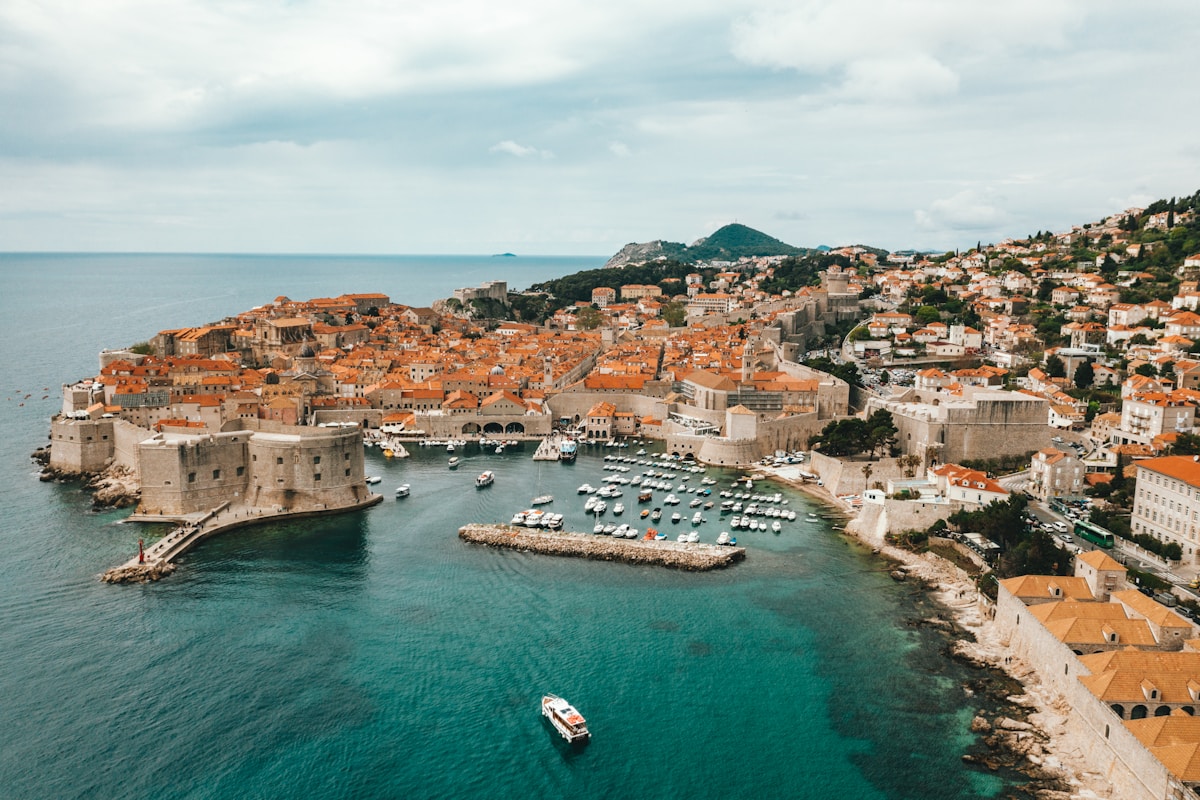


Before You Travel to Croatia
Five things every smart traveler sorts before booking.
- 1
Passport valid 6+ months from entry date
Most countries refuse entry on passports expiring within six months. Renew now if you're close.
- 2
Visa requirements for Croatia
Some are visa-free, some require an e-visa filed days ahead, some need an embassy appointment.
- 3
Travel insurance booked
A hospital visit in Croatia can run $4,000-15,000 without cover. Credit card insurance usually excludes alcohol-related incidents.
- 4
eSIM data plan ready before landing
Airport SIM kiosks need your passport and overcharge tourists. Install an eSIM in 60 seconds, online before you fly.
- 5
Accommodation reserved in the right district
The wrong neighborhood means a 45-minute taxi every night. Map the venues first, then book.
City Guides in Croatia
Split
City guide to adult nightlife in Split, covering Bacvice beach bars, Diocletian's Palace old town venues, safety, and practical tips for Croatia's Dalmatian coast hub.
Zagreb
City guide to adult nightlife in Zagreb, covering entertainment zones, bar streets, lakeside clubs, safety, and practical tips for Croatia's capital.
Compare hotels in Croatia
Hotels, hostels, and short-term rentals across the country's main nightlife cities.
Legal Framework
Croatia has no specific law criminalizing prostitution. The legal situation is best described as unregulated tolerance. Selling sex is not a criminal offense, but organized prostitution, pimping, and running a brothel are all illegal under Articles 157 and 158 of the Croatian Criminal Code. This creates a familiar gray area: individual sex work exists in a legal vacuum while anything organized around it carries criminal penalties.
Our field team visited Croatia most recently in March 2026.
The practical effect is that the industry operates quietly and independently. There are no licensed brothels, no mandatory health checks, and no registration system. Workers operate through online platforms, classified ads, and social networks rather than from fixed establishments. The absence of regulation means there's no official data on the industry's size, though estimates suggest it's modest compared to neighboring countries like Hungary or the Czech Republic.
Clients face no criminal liability. Buying sexual services is legal, and there's been no legislative push toward the Nordic model of criminalizing demand. Public solicitation can draw fines under local ordinance laws, but enforcement is rare.
Enforcement Reality
Croatian police generally don't prioritize prostitution enforcement unless trafficking or exploitation of minors is involved. Periodic raids target massage parlors or apartment operations that authorities believe serve as organized fronts, but these actions are infrequent. Border areas near Hungary and Serbia see more attention due to trafficking concerns along migration routes.
Zagreb's police focus on maintaining order in entertainment districts rather than targeting individual sex work. Split and the Dalmatian coast see even less enforcement during tourist season, when local authorities prioritize keeping the tourism economy running smoothly. The police presence in nightlife areas is visible but oriented toward public safety rather than morality enforcement.
Croatia cooperates with Europol on trafficking cases and has improved its response mechanisms since EU accession in 2013. The national anti-trafficking hotline operates at 116 006. Government reports acknowledge that trafficking victims, primarily from Eastern Europe and Southeast Asia, are identified in Croatia each year, though numbers remain lower than in larger EU member states.
Cultural Context
Croatian society blends Mediterranean openness with Catholic conservatism. The Catholic Church retains meaningful cultural influence, particularly in rural areas and among older generations. Public discussion of sex work remains taboo in most settings. Politicians avoid the topic. Media coverage focuses almost exclusively on trafficking stories rather than the industry itself.
Younger Croatians are significantly more liberal. University cities like Zagreb and Rijeka have active progressive movements, and attitudes toward sexuality among under-35s align more with Western European norms than with the country's post-Yugoslav heritage. Croatia legalized same-sex civil partnerships in 2014, a move that reflected shifting generational values despite opposition from the Church.
Tourism shapes coastal attitudes profoundly. Croatia welcomed over 20 million tourist arrivals in 2024, and the industry accounts for roughly 20% of GDP. Coastal cities that depend on foreign visitors take a pragmatic view of nightlife and entertainment. What brings tourists is good for business, and local authorities understand this calculation clearly.
Venue Types
Nightclubs and bars form the backbone of Croatia's nightlife. Zagreb has a mature club scene with venues ranging from underground electronic spots to mainstream party clubs. Split's nightlife concentrates around the beach zones and old town, with open-air venues dominating during summer. Neither city has a dedicated red-light district.
Gentlemen's clubs exist in small numbers in Zagreb. These operate quietly, often without prominent signage, and cater primarily to locals and business travelers. The clubs serve as a mix of strip venue and upscale bar, with prices reflecting their semi-exclusive positioning.
Massage parlors advertising "relaxation services" operate in both Zagreb and Split. Not all offer adult services, and the line between legitimate wellness and something else isn't always clear from the outside. Online reviews and forums are the most reliable way to identify the nature of any given establishment.
Escort services operate primarily through websites and messaging apps. This is the fastest-growing segment, following the pattern seen across all of Europe. Rates in Zagreb start around EUR 100-150 per hour. Coastal cities see higher prices during peak tourist season (July and August), when rates can increase 30-50%.
Costs
Croatia adopted the euro in January 2023, replacing the kuna. Prices have settled after the conversion, though locals still complain about rounding-up inflation. The country sits in the moderate range for European travel, cheaper than Italy or France but pricier than Serbia or Bosnia.
Beer at a standard bar costs EUR 3-5. On the Dalmatian coast during peak season, expect EUR 5-7. Cocktails run EUR 8-14 in Zagreb and EUR 10-16 at upscale coastal venues. Croatian wine is excellent and affordable; a glass at a konoba (traditional tavern) costs EUR 3-5, and a bottle rarely exceeds EUR 20 at restaurants.
Eating out is reasonable if you avoid waterfront tourist traps. A cevapi plate costs EUR 5-7. A full meal at a mid-range restaurant runs EUR 15-25 per person. Seafood on the coast is pricier, with fresh fish often sold by the kilogram at EUR 40-70/kg.
Transport varies by location. Zagreb's tram system costs EUR 0.53 per ride (30 minutes). Taxis charge EUR 1.05/km after an initial EUR 2.50 flag drop. The Zagreb-Split highway trip takes about 4 hours by car or 5.5 hours by bus (EUR 20-30 one way). Domestic flights connect Zagreb and Split in under an hour for EUR 40-80 if booked early.
Hotels in Zagreb range from EUR 20-35 for hostels, EUR 50-90 for mid-range, and EUR 120-250 for upscale. Split's prices spike during July and August, when even basic apartments in the old town exceed EUR 100/night. Shoulder season (May, June, September, October) offers the best value on the coast.
Dating Culture
Croatians are warm but reserved at first contact. The Mediterranean expressiveness kicks in once comfort is established, but initial approaches tend to be more measured than what you'd experience in Spain or Italy. Direct eye contact matters. Smiling matters. But jumping into someone's personal space too quickly reads as aggressive rather than confident.
Dinner starts around 8 PM, which is earlier than Greece but later than Central Europe. Going to a bar before 10 PM is perfectly normal, unlike Athens. The nightlife peak hits between midnight and 3 AM in both Zagreb and Split. Clubs often stay open until 5 or 6 AM on weekends.
Coffee culture is sacred. Croatians spend enormous amounts of time sitting in cafes, particularly on Saturday mornings when the "spica" tradition turns Zagreb's city center into an extended social runway. Suggesting coffee as a first meeting is always appropriate and carries no romantic pressure. It's just how things start here.
Family ties are strong. Many young adults live with parents into their late 20s, partly from cultural expectation and partly from housing costs. This means dates tend to end at your accommodation rather than theirs. Don't interpret this as a lack of interest.
Dating Apps
Tinder dominates the Croatian market with the largest user base across both Zagreb and Split. Badoo has a strong presence, particularly among Croatians over 30 and in smaller cities along the coast. Bumble has grown since 2023 but remains a distant third. Hinge is barely present.
Profile quality on Croatian apps leans casual. Beach photos, group shots at festivals, and sunset selfies are standard. Bios tend to be short or empty. Croatians prefer to assess chemistry through conversation rather than written profiles.
During summer on the coast, dating app activity surges from international visitors. Match rates jump between June and September, and many connections are explicitly vacation-oriented. Split and Hvar have the most active summer scenes.
Watch for profiles pushing you toward specific bars or clubs. This is the most common app-related hustle in tourist areas, particularly on Tinder in Split during high season.
Key Cities
Zagreb is the capital and the country's only true metropolis. With a metro area of about 1.1 million people, it holds a quarter of Croatia's population and most of its year-round nightlife infrastructure. Tkalciceva Street is the famous bar strip running through the upper town, packed with cafes and bars in a pedestrianized setting. Jarun Lake on the city's western edge hosts the biggest nightclubs, particularly active from spring through fall when open-air venues operate on the lakeside. The city has a strong university presence (University of Zagreb has over 70,000 students) that keeps nightlife energetic throughout the academic year.
Split is Croatia's second city and the gateway to the Dalmatian islands. With roughly 350,000 in the metro area, it's smaller than Zagreb but dramatically more tourist-oriented. Diocletian's Palace, the Roman-era old town, contains bars and restaurants in what are literally ancient Roman chambers. Bacvice Beach, a short walk east of the old town, anchors the summer nightlife with beach bars and open-air clubs. Split's scene is intensely seasonal; summer transforms the city, while winter nightlife is quieter and more local.
Dubrovnik draws massive tourist numbers but its nightlife is limited. The old town has cocktail bars and a few clubs, but the scene is geared toward couples and families rather than solo travelers. It's worth visiting for its own sake but isn't a nightlife destination.
Hvar is Croatia's party island. Hvar Town fills with young travelers between June and September, and the bars along the harbor run until the early hours. Carpe Diem Beach Club on Stipanska island is the best-known venue. The island is accessible by catamaran from Split in about an hour.
Safety Considerations
Croatia is one of Europe's safer countries for travelers. Violent crime against tourists is uncommon. The country consistently ranks well in European safety indices, and police are generally professional and helpful.
- Pickpocketing targets tourists in crowded areas: Split's Riva waterfront, Zagreb's main square (Trg bana Jelacica), and packed summer festivals. Keep valuables in front pockets
- Drink spiking occurs in nightlife settings, particularly in Split during peak tourist season. Standard precautions apply: don't leave drinks unattended, don't accept drinks from strangers
- Taxi scams are less common since the rise of Bolt and Uber, but some drivers at airports and bus stations still try inflated fares with tourists. Use ride-hailing apps or confirm the meter is running
- Emergency services respond quickly in urban areas. Dial 112 for any emergency. Hospitals provide emergency care regardless of insurance status. EU citizens should carry a European Health Insurance Card
- Swimming safety deserves attention on the Adriatic coast. Rocky shorelines, sea urchins, and strong currents in certain channels catch unprepared swimmers. Water shoes are recommended for rocky beaches
- Landmines from the 1990s war still exist in some rural and forested areas, particularly near the Serbian and Bosnian borders. Marked areas are clearly signed. Stick to paved roads and established paths in these regions
Common Scams
Overcharging at coastal restaurants is the most common complaint. Waterfront restaurants in Split, Dubrovnik, and Hvar sometimes charge different prices than what's listed on the menu, add unrequested items to the bill, or price fish at inflated per-kilogram rates without informing guests beforehand. Always confirm prices before ordering seafood, and review the bill carefully.
The "friendly local" bar push: In Split's old town during summer, people occasionally approach solo tourists and suggest heading to a specific bar together. The bar charges inflated drink prices, and the "local" earns a commission. This is less aggressive than the Athens version but follows the same playbook. If someone you just met steers you toward a particular venue, be skeptical.
Currency confusion still catches some visitors despite the euro adoption. A few shops and taxi drivers in tourist zones try to charge in the old kuna prices without proper conversion, or claim the "tourist price" is different. Croatia uses the euro. Prices should be in euros. If something seems off, push back.
Apartment rental scams target tourists booking private accommodation online. Fake listings for Split and Dubrovnik apartments appear on lesser-known booking sites. Book through established platforms (Booking.com, Airbnb) and never wire money directly to a landlord before arrival.
Jet ski rental overcharges on Dalmatian beaches follow a pattern: the initial price quote covers a shorter time than you expect, and returning late triggers steep "overtime" fees. Clarify exact terms, duration, and penalties before renting any watercraft.
What Not to Do
- Don't follow strangers to bars or clubs they recommend, especially during tourist season in Split or Hvar
- Don't carry excessive cash. Card payments are widely accepted across Croatia, even at small businesses
- Don't assume coastal prices reflect Zagreb prices. A beer that costs EUR 4 in Zagreb can cost EUR 7 in Hvar Town in August
- Don't photograph anyone at nightlife venues without clear permission. Croatians value their privacy
- Don't discuss the 1990s war casually or make jokes about it. The Homeland War left deep scars that haven't fully healed, and opinions remain strong
- Don't skip sunscreen on the Adriatic. The combination of sun reflection off the sea, alcohol, and dehydration sends tourists to clinics every summer
- Don't rent a scooter without experience. Tourist scooter accidents are common on Hvar and other islands, and your insurance may not cover it
- Don't confuse Croatian hospitality with romantic interest. Warmth and friendliness are cultural defaults
Sources
- U.S. Department of State: Croatia Travel Advisory - Entry requirements, safety alerts, and local law summary
- UK Foreign, Commonwealth & Development Office: Croatia Travel Advice - Safety, health, and legal information for travelers
- Australian Government Smartraveller: Croatia - Travel advisory and practical information
Get the Legal Status PDF, 50 countries
Newsletter signup coming soon. Check back shortly.
Emergency Information: Croatia
- Emergency:
- 112
- Tourist Police:
- 192 (general police, English-speaking dispatchers available in tourist areas)
- Embassy Note:
- Most embassies are in Zagreb. Several countries maintain honorary consulates in Split and Dubrovnik.
Similar Countries to Explore
Albania
Albania's nightlife is small but growing fast, centered on Tirana's Blloku district where the former communist elite's residential quarter has become a strip of cocktail bars and clubs. Extremely cheap and largely undiscovered by mass tourism.
Bosnia and Herzegovina
Sarajevo's Ottoman-era old town hides a growing bar scene where craft cocktails cost less than a coffee in Vienna. Low prices, warm hospitality, and a post-war cultural renaissance make Bosnia a Balkan sleeper.
Greece
Athens, Mykonos, and Crete offer Mediterranean nightlife with beautiful women. The escort scene is smaller than Western Europe but growing, with summer island parties as a bonus.
Italy
Rome's nightlife districts, Milan's aperitivo scene, and a regulated industry across the peninsula. Legal framework with practical reality for visitors.
Similar Countries in Other Regions
Countries with a similar overall score to Croatia (3.5) but in different parts of the world.
Azerbaijan
3.5Caucasus
An oil-rich Caspian nation where conservative Muslim traditions sit alongside Baku's cosmopolitan bar scene, waterfront clubs, and a nightlife shaped by petrodollars and regional tourism.
China
3.5East Asia
Guide to nightlife across mainland China, Hong Kong, and Macau covering bar districts, KTV culture, legal context, costs, and practical tips for foreign visitors.
Cuba
3.5Caribbean
Havana's Malecon and Vedado offer a unique scene shaped by economics and isolation. Rock-bottom prices, genuine connections, and a fading old-world atmosphere found nowhere else.
Was this guide helpful?