Before You Travel to Pakistan
Five things every smart traveler sorts before booking.
- 1
Passport valid 6+ months from entry date
Most countries refuse entry on passports expiring within six months. Renew now if you're close.
- 2
Visa requirements for Pakistan
Some are visa-free, some require an e-visa filed days ahead, some need an embassy appointment.
- 3
Travel insurance booked
A hospital visit in Pakistan can run $4,000-15,000 without cover. Credit card insurance usually excludes alcohol-related incidents.
- 4
eSIM data plan ready before landing
Airport SIM kiosks need your passport and overcharge tourists. Install an eSIM in 60 seconds, online before you fly.
- 5
Accommodation reserved in the right district
The wrong neighborhood means a 45-minute taxi every night. Map the venues first, then book.
City Guides in Pakistan
Islamabad
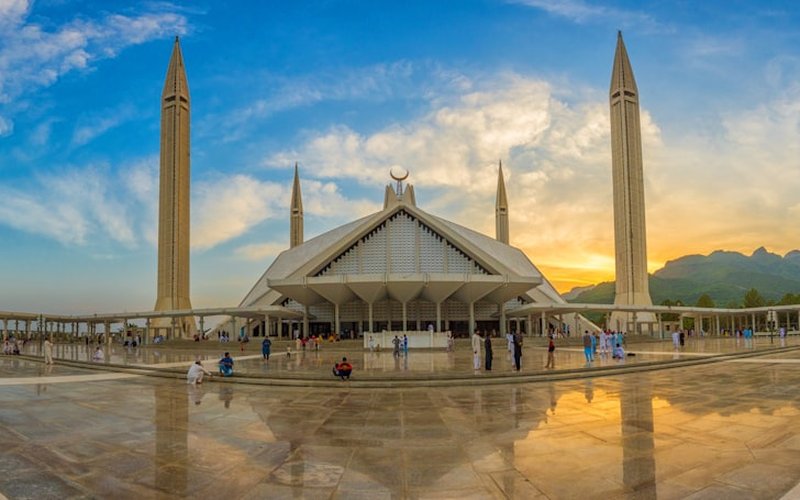
City guide to social venues in Islamabad, Pakistan's planned capital, covering hotel bars, diplomatic club events, and the F-6/F-7 restaurant districts.
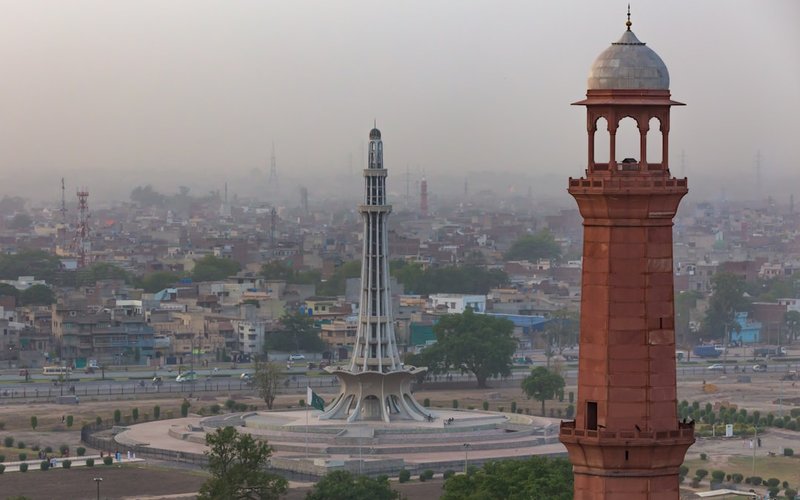
Lahore
City guide to social venues in Lahore, Pakistan's cultural capital, covering hotel bars, private clubs, restaurants, and the Gulberg commercial district.
Compare hotels in Pakistan
Hotels, hostels, and short-term rentals across the country's main nightlife cities.
Legal Framework
Pakistan's legal system combines civil, criminal, and Sharia law. The Hudood Ordinances of 1979 criminalize adultery (zina) and fornication outside marriage, carrying penalties that range from fines to imprisonment and, under Sharia provisions, theoretically up to stoning. Prostitution is explicitly illegal. Operating a brothel or living on earnings from sex work carries imprisonment of up to 25 years.
This guide reflects conditions observed during our March 2026 visit.
Alcohol is prohibited for Muslims under the Pakistan Penal Code and the Prohibition Order of 1979. Non-Muslims can obtain a liquor permit through provincial excise departments, but the process is bureaucratic and rarely pursued by visitors. Licensed hotels in major cities serve alcohol to foreigners and non-Muslim Pakistani nationals with permits.
The Prevention of Electronic Crimes Act (PECA) of 2016 extends enforcement into the digital space. Solicitation through apps or websites can result in criminal charges.
These are not symbolic laws. They carry real penalties and real enforcement.
Enforcement Reality
Enforcement varies dramatically by location and context. Islamabad and Lahore's upscale hotel bars operate openly, serving alcohol to foreign guests and permitted nationals without interference. Police don't enter five-star hotel premises to check permits. This creates a two-tier system where the wealthy and connected operate under different rules.
Street-level enforcement is unpredictable. Police conduct raids on suspected brothels in Lahore's older neighborhoods and Karachi's red-light areas. Arrests make local news and serve both law enforcement and political purposes. Foreign nationals caught in such situations face deportation, criminal charges, and diplomatic complications.
The Federal Investigation Agency (FIA) monitors online activity. Dating apps function in Pakistan but carry risk. Blackmail scams targeting men who use these platforms are well-documented.
During Ramadan, enforcement tightens significantly. Restaurants close during daylight hours, and social restrictions intensify across the board.
Cultural Context
Pakistan is an Islamic republic where religion shapes daily life, social norms, and legal structures. The call to prayer marks the rhythm of the day. Gender segregation is standard in many public spaces. Unmarried men and women socializing openly draws attention outside the most cosmopolitan circles of Lahore and Islamabad.
Class matters enormously. Pakistan's English-speaking upper class in Lahore, Islamabad, and Karachi live lives that bear little resemblance to the conservative mainstream. Private house parties with alcohol, mixed-gender gatherings, and casual dating exist within these circles, but they operate behind closed doors.
Family honor (izzat) is a defining social concept. Perceived sexual misconduct, particularly involving women, can trigger severe consequences including violence. This isn't hypothetical. Honor killings still occur, though legal reforms have strengthened penalties.
Hospitality toward guests is deeply ingrained in Pakistani culture. Visitors often receive extraordinary generosity. This warmth is genuine, and abusing it by disrespecting local norms creates real problems.
Dating Culture
Conventional Western-style dating barely exists in Pakistan's public sphere. Arranged marriages remain the norm across most of society, though urban educated Pakistanis increasingly meet partners through their own social circles.
Foreign men in Pakistan attract curiosity. In Lahore and Islamabad's educated classes, social interactions at hotel events, cultural gatherings, and embassy functions can lead to connections. These operate within strict boundaries of discretion.
Dating apps technically work. Tinder has users in major cities, though many profiles are fake or used for scamming. Bumble has a smaller presence. The risk of blackmail, where someone threatens to expose a conversation or meeting to family or police, is real and documented.
Interacting with Pakistani women carries responsibilities that visitors must understand. Any perceived impropriety can have consequences for the woman that far outweigh anything the foreign man might face. Discretion isn't just advisable. It's a moral obligation.
Key Cities
Lahore is Pakistan's cultural capital and second-largest city, with a population of over 13 million. It has the country's most active social scene, centered on the Gulberg commercial district's restaurants and hotel bars. Lahore's Mughal heritage, food culture, and relatively relaxed social atmosphere (by Pakistani standards) make it the most accessible city for visitors.
Islamabad is the planned capital city, home to embassies, international organizations, and a population of around 1.2 million. Its nightlife is almost entirely confined to hotel bars and private club events. The diplomatic community creates pockets of international social activity that don't exist elsewhere in the country.
Costs
Pakistan uses the Pakistani Rupee (PKR). The currency has depreciated sharply in recent years, making the country extremely affordable for visitors with foreign currency.
A meal at a good restaurant costs PKR 1,500-4,000 ($5.40-14.40 USD). Street food is PKR 200-500 ($0.70-1.80). A beer at a hotel bar costs PKR 800-2,000 ($2.90-7.20), which is expensive relative to local income but cheap by international standards.
Ride-hailing services (Careem and inDrive) are available in major cities. Cross-city rides cost PKR 300-800 ($1.10-2.90). Hotels range from PKR 3,000-8,000 ($10.80-28.80) for budget options to PKR 15,000-50,000 ($54-180) for international brands.
Non-alcoholic drinks are extremely cheap. Fresh juice runs PKR 100-300 ($0.35-1.10). Tea (chai) costs PKR 50-150 ($0.18-0.54).
Safety Considerations
Pakistan's security situation has improved significantly since the mid-2010s but remains complex. The military's ongoing operations have reduced militant activity, but risks persist.
- Sectarian violence occurs periodically, particularly in Balochistan and parts of Khyber Pakhtunkhwa. Lahore and Islamabad are significantly safer but not immune
- Street crime exists in all major cities. Phone snatching and mugging occur, particularly in Lahore's older areas after dark
- Police corruption is widespread. Officers may demand bribes, and having a local contact who can intervene is valuable
- Terrorism risk is reduced but present. Security barriers and checkpoints are common around government buildings, hotels, and markets
- Blackmail scams targeting foreign men through dating apps or chance encounters are a documented pattern. Never share compromising information or images
- Drug laws carry severe penalties, including potentially the death penalty for trafficking
- Emergency number is 15 for police. Ambulance service varies by city (1122 in Punjab for Rescue service)
What Not to Do
- Don't drink alcohol in public or outside licensed hotel premises
- Don't display physical affection with anyone in public, regardless of gender
- Don't photograph military installations, checkpoints, or government buildings
- Don't discuss blasphemy, even casually. Pakistan's blasphemy laws carry a potential death sentence, and accusations have been made against foreigners
- Don't eat, drink, or smoke in public during Ramadan daylight hours
- Don't assume that Lahore's relatively relaxed atmosphere extends to the rest of the country
- Don't engage with strangers who approach offering to "show you a good time." Scams and blackmail are real risks
- Don't carry large amounts of cash. ATMs are available in all major cities
Sources
- U.S. Department of State: Pakistan Travel Advisory - Security and entry information
- UK FCDO: Pakistan Travel Advice - Safety, health, and local law guidance
- Australian Government Smartraveller: Pakistan - Travel advisory and practical information
Get the Legal Status PDF, 50 countries
Newsletter signup coming soon. Check back shortly.
Emergency Information: Pakistan
- Emergency:
- 15
- Embassy Note:
- Most embassies are in Islamabad. Lahore and Karachi have consulates for several countries.
Similar Countries to Explore
India
A country of 1.4 billion people where adult nightlife exists in pockets, shaped by conservative social norms, uneven enforcement, and a growing urban bar scene in Mumbai and Goa.
Maldives
Nightlife guide to the Maldives, covering Islamic law restrictions, resort-only alcohol access, safety, and what visitors should know about entertainment options.
Nepal
A Hindu-majority Himalayan republic where nightlife barely registers outside Kathmandu's Thamel district, shaped by conservative social norms, limited licensing, and a backpacker economy that keeps a handful of bars alive.
Sri Lanka
A conservative Buddhist island where nightlife barely exists outside Colombo's hotel bars and a handful of clubs, shaped by strict liquor licensing, post-civil war recovery, and deep cultural expectations around public behavior.
Similar Countries in Other Regions
Countries with a similar overall score to Pakistan (3.1) but in different parts of the world.
Australia
3.1Oceania
A heavily regulated market where strip clubs and adult entertainment operate within strict state licensing frameworks. High costs, strong safety standards, and a nightlife scene concentrated in Sydney and Melbourne.
Cameroon
3.1West Africa
A West African nation with a split nightlife culture between French-speaking Douala and Yaounde, where low costs meet uneven safety and a tolerant enforcement environment.
Canada
3.1North America
Canada's nightlife runs from Montreal's liberal club scene to Toronto's regulated entertainment districts. Legal but complex framework, high safety standards, and a diverse social landscape shaped by multiculturalism.
Was this guide helpful?