

Before You Travel to Cameroon
Five things every smart traveler sorts before booking.
- 1
Passport valid 6+ months from entry date
Most countries refuse entry on passports expiring within six months. Renew now if you're close.
- 2
Visa requirements for Cameroon
Some are visa-free, some require an e-visa filed days ahead, some need an embassy appointment.
- 3
Travel insurance booked
A hospital visit in Cameroon can run $4,000-15,000 without cover. Credit card insurance usually excludes alcohol-related incidents.
- 4
eSIM data plan ready before landing
Airport SIM kiosks need your passport and overcharge tourists. Install an eSIM in 60 seconds, online before you fly.
- 5
Accommodation reserved in the right district
The wrong neighborhood means a 45-minute taxi every night. Map the venues first, then book.
City Guides in Cameroon

Douala
City guide to nightlife in Douala, Cameroon's economic capital, covering the Akwa entertainment district, maquis bars, safety precautions, and practical details.
Yaounde
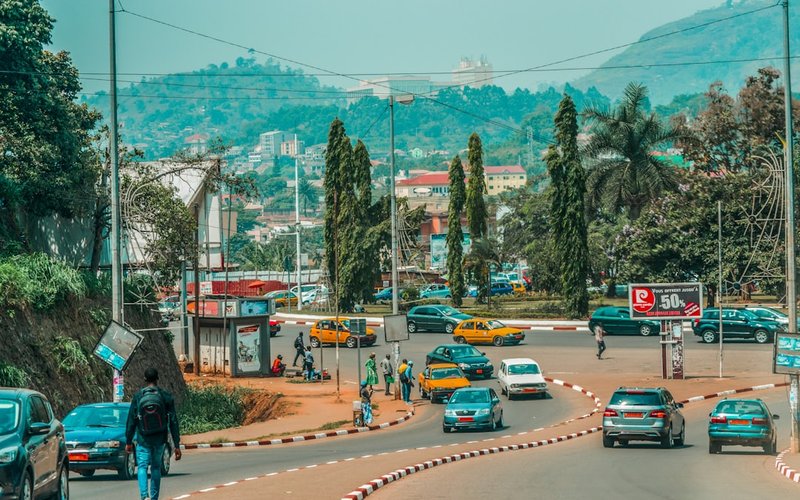
City guide to nightlife in Yaounde, Cameroon's political capital, covering the Bastos diplomatic quarter, bar scene, safety tips, and practical details.
Compare hotels in Cameroon
Hotels, hostels, and short-term rentals across the country's main nightlife cities.
Legal Framework
Cameroon's Penal Code (Article 343) prohibits prostitution, soliciting, and living off the proceeds of sex work. Penalties range from six months to five years' imprisonment. The law targets both those who sell sexual services and those who organize or profit from such activities.
Information verified through local contacts as of March 2026.
No licensing or regulatory system exists. Cameroon has signed the Protocol to Prevent, Suppress and Punish Trafficking in Persons, and Law No. 2011/024 criminalizes human trafficking with penalties of up to 20 years' imprisonment.
The legal framework is clear. All commercial sex activity is prohibited.
Enforcement Reality
Enforcement is selective and heavily influenced by bribery. Police in Douala and Yaounde conduct occasional raids in known areas, particularly around hotels and nightlife zones. These operations are irregular and often timed around political events or visits by international delegations.
Officers commonly demand bribes from sex workers and establishment owners rather than pursuing formal charges. This creates an environment where commercial sex operates openly in certain areas despite its illegal status. Foreign visitors in mainstream bars and restaurants are generally left alone.
The security situation in Cameroon's Anglophone regions (Northwest and Southwest) is volatile due to an ongoing separatist conflict. Travel to these areas is strongly discouraged. Douala and Yaounde, while not directly affected by the conflict, experience elevated security tensions.
Drug enforcement varies. Cannabis use is widespread, but possession can lead to prosecution, especially if police want a reason to extract a bribe.
Cultural Context
Cameroon is culturally diverse, with over 250 ethnic groups and a French-Anglophone linguistic divide. Religious practice splits roughly between Christian (about 70%) and Muslim (about 20%) populations, with traditional beliefs maintained alongside both.
Social attitudes toward sexuality are conservative across most groups. Public displays of affection are uncommon, and discussions of sex work are taboo. Homosexuality is criminalized under Article 347 of the Penal Code with penalties of up to five years' imprisonment.
Douala, as the country's economic capital and largest city, has the most permissive nightlife culture. The port city's commercial character and international connections create spaces where social norms relax after dark. Yaounde, the political capital, has a more buttoned-up daytime character that loosens on weekends.
Dating Culture
Dating customs in Cameroon follow traditional West African patterns. Men initiate and are expected to demonstrate generosity. Gift-giving, paying for meals, and providing financial support are standard expectations in relationships at all levels.
In Douala and Yaounde, younger middle-class Cameroonians socialize through WhatsApp groups and social media rather than dedicated dating apps. Tinder has minimal presence. Meeting people through friends, family connections, and social events remains the primary path.
Foreign men attract attention. Economic motivation is common, and the line between genuine interest and financial expectation can be blurry. Being clear about intentions from the beginning prevents complications.
Facebook and WhatsApp are the dominant social platforms. Romance scams originating from Cameroon do exist, typically targeting people abroad. Standard verification applies when meeting online contacts.
Key Cities
Douala is Cameroon's economic capital and largest city with roughly 3.5 million people. The Akwa neighborhood is the primary nightlife district, offering bars, nightclubs, and restaurants catering to the business community and a small international crowd. The scene is modest but has energy.
Yaounde is the political capital with about 4 million people. Nightlife concentrates in the Bastos neighborhood, which houses embassies and international organizations. The scene is smaller than Douala's but draws a diplomatic and NGO crowd.
Costs
Cameroon is affordable. The Central African CFA Franc (XAF) is pegged to the Euro, which provides currency stability unusual for the region.
Beer at a bar costs XAF 500-1,500 ($0.80-2.50 USD / EUR 0.75-2.30). A 650ml bottle of local beer (Castel, "33" Export, or Beaufort) at a maquis (open-air bar) runs XAF 500-800 ($0.80-1.30). Imported spirits cost XAF 1,500-4,000 ($2.50-6.60) per glass. Club entry ranges from free to XAF 5,000 ($8.25) at top venues.
A meal at a local restaurant costs XAF 1,000-3,000 ($1.65-5). Mid-range restaurants run XAF 3,000-10,000 ($5-16.50) per person. Upscale dining in Douala tops out around XAF 15,000-30,000 ($25-50).
Taxis are cheap. A shared taxi ride within the city costs XAF 200-500 ($0.33-0.80). A private taxi ("course") costs XAF 2,000-5,000 ($3.30-8.25) depending on distance.
Budget hotels start at XAF 10,000-20,000 ($16.50-33) per night. Mid-range options run XAF 25,000-60,000 ($41-100). International chains charge XAF 60,000-150,000+ ($100-250+).
Safety Considerations
Cameroon requires serious security awareness.
- The Anglophone crisis in the Northwest and Southwest regions makes travel there dangerous. Avoid these areas entirely
- Boko Haram activity continues in the Far North region. This area is a no-go zone for tourists
- In Douala and Yaounde, armed robbery, carjacking, and pickpocketing are common, particularly after dark
- Police checkpoints are frequent, and officers may demand bribes. Carry a photocopy of your passport and visa at all times
- Drink spiking has been reported at bars frequented by foreigners
- Road conditions are poor and driving standards are dangerous. Travel by taxi rather than renting a car
- Health infrastructure is basic. Yellow fever vaccination is required for entry. Malaria prophylaxis is recommended
- Emergency number is 112, but response times are unreliable. Know the location of the nearest hospital
What Not to Do
- Do not travel to the Anglophone regions or the Far North
- Do not walk alone after dark in Douala or Yaounde
- Do not display expensive electronics, jewelry, or large amounts of cash
- Do not photograph government buildings, military personnel, or police
- Do not discuss the Anglophone crisis with strangers. Opinions are divided and emotions run high
- Do not resist during a robbery or police checkpoint confrontation
- Do not drink tap water. Use bottled or treated water only
- Do not engage in same-sex public affection. Homosexuality is criminalized and socially stigmatized
Sources
- U.S. Department of State: Cameroon Travel Advisory - Safety alerts, entry requirements, and local law
- UK Foreign, Commonwealth & Development Office: Cameroon Travel Advice - Security situation and practical information
- Australian Government Smartraveller: Cameroon - Travel advisory and health information
Get the Legal Status PDF, 50 countries
Newsletter signup coming soon. Check back shortly.
Emergency Information: Cameroon
- Emergency:
- 112
- Embassy Note:
- Most embassies are located in Yaounde, the political capital. Douala has some consular offices.
More in This Region
Cape Verde
West African island archipelago where a relaxed social culture and growing tourism scene coexist with limited nightlife options and laid-back enforcement of outdated laws.
Ghana
Guide to adult nightlife in Ghana covering Accra's bar districts, legal context, costs, safety, and practical tips for foreign visitors to West Africa.
Ivory Coast
West Africa's economic powerhouse where Abidjan's French-influenced nightlife operates openly despite conservative laws and selective enforcement across the country.
Nigeria
Lagos drives West Africa's largest nightlife scene with clubs, lounges, and a raw energy unlike anywhere else on the continent. Tolerated despite illegality, but safety is a constant concern.
Similar Countries in Other Regions
Countries with a similar overall score to Cameroon (3.1) but in different parts of the world.
Australia
3.1Oceania
A heavily regulated market where strip clubs and adult entertainment operate within strict state licensing frameworks. High costs, strong safety standards, and a nightlife scene concentrated in Sydney and Melbourne.
Canada
3.1North America
Canada's nightlife runs from Montreal's liberal club scene to Toronto's regulated entertainment districts. Legal but complex framework, high safety standards, and a diverse social landscape shaped by multiculturalism.
Denmark
3.1Scandinavia
Copenhagen's Vesterbro district anchors Denmark's adult nightlife scene. Sex work is legal and regulated, safety is excellent, but prices rank among Europe's highest.
Was this guide helpful?