
District Guides
Click through for street-level detail
District Map of Yaounde
Pick a district to recenter the map and see hotels nearby.
Where to stay in Yaounde
Compare hotels and rentals across the city's nightlife districts.
See places to stay and current pricesOverview
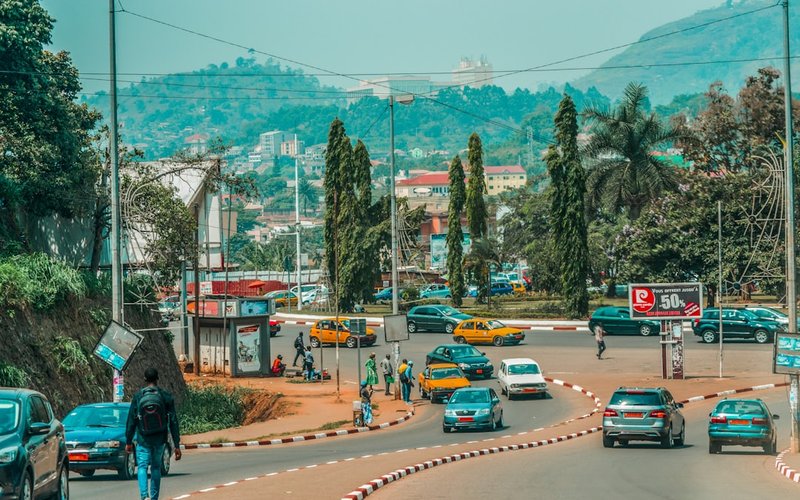
Yaounde spreads across seven hills in central Cameroon, a city of about 4 million that serves as the political capital and seat of government. The altitude (roughly 750 meters) gives it a more bearable climate than coastal Douala, with cooler evenings that make outdoor bars comfortable.
Research conducted through direct venue visits and local interviews.
The city's character is political. Government ministries, embassies, and international organizations shape the social landscape. This gives Yaounde's nightlife a distinct flavor: more reserved than Douala, more international, and with a higher proportion of after-work networking events disguised as social occasions.
Bastos is the neighborhood that matters for nightlife. Sitting north of the city center, it houses most embassies and has the highest concentration of bars and restaurants aimed at the international community.
Legal Context
The same national laws apply as in Douala. Prostitution is illegal, but enforcement focuses on operators rather than patrons. Yaounde's political character means that high-profile raids occasionally happen when the government wants to project a moral stance, but these are rare in the Bastos entertainment zone.
Police checkpoints are more common in Yaounde than in Douala due to the concentration of government facilities. Carry identification at all times.
Key Areas
Bastos Area. The diplomatic quarter and Yaounde's primary nightlife zone. Restaurants, bars, and a few clubs cluster in and around this neighborhood, serving embassy staff, NGO workers, and the city's professional class.
Nlongkak. Commercial area near the city center with some mid-range bars and restaurants. More local in character than Bastos and better value, but less polished.
Hotel district (Centre Ville). Hotels like the Hilton and Mont Febe have bars that serve as gathering points for the business community. Safe, expensive, and air-conditioned.
Safety
Yaounde's safety profile mirrors Douala's, with some differences.
- Armed robbery occurs, particularly at night in less busy areas
- The Bastos area is relatively safer due to embassy security presence, but it's not immune to crime
- Police checkpoints are frequent. Officers may demand identification and may solicit bribes
- Political protests can turn violent. Stay away from demonstrations and government buildings during tense periods
- Taxi rides should be negotiated carefully. Agree on a price before getting in
- Emergency number is 112
Cultural Norms
- French dominance is even stronger in Yaounde than in Douala. English speakers are fewer
- The diplomatic community creates a more formal social atmosphere. Networking events, ambassador residences, and NGO gatherings blend into the nightlife
- Dress expectations are slightly higher than in Douala. Smart casual is the minimum for Bastos venues
- The city's political character means conversations can turn to government and politics. Tread carefully
Social Scene
Bars and restaurants in Bastos serve a cosmopolitan crowd. The mix of diplomats, journalists, and NGO workers creates an information-rich social environment. Conversations tend toward current affairs and development more than in Douala's entertainment-focused scene.
Nightclubs exist but are fewer and smaller than Douala's. The crowd is generally older and more professional.
Maquis operate in Yaounde as well, though less prominently than in Douala. The ones near the Marche Central are popular with locals for after-work beer and grilled plantain.
Transportation
- Taxis: Same system as Douala. Shared taxis cost XAF 200-500, private courses XAF 2,000-5,000
- Moto-taxis: Common but not recommended at night
- Walking: Not advisable after dark
Best Times to Visit
- November-February: The main dry season. Pleasant evenings with lower humidity than Douala
- July-August: A brief dry period. Comfortable for nighttime outings
- September-October: The UN General Assembly season empties some embassy staff, but the city still functions
- Friday is the biggest night, when the diplomatic and government crowd decompresses after the working week
Get the Legal Status PDF, 50 countries
Newsletter signup coming soon. Check back shortly.
Flights to Yaounde
Compare prices across airlines. Filter by stops, time, and cabin.
Airport transfer to Yaounde
Pre-booked transfers cost about the same as a metered taxi but cut out the airport queue, the meter argument, and the "no English" routine that takes some drivers to the wrong address. Fixed price quoted before booking, driver tracks your flight, waits with a name sign at arrivals.
Book a KiwiTaxi transferFrequently Asked Questions
Was this guide helpful?