
Before You Travel to Denmark
Five things every smart traveler sorts before booking.
- 1
Passport valid 6+ months from entry date
Most countries refuse entry on passports expiring within six months. Renew now if you're close.
- 2
Visa requirements for Denmark
Some are visa-free, some require an e-visa filed days ahead, some need an embassy appointment.
- 3
Travel insurance booked
A hospital visit in Denmark can run $4,000-15,000 without cover. Credit card insurance usually excludes alcohol-related incidents.
- 4
eSIM data plan ready before landing
Airport SIM kiosks need your passport and overcharge tourists. Install an eSIM in 60 seconds, online before you fly.
- 5
Accommodation reserved in the right district
The wrong neighborhood means a 45-minute taxi every night. Map the venues first, then book.
Compare hotels in Denmark
Hotels, hostels, and short-term rentals across the country's main nightlife cities.
Legal Framework
Denmark legalized sex work in 1999, making it legal to sell sexual services while criminalizing the purchase of trafficked individuals. The Danish model differs from the full Nordic model used in Sweden and Norway. Selling sex is legal. Buying sex is also legal, provided the worker is not a victim of trafficking. Operating a brothel, however, is illegal, which creates a gray zone where independent workers operate freely but organized establishments technically violate the law.
This guide reflects conditions observed during our March 2026 visit.
Workers must be at least 18 years old and are required to register as self-employed for tax purposes. Street-based sex work is legal in practice, though municipalities can impose local restrictions on where and when it occurs. Copenhagen has historically concentrated most visible activity in the Vesterbro neighborhood around Istedgade.
The law does not require health checks or licensing for individual workers, unlike the fully regulated systems in Germany or the Netherlands. This means the Danish approach relies more on self-regulation and social services than on state-mandated compliance frameworks.
Enforcement Reality
Danish police prioritize trafficking prevention and organized crime rather than targeting individual sex workers or their clients. The national action plan against human trafficking funds outreach programs, safe housing, and exit support for those who want to leave the industry. Police cooperation with social workers is relatively strong by European standards.
Enforcement against street-level sex work in Vesterbro has fluctuated over the years. Periodic crackdowns have pushed some activity into less visible locations, but the area has maintained its character for decades. Indoor operations that stay below a certain visibility threshold generally don't attract police attention, even when they technically operate in a legal gray area.
Foreign nationals who sell sex in Denmark without proper residency or work permits can face deportation. This has disproportionately affected migrant workers from Eastern Europe, West Africa, and Southeast Asia.
Cultural Context
Danes approach adult entertainment with Scandinavian pragmatism. There's little moral panic around the subject, but there's also no celebration of it. The topic appears in public discourse primarily through the lens of worker welfare and trafficking prevention rather than morality debates. Danish media covers sex work policy with the same matter-of-fact tone it uses for housing policy or healthcare reform.
Copenhagen's Vesterbro neighborhood has been the traditional center of adult entertainment since the 1960s. The area has undergone significant gentrification since the early 2000s, with trendy restaurants, design shops, and craft breweries moving in alongside the remaining adult venues. This coexistence is distinctly Danish. Families push strollers past sex shops without apparent concern, and the neighborhood's identity has shifted from seedy to eclectic.
Denmark was the first country in the world to legalize pornography in 1969, a historical footnote that reflects the country's long tradition of social liberalism on matters of personal sexuality.
Costs
Denmark is one of the most expensive countries in Europe. Copenhagen especially punishes the budget-conscious traveler. The Danish krone (DKK) trades at roughly 7.5 DKK to 1 EUR and about 6.8 DKK to 1 USD, though rates fluctuate.
A beer at a Copenhagen bar costs DKK 60-80 (EUR 8-11, USD 9-12). Cocktails run DKK 100-140 (EUR 13-19, USD 15-21). A casual dinner for one costs DKK 150-250 (EUR 20-33, USD 22-37). Nightclub entry fees range from free to DKK 150 (EUR 20, USD 22) depending on the night and venue.
Adult services reflect the high cost of living. Independent workers typically charge DKK 800-1,500 (EUR 107-200, USD 118-221) per session. Massage parlors and similar establishments charge DKK 500-1,200 (EUR 67-160, USD 74-176).
Transport is excellent but not cheap. A single-journey ticket in Copenhagen costs DKK 24 (EUR 3.20, USD 3.50). A 24-hour CityPass covering zones 1-4 costs DKK 80 (EUR 10.70, USD 11.80). The metro runs 24 hours on weekends.
Budget accommodation starts at DKK 200-400 (EUR 27-53, USD 29-59) for hostel dorms. Mid-range hotels run DKK 800-1,500 (EUR 107-200, USD 118-221) per night.
Dating Culture
Danish dating culture is direct but low-key. Danes don't do elaborate courtship rituals or grand romantic gestures. The typical first date is drinks at a bar, and splitting the bill is standard rather than offensive. Offering to pay for everything can come across as old-fashioned or even controlling. Danes value independence and equality in relationships, and this starts from the very first interaction.
Approach culture barely exists in Denmark. Cold approaching someone on the street or in a coffee shop is uncommon and will likely be met with polite confusion. Most romantic connections start through social circles, work, education, or dating apps. Alcohol plays a significant social lubricant role. Danes can be reserved when sober but open up considerably after a few drinks, and Friday night bar culture is where many connections happen naturally.
Physical appearance matters, but understated style wins over flashiness. Danes dress well but casually. Showing off expensive watches or designer logos reads as insecure rather than impressive. The ideal impression is someone who looks good without appearing to try too hard. Being fit helps. Denmark has high gym membership rates, and outdoor activities like cycling and running are part of daily life.
How locals view foreign men depends heavily on behavior. Danes are internationally minded and well-traveled, so being foreign isn't inherently exotic or interesting. What works is genuine conversation, humor, and respecting personal boundaries. What doesn't work is being loud, aggressive, or treating Danish women as conquests. The country consistently ranks among the world's most gender-equal societies, and local women have zero tolerance for patronizing behavior.
Dating Apps
Tinder is the dominant dating app in Denmark, used by a broad demographic from casual hookups to serious relationships. Bumble has gained ground, particularly among women in their late twenties and thirties. Hinge is present but less established than in the UK or US. Danish-made app Happn has some users, especially in Copenhagen where the compact city center makes the proximity feature useful.
English-language profiles work well. Denmark ranks among the top countries worldwide for English proficiency, and most Danes under 50 speak it fluently. Conversations on apps tend to be direct and low-effort. Don't expect lengthy text exchanges before meeting up. Danes prefer to meet quickly and see if there's chemistry in person.
One pattern worth noting: many Danes use Instagram as a soft dating tool. Sharing Instagram handles on Tinder or Bumble is common, and DM conversations sometimes replace the app entirely. The Danish approach to online dating mirrors the offline culture: straightforward, efficient, and without excessive small talk.
Key Cities
Copenhagen is Denmark's only significant city for adult nightlife. With a metropolitan population of about 1.4 million, it concentrates nearly all of the country's entertainment infrastructure. Vesterbro is the traditional adult entertainment district, while Norrebro offers a thriving alternative bar and live music scene.
Aarhus, Denmark's second city, has a small bar scene but nothing approaching a dedicated adult entertainment district. The city is primarily a university town with student nightlife concentrated along the river and Jegergardsgade.
Odense and Aalborg have standard Scandinavian bar scenes. Aalborg's Jomfru Ane Gade is a well-known party street, but it caters to mainstream nightlife rather than adult entertainment.
Safety Considerations
Denmark is one of the safest countries in Europe. Violent crime rates are extremely low, and the police force is professional and generally helpful toward tourists. Copenhagen ranks consistently among the world's safest capital cities. Walking alone at night is normal throughout most neighborhoods.
- Petty theft, primarily pickpocketing, is the only notable risk. It concentrates around Central Station, Stroget, and Tivoli Gardens
- Bicycle traffic poses a genuine hazard. Copenhagen has more cyclists than almost any city in Europe, and they follow traffic rules strictly. Stepping into a bike lane without looking can result in a collision
- The Christiania free town has its own security dynamics. Cannabis sales in Pusher Street have historically attracted associated criminal activity, including occasional violence between competing groups. Tourists should avoid photographing drug trade activity
- Drink spiking is rare but not unheard of in nightlife settings. Standard precautions apply
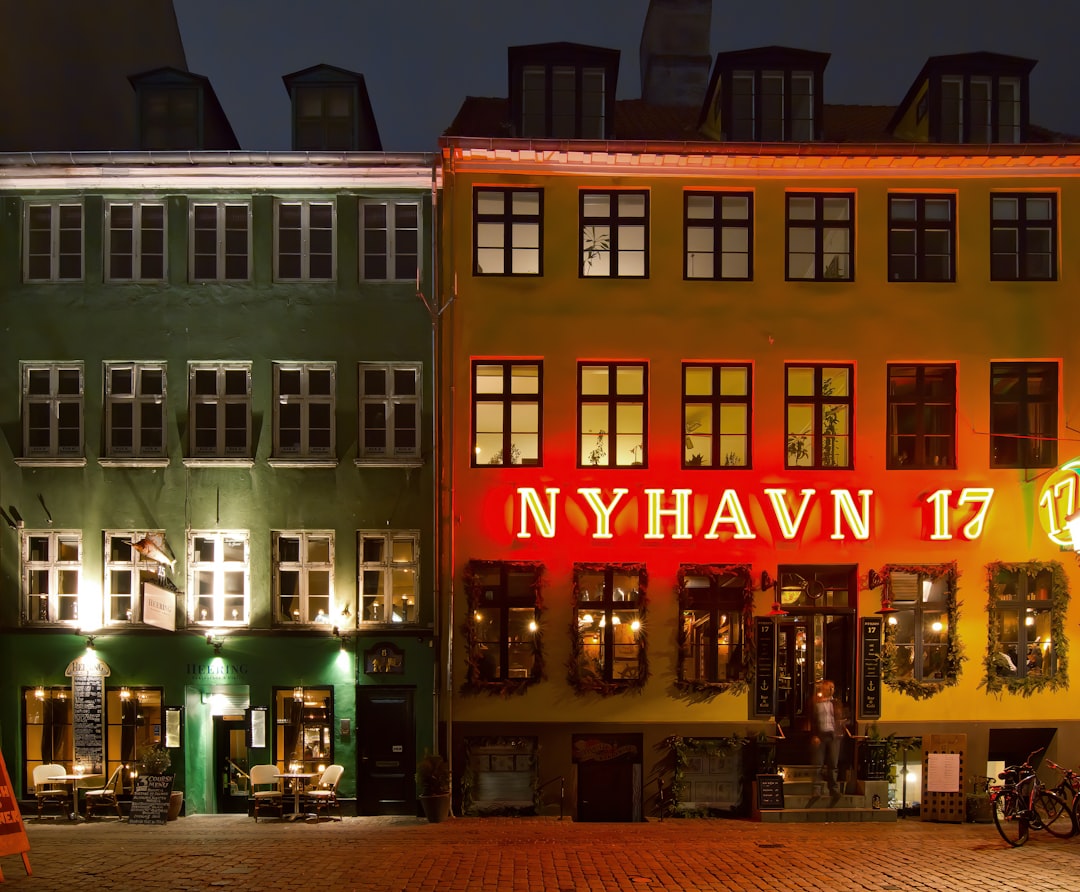
- Scams targeting tourists are minimal compared to most European capitals. The biggest risk is simply overpaying at tourist-oriented restaurants near Nyhavn
- Emergency number 112 covers police, fire, and medical. Non-emergency police can be reached at 114
Common Scams
Copenhagen has fewer tourist scams than most European capitals, but a few patterns exist. Overpriced restaurants near Nyhavn and around Stroget sometimes omit prices from English menus or add unexpected service charges. Always confirm prices before ordering.
The classic shell game appears occasionally on Stroget or near Central Station. It's always rigged, and the "winners" are planted accomplices.
Fake charity collectors sometimes approach tourists in pedestrian areas, asking for signatures or donations that turn into credit card fraud attempts. Decline politely and keep walking.
Taxi scams are rare since Uber's return to Denmark and the widespread use of the Viggo and Bolt ride-hailing apps, which show fares upfront.
What Not to Do
- Do not walk in the bike lanes. This is taken very seriously in Copenhagen, and cyclists will not swerve to avoid you
- Do not photograph workers or customers in adult entertainment venues
- Do not attempt to haggle prices at venues or with independent workers. Danes find this extremely off-putting
- Do not confuse Danish reserve with hostility. Danes are warm once you get past the initial formality
- Do not skip tipping entirely, though Danish expectations are lower than in the US. Rounding up or adding 10% at restaurants is appreciated but not mandatory
- Do not visit Christiania's Pusher Street expecting a carefree drug market. Tensions there can be real, and photography is absolutely forbidden
- Do not assume that Copenhagen's safe reputation means you can be careless with belongings in crowded areas
Sources
- U.S. Department of State: Denmark Travel Advisory - Entry requirements, safety alerts, and local law summary
- UK Foreign, Commonwealth & Development Office: Denmark Travel Advice - Safety, health, and legal information for travelers
- Australian Government Smartraveller: Denmark - Travel advisory and practical information
Get the Legal Status PDF, 50 countries
Newsletter signup coming soon. Check back shortly.
Emergency Information: Denmark
- Emergency:
- 112
- Tourist Police:
- 114 (non-emergency police)
- Embassy Note:
- Most embassies are located in Copenhagen. The nearest alternative for some nationalities is Stockholm or Berlin.
Related Destinations
Similar Countries in Other Regions
Countries with a similar overall score to Denmark (3.1) but in different parts of the world.
Australia
3.1Oceania
A heavily regulated market where strip clubs and adult entertainment operate within strict state licensing frameworks. High costs, strong safety standards, and a nightlife scene concentrated in Sydney and Melbourne.
Cameroon
3.1West Africa
A West African nation with a split nightlife culture between French-speaking Douala and Yaounde, where low costs meet uneven safety and a tolerant enforcement environment.
Canada
3.1North America
Canada's nightlife runs from Montreal's liberal club scene to Toronto's regulated entertainment districts. Legal but complex framework, high safety standards, and a diverse social landscape shaped by multiculturalism.
Was this guide helpful?