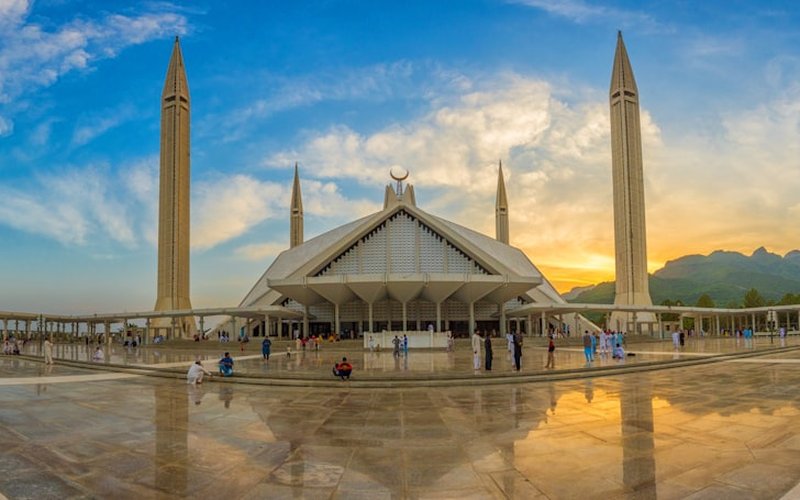
The Key Neighborhoods
Detailed guides for every area
District Map of Islamabad
Pick a district to recenter the map and see hotels nearby.
Where to stay in Islamabad
Compare hotels and rentals across the city's nightlife districts.
See places to stay and current pricesOverview
Islamabad is a planned city, built from scratch in the 1960s to replace Karachi as Pakistan's capital. It sits at the foot of the Margalla Hills in the Pothohar Plateau, with wide tree-lined avenues, organized sectors, and a population of about 1.2 million. The city feels spacious and orderly compared to Lahore's creative chaos or Karachi's urban density.
We spent 3 days in Islamabad researching this guide.
Social life here is structured around the diplomatic community, government officials, and the educated professional class. There's no entertainment district, no bar strip, no club scene. What exists is a network of hotel lounges, embassy events, cultural venues, and restaurants concentrated in the F-6 and F-7 sectors. It's quiet by any standard. By Pakistani standards, it's positively sedate.
Legal Context
The same federal prohibition on alcohol applies. Islamabad's five-star hotels (Serena, Marriott, Best Western) serve alcohol to foreign passport holders. The Islamabad Capital Territory police don't interfere with licensed hotel operations.
Islamabad's diplomatic enclave (the sector housing embassies) operates under enhanced security but the same laws. Embassy events can serve alcohol on embassy premises, which are technically foreign territory.
Drug possession is prosecuted. The ICT police are more organized than provincial forces, and Islamabad's smaller size means less anonymity.
Key Areas
F-6/F-7 Markaz. The commercial centers (Markaz) of sectors F-6 and F-7 are Islamabad's main social areas. Restaurants, cafes, and small shops line the commercial streets. The Jinnah Super Market in F-7 and the Super Market in F-6 are the primary gathering points.
Blue Area. Islamabad's central business district along Jinnah Avenue. Hotels, corporate offices, and some dining options. Less social than F-6/F-7 but home to the Marriott and other hotel bars.
Diplomatic Enclave (G-5). The sector housing embassies and international organizations. Social events here create the most international nightlife-adjacent experiences in Islamabad, though they require invitations.
Safety
Islamabad is Pakistan's safest major city, but the broader security context applies.
- The Red Zone around government buildings and the diplomatic enclave has heavy security. Checkpoints, barriers, and armed guards are normal
- Street crime is lower than in Lahore or Karachi but not absent. Keep valuables out of sight
- The Marriott Hotel bombing in 2008 remains in institutional memory. Major hotels have extensive security screening
- Earthquakes are a risk. The 2005 Kashmir earthquake devastated nearby areas. Islamabad's modern buildings are built to seismic standards, but older structures in surrounding areas aren't
- Traffic is lighter than other Pakistani cities, but driving standards are poor. Use ride-hailing apps
- Emergency number is 15 for police, 1122 for Rescue
Cultural Norms
Islamabad is more reserved than Lahore. The government city atmosphere and the presence of religious conservatives in adjacent Rawalpindi shape social expectations.
- Conservative dress applies. Islamabad is not the place for casual or revealing clothing
- The Margalla Hills and Trail 5 attract a mixed-gender crowd of young professionals in the late afternoon and early evening. This is one of the few public spaces where casual mixed socializing happens openly
- Embassy events and cultural center programs (British Council, Alliance Francaise) host film screenings, lectures, and social gatherings that attract a cosmopolitan crowd
- Rawalpindi, the older city adjacent to Islamabad, is significantly more conservative. The transition is abrupt
- Friday prayers affect schedules. Plan around the midday prayer period
Social Scene
Hotel lounges are the closest thing to a night out. The Serena Hotel's bar area, the Marriott's lounge, and the Best Western serve drinks in quiet, upscale settings. The clientele is international business travelers, diplomats, and Pakistani elites with permits.
Restaurant culture is the real social venue. F-6 and F-7 Markaz have excellent Pakistani, Chinese, Italian, and fusion restaurants. Dinner extends late, particularly on Thursday evenings (the start of the weekend) and Fridays.
Cafe culture serves the younger crowd. Third-wave coffee shops and tea houses in F-6, F-7, and F-8 are where Islamabad's university students and young professionals socialize.
Cultural events provide periodic social opportunities. Art gallery openings, music performances at the Pakistan National Council of Arts, and embassy-hosted cultural evenings create spaces for mixed international socializing.
Transportation
- Careem and inDrive: Available and reliable. Cross-city rides cost PKR 200-600 ($0.72-2.15)
- Islamabad Metro Bus: Connects to Rawalpindi. Useful for daytime travel
- Taxis: Available at hotels and taxi stands. Negotiate fares in advance
- Walking: Islamabad's wide avenues and planned layout make daytime walking pleasant in commercial sectors. Not recommended at night
- Rawalpindi: The adjacent city is accessible by metro bus or ride-hailing (20-40 minutes depending on traffic). A different social environment
Best Times to Visit
- October to March: Pleasant weather. Cool evenings make outdoor dining comfortable. The social scene is most active
- April to June: Increasingly hot, though cooler than Lahore due to the elevation (500 meters). Evenings remain comfortable
- July to September: Monsoon season brings dramatic storms and lush green hills. The Margalla Hills are at their most beautiful. Rain disrupts outdoor plans
- Thursday evenings: The unofficial start of the weekend. Restaurant reservations may be needed at popular spots in F-7
Get the Legal Status PDF, 50 countries
Newsletter signup coming soon. Check back shortly.
Flights to Islamabad
Compare prices across airlines. Filter by stops, time, and cabin.
Airport transfer to Islamabad
Pre-booked transfers cost about the same as a metered taxi but cut out the airport queue, the meter argument, and the "no English" routine that takes some drivers to the wrong address. Fixed price quoted before booking, driver tracks your flight, waits with a name sign at arrivals.
Book a KiwiTaxi transferFrequently Asked Questions
Was this guide helpful?