

Before You Travel to Vietnam
Five things every smart traveler sorts before booking.
- 1
Passport valid 6+ months from entry date
Most countries refuse entry on passports expiring within six months. Renew now if you're close.
- 2
Visa requirements for Vietnam
Some are visa-free, some require an e-visa filed days ahead, some need an embassy appointment.
- 3
Travel insurance booked
A hospital visit in Vietnam can run $4,000-15,000 without cover. Credit card insurance usually excludes alcohol-related incidents.
- 4
eSIM data plan ready before landing
Airport SIM kiosks need your passport and overcharge tourists. Install an eSIM in 60 seconds, online before you fly.
- 5
Accommodation reserved in the right district
The wrong neighborhood means a 45-minute taxi every night. Map the venues first, then book.
City Guides in Vietnam
Da Nang
City guide to adult nightlife in Da Nang, Vietnam: rooftop bars, beach clubs, expat zones, prices in VND, safety tips, and what to expect.
Hanoi
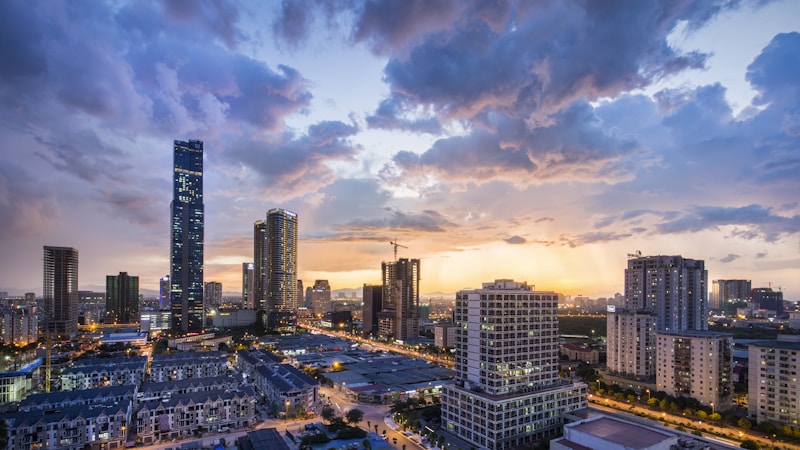
City guide to nightlife in Hanoi, covering entertainment areas, safety advice, and cultural context in Vietnam's capital.
Ho Chi Minh City
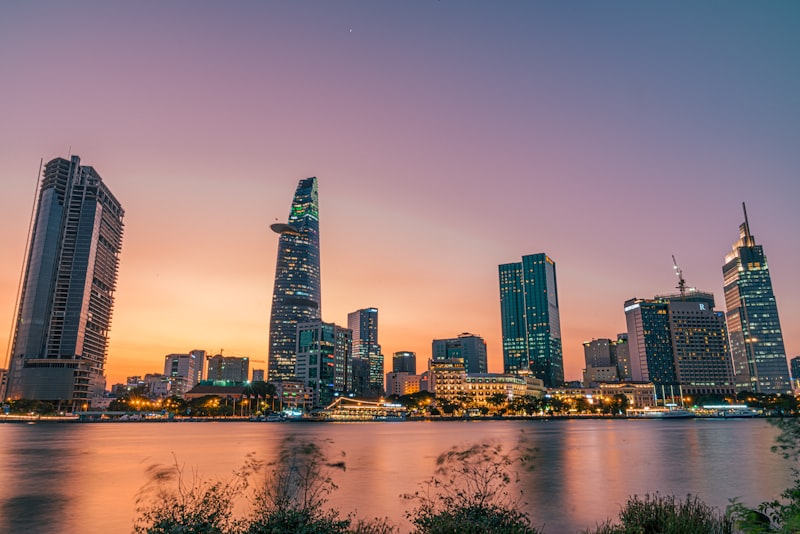
City guide to adult nightlife in Ho Chi Minh City, covering key areas, safety warnings, scam awareness, and cultural context.
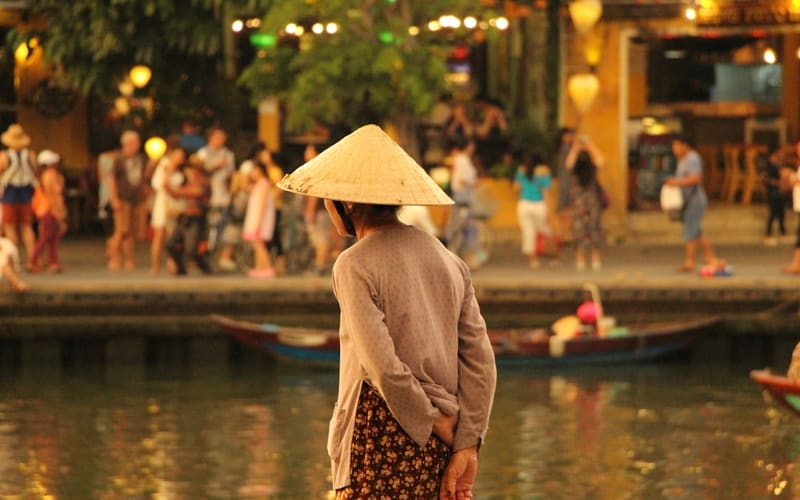
Hue
City guide to nightlife in Hue, Vietnam: DMZ Bar Street, rooftop bars on the Perfume River, prices in VND, safety tips, and what to expect after dark.
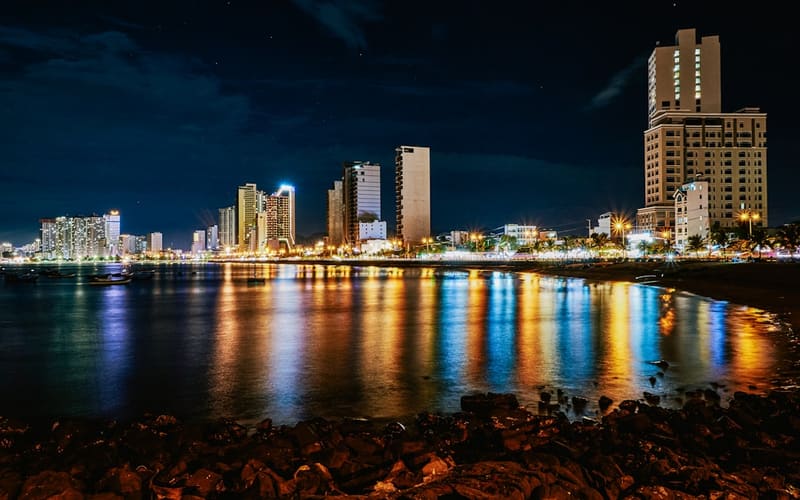
Nha Trang
City guide to adult nightlife in Nha Trang, Vietnam: beach bars, rooftop clubs, the backpacker quarter, prices in VND, safety tips, and what to expect.
Compare hotels in Vietnam
Hotels, hostels, and short-term rentals across the country's main nightlife cities.
Legal Framework
Prostitution is illegal in Vietnam under the Ordinance on Prevention and Combat of Prostitution, first enacted in 2003 and amended multiple times since. The law prohibits both the selling and buying of sexual services, and the operation of establishments that enable prostitution. Penalties include fines, administrative sanctions, and imprisonment for organizers and facilitators.
Information verified through local contacts as of February 2026.
Vietnam has taken a somewhat different approach than its Southeast Asian neighbors in that it frames prostitution primarily as a social issue rather than a purely criminal one. The government has historically operated rehabilitation centers for sex workers, though international criticism of these programs has led to reforms. The emphasis has shifted toward social services and voluntary support rather than forced rehabilitation.
Pimping, brothel operation, and trafficking carry significantly heavier penalties. Vietnam's anti-trafficking laws have been strengthened in recent years, with particular attention to cross-border trafficking. The exploitation of minors is treated with extreme severity, and foreign nationals are subject to both Vietnamese law and potential prosecution in their home countries.
Enforcement Reality
Vietnam is a single-party state, and the government maintains tight control over many aspects of society. This means that enforcement, when it happens, can be swift and difficult to contest. However, the reality is that the adult entertainment industry operates openly in many parts of the country, particularly in major cities.
The industry functions through massage parlors, karaoke bars (KTVs), barbershops, and nightclubs that are licensed as legitimate businesses. Police are generally aware of what happens in these establishments but intervene mainly when political pressure builds or when a specific establishment has caused problems.
For foreign visitors, the risk of police action is relatively low in established entertainment venues. The more significant risk comes from street-level interactions, where police may see an opportunity for an informal payment. Carrying identification (a photocopy of your passport is usually sufficient) and remaining polite can help resolve most encounters.
Vietnam's legal system doesn't operate the way Western systems do. There's no presumption of innocence in practice, legal proceedings are opaque, and consular assistance has limits. Avoiding legal entanglements entirely is the best strategy.
Cultural Context
Vietnamese culture is shaped by Confucian values that emphasize social harmony, family honor, and respect for hierarchy. Public discussion of sex and adult entertainment is considered inappropriate, even as the industry operates visibly in major cities. This disconnect between public morality and private behavior is a consistent feature of Vietnamese society.
The country has undergone rapid economic development since the Doi Moi reforms of the 1980s, and this growth has brought significant social changes. A young population (median age around 30) is increasingly connected to global culture through social media and the internet, while older generations maintain more traditional values. This generational divide is visible in attitudes toward nightlife and adult entertainment.
Vietnamese hospitality is genuine and warm, but it operates within distinct social codes. The concept of saving face is central to interactions, and direct confrontation or public embarrassment is taken very seriously. Losing your temper or raising your voice in public will almost always make a situation worse.
Beer culture is strong in Vietnam, and bia hoi (fresh beer) sessions are a social institution. Nightlife in Vietnamese cities tends to start and end earlier than in neighboring countries, though this is changing in the larger cities. Many establishments close by midnight or 1 AM, though after-hours options exist.
Dating Culture
Vietnamese dating norms are deeply rooted in Confucian tradition, where family honor and social harmony take priority over individual desire. Relationships aren't just between two people; they involve entire families. Parents routinely express opinions about their children's partners, and this influence intensifies when a foreigner is involved. Dismissing or underestimating family involvement is one of the most common mistakes foreign men make.
Men are expected to pay for dates and demonstrate provider qualities. This expectation is strong across all social classes and isn't fading quickly among younger generations, even in cosmopolitan Ho Chi Minh City. Splitting the bill can be interpreted as lack of interest or, worse, cheapness.
Public displays of affection are kept minimal. Hand-holding is acceptable in larger cities, but kissing or embracing in public draws stares and quiet disapproval, particularly in Hanoi and smaller towns. Vietnamese society is conservative about physical displays even between married couples.
There's a notable divide between north and south. Hanoi tends to be more traditional, with stricter family expectations and slower relationship progression. Ho Chi Minh City is more liberal and cosmopolitan, with younger people adopting a more relaxed approach to dating. Both cities, however, share the core values around family and face.
Foreign men attract curiosity and genuine interest, but there's real social stigma for Vietnamese women seen with significantly older foreign men. Age gaps of five to ten years raise few eyebrows, but gaps of fifteen years or more draw judgment from family and peers. The concept of "saving face" governs nearly all social interactions here. Being too direct, too aggressive, or too public about romantic interest creates discomfort. Learning even basic Vietnamese phrases signals respect and effort, two qualities that carry real weight in Vietnamese dating culture.
Dating Apps
Tinder dominates the dating app market in Vietnamese cities, with the largest user base among young professionals and university students. Bumble is growing, particularly among career-oriented women in HCMC and Hanoi. VietnamCupid caters specifically to foreigner-Vietnamese connections but has a smaller, more niche user base. Zalo, Vietnam's dominant messaging app, isn't technically a dating platform but its social features make it a common tool for meeting people and staying in contact.
Vietnamese women on dating apps tend to seek serious relationships rather than casual encounters. Profiles stating "no hookups" or "looking for something real" are common and generally mean what they say. The language barrier is a factor: younger urban Vietnamese often speak conversational English, but many profiles outside major cities are entirely in Vietnamese.
Scams exist on all platforms. Catfishing is common, and requests for money (often framed as emergencies involving sick relatives) should be treated as red flags. Some profiles are linked to karaoke bars or massage parlors and function as customer recruitment rather than genuine dating. Video call verification before meeting in person is a practical precaution that most legitimate matches will accept without issue.
Key Cities
Ho Chi Minh City (still commonly called Saigon) is the largest and most commercially active city, with the most developed nightlife scene. District 1 is the main hub for foreign visitors, with the Bui Vien backpacker area and the surrounding streets offering a concentration of bars and entertainment venues. District 5 (Cholon) and other areas have their own scenes that cater more to local and regional visitors.
Hanoi has a more conservative atmosphere than Ho Chi Minh City, reflecting its position as the political capital. The Old Quarter is the primary nightlife area for tourists, but the entertainment scene is more subdued and discreet. KTVs and massage establishments exist throughout the city, but they're less concentrated and less visible than in the south.
Safety Considerations
Vietnam is one of the safer countries in Southeast Asia for travelers, but standard precautions still apply:
- Petty theft and bag snatching from motorbikes are the most common crimes against tourists, so keep valuables secure and close to your body
- Traffic is the single biggest safety risk. Crossing the street in Vietnamese cities is an acquired skill, and motorbike accidents are extremely common among tourists
- Use Grab for transportation, especially at night. It's reliable, inexpensive, and eliminates haggling
- Carry a photocopy of your passport at all times. Police may ask for identification, and losing your passport creates serious complications
- Drink spiking occurs but is less common than in some neighboring countries; standard precautions apply
- Medical care in Hanoi and Ho Chi Minh City is adequate for most situations, but travel insurance with evacuation coverage is recommended for travel outside major cities
- Be cautious during typhoon season (September-November), particularly in central Vietnam
Common Scams
The motorbike damage scam: You rent a motorbike, and when you return it, the owner claims damage that was either pre-existing or inflicted while the bike was parked. They then demand an inflated payment. Always photograph any rental from every angle before taking it, and never leave your passport as a deposit.
Taxi and ride overcharging: In areas where ride-hailing apps aren't used, drivers may tamper with meters or take deliberately long routes. Use Grab whenever possible, and if you must take a metered taxi, use reputable companies (Mai Linh or Vinasun in Ho Chi Minh City).
Shoe shine and massage harassment: Street vendors who aggressively offer services and then demand inflated prices, sometimes becoming confrontational if you refuse to pay. A firm "no" and walking away is the best response.
The "tea invitation" setup: A friendly local invites you for tea or to visit their home, where you're presented with overpriced goods to buy or asked for money. Politely decline invitations from strangers that seem too friendly too fast.
Currency confusion: The Vietnamese dong involves large numbers (100,000 VND is roughly $4 USD), and scammers may try to shortchange you by exploiting confusion with similar-looking bills. Learn to distinguish denominations quickly.
What Not to Do
- Do not carry or use illegal drugs. Vietnam has some of the harshest drug laws in the world, including the death penalty for trafficking
- Do not engage with anyone who appears to be underage. Penalties are severe
- Do not criticize the government, the Communist Party, or political figures. This can lead to serious legal trouble
- Do not lose your temper in public. It's culturally unacceptable and counterproductive
- Do not rent a motorbike unless you have genuine riding experience. Traffic in Vietnamese cities is chaotic and unforgiving
- Do not leave your passport with rental operators or hotel staff who won't provide a receipt
- Do not assume that smiling agreement means the other person actually agrees. Learn to read indirect communication
- Do not walk across streets without watching local pedestrians first. The traffic flows differently than you expect
Sources
- U.S. Department of State: Vietnam Travel Advisory - Entry requirements, safety alerts, and local law summary
- UK Foreign, Commonwealth & Development Office: Vietnam Travel Advice - Safety, health, and legal information for travelers
- Australian Government Smartraveller: Vietnam - Travel advisory and practical information
Get the Legal Status PDF, 50 countries
Newsletter signup coming soon. Check back shortly.
Vietnam Map
Emergency Information: Vietnam
- Emergency:
- 113
- Embassy Note:
- Most embassies are in Hanoi. Consulates operate in Ho Chi Minh City, and some countries maintain honorary consulates in Da Nang.
Nearby Alternatives
Brunei
A guide to nightlife in Brunei, one of the world's strictest countries for alcohol and entertainment. Sharia law governs daily life, and the nightlife scene is limited to cafes, food courts, and night markets.
Cambodia
Phnom Penh's street 136 and Siem Reap's pub street offer a raw, unfiltered scene. Extremely cheap, minimal regulation, and a frontier feel that other countries have lost.
Indonesia
Bali's Kuta strip, Jakarta's Blok M, and Batam's short-hop scene from Singapore. Officially illegal but widely tolerated, with prices among the lowest in Southeast Asia.
Laos
Vientiane's low-key riverfront bars and Luang Prabang's quiet tourist scene make Laos one of Southeast Asia's least developed nightlife markets. Cheap, conservative, and slow-paced.
Similar Countries in Other Regions
Countries with a similar overall score to Vietnam (4.3) but in different parts of the world.
Brazil
4.3South America
Rio's Copacabana, Sao Paulo's Vila Olimpia, and stunning women across every price range. Legal, unregulated, and deeply woven into the nightlife culture of South America's largest country.
Colombia
4.3South America
Medellin and Cartagena draw visitors with beautiful women, affordable prices, and a scene that ranges from upscale lounges to street-level. Rapidly growing as a top destination.
Armenia
3.9Caucasus
A small Caucasus nation where conservative Christian traditions mix with Yerevan's growing wine bar scene and low-cost nightlife that draws regional visitors from across the former Soviet Union.
Was this guide helpful?