

Before You Travel to Namibia
Five things every smart traveler sorts before booking.
- 1
Passport valid 6+ months from entry date
Most countries refuse entry on passports expiring within six months. Renew now if you're close.
- 2
Visa requirements for Namibia
Some are visa-free, some require an e-visa filed days ahead, some need an embassy appointment.
- 3
Travel insurance booked
A hospital visit in Namibia can run $4,000-15,000 without cover. Credit card insurance usually excludes alcohol-related incidents.
- 4
eSIM data plan ready before landing
Airport SIM kiosks need your passport and overcharge tourists. Install an eSIM in 60 seconds, online before you fly.
- 5
Accommodation reserved in the right district
The wrong neighborhood means a 45-minute taxi every night. Map the venues first, then book.
Compare hotels in Namibia
Hotels, hostels, and short-term rentals across the country's main nightlife cities.
Legal Framework
Namibia's Combating of Immoral Practices Act of 1980 (inherited from South African legislation) criminalizes prostitution, brothel-keeping, and related activities. The law prohibits soliciting in public, keeping or managing a brothel, and living off the earnings of sex work. Penalties include fines and imprisonment of up to three years.
This guide reflects conditions observed during our March 2026 visit.
No regulatory or licensing framework exists. Namibia has ratified the Palermo Protocol and enacted the Combating of Trafficking in Persons Act of 2018, which carries penalties of up to 50 years for trafficking offenses.
Enforcement Reality
Police enforcement is sporadic. Officers occasionally conduct sweeps in known areas of Windhoek, particularly along Independence Avenue and near certain nightlife venues. These operations happen irregularly and with no predictable pattern.
Namibia's police force, the Namibian Police Force (NamPol), is moderately professional by regional standards. Corruption exists but at lower levels than many African countries. Officers are more likely to issue warnings or fines than to demand bribes, though the latter does occur.
Foreign visitors in established bars and restaurants face no legal risk. Windhoek's nightlife scene is conventional and small. The main concern for visitors is petty crime around entertainment areas rather than legal issues related to the entertainment itself.
Drug enforcement is present. Cannabis use is common but illegal, and possession can result in fines or imprisonment.
Cultural Context
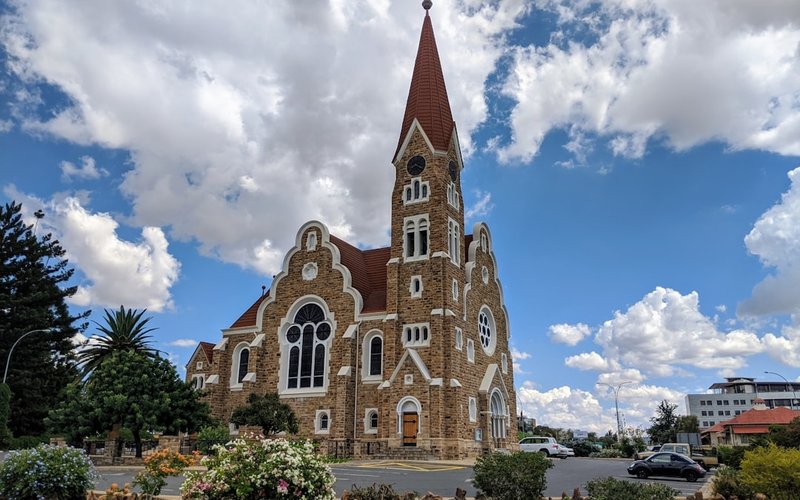
Namibia is a culturally diverse country shaped by indigenous San, Bantu (Ovambo, Herero, Damara), and European (German, Afrikaner) influences. The German colonial period (1884-1915) left architectural and cultural traces visible in Windhoek's buildings, beer culture, and food.
Christianity dominates, practiced by about 90% of the population. Social attitudes are conservative, particularly outside Windhoek. Public discussion of sex work is taboo, and social stigma is strong.
Windhoek feels like a small town despite being the capital. With a population of roughly 450,000, it has a close-knit social scene where anonymity is limited. Everyone seems to know everyone in the nightlife world. This creates a friendly atmosphere but also means that gossip travels quickly.
Dating Culture
Namibian dating norms vary by community. Among urban professionals in Windhoek, dating conventions have modernized. Tinder and social media are used, though the pool is small. Meeting through friends and social gatherings remains the primary path.
The country's diverse ethnic makeup creates different social dynamics depending on the community. German-Namibian, Afrikaner, Ovambo, and Herero social circles each have their own norms and gathering spots.
Foreign visitors are noticed in Windhoek. It's a small city. Genuine social connections form easily in the bar scene, where the atmosphere is more relaxed and friendly than in larger African capitals. Transactional dynamics exist but are less dominant than in countries where economic desperation is more severe.
Key Cities
Windhoek is the capital and by far the largest city, home to roughly 450,000 people. It has a compact nightlife scene centered on Independence Avenue and the surrounding blocks. German-influenced beer halls sit alongside African bars and a handful of modern clubs. The scene is small but genuine.
Costs
Namibia is moderately priced. The Namibian Dollar (NAD) is pegged 1:1 to the South African Rand, and South African Rand are accepted everywhere.
Beer at a bar costs NAD 30-60 ($1.65-3.30 USD / EUR 1.50-3.05). Windhoek Lager (the national pride) and other local brews are the affordable option. Imported beers cost NAD 50-90 ($2.75-5). Cocktails run NAD 80-150 ($4.40-8.25). Club entry ranges from free to NAD 100 ($5.50) at popular venues.
A meal at a local restaurant costs NAD 80-150 ($4.40-8.25). Mid-range restaurants charge NAD 150-350 ($8.25-19.25) per person. German-style restaurants serving game meat and schnitzel run NAD 200-400 ($11-22) per person.
Taxis within Windhoek cost NAD 50-150 ($2.75-8.25). Most visitors use taxis negotiated in advance or hotel-arranged transport. Ride-hailing apps have minimal presence.
Budget accommodation starts at NAD 400-800 ($22-44) per night. Mid-range hotels cost NAD 800-2,000 ($44-110). Upscale options and safari lodges charge NAD 2,000-8,000+ ($110-440+).
Safety Considerations
Namibia is safer than most Southern African countries, though risks exist.
- Windhoek has lower crime rates than Johannesburg or Lusaka, but petty crime occurs in the city center, particularly after dark
- Pickpocketing and bag snatching happen near bus stations, markets, and in the city center
- Walking alone at night in Windhoek's commercial center is possible but not recommended, especially in areas away from the main strips
- Driving at night outside Windhoek is dangerous due to animals on roads and unlit vehicles. Plan to arrive at destinations before dark
- Road accidents are a leading cause of death. Namibia has long straight roads that encourage speeding, and fatigue-related crashes are common
- Health infrastructure is adequate in Windhoek but limited outside the capital. Carry basic medications and have evacuation insurance for trips into remote areas
- Malaria exists in the northern regions. Windhoek is malaria-free
- Emergency number is 10111 for police
What Not to Do
- Do not drive at night outside cities. Animal crossings and unlit obstacles are the main road danger in Namibia
- Do not walk in Windhoek's Katutura neighborhood after dark without local accompaniment
- Do not display expensive electronics or jewelry in public
- Do not underestimate distances. Namibia is enormous and sparsely populated. Running out of fuel between towns is a real possibility
- Do not touch or approach wildlife, even in towns. Baboons, snakes, and other animals can be dangerous
- Do not photograph people without permission, especially in traditional communities
- Do not disrespect tribal customs. Namibia's diverse ethnic groups maintain distinct traditions that deserve awareness
Sources
- U.S. Department of State: Namibia Travel Advisory - Entry requirements and safety
- UK Foreign, Commonwealth & Development Office: Namibia Travel Advice - Safety and practical information
- Australian Government Smartraveller: Namibia - Travel advisory and health guidance
Get the Legal Status PDF, 50 countries
Newsletter signup coming soon. Check back shortly.
Emergency Information: Namibia
- Emergency:
- 10111
- Embassy Note:
- Most embassies are located in Windhoek.
Other Options in the Area
Botswana
One of Africa's safest and most stable nations, where Gaborone's modest nightlife offers a relaxed bar scene in a country better known for safaris than nightclubs.
South Africa
Cape Town's Long Street bars, Johannesburg's Sandton clubs, and a nightlife scene shaped by post-apartheid culture, high inequality, and genuine safety concerns that demand preparation.
Zambia
A Southern African nation where nightlife centers on Lusaka's growing bar scene and Livingstone's tourist strip near Victoria Falls, with low costs and uneven safety.
Zimbabwe
A Southern African nation where economic hardship shapes a modest nightlife scene, with Harare offering the main options alongside Bulawayo's smaller bar circuit.
Similar Countries in Other Regions
Countries with a similar overall score to Namibia (2.9) but in different parts of the world.
Antigua and Barbuda
2.9Caribbean
A guide to nightlife in Antigua and Barbuda, covering St. John's bar scene, English Harbour venues, local laws, costs, safety, and cultural norms on this twin-island Caribbean nation.
Bahrain
2.9Middle East
Guide to adult nightlife in Bahrain covering Manama's hotel bars, Juffair district, legal context, costs, and practical tips for visitors.
Cape Verde
2.9West Africa
West African island archipelago where a relaxed social culture and growing tourism scene coexist with limited nightlife options and laid-back enforcement of outdated laws.
Was this guide helpful?