Roppongi
Semi-Legal3/5ModerateDistrict guide to Roppongi in Tokyo, covering nightlife, clubs, bars, safety risks, and practical advice for foreign visitors.

Where to stay near Roppongi
Hotels walking distance from the venues on this page.
See places to stay and current pricesBars and Clubs Worth Checking
Reviewed and rated by our team
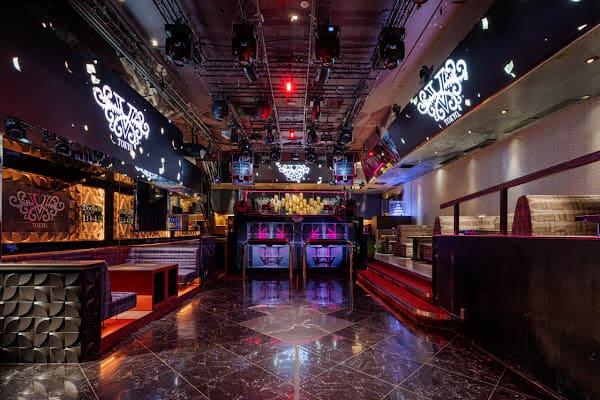
V2 Tokyo
Large multi-floor club known for EDM nights and international guest DJs. Draws a mixed crowd of locals and foreigners with regular themed events.
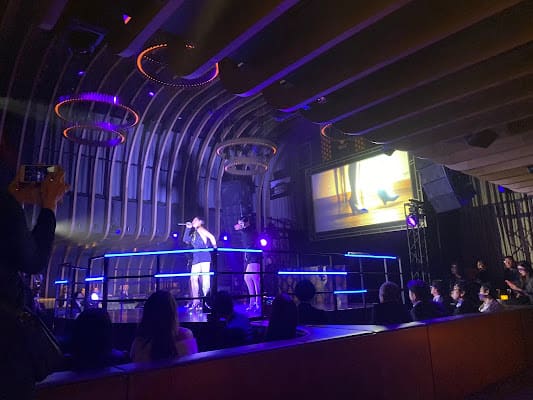
1OAK Tokyo
New York transplant catering to an upscale crowd with bottle service and hip-hop nights. Dress code enforced, expect cover charges of ¥3,000-5,000.
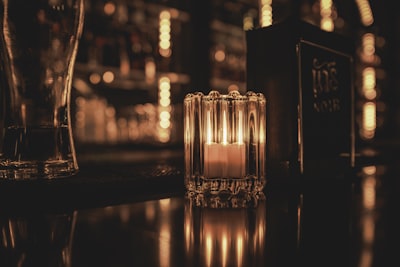
Muse
Sleek lounge-style venue that fills up on weekends with a young international crowd. Music leans toward house and R&B depending on the night.
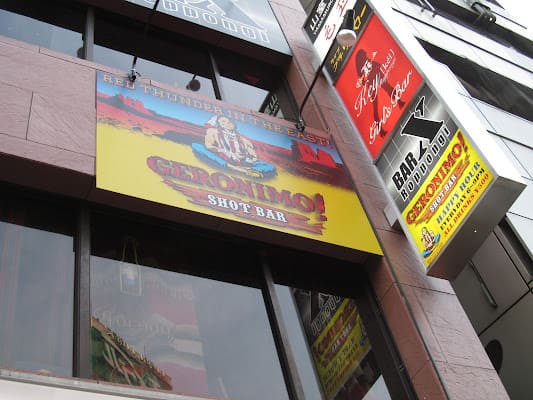
Geronimo Shot Bar
Long-running Roppongi institution famous for its shot menu and loud, social atmosphere. A common starting point for a night out in the area.
7-14-10 Roppongi, Minato-ku
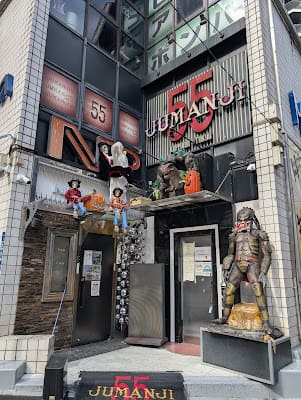
Jumanji 55
Casual late-night bar near Roppongi Crossing popular with younger expats and tourists. Cheap drinks and a packed dance floor on weekends.
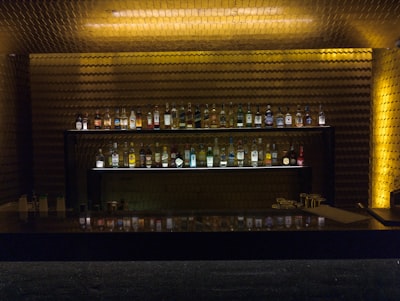
Hobgoblin Roppongi
British pub chain on Roppongi-dori serving real ales, fish and chips, and Sunday roasts. One of the few spots open from early afternoon with sports on TV.
3-16-33 Roppongi, Minato-ku
Bauhaus
Underground techno and house club near Roppongi Hills with a Funktion-One sound system. Cover runs 2,500 JPY on weekends. The crowd leans more Japanese than the clubs on Gaien-Higashi-dori.
Mogambo
Veteran Roppongi dive bar that has been open since the 1990s. Cheap drinks, pool table, and a mixed crowd of expats and locals. No cover charge.
A-Life
Basement nightclub playing R&B and hip-hop with a rotating lineup of local and guest DJs. Bottle service available. Cover 3,000 JPY on Fridays and Saturdays.
1-7-2 Nishi-Azabu, Minato-ku
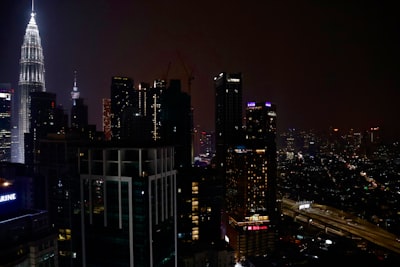
Roppongi Hills Bar
Open-air terrace bar on the Roppongi Hills complex offering cocktails with a view of Tokyo Tower. Drinks start at 1,500 JPY. Smart casual dress expected.
BrewDog Roppongi
Scottish craft beer chain with 20 taps of IPAs, stouts, and sours. Pints from 900 JPY. The two-floor space has standing room downstairs and seating upstairs.
6-6-9 Roppongi, Minato-ku
Overview and Location
Roppongi sits in Minato ward, roughly in the center of Tokyo's southern half. The district's heart is Roppongi Crossing, the intersection of Roppongi-dori and Gaien-Higashi-dori, directly above Roppongi Station on the Hibiya and Oedo subway lines. From this intersection, nightlife venues spread outward along both main roads and into the side streets, with the heaviest concentration running south along Gaien-Higashi-dori.
Venue details verified through on-site research.
The area has been Tokyo's primary international nightlife zone since the postwar American military occupation, when nearby bases brought a steady flow of English-speaking customers. That legacy persists. Roppongi is still the district where you're most likely to hear English on the street, find English menus, and encounter staff who can communicate without Japanese. It's also home to significant cultural institutions like the Mori Art Museum and the National Art Center, though after dark the character shifts entirely toward entertainment.
Legal Status
Roppongi operates under the same national framework that governs all Japanese entertainment districts. The Fueiho (Businesses Affecting Public Morals Regulation Act) provides licensing categories for different types of establishments. Nightclubs, hostess bars, and adult entertainment venues each hold specific permits from the Tokyo Metropolitan Public Safety Commission.
Japan's Anti-Prostitution Act prohibits the exchange of money for vaginal intercourse, but a broad range of related adult services operate legally within the licensed framework. In Roppongi, most venues fall into the nightclub, bar, hostess club, or girls bar categories rather than the fuzoku (adult entertainment) categories more common in Kabukicho or Yoshiwara. The district's identity is built around drinking, dancing, and social entertainment rather than the service-oriented establishments found elsewhere in Tokyo.
Costs and Pricing
Roppongi is expensive by Tokyo standards, and Tokyo is already expensive by global standards. Understanding the pricing tiers before you go out prevents unpleasant surprises.
Nightclubs charge cover fees of 2,000-5,000 JPY depending on the night and the venue. V2 Tokyo, one of the district's flagship clubs, charges around 2,000 JPY on weekdays and 4,000 JPY on weekends, with two drinks included. 1OAK Tokyo charges 4,000-5,000 JPY for men and 2,500 JPY for women on most nights. Drinks inside clubs run 1,000-1,500 JPY each. VIP tables and bottle service start at 30,000 JPY and can exceed 100,000 JPY at premium venues.
Bars vary widely. International pubs like Hobgoblin Roppongi charge 800-1,200 JPY for a pint. Cocktail bars charge 1,200-2,000 JPY per drink. Some bars have cover charges of 500-1,000 JPY, others don't. A casual three-drink night at a regular bar costs about 4,000-6,000 JPY.
Hostess bars (kyabakura) in Roppongi tend toward the higher end of Tokyo's range. Set fees start at 8,000-12,000 JPY for 60 minutes, plus 1,000-3,000 JPY for nominating a specific hostess. Each drink for your hostess adds 1,500-2,500 JPY. Service charges of 20-30% are standard. A single visit easily reaches 20,000-40,000 JPY.
Girls bars charge 3,000-6,000 JPY for 30-40 minutes. Drink-backs for rotating staff members add up quickly.
Food is reasonable if you step away from venue dining. Ramen near Roppongi Station costs 900-1,200 JPY. Izakaya chains serve dishes from 300-800 JPY each. Convenience stores (7-Eleven, Lawson, FamilyMart) are everywhere and open 24 hours.
Transport home after last train is a significant cost. Taxis from Roppongi to Shinjuku run about 2,000-3,000 JPY, to Shibuya about 1,500-2,500 JPY. The Japan Taxi (GO) app works well for hailing rides.
Street-Level Detail
Roppongi Crossing and Gaien-Higashi-dori
The intersection itself is the gathering point. Exit 3 from Roppongi Station puts you right at the crossing. Looking south down Gaien-Higashi-dori, you'll see the highest density of nightclubs. V2 Tokyo, 1OAK, and several other large clubs line this stretch. Touts are most aggressive in this corridor, particularly on Friday and Saturday nights after 10 PM.
Side Streets West of Gaien-Higashi-dori
The smaller streets running west from the main road hold a mix of smaller bars, izakayas, and some hostess clubs. This area is less intense than the main strip and has some genuinely good small bars. Mogambo, a long-running bar popular with expats and locals, is in this zone.
Roppongi-dori (East-West)
The main east-west road has more restaurants and casual bars. Hobgoblin, the British pub, sits on this stretch. The atmosphere here is calmer and better suited to early evening drinking before the clubs open.
Don Quijote Area
The Don Quijote discount store on Gaien-Higashi-dori is a local landmark and a convenient spot to buy supplies. The streets immediately around it have a cluster of smaller entertainment venues and late-night restaurants.
Safety
Roppongi is physically safe. Violent crime is rare, police maintain a presence, and the streets are well-lit and busy until early morning. The risks here are financial and chemical, not physical.
The U.S. Embassy in Tokyo has issued specific warnings about drink spiking at Roppongi bars. The pattern is consistent: a tout brings a visitor to a bar, the visitor is served drinks that are either unusually strong or drugged, and the visitor wakes up with large charges on their credit card or missing cash. This is not an urban legend. It's documented by embassy records and police reports.
Credit card skimming and unauthorized charges have been reported at some venues. Carrying cash and leaving credit cards at your hotel eliminates this risk entirely. If you must use a card, don't let it leave your sight.
Cultural Context
Roppongi occupies an unusual position in Tokyo's social geography. Most Japanese entertainment districts cater overwhelmingly to a domestic audience. Roppongi flipped that equation decades ago, and its reputation among Japanese residents is mixed as a result. Many Tokyoites avoid Roppongi entirely, viewing it as a foreigner district with an inflated, chaotic atmosphere.
This perception matters because it shapes who you'll meet there. The Japanese people in Roppongi's nightclubs tend to be those who actively seek international company, speak some English, or work in the entertainment industry. It's not representative of broader Japanese nightlife culture. For a more authentically Japanese experience, Kabukicho, Golden Gai, or Shibuya's bar scene offer different perspectives.
Scam Warnings
Drink spiking and bill inflation: Touts on Gaien-Higashi-dori and near Roppongi Crossing lure visitors to small bars with promises of cheap drinks or attractive company. Inside, drinks are spiked or made extremely strong. While the visitor is impaired, staff run their credit card for enormous charges, sometimes exceeding 100,000 JPY. The U.S. Embassy and Tokyo Metropolitan Police have both issued warnings about this specific scam. The only defense is to never follow a tout, period.
Fake "international" bars: Some establishments market themselves as welcoming foreign-friendly spaces with English-speaking staff. The warm welcome lasts until the bill arrives, which bears no relationship to the prices quoted at the door. Always confirm total costs in writing before ordering.
Street solicitation after last train: Between midnight and 5 AM, solicitation increases as venues compete for the remaining foot traffic. Desperation pricing ("free entry, free drinks") is always a trap.
Nearby Areas
Roppongi Hills and Tokyo Midtown are major commercial complexes within walking distance, offering restaurants and bars at standard (non-scam) prices. The Mori Art Museum observation deck provides views of the city and stays open until 10 PM on most nights.
Azabu-Juban, a 10-minute walk south, has a quieter, more residential bar scene popular with the expat community. Nishi-Azabu, between Roppongi and Shibuya, has upscale cocktail bars and restaurants without the tout problem.
Kabukicho in Shinjuku is a 15-minute taxi ride or 25-minute train ride away and offers a completely different entertainment experience at generally lower prices.
Meeting People Nearby
Roppongi's international atmosphere makes it one of Tokyo's easiest places for foreigners to start conversations. The clubs draw a mixed crowd of tourists, expats, and internationally-minded Japanese. For lower-key socializing, Azabu-Juban's smaller bars attract long-term residents who are more relaxed and less transactional. Regular international meetup events happen at bars around Roppongi Crossing, listed on Meetup.com and InterNations. For the full picture on socializing and dating apps in the city, see the main Tokyo guide.
Best Times
- Friday and Saturday, 11 PM to 3 AM: Peak nightclub hours, biggest crowds, best energy
- Wednesday and Thursday evenings: Active but less crowded, shorter queues, sometimes reduced cover charges
- 9 PM to 11 PM: Best window for bar-hopping before clubs fill up
- After 2 AM: Crowd thins, touts become more aggressive, higher proportion of heavily intoxicated people
- Sunday through Tuesday: Quieter, some venues closed or operating with reduced hours
- Golden Week and New Year period: Irregular schedules, check individual venues
What Not to Do
- Do not follow touts under any circumstances, regardless of what they promise
- Do not hand your credit card to anyone at a venue you didn't research beforehand
- Do not leave your drink unattended or accept drinks from strangers
- Do not carry more cash than you're prepared to spend that evening
- Do not get into arguments with venue staff over disputed bills; leave calmly and contact police if threatened
- Do not assume that English-speaking staff means the venue is trustworthy
- Do not block sidewalks or doorways while deciding where to go
- Do not take photographs inside clubs or bars without clear permission
Get the Legal Status PDF, 50 countries
Newsletter signup coming soon. Check back shortly.
Frequently Asked Questions
Related Guides
Tokyo Overview
City guide to adult nightlife in Tokyo, covering Kabukicho, legal context, cultural norms, and practical advice.
Read guideIkebukuro
District guide to Ikebukuro in Tokyo. A major entertainment hub with hostess clubs, girls bars, love hotels, and late-night drinking spots.
Read guideKabukicho
District guide to Kabukicho in Shinjuku, Tokyo. Japan's largest entertainment district, with practical advice and safety information.
Read guideUeno
District guide to Ueno in Tokyo. Budget izakayas, Ameyoko bar hopping, and adult entertainment along Nakamachi-dori and surrounding streets.
Read guideYoshiwara
District guide to Yoshiwara in Taito-ku, Tokyo. Historic red-light district and Japan's largest concentration of soapland establishments.
Read guideWas this guide helpful?