Shinsekai
Semi-Legal3/5ModerateDistrict guide to Shinsekai in Osaka. A retro entertainment district with kushikatsu, cheap bars, Tsutenkaku Tower, and adult venues on its edges.

Where to stay near Shinsekai
Hotels walking distance from the venues on this page.
See places to stay and current pricesNightlife Picks
Bars, clubs, and lounges in the area
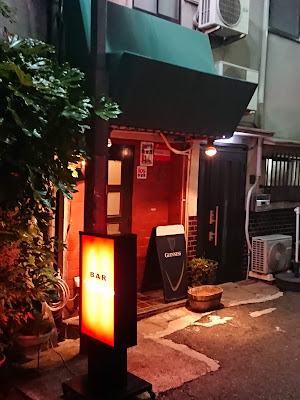
Bar TARO
Small neighborhood bar at the foot of Tsutenkaku Tower, marked by a red sign and LED spotlights. Known for its katsu sandwiches and garlic toast served alongside a full drink menu.
Ebisuhigashi, Naniwa-ku, Osaka
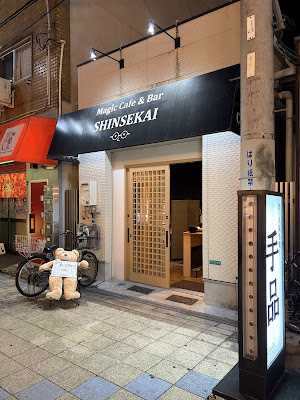
Magic Cafe & Bar Shinsekai
Intimate 80s-themed bar featuring close-up magic performances by rotating magicians. Entry is 2,000 yen per person plus drinks, and staff speak English.
3-2-27 Ebisuhigashi, Naniwa-ku, Osaka
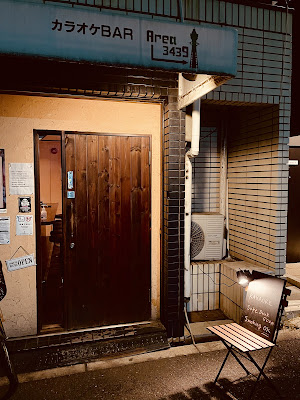
Area 3439
Karaoke bar two minutes from Tsutenkaku with affordable drinks and home-style food. Regulars and first-timers mix easily in the laid-back space.
Ebisuhigashi, Naniwa-ku, Osaka
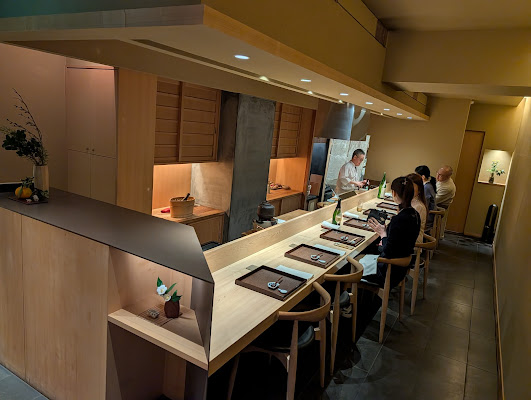
Nokoreshima
Dimly lit bar hosting rotating events including live music sets, storytelling nights, and small art exhibitions. The calm atmosphere sets it apart from the neon-lit streets outside.
Nonkiya
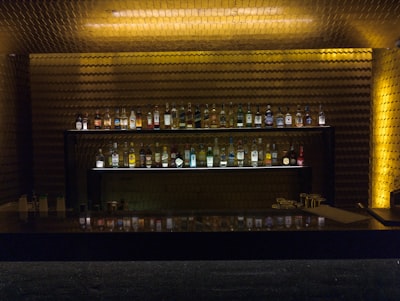
Old-school standing bar in Janjan Yokocho serving oden and dote-yaki alongside cheap beer and sake. Opens early and stays busy through the evening with local regulars.
Asahi Bar Shinsekai
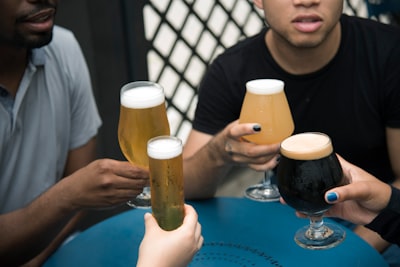
Standing draft beer bar at the foot of Tsutenkaku Tower pouring super-cold Asahi from 350 JPY. No seats, no food, just cheap beer in a retro setting.
Yaekatsu
Popular kushikatsu restaurant with a ground-floor counter bar. Draft beer 400 JPY, sake 350 JPY. Good for a quick drink and a few skewers between bar stops.
3-4-13 Ebisuhigashi, Naniwa-ku, Osaka
Span
Counter-only izakaya along Janjan Yokocho alley serving dote-yaki (beef tendon stew) and highballs from 250 JPY. One of the cheapest drinks in the neighborhood.
Shinsekai Karaoke Utahiroba
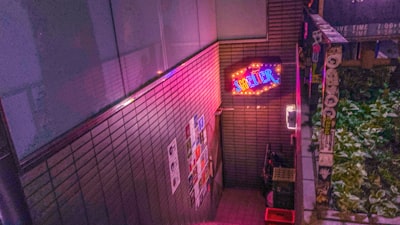
Budget karaoke spot near Tsutenkaku with private rooms from 300 JPY per 30 minutes. Drink-all-you-can plans available. Open until 5 AM on weekends.
Bar Rockstar
Tiny rock-themed bar just off Janjan Yokocho decorated with guitar memorabilia. The owner plays vinyl records and serves whisky highballs for 400 JPY.
Overview and Location
Shinsekai sits in the Naniwa and Nishinari wards of southern Osaka, centered around Tsutenkaku Tower. The name means "New World," an optimistic label given when the district was built in 1912. The northern half was modeled after Paris, the southern half after Coney Island in New York. That grand ambition didn't last. By the mid-20th century, Shinsekai had declined into one of Osaka's roughest neighborhoods, associated with day laborers, cheap flophouses, and the adjacent Kamagasaki (now officially called Airin) district.
Venue details verified through on-site research.
The area has rebounded considerably since the 2000s. Tourists now flock here for kushikatsu, the deep-fried skewered food that Shinsekai claims as its own, and for the retro neon atmosphere that feels like stepping into 1960s Japan. But the gentrification is uneven. Walk a few blocks south from the tower and the tourist crowds thin out quickly. The southern edges blend into Tobita Shinchi and the fringes of Nishinari, and the atmosphere shifts from carnival to something quieter and more complex. Shinsekai is Osaka at its most honest: loud, cheap, friendly, and not pretending to be anything else.
Legal Status
Shinsekai's entertainment businesses operate under the same Fueiho licensing system that governs all of Osaka's adult entertainment. The district itself is primarily a food and drinking area, not a dedicated adult entertainment zone. Licensed fuzoku establishments are limited and mostly concentrated on the southern fringes, where Shinsekai transitions toward Tobita Shinchi.
Tobita Shinchi, the historic licensed quarter that sits immediately south, operates under a different set of conventions. It technically functions as a collection of "Japanese-style restaurants" (ryotei), a legal fiction that dates back to the enforcement of the 1958 Prostitution Prevention Law. The women sit in illuminated doorways while an older woman (the okami) handles negotiations. The area has strict unwritten rules: no photographs, no bargaining, no lingering. This arrangement has persisted for decades and reflects the particular way Japan handles the gap between written law and actual practice. Shinsekai itself is not Tobita, but their proximity means visitors to one often encounter the other.
Costs and Pricing
Shinsekai is cheap. That was true when it served day laborers and it's still true now that it serves tourists.
Kushikatsu is the signature food. Individual skewers cost 120-300 JPY each, depending on the item. Beef, shrimp, lotus root, asparagus, and cheese are the most common fillings. Set meals at popular restaurants like Daruma or Yaekatsu run 1,500-2,500 JPY and include 5-10 skewers plus rice, cabbage, and miso soup. The Shinsekai Set at Daruma costs 2,200 JPY. The Jan Jan Set is 1,760 JPY. Double dipping the communal sauce is famously forbidden, a rule every restaurant enforces.
Standing bars (tachinomi) sell beer from 300-400 JPY and highballs from 200-350 JPY. Snacks like edamame or dried squid cost 100-300 JPY. You can drink for an hour at a tachinomi and spend under 1,000 JPY if you're careful.
Izakayas in the area offer full meals for 1,500-3,000 JPY per person with drinks. All-you-can-drink plans at some establishments cost 1,200-2,000 JPY for 90 minutes, cheaper than the Namba average.
Adult entertainment on the southern edges follows similar pricing to other Osaka districts. Girls bars charge 3,000-5,000 JPY per set. Tobita Shinchi, just south, operates on a fixed-price system: short visits cost 15,000-20,000 JPY for 15-20 minutes, with longer sessions at 20,000-30,000 JPY.
Accommodation in the area includes many budget options. Hostels and capsule hotels near Shinsekai cost 2,000-4,000 JPY per night. Business hotels in the area run 5,000-10,000 JPY, noticeably cheaper than Namba or Umeda.
Getting here is simple. Dobutsuen-mae Station on the Osaka Metro Midosuji and Sakaisuji lines sits at Shinsekai's doorstep. The fare from Namba is 180 JPY.
Street-Level Detail
Tsutenkaku Tower Area
The blocks immediately surrounding Tsutenkaku Tower form the tourist core. The tower itself is 103 meters tall, with an observation deck at 91 meters that offers city views. Admission costs 900 JPY for adults. A newer attraction, the Tower Slider (a 60-meter enclosed slide descending from the tower), costs an extra 1,000 JPY.
The streets radiating from the tower are packed with kushikatsu restaurants, each competing with illuminated signs, large cartoon mascots, and staff calling out to passersby. Daruma, the most famous chain, has multiple locations here, identifiable by its angry-faced red mascot. The atmosphere is touristy but genuinely fun, especially in the evening when the neon comes on and the whole area glows.
Janjan Yokocho
This covered shopping alley runs roughly north-south along Shinsekai's eastern edge. The name comes from "jan jan," the sound of the shamisen (three-stringed instrument) that shop owners played to attract customers when the alley connected Shinsekai to Tobita Shinchi in the 1920s. Today it's a narrow strip of kushikatsu restaurants, shogi and go game parlors, cheap clothing shops, and standing bars. The establishments are tiny, with most seating a dozen people at most. Janjan Yokocho feels less polished than the main Tsutenkaku streets and attracts a more local, older clientele, especially during the daytime.
Southern Edge and Tobita Transition
Walking south from Shinsekai, past Janjan Yokocho and toward Nishinari ward, the atmosphere changes noticeably. The tourist crowds disappear. You'll pass budget accommodations, small local bars, and eventually reach the edges of Tobita Shinchi. This transition zone has a few adult-oriented establishments and is considerably quieter after dark. It's not dangerous, but the shift in character is distinct. First-time visitors should be aware that this area feels very different from the neon-lit streets around the tower.
Safety
Shinsekai is safe for visitors, though it has a grittier edge than Osaka's more polished districts. The main tourist areas around Tsutenkaku Tower are well-lit, busy, and patrolled. Violent crime is extremely rare.
The area's proximity to Nishinari ward and the former Kamagasaki day-labor district gives it a reputation that exceeds the actual risk. You'll see more homeless individuals here than in Namba or Umeda. Some older men may be visibly intoxicated during the day. None of this presents a real danger, but it contributes to an atmosphere that some visitors find uncomfortable. The southern edge near Tobita Shinchi is darker and quieter at night. Stick to main streets if you're unfamiliar with the area. Common sense precautions apply: don't display large amounts of cash, watch your belongings in crowded kushikatsu restaurants, and don't wander into obviously residential streets in Nishinari after dark without knowing where you're going.
Cultural Context
Shinsekai tells the story of Osaka's working class better than any other district. When it opened in 1912, it was a symbol of modernity, built to impress. The Luna Park amusement park in its southern section (modeled after Coney Island) drew massive crowds. But Luna Park closed in 1923, and the area's decline accelerated after World War II. For decades, Shinsekai was where Osaka's poorest workers drank cheap sake and played shogi in cramped parlors.
The tourist revival hasn't erased that history. The shogi parlors still operate alongside the kushikatsu chains. Elderly regulars share counter space with Instagramming visitors. The double-dipping prohibition at kushikatsu restaurants isn't a tourist gimmick; it's a hygiene rule from the days when workers shared communal sauce pots. Shinsekai rewards visitors who appreciate this layered history rather than treating the area as just another photo opportunity. The Billiken statue atop Tsutenkaku, a good-luck charm rubbed smooth by millions of hands, has been the district's symbol since 1912 and represents the neighborhood's stubborn resilience.
Scam Warnings
Tobita Shinchi photography confrontation: Visitors who wander from Shinsekai into Tobita Shinchi and attempt to take photographs face serious confrontation. Photography is absolutely prohibited in Tobita. Staff will confiscate your phone or demand you delete images, and the situation can escalate quickly. If you visit the area, keep your phone in your pocket at all times.
Kushikatsu overcharging at tourist-trap locations: Most kushikatsu restaurants are fairly priced, but a few near the tower have been reported to add charges not on the menu, particularly for tourists who can't read the Japanese bill. Check that your bill matches what you ordered and ask staff to explain any unfamiliar charges.
Aggressive touts for restaurants: Some kushikatsu restaurants employ staff who physically try to guide you through their doors. This isn't a scam per se, but the most aggressively promoted restaurants are rarely the best ones. The locals eat at the quieter places.
Nearby Areas
Tobita Shinchi sits directly south, accessible on foot in under five minutes. It's a separate area with its own character and rules, covered in a dedicated page on this site. The walk between the two passes through a transition zone with a few adult-oriented bars and very quiet streets.
Tennoji and Abeno are northeast of Shinsekai, about a 10-minute walk. Tennoji Station is a major rail hub with connections across Osaka. The Abeno Harukas building (Japan's tallest at 300 meters) offers observation deck views from 1,500 JPY. Namba is reachable by subway from Dobutsuen-mae in about 5 minutes (180 JPY).
Meeting People Nearby
Shinsekai's standing bars and kushikatsu counter restaurants naturally encourage conversation with strangers. The communal seating and close quarters mean you'll end up chatting with neighbors, especially after a couple of beers. Osakans are famously outgoing, and the casual atmosphere here makes that reputation real. For more structured socializing, Namba's bar scene is a short subway ride north. Full details on social options and dating apps in Osaka are in the main Osaka city guide.
Best Times
- 11 AM - 3 PM: Daytime kushikatsu crowds. Good for food-focused visits and photography of the neon signage
- 5 PM - 8 PM: The transition period when neon lights come on and the atmosphere shifts from tourist sightseeing to evening drinking
- 8 PM - 11 PM: Peak evening hours. Standing bars are full, the streets have the best energy, and the neon is in full effect
- After 11 PM: Shinsekai quiets down rapidly. Most kushikatsu restaurants close by 10-11 PM. A few bars remain open but the crowds are gone
- Weekends draw larger tourist crowds. Weekday evenings offer a more local feel
- Avoid rainy days if possible, as the outdoor atmosphere and neon signs are the main appeal
What Not to Do
- Do not take photographs in or anywhere near Tobita Shinchi, even if you didn't realize you'd crossed into it
- Do not double-dip your kushikatsu in the communal sauce; use the cabbage leaf to scoop extra sauce onto your skewer
- Do not wander into the southern fringes of Nishinari ward late at night without a specific destination in mind
- Do not mock or photograph homeless individuals in the area
- Do not be the loudest table in a restaurant; Osakans are lively, but matching their volume requires reading the room
- Do not ignore posted rules at any establishment; each venue has its own expectations
- Do not assume that Shinsekai's casual atmosphere extends to Tobita Shinchi; the two areas have very different codes of behavior
Get the Legal Status PDF, 50 countries
Newsletter signup coming soon. Check back shortly.
Related Guides
Osaka Overview
City guide to adult nightlife in Osaka, covering entertainment districts, legal context, safety information, and cultural norms.
Read guideNamba
District guide to Namba in Osaka. Dotonbori, Ura-Namba, Soemoncho hostess bars, nightclubs, and practical safety advice for Osaka's main nightlife hub.
Read guideTobita Shinchi
District guide to Tobita Shinchi in Osaka, one of Japan's last historic licensed quarters with practical advice and cultural context.
Read guideFrequently Asked Questions
Was this guide helpful?