Tobita Shinchi
Semi-Legal4/5SafeDistrict guide to Tobita Shinchi in Osaka, one of Japan's last historic licensed quarters with practical advice and cultural context.

Where to stay near Tobita Shinchi
Hotels walking distance from the venues on this page.
See places to stay and current pricesPlaces to Drink and Dance
The places locals and visitors recommend
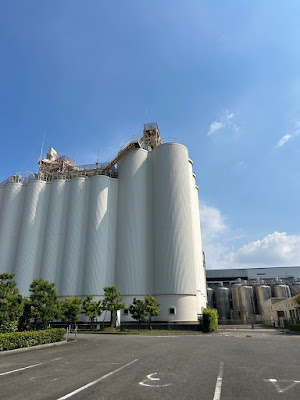
Asahi Gekijou
Long-running entertainment theater on the edge of Tobita Shinchi. Hosts variety performances including comedy and traditional Japanese acts in a retro postwar setting.
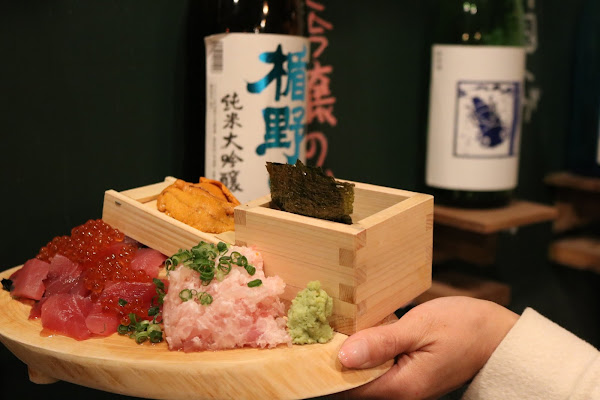
Tachinomi Marutake
No-frills standing bar serving draft beer and chuhai from around 300 yen. Popular with locals winding down after work in the Tobita area.
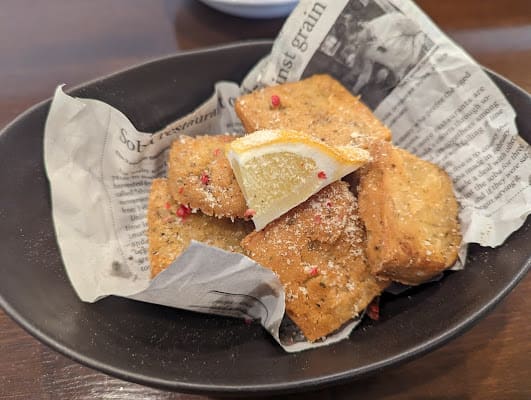
Snack Ran
Intimate mama-san bar tucked into a side street near Tobita Shinchi. Regulars fill the handful of counter seats most nights, and basic Japanese goes a long way.
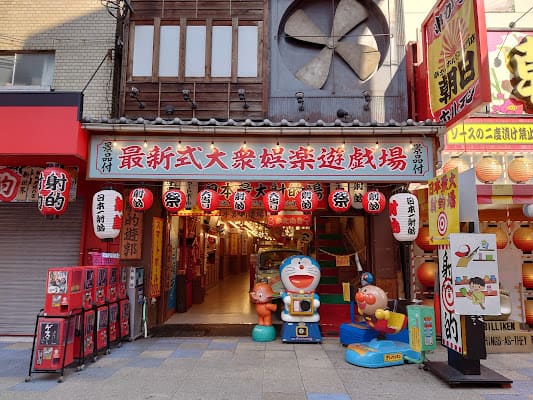
Jankara Shinsekai
Chain karaoke box a short walk from Tobita Shinchi in the Shinsekai district. Open late with all-you-can-drink plans starting from around 1,500 yen.
2 Chome Ebisuhigashi, Naniwa-ku, Osaka
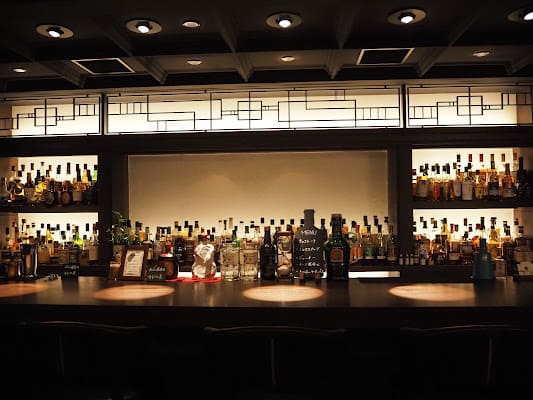
Bar Dote
Hole-in-the-wall counter bar along the Tobita Shinchi perimeter. The bartender pours generously and the crowd skews older and local.
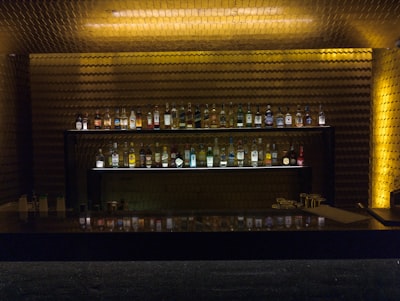
Kushikatsu Teruterubozu
Standing kushikatsu counter on the Shinsekai side of Tobita Shinchi. Skewers from 120 JPY and draft beer 380 JPY. A budget dinner option before or after visiting the district.
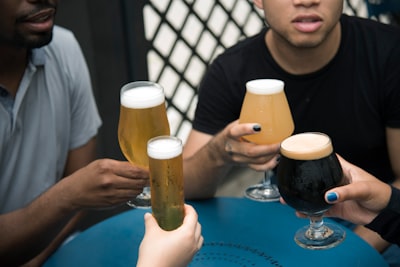
Nishinari Public Stand
Open-front standing bar on the road connecting Shinsekai to Tobita Shinchi. Canned beer from 200 JPY and chuhai from 250 JPY. Cash only, no pretense.
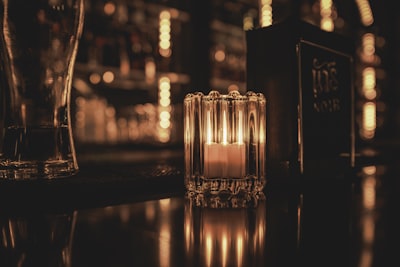
Snack Fuji
Classic snack bar a block from Tobita's main grid. The mama-san sings karaoke with customers and pours shochu. Expect a 1,000 JPY cover and drinks from 500 JPY.
Shin-Imamiya Standing Bar
Rock-bottom-priced standing bar near Shin-Imamiya Station where regulars drink canned chuhai for 150 JPY. No food, no frills, just the cheapest drinks in Osaka.
Tsukimi Izakaya
Sit-down izakaya on the Tobita perimeter with grilled fish and oden. Draft beer 400 JPY. One of the few places in the immediate area with proper table seating.
Overview and Location
Tobita Shinchi is a small grid of narrow streets in Sanno 3-chome, Nishinari-ku, in the southern part of Osaka. You can walk the entire district in about five minutes. It sits just south of Shinsekai, the retro entertainment neighborhood surrounding Tsutenkaku Tower, and a short walk from Dobutsuen-mae Station on the Osaka Metro.
Prices confirmed through direct visits in February 2026.
The district has operated continuously since 1918, surviving both the bombings of World War II and the 1958 Prostitution Prevention Law. It's one of the last remaining traditional licensed quarters in Japan, a direct cultural descendant of the pleasure quarters that once existed in every major Japanese city. The area escaped wartime destruction, and some of the original wooden structures still stand along its streets, though most buildings have been rebuilt or renovated over the decades.
Tobita Shinchi isn't hidden, but it isn't advertised either. There are no signs pointing you there, no listings in tourist brochures. It operates on the understanding that people who come already know what it is.
Legal Status
Tobita Shinchi exists in a legal gray zone that's distinctly Japanese. After the Prostitution Prevention Law took effect in 1958, the establishments in Tobita Shinchi reclassified themselves as "ryotei" (traditional Japanese restaurants). Technically, a customer pays for food and the company of a hostess. What happens beyond that is framed as a private arrangement between consenting adults.
This legal fiction has been maintained for over six decades. Authorities are well aware of what happens in Tobita Shinchi, and police patrol the area regularly. During the 2025 Osaka-Kansai Expo, police intensified patrols to deter disruptions and illicit filming, but they didn't shut the district down. The relationship between Tobita Shinchi and law enforcement reflects a broader Japanese pattern: authorities tolerate the district's operations as long as strict rules are followed, public order is maintained, and no one forces the issue into open confrontation.
The establishments are not formally licensed under the Fueiho (fuzoku) system the way Tokyo soaplands are. This distinction matters legally, even if the practical differences are subtle from a visitor's perspective.
Costs and Pricing
Tobita Shinchi operates on a fixed pricing system. Prices are consistent across most establishments, with only minor variations. There's no haggling, no tipping, no hidden fees.
Standard rates:
- 15 minutes: 11,000 JPY
- 20 minutes: 16,000 JPY
- 30 minutes: 21,000 JPY
- 45 minutes: 31,000 JPY
- 60 minutes: 41,000 JPY
These prices are all-inclusive. You pay at the door to the okami (the older woman managing the establishment) and receive the full duration you've paid for. Some establishments may offer slightly different time increments, but the per-minute rate stays roughly the same across the district.
Payment is cash only. There are no card readers, no digital payment options. The nearest ATMs are at convenience stores around Dobutsuen-mae Station and in Shinsekai. 7-Eleven ATMs reliably accept international cards. Withdraw enough cash before entering the district.
Compared to Tokyo: Tobita Shinchi's pricing sits below Tokyo's Yoshiwara soaplands, where comparable time costs 25,000-45,000 JPY. The shorter minimum time (15 minutes for 11,000 JPY) also makes it more accessible for those who want a brief visit.
Nearby costs: Eating in Shinsekai before or after a visit is cheap by Japanese standards. Kushikatsu (deep-fried skewered meat and vegetables, the area's signature dish) costs 100-200 JPY per skewer at most shops. A full meal with beer runs 1,500-3,000 JPY. The contrast between Shinsekai's budget street food and Tobita's pricing is striking.
Transport: Osaka Metro fares are 190-380 JPY per ride. Dobutsuen-mae Station is served by both the Midosuji and Sakaisuji lines. A taxi from Namba to Tobita Shinchi costs roughly 800-1,200 JPY.
Street-Level Detail
Walking into Tobita Shinchi feels like stepping into a different era. The streets are narrow, paved, and lined with small two-story buildings. Each establishment has a lit entrance where a young woman sits in full view, usually in a kimono or stylish clothing, while an older woman (the okami) stands nearby or sits just inside the doorway.
How It Works
You walk the streets and look. When you see someone who interests you, you approach the okami. She'll state the price and time. If you agree, you enter, pay, and go upstairs. That's the entire transaction. There's no pressure to choose quickly, and nobody will chase you down the street. But there's also no extended browsing. Walking past the same establishment multiple times without stopping is considered poor form.
The Grid
The district occupies a compact rectangle of perhaps four or five streets running parallel, with a few cross streets connecting them. The main walking route forms a rough loop. During peak evening hours, you'll share the narrow streets with other men walking the same circuit. It's orderly and quiet. The atmosphere is more like a traditional market than a nightlife district.
Hygiene Facilities
There are no bathing facilities inside the establishments. Coin-operated showers and a public bathhouse (sento) are located nearby. Visiting one before entering the district is considered good manners and practically expected.
Safety
Tobita Shinchi is remarkably safe. The district's strict internal rules, maintained by the collective of establishment owners, keep order more effectively than any police presence could. There are no touts, no aggressive solicitation, no drunken confrontations. The okami system provides a layer of oversight at every doorway.
Physical safety concerns are minimal. Nishinari ward has a reputation as one of Osaka's rougher areas, and the streets around Shin-Imamiya Station to the west do have a visible homeless population. But Tobita Shinchi itself is clean, orderly, and well-maintained. You're unlikely to encounter any threatening situation within the district boundaries.
Health safety follows the district's own protocols. Condom use is mandatory. Kissing is prohibited as a disease prevention measure. Oral services require protection. These rules are enforced consistently across establishments.
Cultural Context
Tobita Shinchi is a living remnant of a social system that once existed in every major Japanese city. Licensed pleasure quarters date back to the early 1600s, and at their peak they were centers of art, fashion, music, and social life. Most were closed after the 1958 law. Tobita Shinchi survived through the ryotei reclassification and a combination of local political dynamics, community cohesion, and the practical reality that shutting it down would simply scatter the activity elsewhere.
The district operates on a set of unwritten rules that everyone follows. No photography, no loud behavior, no negotiating, no lingering at doorways. Women who work in the area don't discuss their occupation outside the district. Customers are expected to be discreet and brief. These norms aren't posted on signs. They're maintained through social pressure and the okami's authority, and they've kept the district functioning for over a century.
For visitors, the cultural experience is inseparable from the transactional one. You're seeing a system that predates modern Japan, operating in a modern city, under a framework of rules that everyone pretends doesn't exist. It's worth approaching with an awareness of that history.
Scam Warnings
Time shortchanging: The most commonly reported complaint is sessions ending before the paid time has elapsed. Without a visible clock in the room, it's difficult to verify. Check the time on your phone when you enter, and politely note if a session ends significantly early. Most establishments are honest, but it happens.
Unlicensed establishments at the periphery: The streets immediately bordering Tobita Shinchi occasionally have freelance operators who aren't part of the district's collective. These lack the oversight and health protocols of the established houses. Stay within the recognized grid of the district itself.
Taxi overcharging: Some taxi drivers near Shin-Imamiya may take roundabout routes if they sense you're unfamiliar with the area. Use the GO (Japan Taxi) app to book rides with GPS-tracked routes, or walk from Dobutsuen-mae Station, which takes only five minutes.
Nearby Areas
Shinsekai is the immediate neighbor and the natural companion to a Tobita Shinchi visit. The retro entertainment district has dozens of kushikatsu restaurants, standing bars, and cheap izakayas concentrated around Tsutenkaku Tower. Janjan Yokocho, a covered arcade running south from Shinsekai, has more restaurants and game centers. The area is lively, unpretentious, and good for eating and drinking at reasonable prices.
Namba is about a 15-minute walk north or one Metro stop away. Dotonbori, Shinsaibashi, and the Namba entertainment area offer a completely different atmosphere with mainstream nightlife, shopping, and international restaurants.
Tennoji and Abeno Harukas (Japan's tallest building) are a short Metro ride south, with an observation deck, shopping, and Tennoji Zoo and Park.
Meeting People Nearby
Tobita Shinchi isn't a place for socializing. For meeting people, head to Shinsekai's tachinomi (standing bars), where the informal atmosphere and close quarters make conversation natural. Beer costs 300-500 JPY, and the crowd skews local and working-class. For a broader social scene, Namba's Dotonbori area and Americamura (America Village) attract a mixed crowd of locals and tourists at bars and clubs. See the main Osaka city guide for details on the social scene and dating apps in the wider city.
Best Times
- Early evening (6 PM to 9 PM): Best selection, most establishments open, comfortable street atmosphere
- Afternoons (noon to 5 PM): Fewer establishments open, less foot traffic, quieter experience
- Late evening (10 PM to midnight): Some establishments begin closing, selection diminishes
- Weekends: Busier than weekdays but the district handles crowds well given its size
- Avoid New Year period (December 25 to early January): Most establishments close
- Summer evenings: Can be uncomfortably hot and humid given the walking involved
What Not to Do
- Do not take photographs or video anywhere in the district, including the streets
- Do not attempt to negotiate prices, which are fixed and non-negotiable
- Do not linger at doorways or walk the same street repeatedly without entering an establishment
- Do not arrive intoxicated; establishments will refuse entry
- Do not touch or speak to women in doorways without engaging with the okami first
- Do not bring women companions into the district; the area is understood to be for male visitors only
- Do not discuss your visit loudly in surrounding areas like Shinsekai
- Do not ignore the mandatory health protection rules inside establishments
Get the Legal Status PDF, 50 countries
Newsletter signup coming soon. Check back shortly.
Frequently Asked Questions
Related Guides
Osaka Overview
City guide to adult nightlife in Osaka, covering entertainment districts, legal context, safety information, and cultural norms.
Read guideNamba
District guide to Namba in Osaka. Dotonbori, Ura-Namba, Soemoncho hostess bars, nightclubs, and practical safety advice for Osaka's main nightlife hub.
Read guideShinsekai
District guide to Shinsekai in Osaka. A retro entertainment district with kushikatsu, cheap bars, Tsutenkaku Tower, and adult venues on its edges.
Read guideWas this guide helpful?