Sanur
Illegal but Tolerated4/5SafeGuide to Sanur on Bali's southeast coast, covering expat bars, live music venues, beach restaurants, safety advice, and cultural context.

Where to stay near Sanur
Hotels walking distance from the venues on this page.
See places to stay and current pricesTop Spots for a Night Out
What's open and worth your time
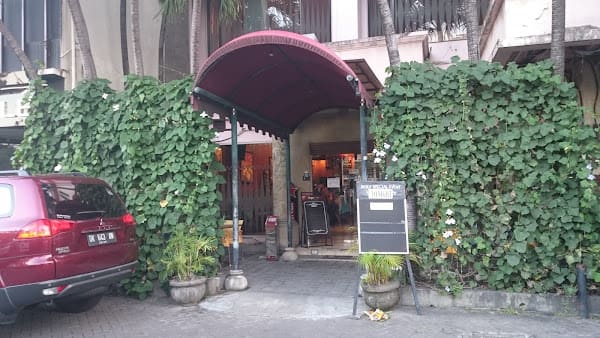
Jazz Bar & Grille
Sanur's longest-running live music spot with nightly jazz and blues performances. Relaxed atmosphere popular with expats and older tourists.
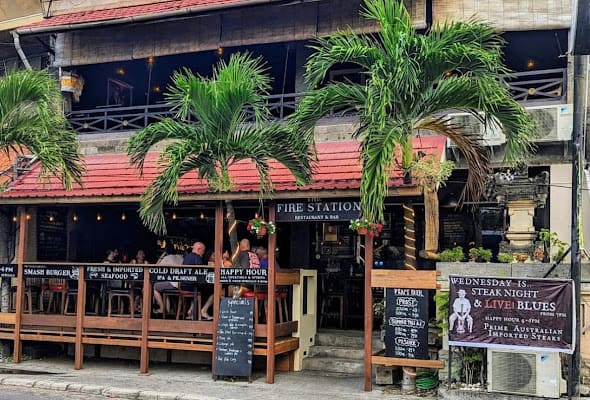
Fire Station Bar
Casual open-air bar on the main strip with pool tables and big screens. One of the few places in Sanur still serving drinks past midnight.
Cat & Fiddle
British-style pub with live bands on weekends and a loyal crowd of long-term Sanur residents. Pub quiz nights are a regular draw.
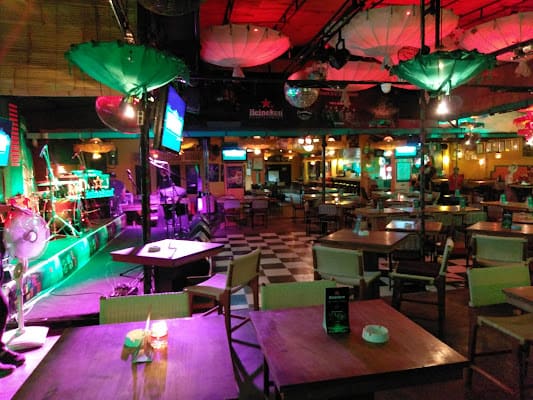
Casablanca Bar
Beachside bar with a laid-back tropical setting and occasional live acoustic acts. Stays open later than most Sanur venues.
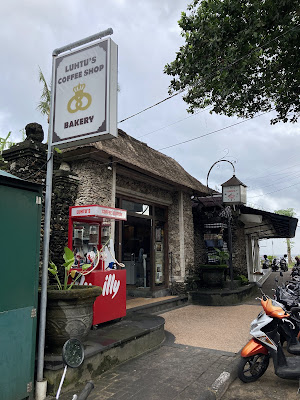
Luhtu's Coffee & Bar
Spot on Jl. Danau Tamblingan that transitions from coffee shop to cocktail bar after dark. Known for craft cocktails at reasonable Sanur prices.
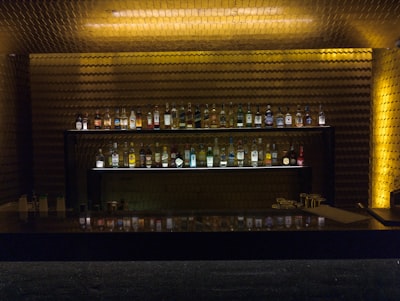
Arena Pub & Restaurant
Long-running expat pub with pool tables, live sport screens, and a social atmosphere that keeps regulars coming back. One of Sanur's latest-closing venues.
Sanur Beer Garden
Microbrewery and beer garden with house-brewed craft ales starting at IDR 30,000. Younger crowd than the typical Sanur bar, with outdoor seating under string lights.
The Shed Bali
Vintage car-themed pub popular with Australian and European expats. Cold beer, simple cocktails, and a crowd that treats this as their living room.
Mango Bar Sanur
Casual beachside spot along the promenade serving sunset cocktails and local beer. Relaxed seating with ocean views and acoustic music on weekends.
Clubhouse Sanur
Eclectic bar with a biker-lounge feel serving strong cocktails to a mixed crowd of locals and expats. One of the few Sanur venues that tries something different.
Overview and Location
Sanur sits on Bali's southeast coast, about 30 minutes from the airport and a world away from the energy of Kuta and Seminyak. An offshore reef protects the shoreline, creating a calm lagoon instead of surf waves, and this geographic fact shaped everything about the town. Sanur became Bali's first beach resort area in the 1960s and 1970s, predating the Kuta boom, and it has aged into a quieter, more settled identity.
This guide is based on multiple evenings spent in Sanur.
The town stretches along a beachfront promenade that runs for roughly five kilometers between Mertasari Beach in the south and Sindhu Beach in the north. Hotels, restaurants, and small shops line the streets behind the promenade. The atmosphere is residential. Families live here. Retirees have settled here for years. Long-term expats run businesses along the main roads. Sanur doesn't have Kuta's frenetic energy or Seminyak's curated cool. What it has is a genuine community, lower prices than the trendier southern districts, and a pace that doesn't punish you for wanting to be in bed by 11:00 PM.
Legal Status
Indonesian law applies in Sanur as it does across all of Bali. Prostitution is illegal. Sanur's entertainment venues are licensed as bars, restaurants, and entertainment establishments. The town's low-key nature means its nightlife operates well within the bounds of standard business licensing. You won't find the gray areas that characterize entertainment districts in Kuta or Nagoya.
Bali's Hindu cultural context creates a more permissive environment for alcohol and entertainment than you'd find on Java or Batam. Sanur benefits from this. Bars serve drinks freely, live music plays without restriction, and the local community coexists comfortably with the foreign visitor population. Police in Sanur focus primarily on traffic violations rather than nightlife enforcement. Drug enforcement, however, is taken seriously everywhere in Bali, and Sanur is no exception.
Costs and Pricing
Sanur is affordable, sitting below Seminyak's prices and roughly on par with Kuta for everyday expenses. The absence of high-end beach clubs and nightclubs keeps the ceiling lower than in the southern strip.
Drinks:
- Domestic beer (Bintang, large): IDR 25,000-45,000 (USD 1.50-3)
- Imported beer: IDR 50,000-80,000 (USD 3-5)
- Cocktails at bars: IDR 60,000-120,000 (USD 4-7.50)
- Craft beer at Sanur Beer Garden: from IDR 30,000 (USD 2)
- Wine by the glass: IDR 80,000-150,000 (USD 5-9.50)
Dining:
- Warung meal (local food stall): IDR 20,000-40,000 (USD 1.25-2.50)
- Beachfront restaurant meal: IDR 60,000-150,000 (USD 4-9.50) per person
- Upscale restaurant: IDR 150,000-300,000 (USD 9.50-19) per person
Entertainment:
- Live music venues: typically no cover charge; you pay for drinks
- Karaoke: IDR 50,000-150,000 per hour depending on venue
Transport:
- Grab from Sanur to Kuta: IDR 40,000-70,000
- Grab from Sanur to Ubud: IDR 80,000-120,000
- Motorbike rental: IDR 60,000-80,000 per day
- Private driver (half day): IDR 250,000-400,000
Street-Level Detail
Sanur's nightlife is spread along two main corridors: the beach promenade and Jalan Danau Tamblingan, which runs parallel to the coast about 200 meters inland. Neither of these is a "nightlife strip" in any recognizable sense. They're streets with restaurants and bars mixed between shops, hotels, and family homes.
Casablanca is Sanur's most well-known evening venue. Packed on most nights with a mix of locals, expats, and tourists, it features live bands that start around 9:00 PM playing classic rock, pop covers, and Indonesian hits. Entry is free. The atmosphere is relaxed and unpretentious. Cold beer, loud music, and a crowd that knows each other's names. This is what passes for a big night out in Sanur.
Arena Pub & Restaurant is a long-standing expat favorite with pool tables, live sports on screens, and a social atmosphere that draws professionals and international visitors. It stays open later than most Sanur venues, making it a default destination for anyone still awake after Casablanca winds down.
Linga Longa Bar offers a throwback Bali feel, with karaoke nights and live music in a setting that attracts expats and longtime visitors. The old-school vibe is part of the appeal. This isn't trying to be trendy.
Sanur Beer Garden (SBG) is a microbrewery with craft beers starting at IDR 30,000. It draws a younger crowd than the live music bars and serves as a good afternoon-to-evening option with a beer garden setup.
The Shed has a classic pub atmosphere with vintage car decor and cold drinks. It's popular with Australian and European expats who've been in Sanur long enough to have a regular seat.
Clubhouse operates as a biker bar of sorts, with good cocktails and a more eclectic crowd than the standard expat pubs. It's one of the few venues that tries to do something slightly different from the standard bar-with-live-music formula.
Most venues in Sanur wind down between 11:00 PM and midnight. Don't come here expecting 3:00 AM closing times. A handful of places stretch to 1:00 AM on busy nights, but the town's character is early-to-bed by Bali standards.
The beach promenade is pleasant for evening walks. Several beachfront restaurants serve sunset drinks, and the promenade itself is paved, lit in sections, and popular with joggers and cyclists even after dark.
Safety
Sanur is one of the safest places in Bali, and by extension one of the safest places in Indonesia for foreign visitors. The town's family-oriented character, established expat community, and residential feel create an environment where serious safety incidents are rare.
Walking at night is generally safe along the main streets and beach promenade. Side streets can be darker and less maintained, so stick to routes you know after dark. The promenade is busiest in the early evening and thins out after 9:00 PM.
Motorbike safety remains the biggest risk, just as in all of Bali. Sanur's roads are narrower and quieter than Kuta's, but local traffic still doesn't follow the rules you might expect. Don't ride drunk, always wear a helmet, and be honest about your riding ability.
Methanol risk exists across Bali. It's less common in Sanur's established bars than in Kuta's budget party scene, but the advice is the same: stick to sealed bottles of branded spirits and avoid cheap arak from unknown sources. If a drink tastes harsh or chemical, stop.
Petty crime is minimal by Bali standards. Keep your phone and wallet secure, don't leave belongings on the beach unattended, and lock your motorbike. Bag snatching is rare in Sanur compared to the Kuta-Legian area.
The nearest hospitals are BIMC Hospital in Kuta (about 30 minutes by car) and Siloam Hospital in Denpasar (about 20 minutes). For emergencies, call 112.
Cultural Context
Balinese Hinduism makes Sanur a different cultural environment from Muslim-majority areas of Indonesia. Alcohol is freely available, entertainment venues operate without religious restrictions outside of Nyepi, and the local population is generally tolerant of foreign visitors and their habits.
Sanur has a strong local Balinese community alongside its expat population. Temple ceremonies happen regularly, and processions sometimes close streets temporarily. Don't drive through a ceremony, and don't enter temples in inappropriate clothing. Canang sari, the small daily offerings placed on sidewalks and doorsteps, are everywhere. Watch where you step and don't kick them aside.
Nyepi (Balinese New Year, typically in March) shuts the entire island down for 24 hours. No flights, no driving, no leaving your hotel or villa. This is not optional. Plan around it or prepare to spend 24 hours indoors.
The expat community in Sanur is well-established and welcoming. Many foreign residents have lived here for years or decades. The social atmosphere at bars like Casablanca and Arena Pub reflects this. Newcomers are absorbed into the community fairly easily, particularly if you show up regularly and treat people respectfully.
Scam Warnings
Methanol-laced alcohol: While less prevalent in Sanur than in Kuta's party strip, the risk exists anywhere in Bali. Budget venues and street vendors sometimes sell spirits containing industrial methanol instead of ethanol. Symptoms include blurred vision, severe headache, nausea, and confusion. If you or anyone you're with shows these symptoms after drinking, get to a hospital immediately. This kills tourists every year.
Motorbike rental damage claims: Rental operators may blame you for pre-existing scratches or mechanical issues. Photograph the entire bike before riding away, record any existing damage with the operator present, and never leave your passport as a deposit. Some operators accept a photocopy or a cash deposit instead.
Money exchange shortchanges: Small exchange offices in Sanur occasionally use the same sleight-of-hand techniques found in Kuta. Use ATMs or established exchange offices with posted rates. Count your money before leaving the counter.
Tour and transport overcharging: Self-appointed transport touts on the street quote prices well above Grab or Gojek rates. Use ride-hailing apps for fair pricing, or negotiate before getting into any vehicle.
"Guide" fees at temples: Self-appointed guides at nearby temples like Goa Gajah charge inflated personal fees on top of the official entrance price. Check official rates at the ticket window before accepting any guide's services.
Nearby Areas
Kuta and Legian are Bali's main nightlife strips, about 30 minutes from Sanur by car. Cheap drinks, loud clubs, and a young international crowd define the area. It's a different universe from Sanur.
Seminyak offers upscale beach clubs, cocktail bars, and trendy restaurants, roughly 40 minutes from Sanur. This is where Bali's more sophisticated nightlife lives.
Denpasar, Bali's capital city, is 15-20 minutes from Sanur. It's not a tourist destination, but it has better hospitals, government offices, and shopping at more local prices.
Ubud, about an hour north in Bali's interior, is the island's cultural and wellness center. Yoga studios, rice terraces, and art galleries rather than nightlife.
Meeting People Nearby
Sanur's social scene revolves around its bar and restaurant community. The expat population is well-established, and the atmosphere at venues like Casablanca, Arena Pub, and Sanur Beer Garden is welcoming to newcomers. Regular patrons know each other, and bartenders will introduce you if you're friendly. Daytime social options include the beach promenade, yoga and fitness classes, and the many cafes along Jalan Danau Tamblingan. The Sanur area has active Facebook groups for expats and residents. For Bali's broader social and dating dynamics, see the main Bali city guide.
Best Times
- 7:00 PM to 11:00 PM: The active window for most Sanur venues; live music starts around 9:00 PM
- Friday and Saturday evenings: Busiest nights, with more visitors from other parts of Bali
- Sunset hours (5:30 PM to 6:30 PM): Best time for beachfront drinks along the promenade
- Dry season (April to October): More pleasant for evening walks and outdoor dining
- High season (July, August, December, January): More tourists in town, busier restaurants and bars
- Nyepi (typically March): Everything shuts down for 24 hours; plan accordingly
What Not to Do
- Do not buy or use drugs; Bali has seen multiple high-profile drug convictions of foreigners, including death sentences
- Do not drink arak or cheap spirits from unknown sources; methanol poisoning is a documented threat
- Do not ride a motorbike drunk or without a helmet; this applies everywhere in Bali, including quiet Sanur
- Do not disrespect temple ceremonies, processions, or canang sari offerings
- Do not expect Kuta-style late-night parties; Sanur's bars close early by Bali standards
- Do not swim in the lagoon at night or without checking local conditions; currents can shift
- Do not leave valuables unattended on the beach or in unlocked motorbike compartments
- Do not engage with anyone who appears underage; report concerns to local authorities
Get the Legal Status PDF, 50 countries
Newsletter signup coming soon. Check back shortly.
Related Guides
Bali Overview
City guide to adult nightlife in Bali, covering entertainment areas, safety advice, and cultural context.
Read guideKuta / Legian
Guide to Kuta and Legian nightlife in Bali, covering Jalan Legian bars, clubs, safety tips, and practical costs for visitors.
Read guideSeminyak
Guide to Seminyak nightlife in Bali, covering beach clubs, upscale bars, cocktail venues, safety advice, and practical tips.
Read guideFrequently Asked Questions
Was this guide helpful?