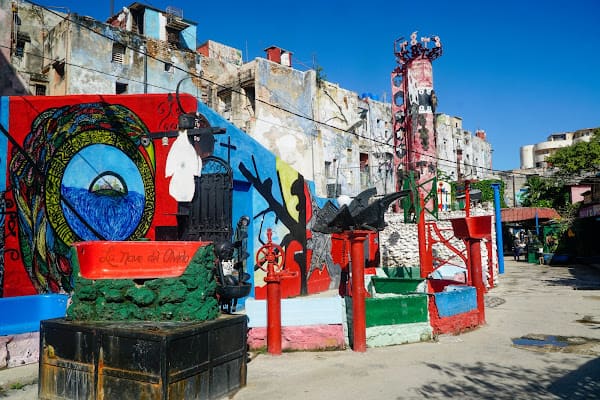
Callejón de Hamel
Callejón de Hamel is a two-block alley in Centro Habana painted top to bottom with Afro-Cuban religious murals, sculptures assembled from scrap metal and bathtubs, and quotations from Afro-Cuban poetry. Artist Salvador González Escalona began transforming the alley in 1990 as a public homage to the Yoruba-derived Regla de Ocha tradition, and the space has since become Havana's most prominent outdoor shrine to Santería culture. Sunday afternoons are the draw: from around noon until 15:00, a rumba group performs live on a makeshift stage at the alley's midpoint, drawing a dense mixed crowd of tourists, Cuban families, santeros, and musicians. The performances feature call-and-response singing, batá and conga drumming, and dancers moving through traditional forms. Outside Sunday afternoons, the alley is quieter but still worth visiting to see the murals and visit the small gallery and botanica shops.

Where to stay near Callejón de Hamel
Hotels close to Centro Habana, Havana.
See places to stay and current pricesWhat to Expect
An outdoor cultural event more than a nightclub: live rumba and batá drumming to a crowded alley, Afro-Cuban dancers, heavy religious symbolism on every wall, and a crowd that pulses with the music for three hours before dispersing back to Centro Habana.
Spiritual, percussive, and dense. A religious space that welcomes visitors but is not staged for them.
Live Afro-Cuban rumba, batá drumming, columbia, guaguancó, and yambú, with call-and-response singing in Spanish and Yoruba
Casual daytime clothing. The alley is outdoors, standing room, and hot; light clothing and comfortable shoes are practical.
Culturally curious travelers, music fans, anyone interested in Afro-Cuban religion and art, daytime alternative to bars
Cash only, USD preferred. Small bills of 1-3 USD work best for donations and street vendors. Cards of any kind will not help you here.
Price Range
Free entry, donations to the musicians welcome, mojitos from street vendors 3-5 USD
Free entry, donations welcome, drinks ~3-5 USD
Hours
Sunday rumba performances 12:00-15:00; alley accessible daily during daylight hours
Insider Tip
Arrive by 11:30 on Sunday to find space near the stage; by 13:00 the alley is packed shoulder to shoulder. Bring small USD bills for tipping musicians, buying a mojito from a vendor, or paying the donation if hats are passed. Pickpockets work the crowd, keep wallets in front pockets and day bags in front of you. Photography is welcome but ask before taking close portraits of performers or religious figures.
Full Review
The alley opens off Calle Aramburu and runs between Hospital and Espada streets in a particularly rough stretch of Centro Habana. The first impression is visual: every wall, every doorway, every piece of scrap metal has been painted, sculpted, or inscribed. Bathtubs mounted vertically become altars; old sewing machines stand as totems; quotations from Nicolás Guillén and Nancy Morejón run across painted masonry in flowing script. The color palette draws from the Yoruba orisha tradition, with blues for Yemayá, yellows for Oshún, reds for Changó. First-time visitors often spend 20 minutes just walking the length before looking for a place to stand.
Sunday afternoons transform the space. The rumba group sets up mid-alley, a percussion ensemble with lead vocalist and dancers, and over an hour the space fills from a trickle of early arrivals to a shoulder-to-shoulder crowd of several hundred. The music is insistent and polyrhythmic, grounded in the 6/8 clave that underlies most Afro-Cuban sacred music. Dancers work the small space in front of the stage, and audience members clap and call response phrases. The set runs roughly three hours with short breaks, and the energy holds throughout.
Compared to watching rumba in a formal concert setting, Callejón de Hamel offers the raw version. The musicians are serious practitioners, many initiated in Santería, and the performance doubles as spiritual practice rather than pure entertainment. The closest equivalent might be a West African drumming circle in Bahia, Brazil. The trade-off is comfort: no seats, no air conditioning, occasional pushing, and a Centro Habana location that requires attention to belongings.
Go with a small group if possible. Arrive early. Bring water, sunscreen, and small USD bills. Leave watches and jewelry behind. Photography works best before the crowd thickens around 13:00.
The Neighborhood
The alley sits in Cayo Hueso, a rough section of Centro Habana between the Malecón and the train station. The surrounding blocks are residential and show the economic strain of the current crisis. Walk with purpose and awareness on approach and departure.
Getting There
Classic-car taxi from Vedado costs 4-6 USD and takes 10 minutes; from Habana Vieja expect 3-5 USD and 8 minutes. Walking from the Malecón takes 10-15 minutes but involves streets that should be approached in daylight. Bicitaxis from Centro Habana cost 2-3 USD. Taxis wait at the Aramburu end of the alley on Sunday afternoons.
Other Venues in Centro Habana
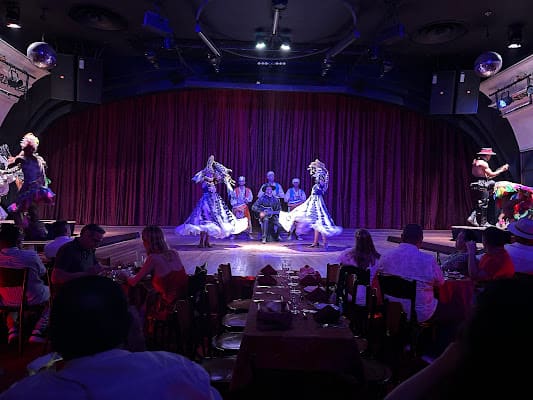
Casa de la Música de Centro Habana
Havana's top salsa and timba venue with nightly performances from Cuba's best bands. Cover charge varies by lineup, expect to pay 500-1000 CUP.
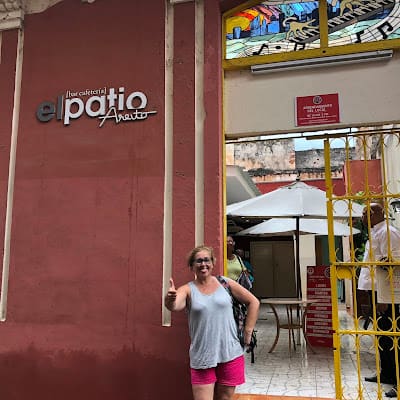
El Jelengue de Areíto
Intimate venue attached to the EGREM recording studios hosting regular son and salsa sessions. Local crowds outnumber tourists here.
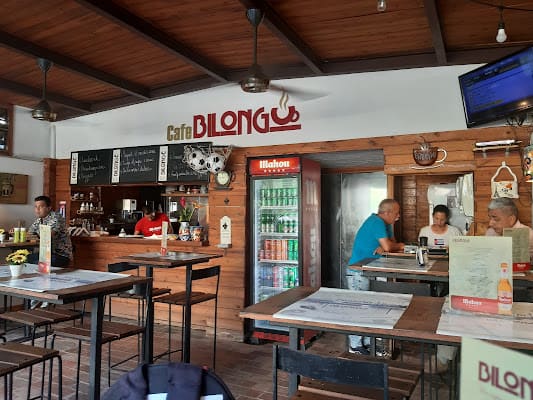
Bar Bilongo
Small neighborhood bar popular with Cubans and tourists for cheap mojitos and occasional live son trios. Cash only.