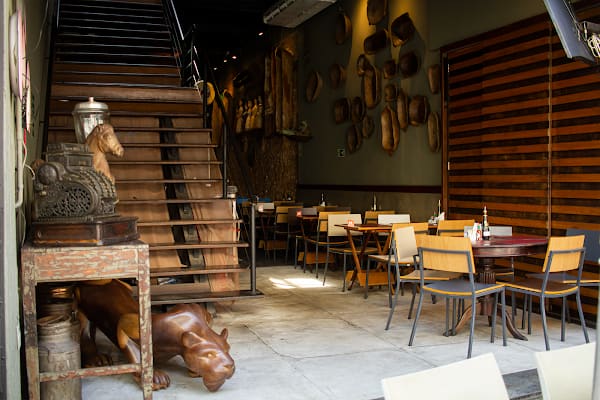
Mangue Seco Cachaçaria
Mangue Seco Cachaçaria occupies a restored townhouse on Rua do Lavradio and focuses on what the name promises: artisanal cachaça from small producers across Minas Gerais, Pernambuco, Paraíba, and Ceará. The menu lists close to 100 rotating labels, organized by state and aging style, from clear unaged cachaça to bottles rested in amburana, bálsamo, or jequitibá wood barrels. Caipirinhas come made to order with your choice of base spirit, and the kitchen turns out northeastern standards like carne de sol, bobó de camarão, and dadinhos de tapioca to keep the drinking honest. The dining room sits on two levels inside the colonial shell, with a street-facing patio where tables spill onto the sidewalk during Saturday's Feira do Rio Antigo antique market. Live music runs most nights: forró pé de serra early, samba and choro later, usually a small combo on an upstairs mezzanine. The crowd leans toward cariocas in their 30s and 40s alongside visitors working their way down Lavradio's strip. Service is attentive by Lapa standards, and the cachaça flights let you sample four pours for a reasonable tab.

Where to stay near Mangue Seco Cachaçaria
Hotels close to Lapa, Rio de Janeiro.
See places to stay and current pricesWhat to Expect
A two-story colonial room lined with wooden shelves of cachaça bottles sorted by state. Service happens in waves as the bar fills. Live forró, choro, or samba runs from around 21:00. Conversation stays possible for the first hour, then the volume climbs once the band hits its stride.
Warm, slightly theatrical, and rooted in northeastern Brazilian bar culture. The wood-and-glass shelving behind the bar is its own visual statement.
Live forró pé de serra, samba, choro, and MPB rotations most nights
Smart casual. Jeans, linen shirts, sandals; Lapa doesn't require more than that.
Travelers curious about cachaça beyond supermarket brands, couples looking for a seated drinks-and-music spot, a first stop before the late Lapa clubs
Cards accepted (Visa, Mastercard, Elo, Amex), PIX standard, cash BRL fine
Price Range
Cachaça pours 14-40 BRL, caipirinha 22-32 BRL, chopp 14 BRL, petiscos 28-55 BRL
Cachaça pour ~$2.80-8/~€2.60-7.50, caipirinha ~$4.40-6.40/~€4-6, chopp ~$2.80/~€2.60, petiscos ~$5.60-11/~€5-10
Hours
Tue-Sat 18:00-02:00, Sun 14:00-22:00, closed Monday
Insider Tip
Order the cachaça flight rather than a single pour to sample across regions. The upstairs mezzanine has better seating and cooler air when the ground floor fills. On the first Saturday of the month the Feira do Rio Antigo market closes the street, so arrive before 19:00 for a table.
Full Review
Mangue Seco takes cachaça seriously without slipping into museum territory. The bar runs along the right wall of the ground floor, backed by shelving that climbs almost to the ceiling and sorts bottles by state of origin. Staff can walk you through the differences between a cachaça rested in amburana and one in bálsamo without making you feel ignorant, and they encourage flights over single pours for anyone exploring the category. Prices sit at fair Lapa levels; you can taste four regional styles for the cost of a single cocktail at a Copacabana hotel bar.
The food menu holds its own. Carne de sol comes as a proper northeastern preparation with pão de queijo and manteiga de garrafa. Bobó de camarão arrives in a clay pot, thick with palm oil and dendê. Dadinhos de tapioca are the obvious starter to pair with caipirinhas. Portions run generous and share easily across a table of three or four. The kitchen stays open late, which matters on Lapa nights where most street vendors stop serving anything beyond churrasquinho after midnight.
Live music drives the second half of the evening. A forró duo or choro trio usually sets up on the mezzanine around 21:00. The volume stays manageable early on, then builds as the bar fills. By 23:00 the floor is standing-room near the bar and the dance space by the musicians has a handful of couples moving through forró or samba steps. It's not a serious dance venue, but the musicianship is better than at most neighboring spots and the crowd knows the songs.
Compared to Rio Scenarium, Mangue Seco is smaller, more food-forward, and calmer. Scenarium is a production. Mangue Seco is a neighborhood restaurant-bar that happens to specialize in one of Brazil's more interesting spirits. Both belong on a Lavradio itinerary. Starting at Mangue Seco for dinner and a cachaça flight, then walking down the street to Scenarium or Fundição around midnight, is a classic Lapa sequence.
Safety note: Lavradio stays busy and reasonably safe until close, but always walk out in groups or take a ride-share. The blocks between Lapa and Centro after 2 AM are not for solo wandering.
The Neighborhood
Rua do Lavradio is Lapa's antique and live-music strip. Mangue Seco sits at number 23, a few doors down from Rio Scenarium and within a five-minute walk of Fundição Progresso and Carioca da Gema. The Feira do Rio Antigo antique market takes over the street on the first Saturday of each month, turning the block into a daytime street party.
Getting There
Metro Line 1 or Line 2 to Cinelândia, then a 10-minute walk northwest through Centro into Lapa. The Santa Teresa bonde runs nearby. Taxis and Ubers from Copacabana cost 30-45 BRL depending on traffic; from Ipanema, 40-55 BRL.
Address
Rua do Lavradio, 23
Other Venues in Lapa
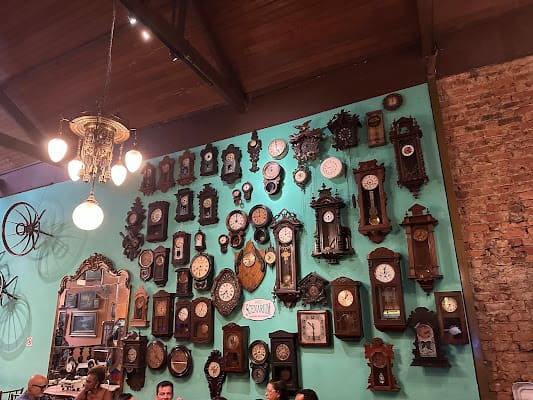
Rio Scenarium
Three-story samba club set inside a restored antique warehouse, filled with vintage decor and rotating live bands. One of Lapa's most recognized nightlife destinations, drawing both tourists and locals.
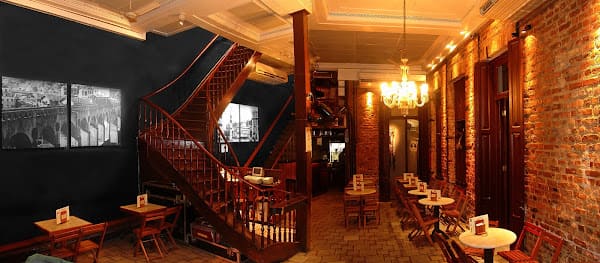
Carioca da Gema
Intimate samba and choro venue with nightly performances from well-known local musicians. The small dance floor fills fast, so arriving before 10 PM on weekends is a good idea.
Circo Voador
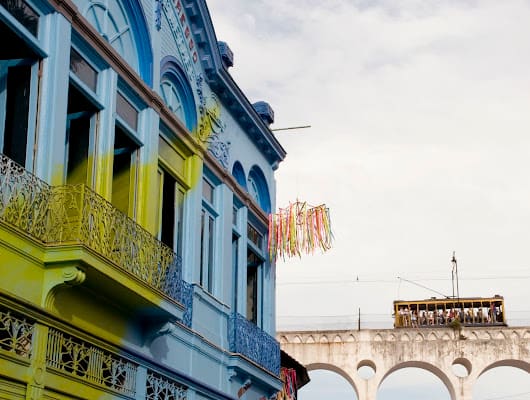
Open-air concert venue at the foot of the Arcos da Lapa that hosts Brazilian and international acts across genres. The space holds over a thousand people and runs a packed schedule from samba to electronic.
Fundição Progresso
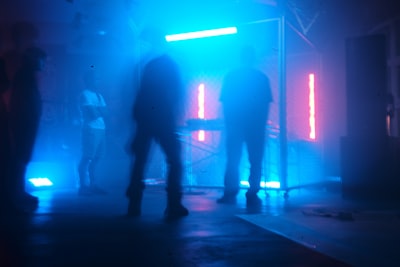
Converted 19th-century iron foundry now operating as a large event space for concerts, DJ nights, and cultural festivals. The industrial interior gives it a raw, warehouse-party feel.

Lapa 40 Graus
Multi-room club spread across several floors with DJs playing funk carioca, forró, and samba on different stages. Cover charges are low and the crowd skews young and local.
Democraticos
Historic samba club founded in 1867 as a Carnival society, now operating as a large dance venue under the Arcos da Lapa. The main hall hosts forró and samba nights with a capacity of over 1,500.