Copacabana
Semi-Legal3/5ModerateGuide to Copacabana's nightlife and adult entertainment scene along Avenida Atlantica, with safety advice and pricing.

Where to stay near Copacabana
Hotels walking distance from the venues on this page.
See places to stay and current pricesThe Nightlife Scene
Hand-picked spots in this district
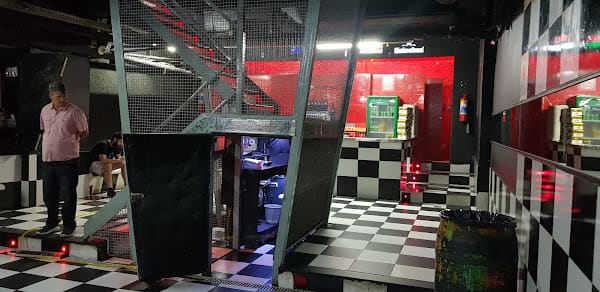
Fosfobox
Underground club in a basement gallery space, popular with a young local crowd for electronic music, indie rock and themed party nights. One of Copacabana's few dedicated dance venues with an alternative edge.
Rua Siqueira Campos, 143
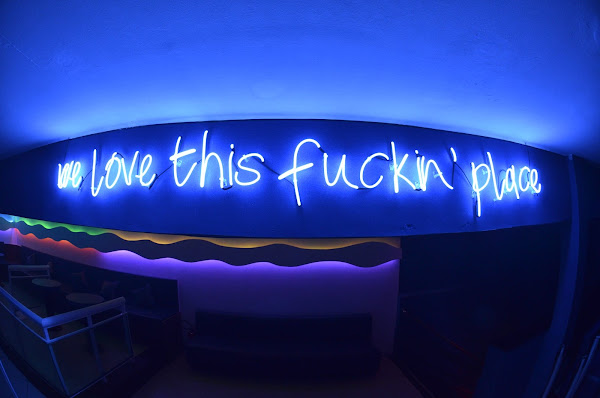
New Mariuzinn
Long-running Copacabana nightclub installed inside a commercial gallery, drawing a mixed crowd for reggaeton, funk carioca and Latin pop. Themed parties run on weekends with reasonably priced drinks.
Av. Nossa Senhora de Copacabana, 435
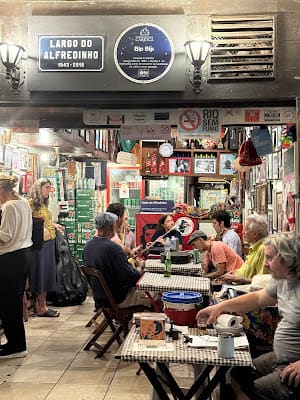
Bip Bip
Tiny, no-frills bar operating since 1968 where local musicians gather for samba, choro and bossa nova jam sessions that spill onto the sidewalk. There's no stage and no cover charge; you stand on the street and listen.
Rua Almirante Gonçalves, 50
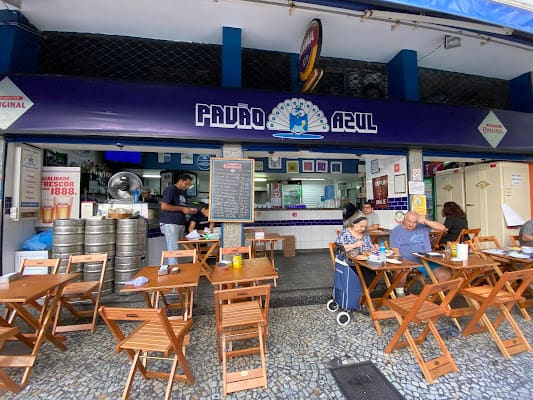
Pavão Azul
Classic Copacabana boteco that's been a neighborhood institution for decades, known for cold draft beer and fried pastéis. The original spot has expanded to occupy multiple storefronts on the same block.
Rua Hilário de Gouveia, 71
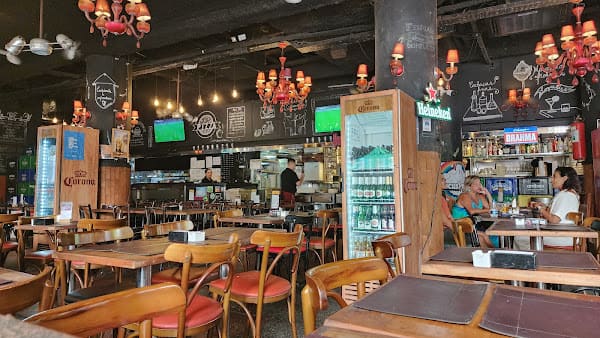
Boteco Belmonte
Reliable neighborhood bar open from morning until 2 AM, serving a large menu of petiscos, grilled meats and draft chopp. Popular with locals as a casual meeting point before heading out for the night.
Rua Domingos Ferreira, 242
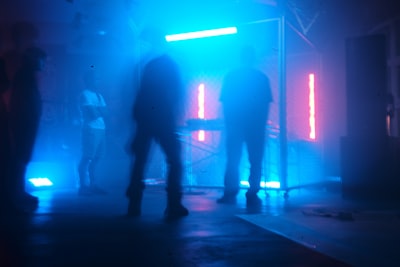
Le Boy
Long-running Copacabana nightclub operating since the 1990s, known for themed party nights, drag shows, and a mixed crowd that keeps the dance floor packed until sunrise on weekends.
Rua Raul Pompeia, 102
Beco das Garrafas
Historic bossa nova venue on Rua Duvivier where Tom Jobim and Vinicius de Moraes once performed. The intimate basement space still hosts live jazz and bossa nova acts most nights.
Rua Duvivier, 37
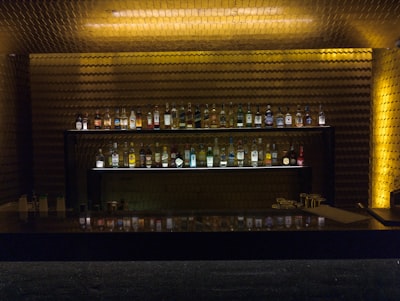
Mud Bug
American-style sports bar near the beach with cold beer on tap, burgers, and screens showing live games. A reliable late-night option when other bars have closed.
Rua Prado Junior, 78
Barrio Lapa
Copacabana corner bar with a tiled interior and sidewalk tables that stay busy past midnight. Known for strong caipirinhas made with fresh fruit and reasonably priced petiscos.
Av. Atlantica, 1910
Skylab Bar
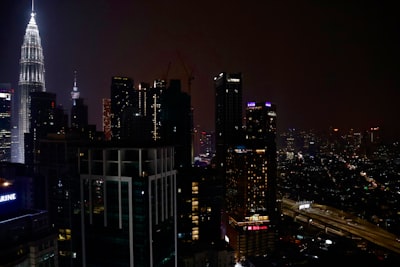
Rooftop bar on top of a Copacabana hotel with panoramic views of the beach and Sugarloaf Mountain. Cocktails are pricier than street level, but the sunset view is hard to match.
Rua Tonelero, 392
Overview and Location
Copacabana occupies a curved stretch of coastline in Rio de Janeiro's Zona Sul, defined by the iconic 4-kilometer beachfront and the parallel Avenida Atlantica. The neighborhood sits between the Leme district to the northeast and Ipanema to the southwest, connected by tunnels through the hills that separate it from Botafogo and the rest of the city.
This guide is based on multiple evenings spent in Copacabana.
The area's nightlife concentrates along Avenida Atlantica and the perpendicular streets running inland, particularly Avenida Nossa Senhora de Copacabana and Rua Barata Ribeiro. Hotels, bars, nightclubs, and freelancer-friendly venues are packed into a relatively compact grid. This is the neighborhood most foreign visitors associate with Rio's adult entertainment scene, for better or worse. The density of tourists also makes it a magnet for opportunistic crime.
Legal Status
Prostitution is legal in Brazil for consenting adults over 18. Selling and buying sexual services carries no criminal penalty. The law draws the line at operating a brothel, pimping, and any form of trafficking or exploitation, all of which are criminal offenses.
In Copacabana, this legal framework creates a gray zone. Termas (sauna clubs) operate as licensed entertainment venues where sex workers are present but transactions are technically private arrangements between individuals. Bars along the beachfront function similarly. Police enforcement in Copacabana tends to focus on drug trafficking, underage exploitation, and organized crime rather than consensual adult activity. During Carnival and major holidays, enforcement patterns shift and police presence increases across the neighborhood.
Costs and Pricing
Copacabana's pricing varies enormously depending on whether you're in a controlled venue or negotiating on the street.
Termas (sauna clubs) are the most structured option. Entry fees run R$150-300 and typically include a buffet meal, soft drinks, and access to sauna facilities. Alcoholic drinks cost R$20-40 each inside. Any private arrangements are negotiated directly and separately, with prices varying by establishment and individual. Termas Monte Carlo (TMC) on Rua Gomes Carneiro and Termas Centaurus (now closed, but similar venues remain) were historically the best-known options in the area.
Nightclubs and bars charge cover fees of R$30-80 on weekends. Draft beer (chopp) costs R$12-25, bottled beer R$15-30, and cocktails like caipirinhas run R$25-50 depending on the venue. New Mariuzinn on Rua Siqueira Campos is one of the more popular party spots, often running drink promotions and ladies' night specials. Expect to spend R$150-300 for a night of drinking at a mid-range bar.
Street-level encounters along Avenida Atlantica and at beachfront kiosks are the least predictable for cost. Prices are entirely negotiable. The lack of any institutional framework means there are no standard rates, and financial disputes are common. This is also the highest-risk category for scams and robbery.
Transport between venues should always be via Uber or 99. Rides within Copacabana typically cost R$10-20. A ride to Lapa or Centro runs R$20-40.
Street-Level Detail
Avenida Atlantica is the main artery. The beachfront sidewalk, with its famous wave-pattern mosaic, is busy with pedestrians until late at night. Kiosks along the beach serve drinks and food, and some function as informal meeting points. After midnight, the beachfront takes on a different character as street workers become more visible between Postos 4 and 6.
The blocks inland from the beach hold most of the actual venues. Rua Barata Ribeiro and Rua Santa Clara have clusters of bars and small clubs. Pavao Azul on Rua Hilario de Gouveia is a traditional boteco (neighborhood bar) known for cheap draft beer and a local crowd. Beco das Garrafas on Rua Duvivier is a historic bossa nova venue that still hosts live music.
The area around Praca do Lido, a small square a block from the beach, has several bars and is a known gathering spot after dark. Side streets off Avenida Nossa Senhora de Copacabana get quieter and less safe the further you move from the main road. Stick to well-lit streets with foot traffic.
Copa's hotel strip means you're never far from accommodation. The Orla Copacabana Hotel, Windsor Atlantica, and dozens of mid-range options line the beachfront. Budget hostels cluster on the inland streets.
Safety
Copacabana is one of Rio's more patrolled neighborhoods, but street crime remains a constant threat. Armed robbery, phone snatching, and mugging happen regularly, particularly on the beach after dark and on quieter side streets.
The beach is a robbery hotspot after midnight. There is no safe reason to walk on Copacabana beach at night. Groups of thieves operate along the sand, targeting anyone visible. Police patrol the boardwalk but can't cover the entire stretch.
Phone snatching is the most common crime tourists experience. Keep your phone in your pocket when walking. Don't stop to take photos on the street at night. If someone approaches you with a friendly greeting late at night on a quiet street, keep walking. The "Good Samaritan" setup, where one person distracts while another moves behind you, is well-documented in this area.
Use Uber or 99 for all transport between venues. Don't walk, even short distances between bars after dark.
Cultural Context
Copacabana has been synonymous with Rio's entertainment culture since the 1940s and 1950s, when it was the center of Brazil's bossa nova movement. The neighborhood has changed dramatically since then, shifting from an elite enclave to a dense, mixed-income area that's simultaneously a residential neighborhood, tourist zone, and nightlife district.
Carioca culture is warm and physical. Conversations happen at close range, and casual touching during interaction is normal. This cultural openness extends to nightlife, where the social barriers between strangers are lower than in most cities. Don't mistake friendliness for something it isn't, but also understand that Rio's social culture is genuinely more relaxed than what many visitors are used to.
Portuguese is the working language. English is understood at hotels and some tourist-oriented bars, but basic Portuguese phrases will help significantly at local establishments.
Scam Warnings
The "friendly group" approach on the beach: A group approaches you on the boardwalk or sand, starts a friendly conversation, and one member distracts you while others take your belongings. This happens constantly after dark on Copacabana beach. Don't engage with groups of strangers on the beach at night, and don't be on the beach at night in the first place.
Overcharging at kiosks and bars: Some beachfront kiosks charge a "gringo price" that's significantly higher than what locals pay. Always ask the price before ordering, and check your bill before paying.
Fake Uber drivers: People near tourist spots may claim to be your Uber driver. Always verify the license plate and driver name in the app before getting in any vehicle.
Drink spiking: This occurs in Copacabana, particularly at smaller bars and in drinks offered by new acquaintances. The drug known locally as "Boa Noite Cinderela" (Good Night Cinderella) is used to incapacitate victims, who are then robbed. Never leave your drink unattended and don't accept open drinks from strangers.
Nearby Areas
Leme sits at the northeastern end of Copacabana beach. It's quieter, slightly safer, and has a few good restaurants. The Morro do Leme trail offers daytime views of the coastline.
Ipanema is one metro stop or a short Uber ride to the southwest. It's more upscale, with better restaurants and a younger, hipper bar scene. Ipanema is generally considered safer than Copacabana at night, though caution is still required.
Lapa, Rio's main nightlife district, is a 15-minute Uber ride through the tunnel. It's where the samba clubs and street parties are.
Centro and its termas are accessible by metro during the day or by Uber at night. This is where some of Rio's more established sauna clubs operate.
Meeting People Nearby
Copacabana's social scene extends beyond the nightlife strip. The beach itself is the primary daytime social venue, with kiosks at Posto 5 and Posto 6 serving as natural gathering points. Botafogo, a 10-minute Uber ride away, has a growing craft beer and cafe scene popular with younger locals and expats. For a broader overview of Rio's social scene and dating culture, see the main Rio de Janeiro city guide.
Best Times
- 11 PM to 3 AM: Peak nightlife hours at bars and clubs, Friday and Saturday
- Midnight to 4 AM: Street-level activity peaks along Avenida Atlantica
- December through March: Southern Hemisphere summer brings the highest activity
- Carnival (February/March): The entire neighborhood transforms; prices spike and crowds multiply
- Weeknights: Quieter but still active, particularly Thursday
- Monday/Tuesday: Many smaller venues close; limited options
What Not to Do
- Do not walk on Copacabana beach after dark under any circumstances
- Do not carry more cash than you're willing to lose in a robbery
- Do not take out your phone to check maps while walking on the street at night
- Do not accept drinks from people you've just met at bars
- Do not walk between venues after dark, even if they're only a few blocks apart
- Do not wear jewelry, watches, or expensive clothing while out at night
- Do not resist if confronted by robbers; hand over what they ask for
- Do not engage with anyone who appears underage; Brazilian law imposes severe penalties
Get the Legal Status PDF, 50 countries
Newsletter signup coming soon. Check back shortly.
Related Guides
Rio de Janeiro Overview
City guide to adult nightlife in Rio de Janeiro, covering key areas, safety warnings, scam awareness, and cultural context.
Read guideCentro
District guide to Centro in Rio de Janeiro, covering termas, sauna clubs, safety warnings, costs, and practical advice.
Read guideLapa
Guide to Lapa, Rio de Janeiro's bohemian nightlife district famous for samba clubs, street parties, and late-night bars.
Read guideVila Mimosa
Guide to Vila Mimosa, Rio de Janeiro's oldest red-light district near Praca da Bandeira, with safety warnings and practical info.
Read guideFrequently Asked Questions
Was this guide helpful?