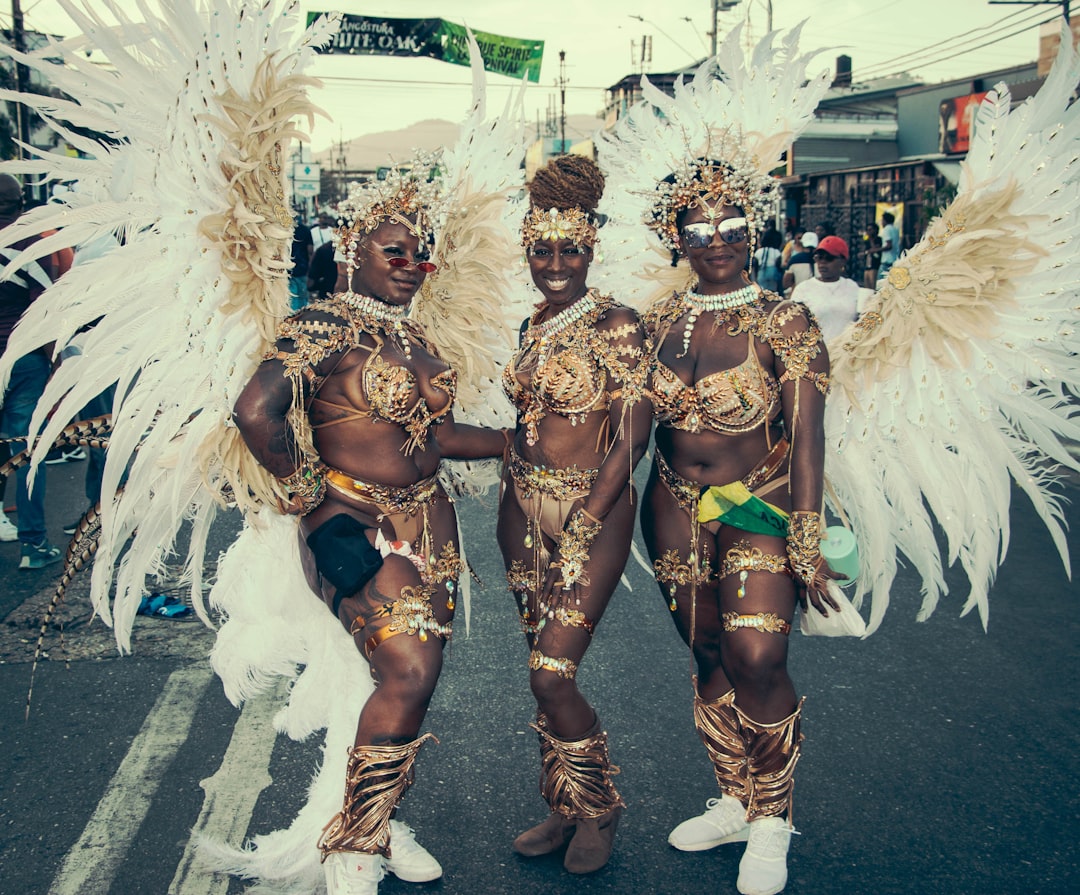


Before You Travel to Trinidad and Tobago
Five things every smart traveler sorts before booking.
- 1
Passport valid 6+ months from entry date
Most countries refuse entry on passports expiring within six months. Renew now if you're close.
- 2
Visa requirements for Trinidad and Tobago
Some are visa-free, some require an e-visa filed days ahead, some need an embassy appointment.
- 3
Travel insurance booked
A hospital visit in Trinidad and Tobago can run $4,000-15,000 without cover. Credit card insurance usually excludes alcohol-related incidents.
- 4
eSIM data plan ready before landing
Airport SIM kiosks need your passport and overcharge tourists. Install an eSIM in 60 seconds, online before you fly.
- 5
Accommodation reserved in the right district
The wrong neighborhood means a 45-minute taxi every night. Map the venues first, then book.
City Guides in Trinidad and Tobago

Compare hotels in Trinidad and Tobago
Hotels, hostels, and short-term rentals across the country's main nightlife cities.
Legal Framework
Prostitution is illegal in Trinidad and Tobago under the Sexual Offences Act of 1986 (amended 2000). The law criminalizes soliciting, living off the earnings of sex work, and operating a brothel. Penalties range from fines to imprisonment, with harsher sentences for offenses involving coercion or minors.
Last updated after our March 2026 research trip.
Enforcement is selective. Police occasionally conduct operations targeting street-based activity in known areas of Port of Spain, particularly around parts of Wrightson Road and the waterfront. But resources are stretched thin across a force dealing with a serious violent crime problem, and vice enforcement sits low on the priority list.
The gap between law and practice is wide. Adult nightlife, including bars with explicit entertainment and private arrangements between consenting adults, operates with minimal interference in established entertainment districts. Carnival season blurs every line further, as the entire country shifts into a mode of celebration that police manage rather than control.
Enforcement Reality
The Trinidad and Tobago Police Service focuses its limited capacity on violent crime, gang activity, and drug trafficking. The country has one of the highest homicide rates in the Caribbean, and that reality shapes police priorities. Vice enforcement receives attention mainly during election cycles or after media pressure.
Street-level activity is more likely to attract attention than private arrangements. Areas with visible soliciting see periodic sweeps, particularly when complaints from residents or businesses mount. These operations tend to be brief. They don't represent sustained enforcement campaigns.
Foreigners caught in any police operation face the local judicial system. Court proceedings move slowly, and bail conditions may restrict your ability to leave the country. The US, UK, and Canadian embassies can provide consular assistance but cannot intervene in legal proceedings.
Hotels in Port of Spain generally don't enforce guest-only policies with the strictness seen in some other Caribbean nations. Smaller guesthouses rarely ask questions. Larger international chains may require guest registration at the front desk.
Cultural Context
Trinidad and Tobago runs on two cultural engines: soca music and Carnival. Understanding both is necessary before stepping into the nightlife. Soca, born in Trinidad in the 1970s as a fusion of calypso and Indian rhythms, drives the country's party culture year-round. During Carnival season (typically February), the entire nation reorganizes around fetes, jouvert, and mas. The rest of the year, Friday and Saturday nights keep the energy alive in Port of Spain's bars and clubs.
"Liming" is the local term for socializing, hanging out, drinking, and talking. It's not just a pastime; it's a cultural institution. Trinis lime on street corners, in rum shops, at beach bars, and in parking lots. If you can't lime, you can't connect. The social style is warm, direct, and loud. Quiet observation won't get you far.
The twin-island republic has a mixed population: African, Indian, Chinese, Syrian-Lebanese, European, and every combination. This diversity shapes the nightlife. You'll find Indian-influenced chutney soca playing alongside African-rooted calypso, with dancehall, hip-hop, and EDM mixed in. Different venues and different nights draw different demographics, though Port of Spain's main entertainment strips attract a genuine cross-section.
Religion plays a background role. Both Christian and Hindu traditions influence social attitudes, and some older Trinidadians hold conservative views about nightlife behavior. But the younger generation, especially in Port of Spain, operates with a "work hard, play hard" mentality that accepts nightlife as a normal part of social life.
Dating Culture
Trinidadians are confident and social. Starting conversations in bars and at fetes is normal and expected. Women are assertive; they'll approach men they find interesting, and they don't wait around for gestures. Men are expected to be direct without being aggressive. Humor goes far. Taking yourself too seriously doesn't.
Foreign men receive mixed signals. Some Trinidadian women are genuinely attracted to visitors. Others see tourists as a temporary distraction, fun for the weekend but nothing serious. A smaller number operate with financial motivations. The line between genuine interest and opportunism isn't always obvious, and asking directly about intentions is considered rude.
The country's mixed ethnic background means beauty standards are broad. You'll see every skin tone and feature combination. Trinidadians are proud of their appearance and dress well for going out. Showing up in flip-flops and a wrinkled shirt signals that you don't take the occasion seriously.
WhatsApp is the default communication tool. Exchange numbers early and keep the conversation going there. Instagram DMs work as an initial approach, especially after meeting at an event. Tinder and Bumble have moderate adoption in Port of Spain, with more active usage among the 20-35 age group.
Dating Apps
Tinder has the largest user base in Trinidad, concentrated heavily in Port of Spain. Bumble is gaining ground among professional women. Caribbean Cupid exists but attracts more scam profiles than genuine users. Instagram remains the most effective social tool, particularly for connecting with people you've already met in person.
The local approach to dating apps skews casual. Many profiles state "not here for hookups" while the opposite may be true. Verification through mutual friends or social media is common before meeting. Video calls before a first meeting aren't unusual and signal good intentions on both sides.
Scam profiles target foreign men with attractive photos and conversations that quickly move toward money requests. Standard rules apply: never send money to someone you haven't met, avoid anyone who cancels meetings repeatedly, and be skeptical of stories involving sudden emergencies.
Key Cities
Port of Spain is Trinidad's capital and nightlife center. St. James (the "city that never sleeps") and Ariapita Avenue in Woodbrook are the two main entertainment corridors. Nearly everything worth experiencing after dark happens within these areas or at seasonal fetes held across the city.
San Fernando is Trinidad's second city, an industrial town in the south with a small bar scene along Coffee Street and the High Street area. It doesn't compare to Port of Spain for nightlife, but during Carnival season it hosts its own celebrations.
Tobago operates on a completely different rhythm. Crown Point has a cluster of bars and restaurants near the airport and Pigeon Point. The scene is small, relaxed, and tourist-oriented. Buccoo hosts the famous Sunday School street party, which draws locals and visitors weekly. Tobago nightlife is beach-bar energy, not club energy.
Safety Considerations
Trinidad has a serious violent crime problem that visitors must take seriously:
- The country recorded over 600 homicides in 2025, with most concentrated in specific communities in East Port of Spain, Laventille, Morvant, and parts of central Trinidad
- Stick to established nightlife areas: St. James, Ariapita Avenue, and the Queens Park Savannah vicinity
- Do not walk between venues at night. Use taxis or rideshare for every trip, even short distances
- Keep valuables in your accommodation's safe. Don't wear expensive jewelry or watches when going out
- Carry only the cash you need for the evening plus taxi fare home
- Save the emergency number 999 (police) and 811 (ambulance) in your phone
- During Carnival, petty crime spikes significantly. Pickpocketing and phone snatching are common in dense crowds
- Avoid Beetham Highway, Laventille, Sea Lots, and East Port of Spain entirely
- Travel insurance with medical evacuation coverage is strongly recommended
Common Scams
Drink spiking occurs in Trinidad, particularly during Carnival season. Victims are robbed or worse after losing consciousness. Never accept drinks from strangers. Watch your drink being prepared. Don't leave beverages unattended, even briefly.
Carnival "friend" scam. Friendly strangers attach themselves to tourists during fetes and jouvert, gain trust over hours, then steal phones, wallets, or bags during moments of distraction in the crowd. Keep your group tight and your valuables secured.
Fake taxi drivers. Unlicensed vehicles posing as taxis pick up tourists near nightlife areas. Some overcharge; others drive to isolated locations for robbery. Use only registered taxis or have your hotel arrange transport.
ATM skimming. Card skimming devices have been found at ATMs across Port of Spain. Use ATMs inside banks during business hours when possible. Cover the keypad when entering your PIN.
Romance scams. Individuals cultivate relationships over days, building trust before requesting money for emergencies. Wire transfers to recent acquaintances are almost always scams.
What Not to Do
- Do not walk on streets alone after dark, even in tourist areas
- Do not enter neighborhoods outside established entertainment districts
- Do not resist if confronted by an armed robber. Comply and report to police afterward
- Do not carry your passport when going out. Leave it in the hotel safe and carry a photocopy
- Do not accept marijuana or other drugs from anyone. Drug penalties in Trinidad are severe
- Do not engage with anyone who appears underage. Trinidad law enforcement treats this with maximum severity
- Do not photograph people without permission, especially in local neighborhoods
- Do not drive at night unless you know the roads well. Poor signage and aggressive driving make nighttime roads hazardous
- Do not attend fetes or parties in unfamiliar areas without a trusted local contact
Sources
- U.S. Department of State: Trinidad and Tobago Travel Advisory - Entry requirements, safety alerts, and local law summary
- UK Foreign, Commonwealth & Development Office: Trinidad and Tobago Travel Advice - Safety, health, and legal information for travelers
- Australian Government Smartraveller: Trinidad and Tobago - Travel advisory and practical information
Get the Legal Status PDF, 50 countries
Newsletter signup coming soon. Check back shortly.
Emergency Information: Trinidad and Tobago
- Emergency:
- 999
- Tourist Police:
- Trinidad and Tobago Police Service handles tourist complaints through divisional headquarters
- Embassy Note:
- Most embassies and high commissions are located in Port of Spain, concentrated in the St. Clair and Woodbrook neighborhoods.
More in This Region
Antigua and Barbuda
A guide to nightlife in Antigua and Barbuda, covering St. John's bar scene, English Harbour venues, local laws, costs, safety, and cultural norms on this twin-island Caribbean nation.
Aruba
Aruba's nightlife centers on the resort strip along Palm Beach, with hotel bars, casinos, and a handful of clubs. Prostitution is illegal, the scene is small, and safety requires basic awareness. A guide to going out on the island.
Bahamas
The Bahamas nightlife revolves around Nassau and Paradise Island, where casino resorts, beach clubs, and downtown bars create a scene that ranges from high-end to local. Cable Beach and Bay Street offer distinct experiences at Caribbean-high prices.
Barbados
Barbados nightlife centers on the south coast's Saint Lawrence Gap, a short strip of bars and clubs catering to tourists and locals alike. Expect high prices, a safe atmosphere by Caribbean standards, and a small but consistent scene shaped by rum culture and soca music.
Similar Countries in Other Regions
Countries with a similar overall score to Trinidad and Tobago (3.3) but in different parts of the world.
Austria
3.3Central Europe
Vienna's regulated nightlife scene, from Gurtel bar strips to Prater party zones. Fully legal and licensed, with German-speaking Europe's most structured approach.
Chile
3.3South America
Santiago and Valparaiso offer South America's most orderly nightlife scene, with cocktail bars, live music, and a late-night culture shaped by Chilean reserve and European influence.
Honduras
3.3Central America
Honduras has limited nightlife concentrated in Tegucigalpa and Roatan. Extremely high violent crime rates make safety the top priority for any visitor.
Was this guide helpful?