Where the Nightlife Is
Tap a district for venues, prices, and safety info
Seomyeon
4/5SafeDistrict guide to Seomyeon in Busan: Korea's most concentrated year-round nightlife hub outside Seoul, with clubs, bars, noraebang, and room salons on Busan's central grid.
8 nightlife spots listed
Haeundae
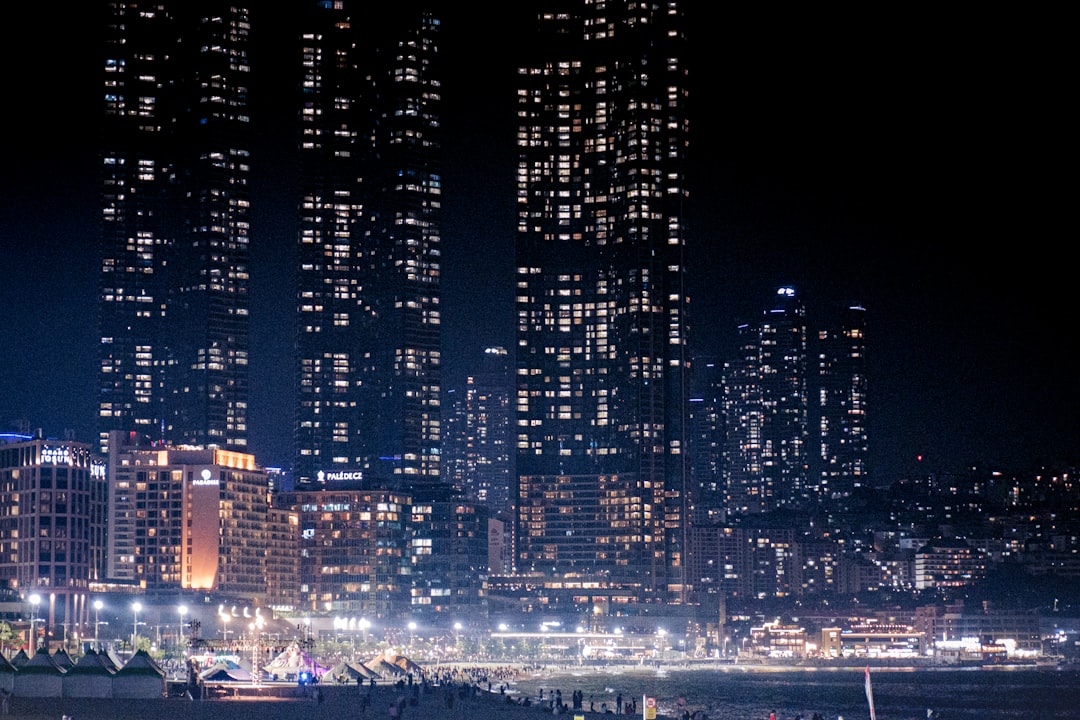
5/5Very SafeDistrict guide to Haeundae in Busan. Beach bars, summer nightlife, year-round entertainment, and Korea's top coastal party district.
6 nightlife spots listed
District Map of Busan
Pick a district to recenter the map and see hotels nearby.
Where to stay in Busan
Compare hotels and rentals across the city's nightlife districts.
See places to stay and current pricesOverview
Busan is Korea's second city, a port town of 3.4 million people squeezed between mountains and the sea on the southeastern coast. The city has a rougher, more direct energy than Seoul. People here speak louder, drink harder, and have a provincial pride that colors every interaction. Nightlife reflects this character: less polished than Gangnam, more affordable, and easier to access for foreigners who don't speak Korean.
Our team walked every district covered here.
Two areas anchor the scene. Haeundae Beach transforms into a nightlife destination from June through August, with beach bars, rooftop clubs, and the energy that comes when a city's young population migrates to the waterfront. Seomyeon, the central business district, runs year-round with Korean-style bars, noraebang, and entertainment venues packed into a dense grid of commercial streets.
Legal Context
Busan operates under the same national laws as Seoul. The 2004 anti-trafficking act applies everywhere. Busan had its own red-light districts, most notably the Wanwol-dong area near Texas Street, which has been significantly reduced through enforcement campaigns over the past decade.
Enforcement in Busan tends to follow national patterns but with less intensity than Seoul. The city's entertainment industry is smaller and draws less political attention. Room salons and KTV venues operate openly in Seomyeon and other commercial districts.
Texas Street near Busan Station was historically known for foreigner-oriented establishments catering to visiting sailors and the nearby military presence. The area has declined significantly and is not recommended for visitors.
Key Areas
Haeundae. Busan's premier beach district. The strip along Haeundae Beach fills with bars and pop-up clubs during summer months. The area behind the beach, particularly around the "Haeundae Traditional Market" area, has year-round restaurants and bars.
Seomyeon. The transportation hub and central business district. The area around Seomyeon Station (Lines 1 and 2 intersection) has the highest year-round concentration of bars, clubs, noraebang, and entertainment venues.
Gwangalli. The second beach area has a younger, more local crowd than Haeundae. Gwangan Bridge provides a dramatic backdrop for the beachfront bars. Less tourist-oriented and more affordable.
Nampo-dong. Downtown Busan near the port. BIFF Square (Busan International Film Festival venue) anchors an area of shops, restaurants, and some nightlife. More daytime-oriented but comes alive during the film festival in October.
Safety
Busan is very safe. The combination of low violent crime and a compact city center means you can move between nightlife areas with minimal risk. Specific concerns:
- Drinking intensity. Busan people drink hard. The social pressure to match pace is real, and many problems stem from overindulgence. Pace yourself
- Summer beach crowds. Haeundae Beach at night during peak summer draws massive crowds. Pickpocketing is rare but not unknown in crush conditions
- Taxi refusals. Late at night, particularly during summer weekends, taxis from Haeundae may refuse short trips or demand flat rates. Use Kakao T
- Water safety. Drunk swimming at Haeundae kills people every summer. The currents are stronger than they appear, and lifeguards go off duty at night
The tourist police hotline (1330) operates in Busan with English, Japanese, and Chinese language support.
Cultural Norms
Busan has its own dialect ("Busan saturi") that even Seoul Koreans find rough and direct. Don't mistake bluntness for hostility. Busan people are famously warm once you get past the surface-level gruffness.
Drinking culture follows the same Korean norms as Seoul (pour for others, receive with two hands, turn away from elders) but with even higher volume and intensity. The "one shot" culture here means finishing your glass in one go. Begging off is harder in Busan than in Seoul.
The seafood culture is central to socializing. Jagalchi Market, Korea's largest fish market, is both a tourist attraction and a genuine social hub where locals gather for raw fish and soju. Shared meals create the bonding context that leads to nightlife activities.
Social Scene
Busan's social scene is more compact and intimate than Seoul's. The foreign community is smaller, centered around English teachers, port workers, and university exchange students. This means the faces at international gatherings are familiar quickly.
Haeundae's beachfront bars are the most natural meeting point for foreigners and internationally minded Koreans, especially during summer. Bay 101, the yacht marina complex, draws a mixed crowd to its restaurants and waterfront seating. Gwangalli Beach's cafe and bar strip is more relaxed and favored by local university students.
Seomyeon's dense bar district around "Jeonpo Cafe Street" has dozens of small bars and cafes where solo visitors can strike up conversation. The area near Kyungsung University and Pukyong National University has cheap bars popular with Korean and international students.
Meetup.com has active groups in Busan, though with fewer events than Seoul. Language exchange meetups run weekly at several locations. The Busan Expats group on Facebook coordinates social events. PNU (Pusan National University) area international student mixers welcome non-students.
Dating Apps
Tinder and Bumble work in Busan but with far fewer English-language profiles than Seoul. The user base skews younger and more student-oriented near the universities. Korean dating apps dominate here. See the South Korea country page for full details on app dynamics.
Scam Warnings
Room salon overcharging in Seomyeon: The same opaque pricing structures that operate in Seoul exist in Busan. Seomyeon's entertainment alleys have establishments that specifically target groups of Korean men but will accept foreigners at premium rates. Confirm all costs in advance.
Texas Street remnants: The area near Busan Station still has some touts and foreigner-targeting bars with inflated prices. The area is in decline and not worth visiting.
Summer beach tent bars: Temporary pojangmacha on Haeundae Beach during summer sometimes charge tourist prices for standard items. Check prices before ordering.
Best Times
- Summer (June to August) is peak season. Haeundae Beach nightlife runs seven days a week, and the city is at its most energetic
- October brings the Busan International Film Festival (BIFF), which transforms Haeundae and Nampo-dong into a two-week party
- Friday and Saturday nights year-round at Seomyeon
- Winter (December to February) is quieter, with Haeundae beach bars closed and nightlife concentrated in Seomyeon
- Chuseok and Lunar New Year slow everything down as residents leave the city
Getting Around
- Busan Metro: 6 lines cover major areas. Runs 5:30 AM to midnight. T-money card fares start at 1,450 KRW
- Taxis: Cheaper than Seoul. Base fare 4,800 KRW. The city is compact enough that most nightlife trips cost 8,000 to 15,000 KRW
- Buses: Good coverage, some routes run past midnight. The 1001 express bus connects Haeundae and Seomyeon quickly
- Walking: Haeundae's beach strip and Seomyeon's bar district are both walkable within each area
- KTX (high-speed train): Seoul to Busan in 2.5 hours, around 59,800 KRW. Useful for weekend trips between the two cities
What Not to Do
- Do not swim drunk at Haeundae Beach. This kills people annually
- Do not refuse drinks aggressively in group settings. A polite medical or religious excuse works better
- Do not wander into the old Texas Street area near Busan Station at night
- Do not carry more cash than necessary to entertainment venues
- Do not underestimate the intensity of Busan drinking culture
- Do not photograph people or venues without permission
- Do not litter on the beach. Fines are enforced, especially during summer
Get the Legal Status PDF, 50 countries
Newsletter signup coming soon. Check back shortly.
Flights to Busan
Compare prices across airlines. Filter by stops, time, and cabin.
Airport transfer to Busan
Pre-booked transfers cost about the same as a metered taxi but cut out the airport queue, the meter argument, and the "no English" routine that takes some drivers to the wrong address. Fixed price quoted before booking, driver tracks your flight, waits with a name sign at arrivals.
Book a KiwiTaxi transferFrequently Asked Questions
Related Guides
Seomyeon
District guide to Seomyeon in Busan: Korea's most concentrated year-round nightlife hub outside Seoul, with clubs, bars, noraebang, and room salons on Busan's central grid.
Read guideHaeundae
District guide to Haeundae in Busan. Beach bars, summer nightlife, year-round entertainment, and Korea's top coastal party district.
Read guideWas this guide helpful?