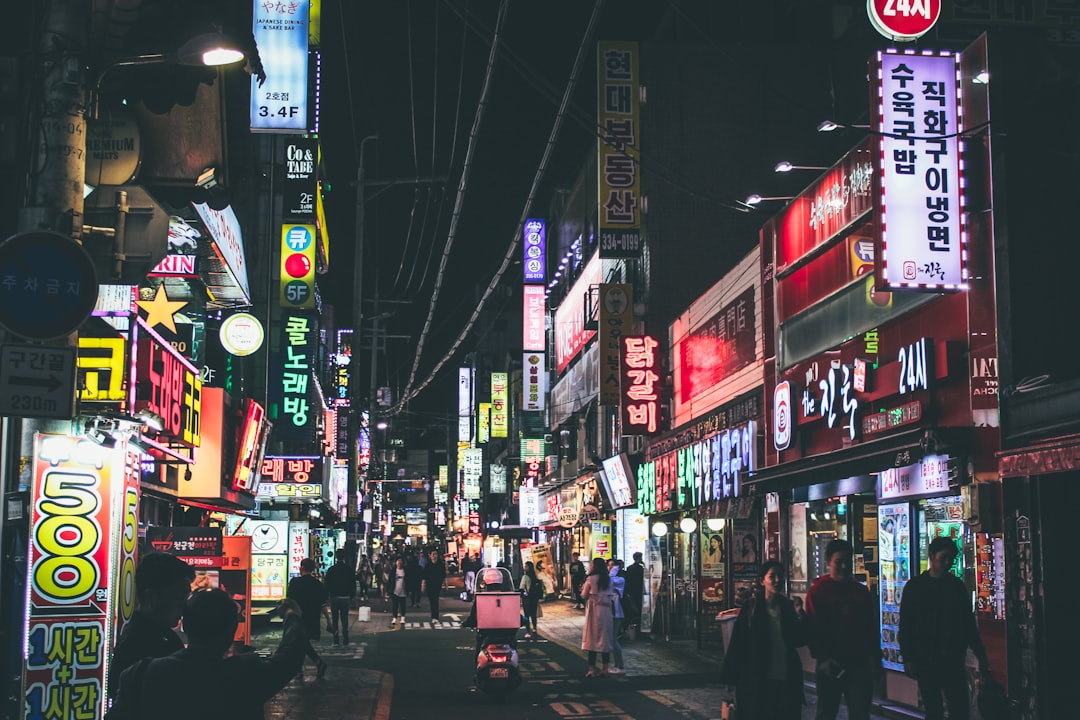
Neighborhoods to Explore
Explore each area for detailed nightlife guides
Gangnam
4/5SafeDistrict guide to Gangnam in Seoul. Upscale clubs, room salons, KTV venues, and Korea's most expensive nightlife scene.
6 nightlife spots listed
Hongdae
5/5Very SafeDistrict guide to Hongdae in Seoul. University nightlife, indie clubs, cheap drinks, and Seoul's youngest, most energetic after-dark scene.
6 nightlife spots listed
Itaewon
4/5SafeDistrict guide to Itaewon in Seoul. International nightlife hub with diverse bars, Hooker Hill, and Seoul's most foreigner-accessible scene.
6 nightlife spots listed
District Map of Seoul
Pick a district to recenter the map and see hotels nearby.
Where to stay in Seoul
Compare hotels and rentals across the city's nightlife districts.
See places to stay and current pricesOverview
Seoul is a city of 10 million people (25 million in the metro area) that runs on caffeine, soju, and an unrelenting work ethic. The nightlife scene reflects Korean corporate culture: hierarchical, expensive at the top, and built around group dynamics rather than solo exploration. Three districts dominate the after-dark scene, each with a distinct character and clientele.
Research conducted through direct venue visits and local interviews.
The gap between what's legal and what operates openly is wider here than in almost any other developed Asian capital. Room salons, KTV bars with hostesses, and booking clubs are woven into the fabric of Korean business culture, even as the law technically prohibits the transactions that often follow. Foreign visitors can access parts of this world, but much of it remains closed to anyone without Korean language skills and a local guide.
Legal Context
Seoul's nightlife operates under South Korea's national laws. The 2004 Act on the Prevention of Sexual Traffic criminalizes buying and selling sexual services. Police conduct periodic raids, particularly before elections or during moral panic cycles in the media.
The practical reality: entertainment venues that maintain a plausible front as karaoke rooms, bars, or private dining establishments face little enforcement. The law targets street-level activity and organized red-light districts more aggressively than high-end venues behind unmarked doors.
Foreigners caught in a raid face deportation and a five-year entry ban. This risk is low but not zero, and it increases during politically motivated crackdown periods.
Key Areas
Gangnam. South of the Han River, Gangnam is Seoul's money district. The area between Gangnam Station and Sinsa Station packs in mega-clubs, room salons, and expensive bars catering to Korea's corporate elite and nouveau riche. Expect high prices and strict door policies.
Itaewon. Seoul's most international neighborhood sits near the Yongsan US military garrison. The area is home to Hooker Hill (a street with overtly foreigner-oriented establishments), a concentration of international bars and restaurants, and the LGBTQ+-friendly "Homo Hill" area. Itaewon offers the easiest entry point for foreign visitors.
Hongdae. The area around Hongik University is Seoul's youth district. Indie clubs, cheap bars, street performances, and a young crowd that stays out until sunrise define the neighborhood. It's the most affordable of Seoul's three main nightlife zones.
Jongno. The historic downtown area has traditional drinking establishments, "jongno 3-ga" with its concentration of venues popular among older men, and the Insadong tea house district. Less foreigner-oriented but culturally rich.
Safety
Seoul is exceptionally safe. Walk anywhere at any hour and the risk of violent crime is minimal. That said:
- Drink culture is intense. Koreans consume more spirits per capita than any other nation. Social pressure to keep drinking is real, and many nightlife incidents stem from severe intoxication
- Room salon pricing is opaque. If you don't clarify costs in advance, you'll pay whatever the house decides
- Late-night altercations between drunk Korean men do occur in entertainment districts, particularly around closing time. Walk away from any escalating situation
- Itaewon after 2 AM draws a rougher crowd than earlier in the evening. Stay aware of your surroundings
- Drink spiking has been reported at foreigner-oriented bars. Never leave your drink unattended
Emergency services speak limited English. Call 1330 (Korea Tourism Organization hotline) for English-language assistance around the clock.
Cultural Norms
Korean drinking culture has rules. Learn them:
- Never pour your own drink. Your companion pours for you, and you pour for them
- When an elder or superior pours you a drink, receive the glass with both hands
- Turn slightly away from elders when drinking, as a sign of respect
- "One shot" (wonshyat) means finish the glass. Refusing without a good reason is poor form
- At noraebang (karaoke), everyone sings. Sitting out looks antisocial
- "Booking" at clubs means a waiter physically brings women to your table (or vice versa). This is normal Korean club culture, not harassment. Declining is fine, but don't be surprised by it
- Physical affection between men (arms around shoulders, hand-holding) is platonic in Korea. Don't misread the signals
Social Scene
Seoul's social life revolves around groups, not solo outings. The "hoesik" (company dinner) tradition means most Koreans go out in work teams or friend groups. Solo foreigners can find their way in, but it takes effort.
Itaewon is the default starting point for foreigners. Bars like The Bungalow, Magpie Brewing, and Southside Parlor attract a mixed Korean-international crowd with English-speaking staff. Thursday, Friday, and Saturday nights are busiest. The "HBC" (Haebangchon) area just uphill from Itaewon has quieter, more intimate bars where conversation comes easier.
Hongdae's all-night culture works for younger visitors. Club nights run from 10 PM to 6 AM, with cover charges of 10,000 to 20,000 KRW including a drink. The free outdoor stage area near Hongdae Station Exit 9 draws street performers and crowds on weekend nights, creating a natural meeting point.
Language exchange meetups happen weekly at venues across Seoul. Seoul Global Center offers free language exchange programs. Meetup.com lists dozens of active international groups. The Seoul Expats Facebook group has 50,000+ members and regular event listings.
For daytime socializing, Bukchon Hanok Village's traditional tea houses and Ikseon-dong's cafe district attract both Korean and international visitors in settings that encourage conversation.
Dating Apps
Tinder and Bumble have the largest English-speaking user bases in Seoul. Korean apps like Amanda, GLAM, and Noondate dominate the local market but require Korean phone verification and, in some cases, Korean ID. Tinder works well in Itaewon and Gangnam; Bumble trends slightly more relationship-oriented. See the South Korea country page for full details on dating app dynamics and verification requirements.
Scam Warnings
Room salon bill shock: A host quotes 200,000 KRW per person as the base rate. Two hours later, the bill is 1,200,000 KRW after staff nominations, bottle charges, food platters, time extensions, and a 20% service fee. This is the standard business model, not a scam in the traditional sense, but the lack of transparency functions identically. Get line-item pricing before you sit down.
Fake "international" bars: Touts near Itaewon Station approach foreigners with promises of free drinks or "VIP access." These establishments charge inflated prices and may become aggressive about payment.
Taxi meter refusal: Late at night, some taxi drivers refuse to use the meter and quote flat rates well above the metered fare. Use the Kakao T app to book rides with transparent pricing.
Juicy bars near military bases: Small bars near US military installations employ women who pressure customers to buy overpriced "lady drinks." A single evening can cost 200,000+ KRW with nothing to show for it.
Best Times
- Thursday night is the unofficial start of the weekend for Seoul's office workers. Gangnam room salons and clubs are packed
- Friday and Saturday, 10 PM to 4 AM are peak hours across all districts
- Summer (June to August) brings outdoor drinking culture; pojangmacha (street tent bars) are at their best
- Year-end (December) is "songnyeonhoe" (end-of-year party) season, and entertainment districts are extremely busy
- Chuseok (Korean Thanksgiving, September/October) and Lunar New Year (January/February) see reduced activity as Koreans travel to hometowns
- Sunday nights are dead outside of Hongdae
Getting Around
- Seoul Metro: 9 lines plus extensions cover every nightlife district. Runs approximately 5:30 AM to midnight. T-money card fares are 1,450 KRW per ride
- Taxis: Metered, safe, and plentiful. Base fare 4,800 KRW. Late-night surcharge (midnight to 4 AM) adds 20-40%. Kakao T is the standard ride-hailing app
- Buses: Extensive network, runs later than the subway (some routes until 1-2 AM). Blue buses are trunk routes, green are feeder routes
- Walking: Each nightlife district is compact and walkable within its boundaries. The distance between districts requires transit
- Night Owl Buses (Olppaemi Bus): Nine routes run from midnight to 5 AM on major corridors, including lines connecting Gangnam, Hongdae, and Itaewon. Fare is 2,350 KRW
What Not to Do
- Do not pour your own drink at a group table. This breaks a basic social rule
- Do not refuse alcohol from a senior without a clear, polite excuse
- Do not enter a room salon without confirming the full pricing structure
- Do not follow touts near Itaewon Station or in Gangnam side streets
- Do not get into arguments with intoxicated Koreans. Saving face is more important than being right
- Do not carry more cash than you plan to spend
- Do not take photos or videos inside any entertainment venue
- Do not assume that club "booking" culture means anything beyond a facilitated introduction
- Do not stumble drunk through residential neighborhoods. Noise complaints are taken seriously
Get the Legal Status PDF, 50 countries
Newsletter signup coming soon. Check back shortly.
Flights to Seoul
Compare prices across airlines. Filter by stops, time, and cabin.
Airport transfer to Seoul
Pre-booked transfers cost about the same as a metered taxi but cut out the airport queue, the meter argument, and the "no English" routine that takes some drivers to the wrong address. Fixed price quoted before booking, driver tracks your flight, waits with a name sign at arrivals.
Book a KiwiTaxi transferRelated Guides
Gangnam
District guide to Gangnam in Seoul. Upscale clubs, room salons, KTV venues, and Korea's most expensive nightlife scene.
Read guideHongdae
District guide to Hongdae in Seoul. University nightlife, indie clubs, cheap drinks, and Seoul's youngest, most energetic after-dark scene.
Read guideItaewon
District guide to Itaewon in Seoul. International nightlife hub with diverse bars, Hooker Hill, and Seoul's most foreigner-accessible scene.
Read guideFrequently Asked Questions
Was this guide helpful?