
Before You Travel to North Macedonia
Five things every smart traveler sorts before booking.
- 1
Passport valid 6+ months from entry date
Most countries refuse entry on passports expiring within six months. Renew now if you're close.
- 2
Visa requirements for North Macedonia
Some are visa-free, some require an e-visa filed days ahead, some need an embassy appointment.
- 3
Travel insurance booked
A hospital visit in North Macedonia can run $4,000-15,000 without cover. Credit card insurance usually excludes alcohol-related incidents.
- 4
eSIM data plan ready before landing
Airport SIM kiosks need your passport and overcharge tourists. Install an eSIM in 60 seconds, online before you fly.
- 5
Accommodation reserved in the right district
The wrong neighborhood means a 45-minute taxi every night. Map the venues first, then book.
City Guides in North Macedonia
Compare hotels in North Macedonia
Hotels, hostels, and short-term rentals across the country's main nightlife cities.
Legal Framework
North Macedonia's Criminal Code addresses prostitution under Articles 191 through 193. Selling sex is not directly criminalized for the individual, but organizing, facilitating, or profiting from someone else's sex work carries prison sentences of one to ten years. Trafficking offenses under Article 418-a carry penalties up to 20 years. The legal framework follows a model where the act itself occupies a gray zone while the commercial infrastructure around it is explicitly illegal.
This guide reflects conditions observed during our March 2026 visit.
The country ratified the Council of Europe Convention on Action against Trafficking in Human Beings in 2009. This drove legislative updates that strengthened penalties for organized exploitation while leaving individual conduct in a quasi-legal limbo. Municipal ordinances in Skopje and Ohrid add local layers of regulation around nightlife venues, primarily targeting noise and licensing rather than morality.
Enforcement Reality
Police in Skopje rarely pursue individual sex work unless it's connected to organized crime or trafficking investigations. The Ministry of Interior focuses its limited resources on border-related trafficking along the Balkan route rather than street-level enforcement. Periodic operations target massage parlors or online escort services, but these are infrequent and usually tied to broader anti-trafficking campaigns coordinated with Europol or the IOM.
The nightlife scene itself operates with standard licensing requirements. Bars and clubs in Skopje's Old Bazaar and City Park areas hold proper permits and face inspections for fire safety and noise levels rather than moral policing. Police presence in nightlife areas is visible on weekends but oriented toward maintaining public order, not monitoring private behavior.
Cultural Context
North Macedonian society blends Balkan conservatism with a pragmatic streak common across the region. The Orthodox Church and Islamic community both hold social influence, particularly outside Skopje, but neither drives nightlife policy in the capital. Public discourse around sex work is minimal; it's simply not a political priority in a country focused on EU accession, economic development, and the resolution of its long-running name dispute with Greece.
Skopje underwent a controversial urban transformation through the "Skopje 2014" project, which filled the city center with neoclassical statues, bridges, and government buildings. The project divided opinion sharply, but it did reshape the city center into a more walkable, visually striking space. The nightlife scene developed independently of this project, concentrated in the Ottoman-era Old Bazaar and the newer areas around City Park.
Gender dynamics follow familiar Balkan patterns. Traditional expectations around courtship persist, particularly among older generations, while younger Skopjeans educated in the EU or exposed to Western culture adopt more relaxed approaches. The capital's university population of roughly 50,000 students injects energy into the nightlife scene, particularly on Thursday and Friday nights.
Dating Culture
Dating in North Macedonia follows the Balkan template with local variations. Men initiate, plan, and pay for dates as a default. Coffee is the standard first meeting, and North Macedonians take their coffee culture seriously. The kafana tradition of lingering over espresso for hours creates a natural, low-pressure environment for getting to know someone.
Tinder has a limited but growing user base in Skopje. Badoo reaches more users across the country. Instagram serves as a de facto dating platform, with DMs being a socially acceptable way to express interest. The user base thins out fast outside Skopje and Ohrid.
North Macedonians are warm and hospitable, often surprisingly so for first-time visitors. Invitations to family dinners or weekend gatherings can come quickly once a connection is established. Refusing hospitality is taken as an insult. If someone's mother offers you food, eat it.
Language can be a barrier outside Skopje's younger generation. North Macedonian is a South Slavic language closely related to Bulgarian and Serbian. English proficiency is common among under-35s in Skopje but drops off in smaller cities. Learning basic phrases like "fala" (thank you) and "zdravo" (hello) goes a long way.
Dating Apps
Tinder works in Skopje with a small but active user base. Matches tend to respond slowly, and conversations can stall without a concrete meeting suggestion. Badoo has broader reach and is more commonly used outside the capital. Instagram is arguably the most effective platform; following someone and engaging with their stories before sending a direct message is a normal approach here.
Bumble has minimal presence. Hinge hasn't launched in the market. Local platforms don't exist in any meaningful way. For visitors staying more than a few days, the organic approach through Skopje's compact nightlife scene is often more effective than apps.
Key Cities
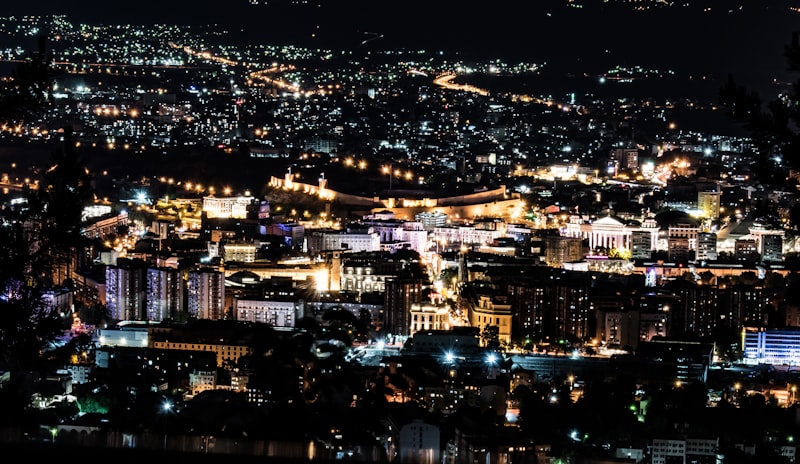
Skopje is where nearly all of the country's nightlife concentrates. The capital holds roughly a third of the national population and an even larger share of the entertainment economy. The Old Bazaar and City Park areas form the two main nightlife zones, offering different atmospheres at distinctly low prices.
Ohrid, the lakeside town in the southwest, has a seasonal summer scene driven by tourism but lacks the year-round infrastructure to warrant a standalone guide. Bitola, the country's second city, has a pleasant cafe culture along its main pedestrian street but limited nightlife beyond a few bars.
Safety
North Macedonia is generally safe for travelers. Violent crime rates are low, and tourists are rarely targeted. The U.S. State Department rates the country at Level 2 (exercise increased caution), primarily due to occasional civil unrest rather than crime.
- Petty theft occurs in crowded areas, particularly the Old Bazaar and bus stations
- Taxi overcharging is common; agree on a price before getting in or use metered taxis
- Political demonstrations occasionally occur around government buildings in central Skopje; avoid these areas during protests
- Seismic activity is a background risk; Skopje was devastated by an earthquake in 1963 and modern buildings are built to updated codes
- Traffic is chaotic by Western European standards; pedestrians should exercise caution at crossings
- Emergency services are functional but response times outside Skopje can be slow
Common Scams
The scam landscape in North Macedonia is less developed than in more touristed Balkan countries. The most common issues are:
- Taxi overcharging: Drivers at the airport and bus station sometimes quote inflated prices. Use the taxi booking desks inside the airport or call a taxi by phone
- Currency confusion: The Macedonian denar (MKD) can trip up travelers unfamiliar with the denomination. Know the exchange rate before arriving (roughly 60 MKD to 1 EUR)
- Fake guides in the Old Bazaar: Occasional self-appointed guides offer tours and then demand payment. Politely decline unless you've arranged a guide through your accommodation
- Overcharging at unlisted restaurants: Some tourist-facing restaurants near the Stone Bridge charge more than their menus state. Check prices before ordering and review the bill carefully
What Not to Do
- Don't discuss the name dispute with Greece or the relationship with Bulgaria unless you're prepared for a passionate conversation. These are sensitive topics
- Don't refuse food or drink when offered by a local. Hospitality is deeply embedded in the culture
- Don't assume everyone speaks Albanian or Serbian. While both are spoken by minorities, Macedonian is the national language and people appreciate the distinction
- Don't photograph military installations or government buildings from unusual angles; security personnel may intervene
- Don't underestimate summer heat. Skopje sits in a valley and temperatures regularly exceed 40°C in July and August
Sources
- U.S. Department of State: North Macedonia Travel Advisory - Entry requirements, safety alerts, and local law summary
- UK Foreign, Commonwealth & Development Office: North Macedonia Travel Advice - Safety, health, and legal information for travelers
- Australian Government Smartraveller: North Macedonia - Travel advisory and practical information
Get the Legal Status PDF, 50 countries
Newsletter signup coming soon. Check back shortly.
Emergency Information: North Macedonia
- Emergency:
- 112
- Embassy Note:
- Most foreign embassies are located in Skopje's city center.
Similar Countries to Explore
Albania
Albania's nightlife is small but growing fast, centered on Tirana's Blloku district where the former communist elite's residential quarter has become a strip of cocktail bars and clubs. Extremely cheap and largely undiscovered by mass tourism.
Bosnia and Herzegovina
Sarajevo's Ottoman-era old town hides a growing bar scene where craft cocktails cost less than a coffee in Vienna. Low prices, warm hospitality, and a post-war cultural renaissance make Bosnia a Balkan sleeper.
Croatia
Zagreb and Split offer a growing nightlife scene with Mediterranean beauty, Adriatic coastline bars, and an unregulated but tolerated adult entertainment industry.
Greece
Athens, Mykonos, and Crete offer Mediterranean nightlife with beautiful women. The escort scene is smaller than Western Europe but growing, with summer island parties as a bonus.
Similar Countries in Other Regions
Countries with a similar overall score to North Macedonia (3.8) but in different parts of the world.
Dominican Republic
3.8Caribbean
Sosua and Santo Domingo attract visitors with affordable prices, direct flights from the US, and a Caribbean atmosphere. One of the most accessible scenes in the Americas.
Laos
3.8Southeast Asia
Vientiane's low-key riverfront bars and Luang Prabang's quiet tourist scene make Laos one of Southeast Asia's least developed nightlife markets. Cheap, conservative, and slow-paced.
Venezuela
3.8South America
Venezuela has world-renowned beauty culture and a nightlife scene that once rivaled any in South America, but the country's ongoing crisis makes it one of the most dangerous destinations on earth for travelers. Safety warnings, legal context, and what you need to know.
Was this guide helpful?