Singelgebied
Legal & Regulated4/5SafeDistrict guide to Singelgebied in Amsterdam, a quieter window prostitution area near the Singel canal with practical tips.

Where to stay near Singelgebied
Hotels walking distance from the venues on this page.
See places to stay and current pricesBars and Clubs Worth Checking
Reviewed and rated by our team
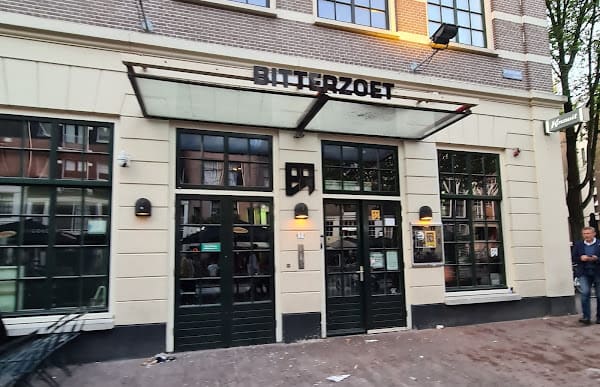
Bitterzoet
Underground live music venue and club just off Central Station with a 350-person capacity. Programming ranges from Afrobeats and hip-hop to funk jam sessions and house nights.
Spuistraat 2
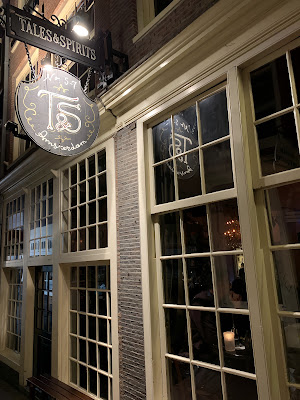
Tales & Spirits
Award-winning cocktail bar tucked into a narrow alley between Singel and Spui, set in a restored 16th-century canal house. Inventive drinks served in vintage glassware, open until 3 AM on weekends.
Lijnbaanssteeg 5-7
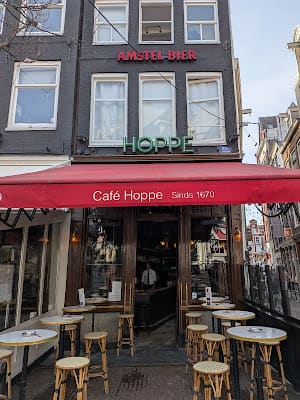
Café Hoppe
One of Amsterdam's oldest drinking establishments, operating since 1670 as a jenever distillery with tasting room. Split into two halves: the standing-room original at No. 18 (a national monument) and the seated side at No. 20.
Spui 18-20
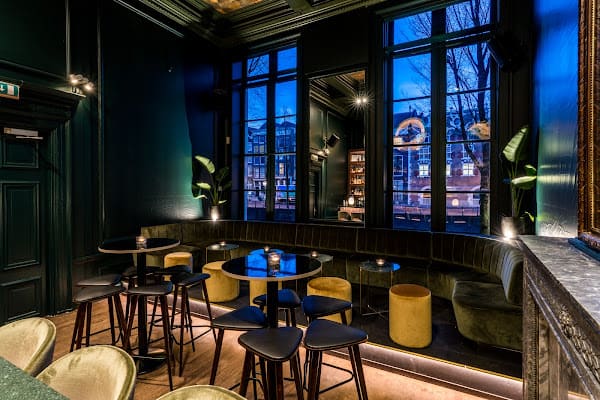
Flying Dutchmen Cocktails
Intimate cocktail bar run by two of the Netherlands' most recognized bartenders. Small room with a serious spirits collection; reservations recommended as seating is limited.
Singel 460
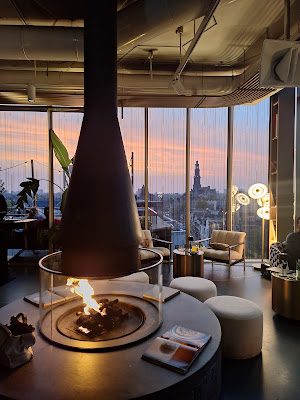
W Lounge
Sixth-floor bar inside the W Amsterdam hotel with panoramic views over the canal district. Upscale crowd, poolside seating in summer, and late-night DJ sets on weekends.
Spuistraat 175
Overview and Location
Singelgebied is Amsterdam's second red-light area, running along a section of the Singel canal in the city center. It sits roughly 400 meters west of De Wallen, the main Red Light District, but operates in a noticeably different register. Where De Wallen draws crowds of tourists photographing the canal-side windows, Singelgebied is quieter, less photographed, and easier to walk through without feeling like you're in a theme park.
Prices confirmed through direct visits in February 2026.
The area spreads across a few short streets near the Singel canal, concentrated between Haarlemmerstraat to the north and Raadhuisstraat to the south. Window spaces are integrated into residential and commercial buildings rather than occupying an entire neighborhood. You'll find windows squeezed between offices, apartments, and shops, a reflection of Amsterdam's approach to zoning adult entertainment into the existing urban fabric rather than isolating it.
Singelgebied has approximately 64 licensed window spaces, compared to De Wallen's roughly 300. This smaller scale gives the area a different atmosphere. There are no large tour groups, no souvenir shops selling red-light-themed keychains, and far fewer people with their phones out. It feels more like a working district and less like a tourist attraction.
Legal Status
Singelgebied operates under the same national and municipal framework as De Wallen. The Netherlands lifted its brothel ban in 2000, and Amsterdam licenses window spaces through a regulated process. Workers must be at least 21 years old, hold EU citizenship or legal residency, and register with the municipality.
The city has gradually reduced the total number of licensed window spaces across all districts as part of urban planning and anti-trafficking initiatives. Singelgebied has been affected by this reduction, though it has retained its core window spaces. The political debate around window prostitution in Amsterdam is ongoing, with periodic proposals to relocate windows to a purpose-built "erotic center" outside the city center. As of early 2026, Singelgebied's windows continue to operate in their current locations.
Enforcement in Singelgebied follows the same pattern as De Wallen: regular inspections by licensing authorities, CCTV monitoring, and police patrols. The area's smaller size makes it easier for authorities to monitor.
Costs and Pricing
Window-based services in Singelgebied follow Amsterdam's standard pricing. A typical session costs EUR 50-100 for 15-20 minutes. Rates are negotiated directly with the worker and confirmed before the door closes. Prices are generally consistent with De Wallen, though some variation exists between individual workers.
The surrounding area has standard central Amsterdam pricing. A beer at a nearby bar costs EUR 5-7. Coffee is EUR 3-4. Restaurant meals in the surrounding streets run EUR 15-25 for a main course. The area is near enough to Haarlemmerstraat, one of Amsterdam's popular shopping and dining streets, that finding food and drink options is straightforward.
Amsterdam's GVB public transport costs EUR 3.40 for a single tram/bus/metro trip (one hour), or EUR 9.00 for a 24-hour pass. The area is also easily reached on foot from Centraal Station in about 10 minutes.
Street-Level Detail
Singelgebied's window spaces are spread across a few streets rather than concentrated on a single canal like De Wallen.
The Singel canal windows. Several window spaces face the Singel canal itself, visible from the street. These are integrated into the building facades in a way that looks less dramatic than De Wallen's concentrated rows of windows. You could walk past some of them without immediately recognizing the area as a red-light zone, especially during daylight hours.
Blue-lit windows. Singelgebied has the highest concentration of blue-lit (or purple-lit) windows in Amsterdam. Blue lighting indicates transgender sex workers, as distinct from the red lighting used by cisgender women. This is a well-established convention in Amsterdam's red-light areas, and Singelgebied is the primary location for transgender window workers in the city. The streets of Bloedstraat and Gordijnensteeg have notable concentrations.
The surrounding neighborhood. Unlike De Wallen, which is surrounded by tourist infrastructure, Singelgebied sits in a genuinely mixed-use area. Residential buildings, small offices, and neighborhood shops share the streets with the window spaces. The area doesn't have the dedicated sex shops, peep shows, and adult theaters that cluster around De Wallen.
Nearby commercial activity. The area borders Haarlemmerstraat and Haarlemmerdijk to the north, two streets with independent shops, cafes, and restaurants that have become popular with locals and visitors. These streets have no connection to the red-light area and simply represent the normal commercial life of the neighborhood.
Safety
Singelgebied is safe. It benefits from Amsterdam's general safety infrastructure and its location in the city center.
- CCTV coverage extends across the area, consistent with Amsterdam's monitoring of all red-light zones
- The streets are well-lit, though some connecting passages are narrower and less illuminated than main routes
- The smaller crowd size compared to De Wallen means less pickpocketing risk. That said, keep standard precautions: wallet in front pocket, phone secure, bag zipped
- Police patrol the area, though less visibly than in De Wallen. Plainclothes officers operate in addition to uniformed patrols
- Emergency buttons are installed in window units for worker safety
- The area is close to major streets with tram service, so leaving quickly is straightforward
- Canal edges in Amsterdam are unprotected. This is a genuine hazard after drinking, as falls into canals cause several deaths per year in the city
The primary risk in Singelgebied is the same as everywhere in Amsterdam: cycling accidents. Amsterdam's bike traffic is relentless, and cyclists have right of way on most streets. Look both ways before stepping off a curb, especially on the canal-side streets.
Cultural Context
Amsterdam takes a matter-of-fact approach to its red-light areas. Singelgebied operates in plain sight, without apology, as a licensed and regulated part of the city's commercial environment. This is a product of Dutch pragmatism: the prevailing attitude holds that regulating and monitoring the sex trade produces better outcomes than prohibition.
Visitors should approach Singelgebied with the same attitude. It's a workplace. The people in the windows are professionals conducting a legal business. A few behavioral guidelines apply:
- Do not photograph or film workers. This is the most important rule and it's enforced. Workers will react, sometimes aggressively, if they see a camera or phone pointed at them
- Move at a reasonable pace. Don't stand and stare at windows. If you're interested, approach the door. If not, keep walking
- Keep your voice at a normal volume. People live in the buildings above the windows
- Respect the transaction if you engage. Terms and prices are agreed before the door closes. Honor what was agreed
- The blue-lit windows are for transgender workers. This is not unusual or exotic in Amsterdam; it's an established part of the picture. Treat these spaces with the same respect as any other
Singelgebied's less-touristed character means the people walking through are often locals going about their daily business. The area doesn't have the performative feel of De Wallen, where tourists sometimes treat the district as entertainment rather than a workplace.
Scam Warnings
Street drug dealers near the Singel. As in other parts of central Amsterdam, individuals may approach you offering cocaine, ecstasy, or other drugs. These substances are frequently fake, contaminated, or both. Ignore all street dealers and do not engage in conversation with them. Hard drugs are illegal in the Netherlands regardless of the tolerance policies around cannabis.
Overpriced tourist restaurants. Some restaurants in the nearby streets charge inflated prices for mediocre food, relying on foot traffic from people who don't know the area. Check reviews before sitting down, or walk one block further to find better options on Haarlemmerstraat.
Unlicensed services. Occasionally, unlicensed individuals may operate near the edges of the designated area. Licensed window spaces are clearly identifiable by their standardized appearance and red (or blue) lighting. If something looks informal or improvised, it's not part of the regulated system.
Singelgebied has fewer scam risks than De Wallen simply because it attracts fewer tourists. The smaller crowd makes it harder for pickpocket teams and scam operators to blend in.
Nearby Areas
De Wallen is Amsterdam's primary red-light district, approximately a 10-minute walk east. It has roughly 300 window spaces, sex shops, peep shows, and a full tourist infrastructure. See the De Wallen district guide for details.
Ruysdaelkade is Amsterdam's third red-light area, located in the De Pijp neighborhood south of the city center. It's even smaller than Singelgebied, with a handful of windows along the Ruysdaelkade canal.
Haarlemmerstraat and Haarlemmerdijk run just north of Singelgebied and offer a strong selection of independent shops, restaurants, and cafes. This is a good area for dining before or after visiting the district.
Meeting People Nearby
The Singelgebied area itself is not a conventional social zone. For meeting people through normal nightlife, the Jordaan neighborhood is a short walk west, with traditional brown cafes (Dutch pubs with dark wood interiors and candlelit tables) that are ideal for extended conversations over beer. Leidseplein, Amsterdam's main nightlife square, is about 15 minutes south on foot, with bars, clubs, and live music venues. De Pijp's Marie Heinekenplein area draws a young, mixed crowd of locals and expats. For the full picture, see the main Amsterdam city guide.
Best Times
Singelgebied's windows operate from late afternoon through the early morning hours, roughly matching De Wallen's schedule. Activity picks up in the evening and peaks between 10 PM and 1 AM.
Weekend evenings are busier, though "busy" in Singelgebied is relative. Even on a Saturday night, the area sees a fraction of De Wallen's foot traffic. Weekday evenings are quiet and offer a low-pressure way to see the area.
Summer months bring more activity as tourism peaks across Amsterdam. The area operates year-round, with winter evenings being quieter but still active.
One practical note: if you're visiting Amsterdam during major events like King's Day (April 27) or New Year's Eve, the entire city center becomes extremely crowded. Singelgebied will be busier than usual on these dates, though still calmer than De Wallen.
What Not to Do
- Do not photograph or film workers in their windows. This is the single most important rule. Violation can result in your phone being knocked out of your hands or confiscated
- Do not block the narrow streets or stand in groups staring at windows
- Do not knock on windows to get attention, make gestures, or act disrespectfully toward workers
- Do not assume that blue-lit windows are unusual or treat them differently from red-lit windows. Same rules, same respect
- Do not engage with street drug dealers, even to decline politely. A firm "no" and keep walking
- Do not wander along canal edges while intoxicated. Amsterdam's canals are dark, deep, and cold, with limited access points for climbing out
- Do not use a bicycle to tour the red-light area. The streets are narrow, and combining cycling with distracted sightseeing is a recipe for an accident
- Do not haggle. Prices are set by the worker and stated upfront. If the price doesn't work for you, decline politely and move on
Get the Legal Status PDF, 50 countries
Newsletter signup coming soon. Check back shortly.
Frequently Asked Questions
Related Guides
Amsterdam Overview
City guide to adult nightlife in Amsterdam, covering De Wallen, safety, cultural norms, and practical advice.
Read guideRuysdaelkade
District guide to the Ruysdaelkade window district in Amsterdam's De Pijp neighborhood, the city's smallest and quietest red-light area.
Read guideDe Wallen
District guide to De Wallen (Red Light District) in Amsterdam, covering window prostitution, street layout, safety, and visitor etiquette.
Read guideWas this guide helpful?