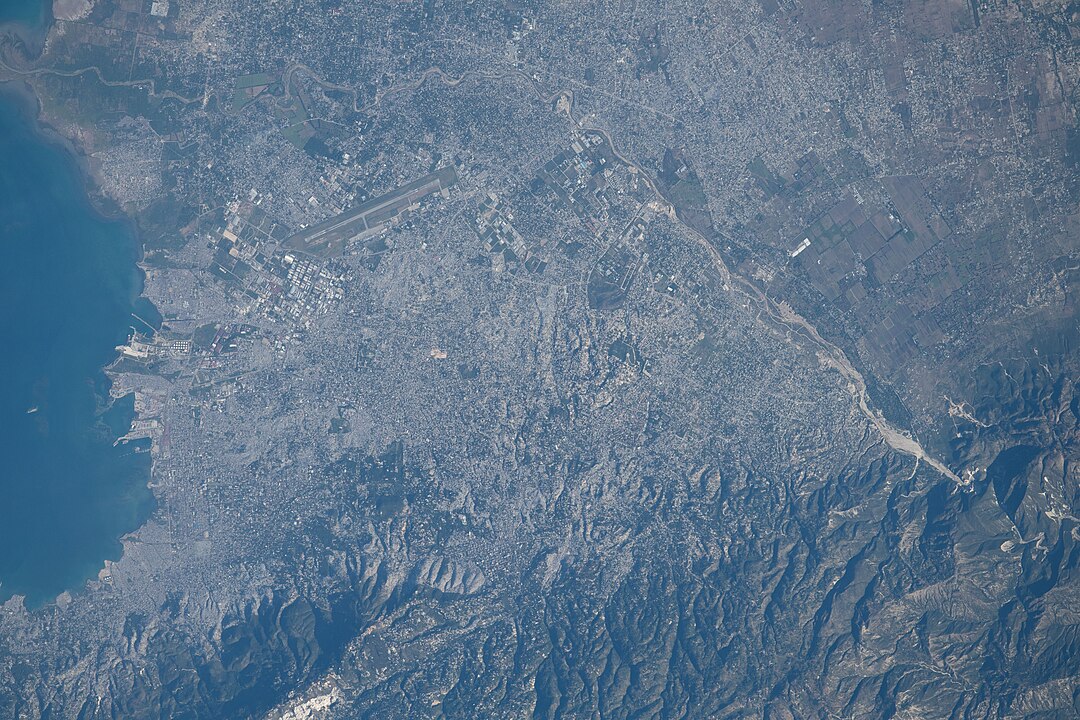


Before You Travel to Haiti
Five things every smart traveler sorts before booking.
- 1
Passport valid 6+ months from entry date
Most countries refuse entry on passports expiring within six months. Renew now if you're close.
- 2
Visa requirements for Haiti
Some are visa-free, some require an e-visa filed days ahead, some need an embassy appointment.
- 3
Travel insurance booked
A hospital visit in Haiti can run $4,000-15,000 without cover. Credit card insurance usually excludes alcohol-related incidents.
- 4
eSIM data plan ready before landing
Airport SIM kiosks need your passport and overcharge tourists. Install an eSIM in 60 seconds, online before you fly.
- 5
Accommodation reserved in the right district
The wrong neighborhood means a 45-minute taxi every night. Map the venues first, then book.
Compare hotels in Haiti
Hotels, hostels, and short-term rentals across the country's main nightlife cities.
Legal Framework
Haiti has no specific law criminalizing prostitution. The country's penal code addresses related offenses like pimping and operating a brothel, but the sale and purchase of sexual services between consenting adults exists in a legal gray zone. No regulatory framework governs the industry, and there are no licensing requirements, health checks, or worker protections.
Our field team visited Haiti most recently in March 2026.
This absence of regulation doesn't mean acceptance. Haitian society is deeply conservative, shaped by Catholic and Protestant Christian values that view sex work negatively. The gap between legal silence and social stigma creates a shadow economy with no oversight or safety net for anyone involved.
Haiti's child protection laws exist on paper but enforcement is severely compromised by the collapse of state institutions. International organizations including UNICEF and the International Justice Mission have documented widespread exploitation of minors. Any involvement with someone underage carries severe consequences under both Haitian and international law.
Enforcement Reality
Haiti's law enforcement infrastructure has effectively collapsed in many parts of the country. The Haitian National Police (PNH) is understaffed, underfunded, and outgunned by armed gangs that control large swaths of Port-au-Prince and surrounding areas. Vice enforcement is essentially nonexistent when police can't maintain basic security in most neighborhoods.
In Petionville and a handful of other secure enclaves, private security firms have filled the vacuum left by the state. Hotels, restaurants, and nightlife venues employ armed guards, and some neighborhoods maintain their own security checkpoints. This privatized security system provides a thin layer of protection but operates outside any legal framework.
The UN and multinational security forces have deployed in Haiti periodically, most recently with a Kenya-led Multinational Security Support mission. These forces focus on gang violence and territorial control rather than any form of vice enforcement. Their presence fluctuates based on international political decisions.
Cultural Context
Haitian culture is rich and complex, rooted in a blend of West African traditions, French colonial heritage, and the unique legacy of being the first Black republic. Vodou, Creole language, and a fierce sense of independence define the national identity. Music, particularly kompa (compas), is central to social life and remains one of the few cultural spaces that functions normally despite the ongoing crisis.
The economic reality dominates everything. Haiti is the poorest country in the Western Hemisphere, with most of the population living on less than $2 per day. This extreme poverty shapes every social interaction between Haitians and foreign visitors. The power imbalance is enormous and impossible to ignore.
Haitian women face particular economic pressures. Employment opportunities are scarce, the informal economy dominates, and social safety nets don't exist. Foreign visitors should approach all interactions with awareness of this context and the ethical weight it carries.
Dating Culture
Dating in Haiti follows traditional patterns where men are expected to initiate and demonstrate financial stability. Haitian culture values family heavily, and relationships often involve extended family from an early stage. French and Haitian Creole are the primary languages; English is uncommon outside of NGO circles and some business contexts.
Foreign visitors are rare in Haiti outside of aid workers, missionaries, and diaspora members visiting family. A tourist presence in nightlife venues draws immediate attention. Some of this attention is genuine curiosity, and some is driven by economic necessity. The distinction between the two can be difficult to read.
The Haitian diaspora, particularly in Miami, Montreal, New York, and Paris, maintains strong ties to the country. Diaspora members who return for visits navigate a different social landscape than other foreigners, as they understand the cultural codes and language but are still viewed through an economic lens.
Dating Apps
Internet access in Haiti is limited and expensive. Mobile data coverage exists in Port-au-Prince and Petionville but is unreliable. WiFi is available at hotels and some restaurants in Petionville but speeds are slow.
Tinder and other dating apps have minimal user bases in Haiti. WhatsApp is the dominant communication platform for everyone who has a smartphone. Facebook is widely used and serves as a social networking tool more than Western-style dating apps.
Meeting people happens almost exclusively in person. Bars, clubs, church events, and family gatherings are the primary social venues. For foreign visitors in Petionville, hotel bars and the small number of functioning nightlife venues are the realistic options.
Key Cities
Port-au-Prince is the capital and the only city with any nightlife infrastructure. Specifically, Petionville, the upscale hillside suburb, concentrates what remains of Haiti's restaurant and entertainment scene. The rest of Port-au-Prince is largely controlled by armed gangs and is not safe for visitors.
Cap-Haitien is Haiti's second city on the northern coast. It's significantly safer than Port-au-Prince but has minimal nightlife beyond a few local bars. The Citadelle Laferriere, a UNESCO World Heritage Site, draws some tourism.
Jacmel on the southern coast is known for its arts scene and annual carnival. A handful of guesthouses and restaurants cater to visitors, but nightlife is limited to occasional live music events.
Safety Considerations
Haiti is currently rated Level 4 ("Do Not Travel") by the U.S. State Department. This is the highest warning level, shared with active conflict zones. The security situation is not comparable to other Caribbean destinations:
Kidnapping for ransom is a serious and ongoing threat throughout Haiti, including in Port-au-Prince and Petionville. Both Haitians and foreigners are targeted. Armed gangs conduct kidnappings openly, and ransom demands typically range from $10,000 to $500,000 USD. Some victims have been killed even after ransom was paid. If you choose to travel to Haiti despite advisories, maintain an extremely low profile and never travel without armed security.
- Armed gangs control approximately 80% of Port-au-Prince. Movement between neighborhoods can require passing through gang-controlled territory
- Do not travel by road between cities without armed security escort. Highway robberies and carjackings are common
- The airport (Toussaint Louverture International) and roads to/from it are high-risk areas for kidnapping
- Medical facilities are extremely limited. Hospitals lack basic supplies, and medical evacuation to Miami (the nearest adequate care) costs $25,000+ USD
- Power outages are constant. Carry a flashlight and keep devices charged
- Do not display any valuables, electronics, or jewelry in public
- Travel insurance with kidnap-and-ransom coverage and medical evacuation is not optional; it's a necessity
- Register with your country's embassy before arriving
- Keep cash reserves in multiple locations. ATMs are unreliable and banks have limited hours
- Save emergency contacts: police 114, fire 115, ambulance 116
Common Scams
Fake checkpoints. Individuals set up unofficial roadblocks and demand payment to pass. Some are legitimate community security points; others are robbery setups. Travel only with someone who knows the current road situation.
Airport hustlers. Aggressive "helpers" at Toussaint Louverture Airport attempt to grab luggage and demand payment. They may also steer you to unlicensed vehicles. Arrange airport pickup through your hotel or a verified security company before arriving.
NGO impersonation. Individuals claim to work for international organizations and request money for fabricated projects. Verify any claims through official channels.
Currency manipulation. Haiti uses the Haitian gourde (HTG), but many transactions reference the "Haitian dollar" (5 gourdes = 1 Haitian dollar), creating confusion. Always clarify which currency a price is quoted in. USD is widely accepted in Petionville at varying exchange rates.
Romance and visa scams. Requests for money to process visa applications, pay for English classes, or handle family emergencies should be treated with extreme skepticism.
What Not to Do
- Do not travel to Haiti against your government's travel advisory without understanding the full scope of the security situation
- Do not move around Port-au-Prince without armed security, especially after dark
- Do not take photos of security checkpoints, police, or military personnel
- Do not carry large amounts of cash in one location. Spread it across multiple secure spots
- Do not resist during a robbery or kidnapping attempt. Compliance increases survival odds
- Do not discuss your itinerary, hotel, or financial situation with strangers
- Do not engage with anyone who appears underage under any circumstances
- Do not assume that Petionville is safe simply because it's the "nice" part of Port-au-Prince. Kidnappings occur there too
- Do not drive yourself. Hire a driver who knows current road conditions and gang boundaries
- Do not travel after dark outside of secure, guarded compounds
Sources
- U.S. Department of State: Haiti Travel Advisory - Level 4: Do Not Travel advisory with detailed security information
- UK Foreign, Commonwealth & Development Office: Haiti Travel Advice - Safety, health, and legal information for travelers
- Australian Government Smartraveller: Haiti - Travel advisory and practical information
Get the Legal Status PDF, 50 countries
Newsletter signup coming soon. Check back shortly.
Emergency Information: Haiti
- Emergency:
- 114
- Embassy Note:
- Most embassies are in Port-au-Prince, though several have reduced operations or evacuated staff due to the security crisis. Check with your government before traveling.
Other Options in the Area
Antigua and Barbuda
A guide to nightlife in Antigua and Barbuda, covering St. John's bar scene, English Harbour venues, local laws, costs, safety, and cultural norms on this twin-island Caribbean nation.
Aruba
Aruba's nightlife centers on the resort strip along Palm Beach, with hotel bars, casinos, and a handful of clubs. Prostitution is illegal, the scene is small, and safety requires basic awareness. A guide to going out on the island.
Bahamas
The Bahamas nightlife revolves around Nassau and Paradise Island, where casino resorts, beach clubs, and downtown bars create a scene that ranges from high-end to local. Cable Beach and Bay Street offer distinct experiences at Caribbean-high prices.
Barbados
Barbados nightlife centers on the south coast's Saint Lawrence Gap, a short strip of bars and clubs catering to tourists and locals alike. Expect high prices, a safe atmosphere by Caribbean standards, and a small but consistent scene shaped by rum culture and soca music.
Similar Countries in Other Regions
Countries with a similar overall score to Haiti (3.3) but in different parts of the world.
Austria
3.3Central Europe
Vienna's regulated nightlife scene, from Gurtel bar strips to Prater party zones. Fully legal and licensed, with German-speaking Europe's most structured approach.
Chile
3.3South America
Santiago and Valparaiso offer South America's most orderly nightlife scene, with cocktail bars, live music, and a late-night culture shaped by Chilean reserve and European influence.
Honduras
3.3Central America
Honduras has limited nightlife concentrated in Tegucigalpa and Roatan. Extremely high violent crime rates make safety the top priority for any visitor.
Was this guide helpful?