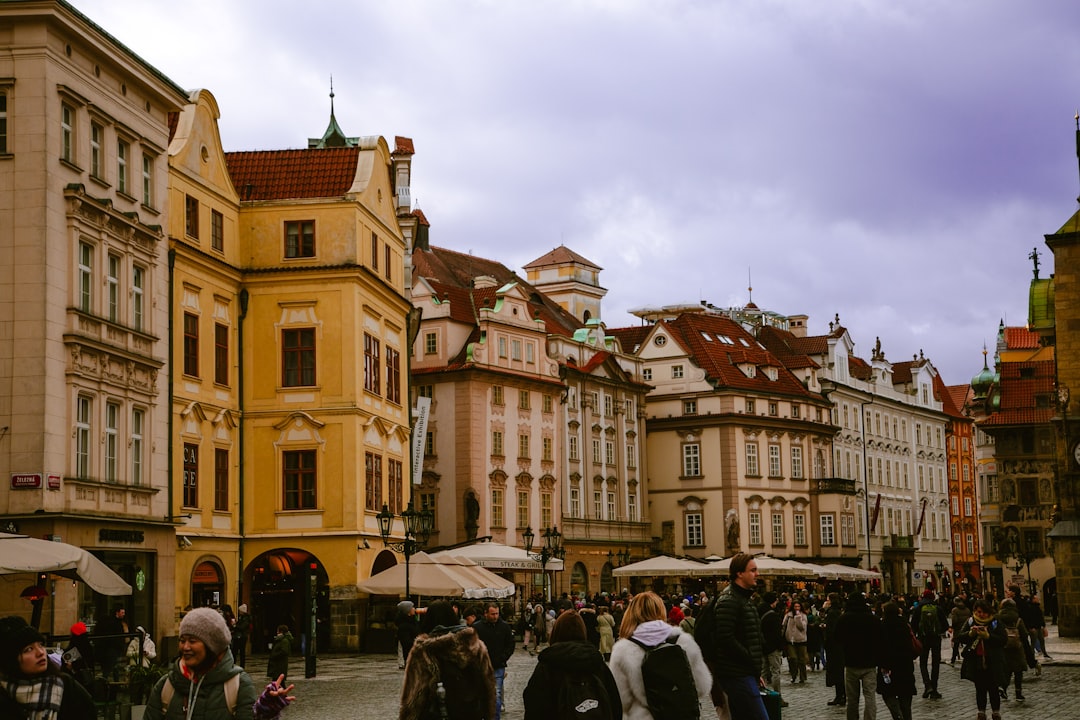

Neighborhoods to Explore
Explore each area for detailed nightlife guides
District Map of Cheb
Pick a district to recenter the map and see hotels nearby.
Where to stay in Cheb
Compare hotels and rentals across the city's nightlife districts.
See places to stay and current pricesOverview
Cheb is a small town of roughly 32,000 people in the far west of Czechia, sitting almost directly on the German border. The Bavarian city of Waldsassen is just 10 kilometers away, and the larger German cities of Hof and Bayreuth are within an hour's drive. This proximity to Germany defines nearly everything about Cheb's adult entertainment history.
Research conducted through direct venue visits and local interviews.
For decades, the price differential between Germany and the Czech Republic drew German men across the border for cheaper services of every kind: fuel, cigarettes, dental work, and adult entertainment. Cheb and the surrounding border towns became synonymous with cross-border sex tourism, earning international media coverage and political attention on both sides of the frontier. The industry peaked in the late 1990s and early 2000s, then entered a steady decline that continues today.
The Peak Years
The period from roughly 1995 to 2005 was the height of Cheb's border trade. After the fall of communism, the economic gap between Germany and the Czech Republic was enormous. A service that cost EUR 100 in Germany might cost EUR 20-30 in Cheb. Nightclubs, roadside establishments, and private venues multiplied along the border roads, particularly on the E48 and routes connecting to the German crossing points.
At its peak, estimates put the number of border adult venues in the wider Cheb-As-Teplice corridor at 50 or more. The clientele was almost exclusively German-speaking. Menus, signage, and advertising were in German. Czech was the secondary language in what was technically a Czech town.
The scale attracted attention from German and international media. Documentaries, newspaper investigations, and political campaigns focused on the border zone. Concerns about trafficking, organized crime, and exploitation drove both German and Czech authorities toward action.
Current Status
The scene today is a fraction of what it was. Several factors drove the decline.
EU accession in 2004 began eroding the economic gap. As Czech wages and prices rose, the cost advantage narrowed. German clients who once crossed the border for bargain prices found the savings less dramatic.
Police crackdowns on both sides of the border targeted the most visible establishments. Czech authorities closed venues linked to trafficking and organized crime. German police ran operations against clients and facilitators.
Economic development in the Czech Republic changed the local labor market. Younger Czechs found better opportunities in Prague, Brno, or abroad. The workforce that had staffed border venues contracted.
Internet and advertising shifts dispersed the market. Clients who once drove to physical border clubs shifted to online platforms and urban establishments in Prague or other cities.
What remains is scattered. A handful of nightclubs still operate in and around Cheb, some on the border roads and others closer to the town center. The days of dozens of neon-lit roadside clubs are over. The surviving venues range from reasonably run establishments to genuinely rough operations. Quality control is minimal.
Key Areas
The border roads running from Cheb toward Pomezi nad Ohri and the German crossing points still have a few roadside venues. These are the most visible remnants of the old industry, often marked by illuminated signs visible from the road.
Cheb town center has a handful of bars and clubs that offer adult entertainment alongside regular nightlife. The town's historic square (Namesti Krale Jiriho z Podebrad) is attractive in a faded Central European way, but the town itself is quiet and the tourist infrastructure is thin.
The As area, about 15 kilometers northwest of Cheb, had its own cluster of border venues. Some of these also survive in reduced form.
Safety
This section is longer than usual because the risks here are real and qualitatively different from Prague or Brno.
- Robbery is a documented concern around border area venues. Vehicle break-ins are common. Don't leave anything visible in your car, and don't carry excess cash
- The quality of remaining venues varies enormously. Some surviving clubs maintain basic standards. Others are rough enough that entering alone is inadvisable
- Scams take different forms here than in Prague. You're less likely to face a clip joint bill and more likely to encounter straightforward theft or aggressive pricing after the fact
- Don't go alone. This is not a standard tourist area with police patrols and CCTV. If something goes wrong, help may not be immediately available
- Organized crime has historically been present in the border zone. While crackdowns have reduced this, the legacy persists in some operations
- Road safety matters if you're driving. The border roads are rural, sometimes poorly maintained, and wildlife crossings are common after dark
- Czech police in the border area have a mixed reputation. Most are professional, but corruption allegations have surfaced repeatedly in reporting on the region
Emergency number 112 works throughout Czechia. The nearest hospital with a full emergency department is Nemocnice Cheb on Svatopluka Cecha street.
Pricing
Cheb remains cheap by European standards, though the extreme bargains of the 1990s are gone.
- Nightclub entry: 0-200 CZK (EUR 0-8)
- Drinks in venues: 60-150 CZK (EUR 2.50-6) for beer, 100-250 CZK for spirits
- Private services at clubs: EUR 30-50 for a standard session, sometimes less
- Private apartment sessions in town: EUR 30-60
These are among the lowest prices you'll find anywhere in the EU for adult services. The low cost reflects the market reality: Cheb is a declining destination with limited demand and significant competition from online alternatives.
Cultural Context
Cheb's border economy tells a story about post-communist transition that most travel guides won't touch. The town's adult entertainment industry emerged from genuine economic desperation after 1989. When the average Czech wage was a fraction of the German equivalent, the border trade was a rational economic response to a massive price differential.
That context doesn't make the industry's problems, trafficking concerns, exploitation, organized crime, less serious. It does mean that moralizing about the border zone misses the economic forces that created it and the economic changes that are slowly dismantling it.
Today's Cheb is trying to move on. The town has a genuinely pretty historic center, a castle ruin, and proximity to the Karlovy Vary spa region. Local officials would rather promote cultural tourism than manage the remnants of the border trade. The transition is incomplete, but it's real.
Getting There
From Germany: Cheb is directly accessible via the E48 from Hof (about 70 km, 50 minutes by car) or via Waldsassen and the Pomezi border crossing. Deutsche Bahn regional trains run from Nuremberg to Cheb with a change at Marktredwitz; total journey time is roughly 3 hours.
From Prague: The drive is about 180 km (2 hours) west on the D6 and then Route 6. Direct trains from Prague hlavni nadrazi run to Cheb in approximately 3.5 hours, operated by Czech Railways (CD). RegioJet bus service is faster at around 2.5 hours.
From Karlovy Vary: Just 40 km east, a 30-minute drive or a short train ride. Karlovy Vary's spa town atmosphere is a world away from Cheb's border character.
What Not to Do
- Don't treat Cheb like Prague. The tourist infrastructure is minimal, English is less widely spoken, and the safety margin is thinner
- Don't visit roadside border clubs alone, especially late at night
- Don't leave valuables in your car. Vehicle break-ins around border venues are well-documented
- Don't carry more cash than you intend to spend
- Don't assume all remaining venues operate honestly. Research what you can online before visiting
- Don't drive after drinking. Czech blood alcohol limits are zero tolerance (0.0%), and police checkpoints exist on border roads
- Don't ignore your instincts. If a situation feels wrong, leave immediately. The savings aren't worth the risk
- Don't confuse Cheb's current state with its peak-era reputation. Most of what you've read about the border zone describes a scene that largely no longer exists
Get the Legal Status PDF, 50 countries
Newsletter signup coming soon. Check back shortly.
Flights to Cheb
Compare prices across airlines. Filter by stops, time, and cabin.
Airport transfer to Cheb
Pre-booked transfers cost about the same as a metered taxi but cut out the airport queue, the meter argument, and the "no English" routine that takes some drivers to the wrong address. Fixed price quoted before booking, driver tracks your flight, waits with a name sign at arrivals.
Book a KiwiTaxi transferFrequently Asked Questions
Was this guide helpful?