Calle Heredia
Illegal but Tolerated3/5ModerateDistrict guide to Calle Heredia in Santiago de Cuba, the city's most famous street for live music, Casa de la Trova, and traditional Cuban nightlife.

Where to stay near Calle Heredia
Hotels walking distance from the venues on this page.
See places to stay and current pricesTop Spots for a Night Out
What's open and worth your time
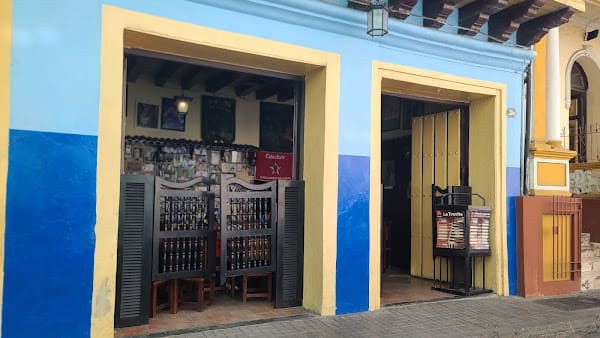
Casa de la Trova
Legendary son music venue operating since 1968 where Santiago's best trovadores perform nightly in a small colonial-era house. The spiritual home of Cuban son.
Calle Heredia 208
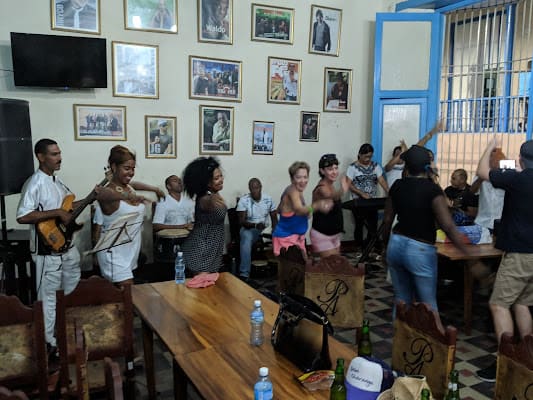
Patio ARTex
Open-air courtyard venue on Calle Heredia with regular live son, bolero, and salsa performances. Drinks at state prices, relaxed atmosphere.
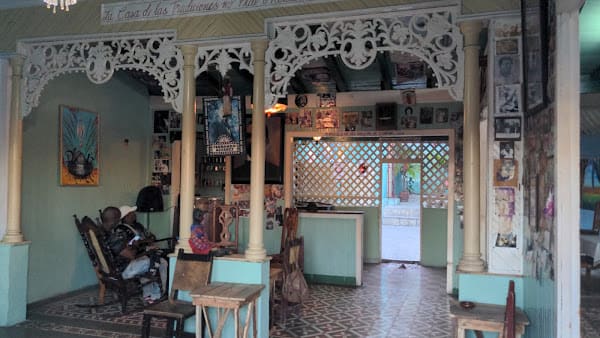
Casa de las Tradiciones
Son and trova venue in the nearby Tivoli neighborhood with an intimate patio setting and nightly acoustic performances. Feels like a house party.
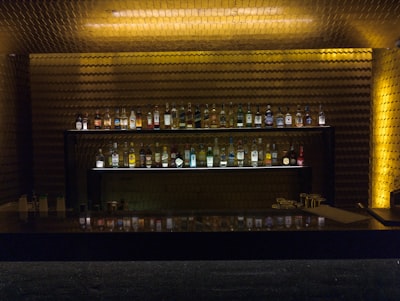
Club 300
Multi-level bar and cultural space in a restored colonial building with live music on weekends and a rooftop terrace.
La Taberna de Dolores
Casual bar on Plaza de Dolores, a short walk from Calle Heredia. Cold Cristal and Bucanero beer with outdoor seating on the square.
Overview and Location
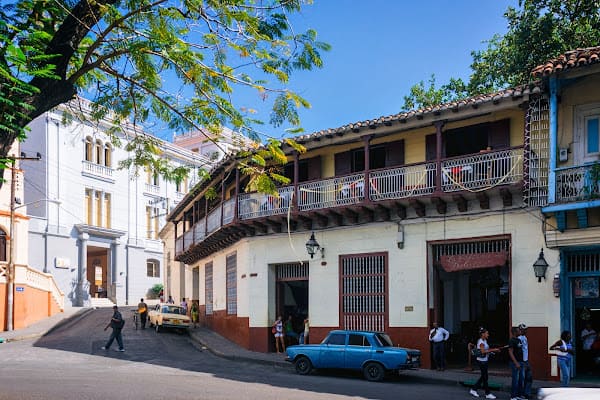
Calle Heredia runs east from Parque Cespedes, Santiago de Cuba's main square, through the heart of the historic center. It's a narrow street, maybe four blocks long, but it carries more cultural weight per meter than almost anywhere else in Cuba. This is where son cubano, the genre that eventually gave the world salsa, has been played live for over a century. Casa de la Trova, the most famous music venue on the island, sits on this street. On weekend nights, the music doesn't stay inside the buildings; it spills through every open doorway, and the street itself becomes a gathering space, dance floor, and communal living room.
Venue details verified through on-site research.
Santiago's relationship to music is different from Havana's. In the capital, music has been partly absorbed into the tourist industry, packaged and priced for visitors. On Calle Heredia, the music is still primarily for Santiagueros. Tourists are welcome, but they're not the target audience. The performers at Casa de la Trova are playing because this is what they've done their whole lives, and the Cubans in the audience are dancing because this is how their evenings work. That authenticity is Calle Heredia's real draw.
Legal Status
Prostitution is illegal under Cuban law. Santiago de Cuba sees less tourist-focused enforcement than Havana because far fewer tourists visit the city. Police patrol the area around Parque Cespedes and Calle Heredia but with less intensity than you'd encounter in Habana Vieja.
The jineterismo (hustling) dynamic exists in Santiago but operates differently than in Havana. Approaches are less frequent, less aggressive, and less transactional. The lower tourist volume means the hustle is less economically rewarding, so you're more likely to encounter genuine curiosity and hospitality. Economic motivations still play a role in some foreigner-local interactions, but the overall social atmosphere on Calle Heredia is less calculated than what you'd find on Havana's tourist circuit.
Casas particulares in Santiago follow the same guest registration requirements as the rest of Cuba. Your host must record the identity of any Cuban guest you bring to the property.
Costs and Pricing
Santiago is one of Cuba's cheapest cities for nightlife, and Calle Heredia is cheap even by Santiago standards.
Casa de la Trova entry: About 150 CUP for foreigners. This is the best value in Cuban nightlife.
Drinks: Beer costs 150-200 CUP ($1-1.50 USD). Mojitos run 150-250 CUP. Rum, served straight, is 100-200 CUP. Prices are consistent across the venues on Calle Heredia and the surrounding blocks.
Other venue covers: Small bars along Calle Heredia may charge 50-100 CUP cover on busy nights, or nothing at all. Casa de la Musica (on nearby Calle Corona) charges 200-300 CUP depending on the act.
Food: Restaurants near Parque Cespedes serve full meals for 500-1,500 CUP ($3-9 USD). Street food runs 50-200 CUP. Eat dinner before 9 PM; restaurants in Santiago close earlier than in Havana.
Transport: Bicitaxis (pedal-powered cabs) within the center cost 100-300 CUP. Horse-drawn carriages are another option for short trips, similarly priced. For longer rides, classic car taxis cost 300-800 CUP.
Full evening estimate: An entire night on Calle Heredia, including Casa de la Trova entry, several rounds of drinks, and food, rarely exceeds 1,500-2,500 CUP ($8-15 USD). It's extraordinarily cheap.
Currency notes: Cuba uses the Cuban peso (CUP). US dollars circulate but may carry a surcharge. Bring euros or Canadian dollars. US-issued credit and debit cards do not work in Cuba. ATMs are scarce and none accept US-issued cards. Carry enough cash for your stay.
Street-Level Detail
Walking east from Parque Cespedes, Calle Heredia begins at the edge of the square, passing the Hotel Casa Granda on your left. The Hotel's rooftop terrace overlooks Parque Cespedes and is a popular spot for sunset drinks, though prices are higher than street-level venues (cocktails around 3-5 USD).
Casa de la Trova is a few doors down on the right side of the street. The building is a beautiful balconied townhouse with a ground-floor bar and an upstairs performance space. Founded in 1968, it has hosted virtually every significant figure in Cuban music. The venue is small and intimate. You're close to the performers, and when the room fills up on a Saturday night, the energy is physical. The music is traditional son, bolero, and trova, played by musicians who often span three generations. Performances typically start around 9 PM and run until the early hours. Entry is about 150 CUP. Beers cost 150-200 CUP. Mojitos are roughly the same.
Beyond Casa de la Trova, the street holds several more music venues and bars. The UNEAC (Union of Writers and Artists) has a courtyard space that hosts cultural events and live performances. Small bars with just a handful of chairs, a sound system, and a performer or two line the street. On Saturday nights, the street itself becomes so crowded you can barely walk, with music competing from multiple doorways and people dancing on the sidewalk.
The atmosphere on Calle Heredia on a good night is hard to describe without sounding promotional, but here are the facts: multiple live bands playing simultaneously in venues spaced 50 meters apart, crowds of Cubans dancing in the street, the smell of rum and cooking food, and a heat that doesn't break even after the sun goes down. Santiago is hotter and more humid than Havana year-round, and Calle Heredia on a Saturday night in July is an oven. Dress light and expect to sweat.
Parque Cespedes, at the western end of Calle Heredia, is the default gathering point before and after the music. Benches fill up after sunset, and the evening social scene starts here before migrating to the street. The park is well-lit and feels safe in the evenings.
Safety
Santiago de Cuba is a safe city by Caribbean standards. Violent crime against tourists is rare, and Calle Heredia, as the most visible and well-trafficked nightlife street, is one of the safer spots in the city. The area is close to Parque Cespedes, which has police presence, and the crowds on weekend nights create a natural safety buffer.
The risks on Calle Heredia are minor but real:
- Petty theft is the main concern. Pickpocketing can happen in the crowded street scene on busy nights. Keep your phone and wallet in front pockets and be aware of your surroundings
- The heat is a genuine physical factor. Santiago is significantly hotter and more humid than Havana. Drink water, pace your alcohol consumption, and take breaks. Dehydration and alcohol don't mix well
- Street lighting drops off quickly once you leave the main street. The side streets running perpendicular to Calle Heredia are darker and emptier. Stay on the main drag
- Power outages happen regularly in Santiago. Carry a flashlight or backup battery
- Medical facilities in Santiago are basic. Bring prescription medications and a first-aid kit
- Emergency number: 106
- Very few ATMs exist and none accept US-issued cards. Carry cash
Cultural Context
Calle Heredia is named after Jose Maria Heredia, the poet considered one of the founders of Spanish Romanticism, who was born in Santiago in 1803. But the street's cultural significance is built on music, not literature.
Santiago de Cuba is the birthplace of son cubano, the guitar-and-percussion-based genre that emerged from eastern Cuba in the late 19th century and eventually evolved into salsa. Son was born in the same poor, Afro-Cuban neighborhoods that surround Calle Heredia. Casa de la Trova preserves this tradition not as a museum piece but as a living practice. The musicians who play there are continuing a lineage that stretches back over a century.
The cultural expectation on Calle Heredia is participation. If the music is playing, you dance. Or at least you try. Nobody cares about technique. What matters is showing that the music moves you. Standing against a wall with your arms crossed watching the locals dance will mark you as a tourist faster than your sunburn or your camera. Santiagueros are known across Cuba as some of the best dancers on the island, and their standard is high, but they're generous with visitors who make the effort.
Santiago's population has stronger Afro-Caribbean cultural influences than Havana's. The food is spicier, the music is rawer, and the relationship to African-origin religious traditions like Santeria and Palo Monte is more open. Approaching this culture with genuine interest and respect is noticed and appreciated.
Spanish is the only working language on Calle Heredia. English speakers are extremely rare. If you can't communicate at all in Spanish, you'll miss most of what makes this street special. Even basic phrases, and especially any vocabulary related to music, will change how people interact with you. Telling a musician you love son or asking about the history of Casa de la Trova earns genuine warmth.
Scam Warnings
The music venue redirect is Santiago's most common tourist scam. Someone approaches you near Parque Cespedes or on Calle Heredia and offers to take you to a "secret" or "better" music venue than Casa de la Trova. You end up at a private house where drinks are overpriced, the music is from a speaker, and your guide collects a commission. Stick to established venues on Calle Heredia itself. If someone suggests going elsewhere, politely decline.
The friendly guide: A local offers to walk you around the city or accompany you for the evening. The walk ends at a restaurant or bar where your companion earns a commission on your spending. Choose your own destinations.
Overcharging at restaurants: Some restaurants quote prices in USD to tourists while the menu prices are in CUP. Always confirm the currency before ordering and ask to see a printed menu.
Cigar scams: Less common in Santiago than Havana, but they happen. Someone offers genuine branded cigars at a discount. They're always counterfeit. Buy cigars from official stores only.
Nearby Areas
Parque Cespedes is at the western end of Calle Heredia. The main square is Santiago's social anchor, with the Hotel Casa Granda's rooftop bar and benches that fill up every evening.
Casa de la Musica is on Calle Corona, a short walk from Calle Heredia. It's a larger venue focused on salsa and more contemporary Cuban music, with a younger crowd and serious dancing.
The Casco Historico (historic center) extends a few blocks in every direction from Parque Cespedes. Most of Santiago's restaurants, bars, and accommodation are within walking distance.
Padre Pico Steps, south of the center, are Santiago's most photographed landmark and the entrance to the Tivoli neighborhood, a historically Haitian area with its own cultural character.
Meeting People Nearby
Calle Heredia on a Saturday night is a social experience by default. The street is too crowded and the music too loud for anyone to stay isolated. Casa de la Trova is the easiest place to meet both Cubans and the small number of tourists who make it to Santiago. Dancing is the social currency here; if you're on the floor, people will dance with you. Parque Cespedes is a more relaxed option for conversation, with benches filling up after sunset. The Hotel Casa Granda terrace offers a more curated meeting point with a view. Santiago's expat community is very small; this isn't a city with a foreigner scene. For a full overview of Santiago de Cuba's social culture, see the main Santiago de Cuba city guide.
Best Times
Santiago is hot year-round, with temperatures regularly exceeding 32C. The driest months are December through April. The wet season (May through November) brings heavy afternoon rains but nightlife continues after they pass.
- Saturday night: The peak. Calle Heredia is at its most alive, with multiple venues running simultaneously and the street itself becoming a dance floor
- Friday night: Active but less intense than Saturday
- 9 PM - midnight: Casa de la Trova performances peak during these hours
- Late July: Santiago's Carnival is Cuba's biggest and most intense celebration. The street parties, conga processions, and live music run for days. Calle Heredia is at the center of it all. Book accommodation months ahead
- Early July: Festival del Caribe celebrates Afro-Caribbean music and traditions
- Dry season (December - April): Most comfortable weather and fewer mosquitoes
- January: International Pepe Sanchez Trova Festival brings extra performances to Casa de la Trova and surrounding venues
What Not to Do
- Do not skip Casa de la Trova. It's the single most important cultural experience in Santiago
- Do not refuse to dance when the music is playing. Standing still and watching is considered odd and unfriendly
- Do not follow people to "secret" music venues away from Calle Heredia
- Do not expect to find English speakers. Spanish is the only working language here
- Do not wander off the main streets after dark. Street lighting is unreliable in Santiago
- Do not carry more cash than you need for the evening
- Do not rely on the internet. WiFi hotspots exist but are slow and expensive. Buy ETECSA cards in advance
- Do not engage with anyone who appears underage. Cuban enforcement is strict and prison conditions are severe
- Do not buy street cigars. Official stores are the only reliable source
- Do not compare Santiago unfavorably to Havana. Santiagueros take deep pride in their city's distinct identity and its role as Cuba's cultural capital
- Do not underestimate the heat. Stay hydrated, especially when drinking alcohol. Santiago is significantly hotter than Havana
Get the Legal Status PDF, 50 countries
Newsletter signup coming soon. Check back shortly.
Frequently Asked Questions
Was this guide helpful?