Solo safety
Comfortable
Monthly budget
USD 900-1,700 per month for a comfortable mid-tier life with a one-bedroom in Thao Dien or District 3, daily meals out, motorbike rental, coffee shop habit, and weekend trips.
English level
Patchy English
Visa-free for US
Visa required
Nomad-friendly
Yes
Best season
December to March
Legal status
illegal tolerated
Country
Vietnam
Safety realism: scams to know before you go
The specific patterns operators run on solo male travelers in Ho Chi Minh City. These are not generic warnings; they are the schemes that actually get reported. Knowing the pattern is most of the defence.
Phone snatching from motorbikes
Pedestrians on District 1 sidewalks (especially around Ben Thanh, Nguyen Hue walking street, and the Bui Vien strip at night) get their phones snatched by passengers on passing motorbikes. The bikes ride up onto the pavement at speed, the passenger reaches across, and they're gone before you've turned around. Documented hundreds of times annually.
How to avoid
Never hold your phone in your hand on a District 1 sidewalk. Use it at a cafe table or against a wall facing into the venue. Use earphones for navigation, not held-up screens. If you must use it on the street, stand with your back against a wall so a passing bike can't approach from behind.
Tan Son Nhat airport taxi scam
Unmarked white taxis at Tan Son Nhat airport quote a 'flat fare' to District 1 of 700,000 to 1,500,000 VND. A legitimate metered Vinasun or Mai Linh taxi runs 200,000 to 280,000 VND. Variant: the meter is rigged to run at multiple speed.
How to avoid
At the airport, exit to the main road and take a legitimate Vinasun (white) or Mai Linh (green) taxi from the official rank, or use the Grab app which has a designated pickup at exit 4 of the international terminal. Insist on the meter, photograph the meter reading at the start of the trip if you're paranoid.
Motorbike rental damage shakedown
You return a rental motorbike after a week. The owner inspects it slowly, points out scratches you don't recognise, and demands 2 to 4 million VND for 'damage repair'. The bike is then re-rented to the next foreigner with the same scratches.
How to avoid
On day one, photograph every angle of the bike including underneath the seat and behind the panels. Email yourself the photos with the date stamp. Rent from a reputable shop like Tigit Motorbikes or Style Motorbikes in District 1, not a hostel desk. A small written rental agreement with pre-existing damage noted is standard.
Bui Vien aggressive vendors and 'free' photo offers
On the Bui Vien walking street at night, vendors push laughing gas balloons, fake watches, and 'free' photos with girls who then demand 500K VND tips. Aggressive children sell flowers and gum at restaurant tables.
How to avoid
Avoid eye contact and walk on. Don't accept anything free. If a vendor inserts a balloon or product into your hand, drop it on the ground; don't engage with the rate negotiation. Don't sit at tables with empty chairs facing the street; the children work that perimeter.
Cyclo (xich lo) ride bait-and-switch
Cyclo drivers in District 1 offer a tour of the city for 100,000 VND. After two stops, the price is changed to 600,000 VND because 'each landmark is extra'. The driver becomes loud and threatening if you refuse.
How to avoid
Cyclos are essentially a tourist novelty in 2026; the locals all use motorbikes. If you want one, agree on the total price in writing on the WhatsApp app or via Google Translate, photographed, before getting in. Three landmarks, one hour, total 150K VND, includes all stops.
Where to live as a solo traveler
The neighborhoods that consistently work for solo arrivals, with realistic monthly rent for a furnished one-bedroom. Choose by stay length: most first-month visitors do well in the expat-default; long-stayers tend to migrate to the local-priced alternatives.
District 1 (Ben Thanh, Bui Vien, Nguyen Hue)
The historic and tourist center. Walkable around the Saigon Opera House, the Notre Dame Cathedral, and the central post office. Bui Vien is the loud backpacker strip. Ben Thanh Market and Nguyen Hue walking street are the daytime tourist beats. Highest hotel density. Best for one to two week first-time visits, but a noisy and tourist-heavy base for longer stays.
Monthly rent
USD 500-900 for a furnished one-bedroom in a serviced apartment
District 3
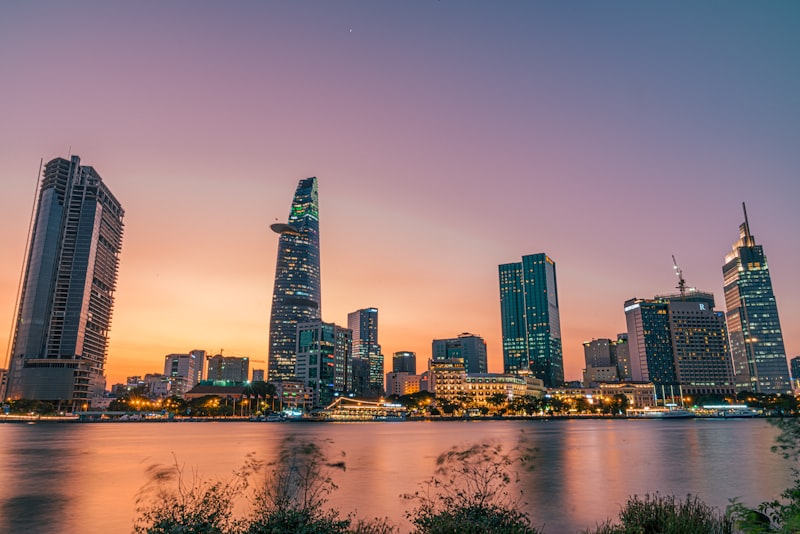
RecommendedAdjacent to District 1 but with the volume turned down. French colonial architecture, the Tan Dinh pink church, leafy streets, the best mid-tier restaurants in central Saigon, and far less tourism. The Bitexco Tower neighbourhood for cafes. A solid base for nomads who want central but not chaos.
Monthly rent
USD 450-800 for a furnished one-bedroom
Thao Dien (Thu Duc City / former District 2)
RecommendedThe expat suburb 8 to 10 km east of central Saigon across the river. International schools, craft breweries (Heart of Darkness, Pasteur Street Tap House), Western supermarkets (Annam, Vincom), the metro line 1 set to open in 2026. Quieter, leafier, more residential. Most foreign families and long-term expats live here. Less Vietnamese feel; more international suburb.
Monthly rent
USD 550-1,100 for a furnished one-bedroom in a modern building with pool
Phu Nhuan / District 4
RecommendedMore local, less expat. Phu Nhuan is a working middle-class district immediately north of District 1 with mid-rise buildings and significant Vietnamese-only restaurant scene. District 4 is just south across the canal and has the best seafood streets in the city. Both are 30 to 50 percent cheaper than District 1 with metro proximity.
Monthly rent
USD 300-550 for a furnished one-bedroom
Where to stay in Ho Chi Minh City on a longer trip
Compare apartments and aparthotels around the neighborhoods above. Longer stays (14+ nights) typically get monthly-discount pricing not visible on standard hotel sites.
See places to stay and current pricesWhy Ho Chi Minh City Works for a Solo Male Traveler
HCMC sits in a sweet spot for the solo male nomad: cheap enough that USD 1,200 buys a real life, modern enough that gigabit fibre, Western supermarkets, and Uber-equivalents work without friction, and lively enough that you're not bored after 7pm. The infrastructure is younger than Bangkok's, the scams are less industrial than Manila's, and the language barrier is more navigable than Tokyo's. Vietnam is also notably safer for solo travellers than its Southeast Asian peers; violent crime against foreigners is rare, and the worst day-to-day risk is having your phone snatched off the sidewalk.
The city is built for a 25 to 40 year old with a remote-work setup. Coffee culture rivals anywhere on Earth (Vietnam is the world's number two coffee exporter, and the local cafe scene shows it). Coworking spaces have spread across District 1, District 3, and Thao Dien. Motorbike rental at USD 60 to 100 monthly transforms mobility. Local food is among the world's best and a full meal of pho or banh mi costs USD 1.50 to 3. The weather is consistent and tropical, but with a real dry season from December to March that makes outdoor life easy.
The trade-offs are noise, traffic chaos, and a city that doesn't slow down. Bui Vien is unbearably loud past 9pm Friday and Saturday. The streets are constantly construction-active. Traffic at 5pm in District 1 makes a 4 km trip take 45 minutes by car. Air quality in the dry-cool months is moderate to poor, comparable to Bangkok. Mosquitoes are constant year-round.
Day to Day Reality
A typical day for a solo nomad based in Thao Dien or District 3: a 7am wake-up at 26 to 28 C, coffee at The Workshop or a third-wave cafe like Shin Coffee for 60K VND, an hour at a gym (most condos have one, or a Smartfit membership runs 1.5M VND monthly), a banh mi or pho breakfast at the corner cart for 35K VND. Morning work block from 9am to 12pm at a coworking space (Cirkular, Toong, Dreamplex) or a cafe.
Lunch: a 60K to 90K VND set meal at a com tam (broken rice) or pho restaurant. More work afternoon, then a sunset run along the Saigon River (the Thu Thiem path) or a swim at the apartment pool. Evening: dinner at a Vietnamese restaurant or a craft brewery, drinks if it's social, an early-ish night because the city wakes early and you'll want to start at 7am again.
Weekends gravitate to the coast. Mui Ne and Vung Tau are both 2 to 3 hour bus rides from the city. Beach hostel weekends run USD 50 to 90 inclusive. Da Nang is a 90-minute domestic flight; many nomads do a long weekend or a base-shift to Da Nang for a month.
Visa Reality
US passport holders need a visa for Vietnam, no visa-on-arrival. The e-visa is straightforward: 25 USD, 3 to 5 business days, 90 days validity (extended from 30 in 2023), single or multiple entry. Apply at evisa.xuatnhapcanh.gov.vn directly; avoid third-party services that charge extra.
For longer stays, the 12-month multiple-entry tourist visa is available for nationals of select countries including the US, around 90 to 100 USD all-in via a visa agent. You apply via a Vietnam consulate or a visa run agency in HCMC; processing takes about a week.
The Vietnam digital nomad visa announced in 2024 covers select nationalities with income proof; check current eligibility on the immigration site as the policy is still evolving.
Where to Stay
District 1 as a long-stay base: only if you really want to be in the middle of the action. The serviced apartments around Le Lai or Le Thanh Ton are convenient and walkable, but the noise from Bui Vien and the traffic on Cong Quynh make it a poor night-sleep neighbourhood. Best for a first week, then move out.
District 3 is the unsexy correct answer for many solo nomads. The Tran Quoc Toan area, between the Tan Dinh church and the Reunification Palace, has the best mid-tier restaurant density in the city, lots of independent cafes, and walking-distance to District 1 without the chaos. Rents come in 20 to 30 percent below comparable District 1 buildings.
Thao Dien is the international choice. Older expats, foreign professionals, families. The street life is quieter and less Vietnamese, the restaurants international, the supermarkets Western-stocked. The downside: it's a 25 to 35 minute Grab into central Saigon, and the area can feel more suburban than urban. The metro line 1 opening (long-delayed, currently slated for 2026) will make Thao Dien commutable in 12 minutes; until then, you're committed to a slightly isolated lifestyle. Best for those past the discovery phase.
Phu Nhuan and District 4 are where local-life-priced rents survive. Phu Nhuan is just a 10-minute Grab from District 1, has Vietnamese-only neighbourhoods, and rents are USD 300 to 500 for furnished one-bedrooms. Best for the budget-conscious nomad who's at least partially comfortable navigating in Vietnamese.
Cost of Living Breakdown
Numbers in Vietnamese dong (VND) and USD at approximately 25,000 to 1 (May 2026):
- Rent (1BR Thao Dien or D3, modern, pool/gym): 13M-20M VND (USD 520-800)
- Rent (1BR Phu Nhuan or D4 local): 7M-12M VND (USD 280-480)
- Utilities (electric heavy with AC, water, internet): 1.5M-2.5M VND (USD 60-100)
- Food (mix of street, mid-tier, occasional western dinner): 5M-8M VND (USD 200-320)
- Coffee (third-wave daily): 1.5M-2.2M VND (USD 60-90)
- Gym (Smartfit, Citigym basic): 1M-1.8M VND (USD 40-72)
- Motorbike rental (with monthly discount): 1.5M-2.5M VND (USD 60-100)
- Grab and fuel: 1M-2M VND (USD 40-80)
- Going out (craft beer, dinners, weekend bars): 3M-5M VND (USD 120-200)
- Coworking membership: 2.5M-4.5M VND (USD 100-180)
Total: 23M-44M VND, or USD 920-1,800 monthly. Very tight budget: USD 700 to 900 if you live local. Comfortable mid-tier: USD 1,200 to 1,600. The big swing is rent (Thao Dien vs local) and whether you ride a motorbike or rely on Grab.
Getting Around
Vietnam's traffic is the largest culture shock for many first-time visitors. HCMC has roughly 8.5 million motorbikes serving a population of 9 million. The roads are dense, lane discipline is loose, and motorbikes flow around cars like water.
The two practical mobility options for a long-stay nomad:
Grab (the Vietnamese Uber equivalent) is the friction-free starting point. Order GrabBike (motorbike taxi, 25K to 60K VND across central districts) or GrabCar (35K to 120K VND). The app does in-app payment, no haggling. Drivers' English is patchy; share the destination map pin.
Your own motorbike is the unlock for nomads staying a month or more. Rent from Tigit Motorbikes, Style Motorbikes, or Saigon Scooter Centre for 1.5M to 2.5M VND monthly (USD 60 to 100) including basic insurance. A 110cc to 125cc automatic (Honda Air Blade, Yamaha Janus) is the standard option. You need an International Driving Permit with a motorcycle endorsement to be technically legal; enforcement against foreigners is light but real. Helmet is mandatory, fines are routine.
Riding rules of survival: start on a Sunday morning when traffic is half-density. Match the speed of the bike flow around you, don't try to overtake. Move through intersections steadily; sudden braking is more dangerous than rolling forward. Use both mirrors constantly. Don't ride drunk; police breathalyse foreigners more often than locals.
For the longer term, the HCMC Metro Line 1 opening (long-delayed, currently expected in 2026) will be transformative for Thao Dien residents.
Where to Meet People
The expat and nomad social scene in HCMC is concentrated in three obvious places: Thao Dien (for the international families and longer-term expats), the coworking spaces in District 1 and Thao Dien, and the language exchange / cafe scene in District 3.
Specific on-ramps:
Coworking spaces. Toong (multiple locations), Dreamplex (District 1, District 2), Cirkular (Thao Dien), and Cowork24 (District 3) run regular community events. Most have day-pass and monthly options; monthly memberships start at 2.5M VND. The Thao Dien locations skew expat; District 1 skews mixed expat-Vietnamese tech.
Run clubs. Saigon Hash House Harriers meet Saturdays. Saigon Heat (the basketball team's casual league) plays in District 7. The Thao Dien Runners group does a Saturday 7am along the Saigon River.
Language exchanges and Vietnamese classes. Vietnamese is a hard language and learning even survival Vietnamese opens doors. Apartment-owners speak less English than you think. Mochi Vietnamese, Saigon Language School, and SVL run small-group classes; language exchange nights happen weekly at Yoko Cafe and District 3 pho restaurants.
Sports. Football leagues for men 30+ play in District 7 (RMIT area) and Thao Dien. Tennis is big with the older expat set. Saigon Hot Yoga, BFITX (CrossFit), and several Muay Thai gyms run regular classes.
Cafe culture as meeting hub. The Workshop (D1, the historic third-wave roastery), Shin Coffee (multiple locations), Loft Cafe Saigon, and Phuc Long are all reliable cafes for working solo where chance encounters happen. The District 3 cafe scene around Tran Quoc Toan is the most local-feeling and the easiest place to drift into conversation.
Day Trips and Weekend Escapes
Mui Ne (5-hour bus from Saigon, 4-hour drive): the kitesurfing beach town with red sand dunes and seafood shacks. A Friday-to-Sunday escape, all-in around USD 80 to 130 including bus and beach hostel. Cu Lao Cau island offshore is an easy day trip with snorkelling and zero crowds.
Vung Tau (2-hour bus or 90-minute speedboat): the weekend beach for HCMC locals. Less polished than Mui Ne but easier as a one-day trip. The speedboat from Bach Dang ferry terminal runs USD 12 each way.
Da Lat (45-minute domestic flight, or 7-hour overnight bus): cool mountain climate (15 to 22 C year-round), pine forests, French colonial era villas, weasel-coffee farms, the city is a long-weekend destination for romantics. A good break from the Saigon heat.
Phu Quoc (1-hour domestic flight): the island in the Gulf of Thailand. Powdery beaches, snorkelling, the increasing tourist-resort scene. Pricier weekend, USD 200 to 350 all-in.
Logistics
SIM and connectivity. Viettel and Mobifone are the major carriers. eSIM works. A 4G SIM at the airport: 250K to 400K VND for the package most travellers want (15GB to 30GB monthly). In town the same package is 150K to 250K. Or use Yesim from before arrival.
Money. Wise and Revolut cards work at most ATMs. Withdrawal fees are around 55K to 70K VND per transaction. The largest banks (Vietcombank, Techcombank, BIDV) generally work most reliably with foreign cards. Many street vendors and small restaurants are cash-only; carry 200K to 500K VND in small bills.
Health. FV Hospital and Vinmec are the major private healthcare options, both with English-speaking staff and reasonable prices (a general consultation around 600K to 1.2M VND). Pharmacies are everywhere, most US medications available without prescription.
Bottom Line
Ho Chi Minh City suits the solo male traveller who wants Southeast Asia infrastructure at a third the cost of Bangkok, with a more dynamic and less expat-saturated feel. It rewards the rider (you'll get more from the city with a motorbike), the food-curious (the local food is among the world's best), and the early-morning person (the city wakes at 6am). It doesn't suit the noise-sensitive (District 1 is loud) or the rider-averse (without a motorbike you're at the mercy of Grab fares and slow taxis).
Start in Thao Dien or District 3 for a first month, get a motorbike if you can ride, take Vietnamese classes within the first two weeks, join a coworking space, and let the city open up from there.
For the explicit nightlife side of HCMC the main TDG site covers it; see the Ho Chi Minh City page and the Vietnam country guide.
Staying connected in Vietnam
Tourist SIM cards usually require your passport and a trip to a kiosk. An eSIM works the moment you land: scan a QR, pick a data plan, done. Roaming charges from your home carrier rarely make sense for trips longer than a few days.
Yesim covers 200+ countries including Vietnam with pay-as-you-go data and duration-based plans, useful when trip length is unpredictable. Works on iPhone XS and newer, plus most Android phones from 2020 onward. No contract, no commitment.
Get Yesim eSIMNeed the after-dark context too?
This solo travel guide deliberately stays on the lifestyle side of Ho Chi Minh City. For the full legal framework, adult entertainment districts, and venue-level coverage, see the main TDG Ho Chi Minh City city page and Vietnam country guide.
Frequently Asked Questions
Affiliate disclosure. Some links on this page lead to Stay22, Yesim, and other partners. If you book through them we may earn a small commission at no extra cost to you. We only link to operators we'd use ourselves; no editorial decision on this page is influenced by commissions.