Pelourinho
Legal, Unregulated2/5RiskyGuide to Pelourinho's nightlife in Salvador, including live samba bars, cachaça houses, capoeira squares, safety advice, and pricing.

Where to stay near Pelourinho
Hotels walking distance from the venues on this page.
See places to stay and current pricesNightlife Picks
Bars, clubs, and lounges in the area
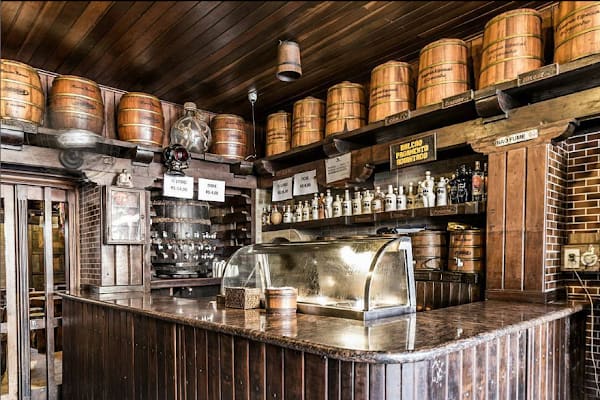
O Cravinho
Iconic Pelourinho bar specializing in cachaça infusions, operating since 1989. The signature drink (cravinho) combines cachaça with cloves, honey, and lemon. Four connected spaces give it room to breathe even on busy nights.
Terreiro de Jesus, 3, Pelourinho
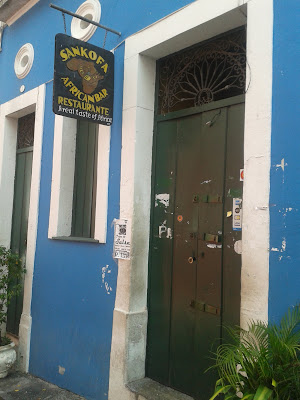
Sankofa African Bar
African-themed bar set in a colonial sobrado, decorated with maps and masks from across the continent. Reggae, salsa, and Afro-house nights with hammocks upstairs and a veranda overlooking the lane below.
Ladeira de São Miguel, 7, Pelourinho
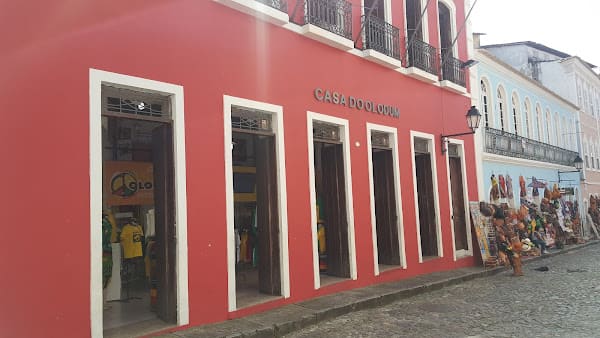
Casa do Olodum
Home of the famous Bloco Afro Olodum, the percussion ensemble that defined Salvador's samba-reggae sound. Tuesday and Sunday rehearsals are open to the public with thunderous drumming and dancing crowds spilling into the street.
Rua Gregório de Mattos, 22, Pelourinho
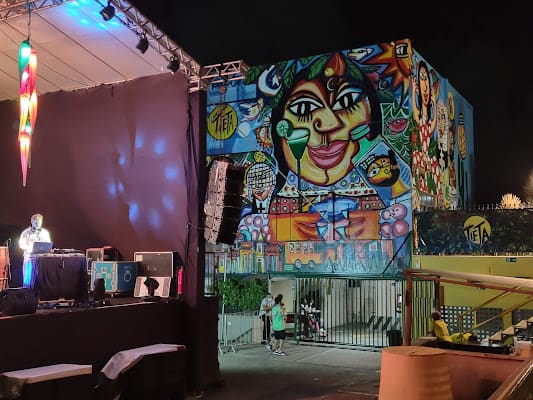
Largo da Tieta
Reinaugurated public square and event space with capacity for 1,500, hosting regular samba nights, axé concerts, and Carnival programming. Two access points connect Pelourinho proper with the Baixa dos Sapateiros.
Rua das Laranjeiras, Pelourinho
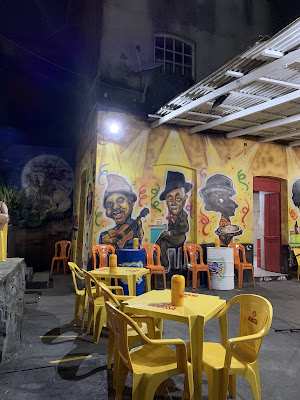
Clube do Samba
Long-running samba club in the historic center with over two decades of programming. Live bands play traditional samba and pagode with a small dance floor and Bahian finger food.
Rua das Laranjeiras, Pelourinho
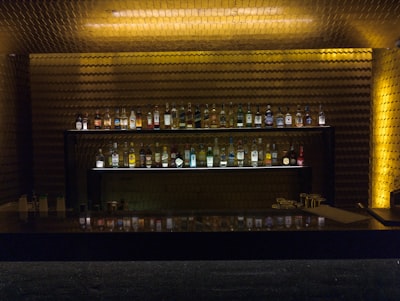
Arté Bahia
Open-air bar with cheap drinks, affordable cover, and a Friday reggae night that draws a young mixed crowd of locals and backpackers. The terrace overlooks the colonial rooftops of the historic center.
Largo do Pelourinho, Pelourinho
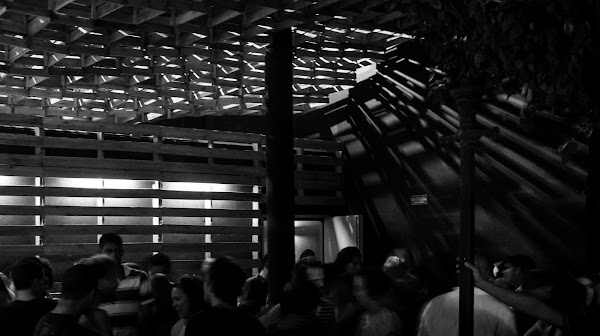
Commons Studio Bar
Laid-back venue that fills around midnight with local musicians playing forró, reggae, and rock. The crowd is alternative and largely local, and sets often run until early morning.
Rua das Laranjeiras, Pelourinho
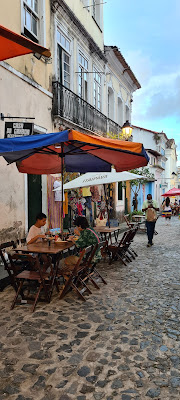
Quincas Berro d'Água
Restaurant-bar named after the Jorge Amado character, set on the small square of the same name. The terrace fills with people for the Tuesday outdoor concerts and the kitchen serves classic Bahian dishes until late.
Largo Quincas Berro d'Água, Pelourinho
Bar Zulu
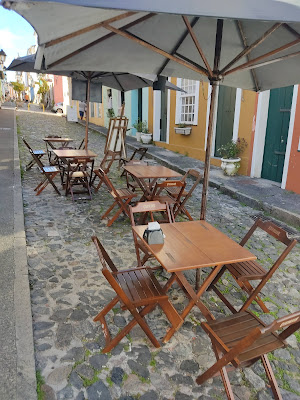
Casual bar run by a British expat near Terreiro de Jesus, popular with visitors looking for a low-key place to drink. English-speaking staff, a small menu of grilled food, and a courtyard that stays busy on event nights.
Rua das Laranjeiras, 15, Pelourinho
Cantina da Lua
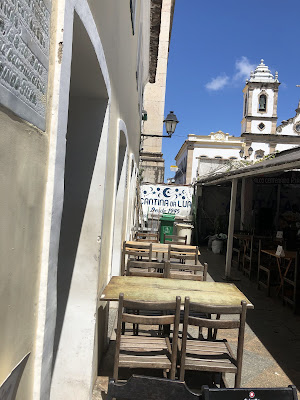
Decades-old Pelourinho institution on Terreiro de Jesus, with sidewalk tables that fill from late afternoon onwards. The classic stop for a beer before catching one of the square's outdoor performances.
Terreiro de Jesus, 2, Pelourinho
Overview and Location
Pelourinho is the historic core of Salvador, a UNESCO World Heritage Site since 1985 and one of the most architecturally intact colonial centers in the Americas. The neighborhood occupies a sloped grid of pastel-painted sobrados (colonial townhouses), baroque churches, and cobblestone lanes on the upper plateau of the city, looking down over the Bay of All Saints.
This guide is based on multiple evenings spent in Pelourinho.
The nightlife concentrates on a few key squares. Terreiro de Jesus and the adjoining Praça da Sé form the upper anchor, lined with bars and the city's cathedral. The Largo do Pelourinho sits at the heart of the colonial grid, the photogenic open square with the Igreja do Rosário dos Pretos at its base. Largo Quincas Berro d'Água, Largo da Tieta, and Largo Tereza Batista form a connected circuit of smaller event squares where live music and outdoor performances happen most evenings.
Pelourinho's character changes throughout the day. Mornings are dominated by tour groups and cruise-ship visitors. Late afternoons see capoeira circles forming on the squares and street vendors setting up. Evenings shift toward live music, with bars filling from 8 PM onwards and the squares hosting free outdoor concerts on Tuesdays and event nights. After 1 AM, the area empties out fast, and the streets that felt full of life two hours earlier become unsafe.
Legal Status
The Brazilian legal framework applies. Prostitution between consenting adults over 18 is legal. Operating a brothel, pimping, and trafficking are criminal offenses. Pelourinho's nightlife operates entirely within the bar and live-music sphere; there are no dedicated termas, go-go clubs, or organized adult-entertainment venues in the historic center.
What does exist is informal. Some women approach foreign visitors at bars and on the squares offering company, with any subsequent arrangements being private. Police patrols target drug dealing, trafficking, and offenses against minors. The penalty for any sexual offense involving a minor is severe under Brazilian law and pursued aggressively in Bahia.
Pelourinho is policed by a combination of Polícia Militar units and the Bahia tourist police (DELTUR), with a base station on Largo do Pelourinho. Cameras cover most of the central squares. The visible enforcement is one of the reasons the historic center remains relatively safe during operating hours, though the perimeter and after-hours periods are not policed at the same level.
Costs and Pricing
Pelourinho prices are moderate by Salvador standards, with significant variation between street-level bars and the more polished venues.
Beer (chopp draft or bottled longneck) runs R$8-15 at the casual sidewalk bars and street vendors, R$12-25 at the more polished venues. Caipirinhas range from R$15 at a basic boteco to R$30 at venues like O Cravinho that specialize in cachaça-based drinks. A cravinho infusion at O Cravinho is R$15-20.
Cover charges for indoor live-music venues are R$20-50 depending on the night and the act. Casa do Olodum charges R$30-60 for rehearsals. The squares host free outdoor concerts most nights, particularly during the Tuesday Terça da Benção, with the only expected payment being a R$5-10 tip to the performers and the cost of drinks from sidewalk vendors.
Food is cheap. Acarajé (fried bean cake) from street vendors on the squares costs R$8-15. A proper Bahian dinner of moqueca de peixe at a Pelourinho restaurant runs R$60-120 per person. Pratos feitos (set meals) at neighborhood lanchonetes are R$25-40.
Transport. An Uber from a Barra hotel to Terreiro de Jesus costs R$20-35, depending on traffic. From Rio Vermelho, expect R$15-25. Return rides at 2 AM cost similar amounts with potential surge pricing on Tuesday and Friday nights.
A full night in Pelourinho (Uber both ways, two or three drinks, snack, cover for one venue) lands at R$80-200. That's substantially less than what you'd pay in Copacabana or Vila Madalena for a comparable evening.
Street-Level Detail
The classic route through Pelourinho starts at Praça da Sé, walks down the slope toward Terreiro de Jesus, and continues into the colonial grid. Terreiro de Jesus is the largest open square in the historic center, framed by the Catedral Basílica de Salvador on one side and a row of restored townhouses on the others. Sidewalk tables at O Cravinho, Cantina da Lua, and several other bars line the square, and outdoor concerts are often staged here.
From Terreiro de Jesus, Rua das Laranjeiras drops down toward the Largo do Pelourinho. This is one of the busiest stretches at night, with bars, restaurants, and shops in nearly every storefront. The lane is narrow, cobblestoned, and lined with the colorful facades that make Pelourinho photographable from any angle.
Largo do Pelourinho itself sits at the bottom of the slope, with the Igreja Nossa Senhora do Rosário dos Pretos at its base. The square hosts Tuesday outdoor concerts and serves as the gathering point for capoeira circles in the afternoon. Stairs and lanes lead off in multiple directions, with most of the nightlife concentrated up the slope rather than further into the warren.
The smaller squares (Largo Quincas Berro d'Água, Largo Tereza Batista, Largo Pedro Archanjo) form a connected event circuit immediately uphill from the Largo do Pelourinho. These are programmed during the high season and Carnival but quieter on regular weeknights. The newly reinaugurated Largo da Tieta to the north has become a major event space, accommodating up to 1,500 people for samba nights.
Ladeira de São Miguel descends from the area, lined with smaller bars and the African-themed Sankofa. The lane is atmospheric but quieter than the main grid and not somewhere to wander alone late at night.
Safety
Pelourinho during the operating hours of its venues (roughly 6 PM to 1 AM) is the most patrolled part of Salvador. Police presence on the main squares is visible, cameras cover key intersections, and tourist police speak some English and respond to incidents reasonably quickly. The risk profile changes sharply after the bars close.
Phone snatching is the single most common crime tourists experience here. Teenagers on foot grab phones from anyone holding them up to take photos. The colonial facades are photogenic and most visitors get robbed at exactly the moment they're trying to capture them. Keep your phone in your pocket. If you want a photo, find a spot with foot traffic, take it quickly, and put the phone away.
Necklace and chain grabs follow the same pattern. Don't wear gold, silver, or anything that looks valuable. A snatcher will pull a chain off your neck and disappear down a side lane in seconds.
Friendship bracelet scam: A woman or child approaches with a brightly colored ribbon and offers a "blessing" from Senhor do Bonfim. The bracelet gets tied to your wrist with a knot that's hard to remove, and then comes the demand for R$50-200. Politely decline before any ribbon touches your wrist. If a bracelet is already tied, it costs nothing to walk away with it on.
Drink spiking: Documented at bars in and around Pelourinho. Victims are drugged, walked to ATMs, and forced to withdraw cash. Never leave your drink unattended. Don't accept open drinks from strangers. If you feel suddenly disoriented, tell the bartender or security immediately.
The streets immediately surrounding Pelourinho (down the hill toward Comércio, into Santo Antônio, or toward Saúde) get unsafe fast. Don't walk between neighborhoods. The Ladeira do Carmo, which descends from Largo do Pelourinho toward Santo Antônio, is fine during the day but a robbery setup at night.
After the bars close around 2 AM, the squares empty out and police presence thins. Don't linger. Have your Uber requested before leaving the bar, walk straight to the pickup point, and don't stop to take photos on the way.
Cultural Context
Pelourinho's name (literally "whipping post") refers to the stone column where enslaved Africans were punished publicly during the colonial era. The neighborhood was the social and commercial heart of colonial Brazil from the 16th to 19th centuries, and the deep Afro-Brazilian cultural layers visible in today's nightlife (samba, capoeira, candomblé references, the percussive style of Olodum) trace directly to that history.
The Bloco Afro Olodum, founded in 1979, defined the samba-reggae sound that influenced Paul Simon, Michael Jackson (whose "They Don't Care About Us" was filmed on Largo do Pelourinho), and a generation of Brazilian musicians. The Casa do Olodum on Rua Gregório de Mattos still holds rehearsals open to the public, and the bloco parades during Carnival in some of the largest organized formations.
Capoeira circles (rodas) form on the squares in late afternoons, particularly on Largo Tereza Batista. The art form, with roots in Angolan martial traditions adapted by enslaved Africans, combines fight, dance, and acrobatics to a soundtrack of berimbau, atabaque, and pandeiro. Watch from outside the circle, applaud when appropriate, and tip the musicians a few reais if you want to support them.
The Tuesday night Terça da Benção tradition begins with the 6 PM mass at the Igreja do Rosário dos Pretos, the church built by and for enslaved Africans during the colonial era. The mass is followed by hours of free outdoor concerts on Largo do Pelourinho and surrounding squares. This is the single biggest weekly cultural event in Salvador and worth planning around.
English is uncommon at most Pelourinho bars. Portuguese basics will help significantly, particularly for negotiating prices, ordering food, and dealing with situations. A polite "boa noite, tudo bem?" and "obrigado" go a long way.
Nearby Areas
Santo Antônio Além do Carmo sits just to the north of Pelourinho, up the Ladeira do Carmo. It's a quieter colonial district with smaller pousadas, art galleries, and a handful of restaurants. The Forte de Santo Antônio offers daytime views of the bay. The area is generally safer than Pelourinho itself during the day, but the steep lanes connecting the two are unsafe at night.
Comércio lies at the bottom of the cliff, accessible via the Elevador Lacerda. It's the commercial port district and largely empty at night. Do not walk down to or up from Comércio after dark.
Praça Castro Alves at the western edge of the historic center hosts large Carnival stages and concerts. During off-Carnival times it's quiet at night.
Barra is a 15-minute Uber ride away. The beachfront tourist neighborhood is where most foreign visitors stay and has its own bar and club scene. See the Barra district guide for details.
Rio Vermelho is a 15-20 minute Uber ride north. This is where locals go out, with a denser and more authentic nightlife scene than Pelourinho's tourist-driven model. See the Rio Vermelho district guide for details.
Meeting People Nearby
Pelourinho's social scene revolves around the squares rather than indoor venues. Sit at a sidewalk table at Cantina da Lua or O Cravinho on a Tuesday or Friday, and conversations will start themselves. The crowd is a mix of locals, Brazilian tourists from other states, and international visitors, with the language barrier being the main constraint for English speakers. For a fuller picture of Salvador's social and dating scene, see the main Salvador city guide.
Best Times
- Tuesday 7 PM to 1 AM (Terça da Benção): The biggest weekly draw, free outdoor concerts on Largo do Pelourinho and surrounding squares
- Friday and Saturday nights: Strong turnout at indoor venues and the squares
- Sunday afternoon: Capoeira circles and street performances; the Mercado Modelo across the cliff is open during the day
- 9 PM to 1 AM: Peak bar hours
- Carnival week (February or March): The Pelourinho circuit is one of three official Carnival circuits, with continuous programming and massive crowds
- August through October: Cooler dry season, fewer cruise-ship tourists, comfortable evenings
- Avoid Monday nights: Many bars are closed or quiet
- Don't stay past closing: The area empties out after 2 AM and gets unsafe
What Not to Do
- Don't walk between Pelourinho and any other neighborhood after dark
- Don't carry your phone in your hand while walking the streets
- Don't wear jewelry, watches, or expensive sunglasses
- Don't accept friendship bracelets or "blessings" from strangers
- Don't leave your drink unattended at any bar
- Don't accept drinks from people you've just met
- Don't try to climb stairs or descend into Santo Antônio at night
- Don't go down the Ladeira do Carmo or any descending lane after dark
- Don't take photos with valuables visible (phone, camera, watch)
- Don't pay capoeira performers more than R$5-10 unless you genuinely want to
- Don't linger after 2 AM when bars close
- Don't engage with anyone who appears underage; Brazilian law treats offenses against minors with extreme severity
- Don't withdraw cash from any ATM after dark
- Don't follow strangers down side lanes for "better" or "cheaper" venues
Get the Legal Status PDF, 50 countries
Newsletter signup coming soon. Check back shortly.
Related Guides
Salvador Overview
City guide to nightlife in Salvador, Bahia, covering Pelourinho, Barra, Rio Vermelho, safety warnings, scams, and cultural context.
Read guideBarra
Guide to Barra's oceanfront nightlife in Salvador, covering beach bars, clubs, the Farol lighthouse area, safety, and pricing.
Read guideRio Vermelho
Guide to Rio Vermelho, Salvador's bohemian nightlife district, covering live-music bars, late-night botecos, safety, and pricing.
Read guideFrequently Asked Questions
Was this guide helpful?