Solo safety
Very Safe
Monthly budget
USD 1,600-2,600 per month for a comfortable mid-tier life in Vinohrady or Karlin with a one-bedroom, daily restaurant meals, gym, and weekend trips.
English level
Widely Spoken
Visa-free for US
Yes
Nomad-friendly
Yes
Best season
April to June (also September to October)
Legal status
legal unregulated
Country
Czechia
Safety realism: scams to know before you go
The specific patterns operators run on solo male travelers in Prague. These are not generic warnings; they are the schemes that actually get reported. Knowing the pattern is most of the defence.
Wenceslas Square 'pretty woman' bar scam
An attractive English-speaking woman approaches a man near Wenceslas Square, suggests they go for a drink at 'her favourite' bar nearby. Three rounds later the bill is CZK 25,000 to 60,000 ('special imported drinks', 'sitting fee', 'entertainment surcharge'). Two large doormen block the exit until you pay or hand over your card. The bar rotates names every few months.
How to avoid
Never let a stranger choose your venue. If a woman in central Prague approaches you with an invitation to a specific bar, that's the scam. Pick your own bars from a guidebook or app. The legitimate venues have visible Czech locals drinking, posted prices, and don't have aggressive doormen.
Old Town and Wenceslas Square pickpocketing
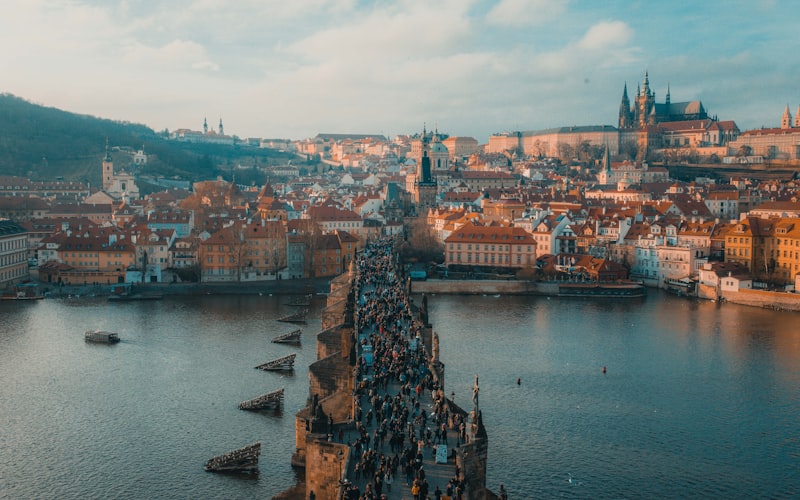
Organised teams operate around the Astronomical Clock at the top of the hour, on Charles Bridge during peak crossings, and on the metro Line A. Classic distraction: someone bumps into you, second person lifts wallets and phones from front pockets. Phone-snatching on bridges and from outdoor cafe tables is also common.
How to avoid
Wallet in front pocket with your hand on it in crowded areas. Don't put your phone on a cafe table where you can't see it; clip it to your bag strap or keep it in your pocket. Day-pack worn on the front when you're in a tourist crush.
Street taxi meter fraud
Taxis hailed on the street, particularly around Wenceslas Square, the airport, and tourist hotels, run with rigged meters that quote double the city's regulated rate. A CZK 250 ride becomes CZK 800 to 1,500. The 'broken meter' variant: 'I have a flat rate, 600 koruna, friend'.
How to avoid
Use Uber, Bolt, or Liftago apps for all city rides. Pre-book a Letiste Praha airport transfer for around CZK 600. The official taxi rank at the airport has metered Tick Tack and AAA Radiotaxi cabs that are honest. Don't hail on the street.
Currency exchange margin
Stare Mesto exchange booths advertise great rates in big numbers, then apply a 12 to 20 percent commission in fine print. A 'no commission' sign often means even worse exchange rate. Some booths refuse to refund if you back out of the transaction after they've counted out koruna.
How to avoid
Use bank ATMs (CSOB, Komercni Banka, Ceska Sporitelna) for cash. Decline the dynamic currency conversion offer at any card terminal (always pay in CZK, not your home currency). If you must use an exchange booth, look for ones inside major banks; the standalone tourist-zone booths are mostly traps.
Aggressive strip-club tout extraction
Touts on the smaller side streets off Wenceslas Square (Stepanska, Ve Smeckach) hand out 'VIP entry, free drink' cards. Inside the venue you're charged CZK 4,000 to 9,000 for a single drink, with doormen blocking the exit until payment. Some venues run a credit card terminal scam where they swipe twice or hold the card for hours.
How to avoid
Never follow a tout with a leaflet to any venue. If you want a strip club in Prague the legitimate venues (Goldfingers, Atlas, Darling Cabaret) have clear pricing, are advertised openly, and have no aggressive promoters at the door. Avoid the side-street venues off Wenceslas; they're nearly all extraction operations.
Where to live as a solo traveler
The neighborhoods that consistently work for solo arrivals, with realistic monthly rent for a furnished one-bedroom. Choose by stay length: most first-month visitors do well in the expat-default; long-stayers tend to migrate to the local-priced alternatives.
Vinohrady
RecommendedThe expat-favourite residential neighbourhood east of Wenceslas Square. Belle Epoque buildings, tree-lined streets, the Riegrovy Sady park, the densest concentration of third-wave cafes in Prague, walkable infrastructure throughout. The metro Line A runs through it (Namesti Miru, Jiriho z Podebrad, Flora). Best landing zone for a first-month visitor in Prague.
Monthly rent
USD 1,000-1,600 for a furnished one-bedroom in a renovated building
Karlin
RecommendedThe newer, hipper neighbourhood east across the river. Industrial buildings converted to coworking spaces, breweries, and design offices, the Karlinske Namesti square with its restaurants, the cycling and running infrastructure along the Vltava embankment. Most popular with younger nomads and Czech tech workers. The metro Line B (Krizikova, Florenc) connects it.
Monthly rent
USD 950-1,500 for a furnished one-bedroom
Zizkov
RecommendedThe bohemian, working-class-feel neighbourhood north of Vinohrady. The Zizkov TV Tower, Riegrovy Sady, the densest pub-to-resident ratio in Europe (locally legendary). More authentically Czech, less polished, cheaper than Vinohrady. The neighbourhood famously has the most pubs per square kilometre in the world.
Monthly rent
USD 700-1,100 for a furnished one-bedroom
Vrsovice
RecommendedThe just-getting-trendy neighbourhood south of Vinohrady. Genuinely local, Czech families, the Heroldovy Sady park, smaller cafes and pubs, modest prices. The metro is less direct but the tram network covers it. Best for the longer-stay nomad past the discovery phase.
Monthly rent
USD 650-1,000 for a furnished one-bedroom
Where to stay in Prague on a longer trip
Compare apartments and aparthotels around the neighborhoods above. Longer stays (14+ nights) typically get monthly-discount pricing not visible on standard hotel sites.
See places to stay and current pricesWhy Prague Works for a Solo Male Traveler
Prague is the European nomad city that delivers on infrastructure, beauty, and price together. Cobblestone streets and Habsburg architecture meet a working tram network, gigabit fibre in most apartments, and a coworking density rivalling Berlin's. Beer is the cheapest in any European capital with proper nightlife (CZK 50 to 80, or USD 2.20 to 3.50, for a half-litre at a non-tourist pub). The city is fully walkable; you can live months without taxis or rideshares. Czech English proficiency is the highest in Central Europe outside Berlin, so the daily friction of being foreign is minimal.
The city suits a solo male traveller in his 30s who wants a real European base without Western European prices. USD 2,000 a month buys a comfortable life in Vinohrady or Karlin; USD 2,500 to 2,800 buys a generous one. The culture rewards extended stay: there's a thriving classical music scene (the Prague Spring festival, the Rudolfinum and Municipal House concert halls), three real opera houses, a strong jazz scene (the Reduta and U Maleho Glena clubs), and a beer culture that operates as a daily social practice rather than a weekend event.
The trade-offs are weather (real winters: November through February averages around 0 to 4 C with short daylight), the tourist saturation of the historic centre (avoid Old Town Square mid-day in summer), and a relatively conservative cultural undercurrent that takes some learning to read. Czechs are warm once you're inside the social circle but a slow start with strangers. The drinking culture is heavy by Western European standards; expect more daily beer than you'd plan in many other cities. Air quality in winter is moderate due to coal heating; less than ideal for runners.
Day to Day Reality
A typical day for a solo nomad in Vinohrady: an 8 to 9am wake-up, coffee at Coffee Source, Original Coffee, or Mama Coffee for CZK 90 to 130 (USD 4 to 5.50), morning work block at a coworking space (Locus Workspace, Opero, Impact Hub) or a cafe. Most cafes in Vinohrady are quiet enough for productive work; specific ones (Cafe Lounge, La Boheme Cafe) have built communities of remote workers.
Lunch: a polední nabídka (set lunch menu) at a Czech pub for CZK 180 to 260 (USD 8 to 12). The set-lunch culture is the budget secret of Prague; most non-tourist pubs offer a soup-plus-main-plus-side for very reasonable prices Monday through Friday noon to 2pm.
Afternoon work, then an early evening walk to Riegrovy Sady or Letna Park for the views, a beer at one of the park's outdoor beer gardens (Letna especially, with the Old Town panorama). Dinner: at a Czech restaurant (Lokal, Pivnice U Cerneho Vola, Cestr if you want a steakhouse), CZK 400 to 700 (USD 18 to 30). Evening: a pub crawl through Vinohrady's local pubs, a concert at the Rudolfinum if it's a Thursday or Friday, or a beer-tasting night at a microbrewery in Karlin or Holesovice.
Weekends: a hike in Cesky Raj (Bohemian Paradise, a UNESCO geological park 90 minutes by car), a day trip to Cesky Krumlov, a long weekend in Brno, Karlovy Vary (the spa town), or further afield to Dresden or Vienna by train.
Visa Reality
Czechia is an EU member and part of the Schengen Area. The 90-days-in-180 rule applies for non-EU passport holders (US, UK, Canada, Australia and most non-EU Western countries). Critically, the 90-day allowance is cumulative across the entire Schengen zone, not Czechia alone. So if you've been in Spain or Germany within the past 180 days, your Prague time is reduced accordingly.
For longer stays, the standard digital-nomad route is the Czech Zivnostensky list visa (zivno). It's actually a trade-license visa: you register as a sole proprietor (osoba samostatne vydelecne cinna) in Czechia, you get a business license, and on the basis of that you get a long-stay visa for 12 months extendable to 24, then a residence permit. Requires proof of accommodation, around CZK 130,000 in bank funds, and a working knowledge of the Czech tax system (most expats use a local tax advisor or accountant for the first year). The whole process from zero to visa-in-passport takes 6 to 12 weeks.
The EU Blue Card and Employee Card routes apply if you have a Czech employer. The Investor and Family Reunification routes exist as well.
Where to Stay
Vinohrady is the comfortable expat default. The streets between Namesti Miru and the Riegrovy Sady park have the densest mix of cafes, restaurants, and apartment buildings in the city. Belle Epoque facades, mature trees, walkable everywhere. The metro Line A runs through the centre. Furnished one-bedrooms in renovated buildings (often original 1900s buildings with modern fitouts) run CZK 24,000 to 38,000 monthly (USD 1,050 to 1,650). Most foreign workers and nomads in their 30s end up here.
Karlin is the alternative for younger nomads and tech-industry workers. East across the river from Stare Mesto, the area gentrified rapidly after the 2002 flood damaged and then renewed it. Industrial buildings converted to coworking spaces (the JustCo Karlin location is a flagship), independent breweries, cycling along the Vltava. Slightly more modern feel than Vinohrady, slightly less of the Habsburg atmosphere. Rents are similar to Vinohrady or marginally lower.
Zizkov is the bohemian, slightly grittier option. Famous for having the highest pub-to-resident ratio in Europe (the local joke: "Zizkov is just a hill of pubs with a few apartment buildings stuck between them"). The neighbourhood has working-class roots, a young creative crowd now, the Riegrovy Sady on the southern border, and the iconic communist-era TV Tower. Rents come in 25 to 35 percent below Vinohrady equivalents (CZK 18,000 to 27,000 monthly).
Vrsovice is the still-arriving alternative south of Vinohrady. More Czech families, fewer foreigners, the Heroldovy Sady park, traditional pubs. Tram-connected to Vinohrady and the centre. Best for the long-stay nomad who's past the first-month discovery phase.
Cost of Living Breakdown
Numbers in Czech koruna (CZK) and USD at approximately 23 to 1 (May 2026):
- Rent (1BR Vinohrady or Karlin, furnished, renovated): CZK 24,000-38,000 (USD 1,050-1,650)
- Rent (1BR Zizkov or Vrsovice): CZK 17,000-25,000 (USD 740-1,090)
- Utilities (electric, water, internet, building fees): CZK 2,800-4,500 (USD 120-195)
- Food (mix of pubs, mid-tier restaurants, cooking): CZK 9,000-14,000 (USD 390-610)
- Coffee (third-wave daily): CZK 2,500-3,800 (USD 110-165)
- Gym (Fitness Pure, Bluefit, BBC): CZK 1,200-2,500 (USD 50-110)
- Transport (Prague Integrated Transport monthly): CZK 550 (USD 25)
- Going out (beers, restaurants, occasional clubbing): CZK 6,000-12,000 (USD 260-520)
- Coworking (Opero, Locus, Impact Hub): CZK 5,500-9,500 (USD 240-415)
Total: CZK 36,000-60,000 monthly for a mid-tier solo nomad, USD 1,600-2,600. Budget option (Zizkov rent, more home cooking, less restaurant): USD 1,200-1,500. High end with a premium Vinohrady apartment and frequent fine dining: USD 2,800-3,500.
Getting Around
Prague's public transport is genuinely excellent: three metro lines (A, B, C), an extensive tram network (the 22 line going to the Castle is famous), and night trams that run when the metro closes. A monthly Prague Integrated Transport pass is CZK 550 (USD 24), among the cheapest urban transit in Europe.
For everything off the public transport network, use Uber, Bolt, or Liftago (the Czech-founded ride-hailing app that locals slightly prefer). Tariffs are reasonable; a central-Prague ride runs CZK 120 to 280 (USD 5 to 12).
Walking is the default in central neighbourhoods. Cycling has improved significantly with the Rekola bike-share and the dedicated cycle infrastructure along the Vltava embankment, but Prague's hills and cobblestones make it less of a daily commuter culture than Berlin or Vienna.
For weekend trips, the Czech train network (Ceske Drahy) and bus operators (RegioJet, Flixbus) connect Prague comfortably to Brno (2.5 hours), Cesky Krumlov (3 hours), Karlovy Vary (2 hours), Pilsen (1.5 hours), and international destinations like Dresden (2.5 hours), Berlin (4 hours), Vienna (4 hours), and Budapest (7 hours).
Where to Meet People
The Prague expat scene is large enough to find your subculture but small enough that you'll see familiar faces quickly. Specific on-ramps:
Coworking spaces. Opero (Vinohrady), Locus Workspace (Stare Mesto), Impact Hub Praha (Holesovice and Smichov), Hubspot, JustCo Karlin all run weekly community events. Day passes CZK 350 to 550; monthly memberships CZK 5,500 to 12,000 (USD 240 to 520).
Czech language classes and exchanges. Czech is hard but charming to attempt. The Charles University Czech for Foreigners course is the gold standard; smaller schools like Glossa, Czech-In Pragua, and Cervinkova run weekly group classes. The Polyglot Club Prague hosts weekly multilingual meetups.
Pub culture as community. Prague pubs (real Czech hospodas, not tourist bars) function as social institutions. Pick a local pub in your neighbourhood (in Vinohrady, places like U Sadu, U Hrocha, Pivovarsky Klub; in Karlin, places like U Vystreleneho Oka, Sad Cafe), become a regular over two to three weeks, and you'll start running into the same faces. Czech regulars (stamgasti) form tables that often welcome newcomers if you make polite Czech effort.
Run and cycling clubs. The Prague Hash House Harriers meet weekly. The Letna Park morning running group is informal but active. Cycling clubs ride out into the Bohemian forest on weekends.
Cultural events. The Rudolfinum and Municipal House run regular classical concerts that attract a mix of locals and foreigners. The Prague Spring festival in May and June is the main classical event. Jazz clubs (Reduta, U Maleho Glena, Jazz Republic) have intimate regular nights.
Sports. Football matches at Sparta or Slavia, hockey matches in the autumn-winter season at the O2 Arena. Climbing gyms (Hudy Sport, BoulderBar). The 100% Squash and 100% Tennis clubs in Karlin for racquet sports.
Day Trips and Weekend Escapes
Cesky Krumlov (3 hours by bus or train south): the impossibly picturesque medieval town along the Vltava, with the castle towering over the river bend. A perfect weekend trip; book accommodation in advance because the small old town sells out summer weekends.
Karlovy Vary (2 hours west by bus): the historic spa town in the Bohemian forest, the Becherovka herbal liqueur made here, the colonnade hot springs, Russian-emigrant culture from the 19th century. A long weekend of spa treatments and walks.
Pilsen (1.5 hours west by train): the original Pilsner Urquell brewery; the 90-minute tour is the genuine beer-pilgrimage experience. Day-trip or overnight.
Cesky Raj (Bohemian Paradise) (90 minutes northeast by car): the UNESCO geological park with sandstone formations, castles, and forest hiking. The Hruba Skala area is the classic base. A two-day weekend.
Brno (2.5 hours southeast by train): Czechia's second city, much smaller and more student-friendly. The Spielberg fortress, the Functionalist architecture, the strong coffee culture. A two to three-day cultural break.
Dresden (2.5 hours north by train into Germany): the rebuilt baroque capital of Saxony. The Frauenkirche, the Zwinger Palace, the Semperoper. A long weekend that crosses into a different cultural register.
Vienna and Budapest (4 and 7 hours respectively): both reachable by train for long weekends. Vienna is the high culture; Budapest is the spas and ruined-bar nightlife.
Logistics
SIM and connectivity. T-Mobile CZ, O2, and Vodafone are the major carriers. eSIM works. A 30GB monthly plan runs CZK 600 to 900 (USD 26 to 39). Or use Yesim from before arrival. Fibre internet in Vinohrady and Karlin apartments is typically 250 to 1000 Mbps.
Money. Wise and Revolut work at all major ATMs (CSOB, Komercni Banka, Ceska Sporitelna). Withdraw in larger amounts to minimise fixed fees. Local banks open accounts for foreigners on long-stay visas; most expats use Wise for daily life. Decline dynamic currency conversion at every card terminal.
Health. Motol University Hospital and several private clinics (Canadian Medical Care, Polyclinic at Narodni) offer excellent care at modest prices. SafetyWing or local insurance through VZP works for Schengen. Pharmacies (Dr Max, BENU) are abundant and English-friendly.
Bottom Line
Prague suits the solo male traveller who wants a real European base (gothic architecture, cobblestone streets, the cafe-and-pub culture as daily practice) without Western European prices. It rewards extended stay: the city is small enough to feel familiar after a month, but deep enough to reward years.
It doesn't suit anyone who wants Spanish-or-Portuguese language immersion, year-round warm weather, or a city where the social fabric forms within a week (Czechs warm slowly).
Stay 90 Schengen days, leave for a non-Schengen reset (Belgrade, Tirana, Istanbul all work), and come back. Or commit to the zivnostensky visa for a real 12-month base.
For the explicit nightlife side of Prague, see the main TDG Prague page and Czechia country guide.
Staying connected in Czechia
Tourist SIM cards usually require your passport and a trip to a kiosk. An eSIM works the moment you land: scan a QR, pick a data plan, done. Roaming charges from your home carrier rarely make sense for trips longer than a few days.
Yesim covers 200+ countries including Czechia with pay-as-you-go data and duration-based plans, useful when trip length is unpredictable. Works on iPhone XS and newer, plus most Android phones from 2020 onward. No contract, no commitment.
Get Yesim eSIMNeed the after-dark context too?
This solo travel guide deliberately stays on the lifestyle side of Prague. For the full legal framework, adult entertainment districts, and venue-level coverage, see the main TDG Prague city page and Czechia country guide.
Frequently Asked Questions
Affiliate disclosure. Some links on this page lead to Stay22, Yesim, and other partners. If you book through them we may earn a small commission at no extra cost to you. We only link to operators we'd use ourselves; no editorial decision on this page is influenced by commissions.