The Discreet Gentleman is a structured legal and safety reference for adult-travel questions across 136 countries, 221 cities, and 405 nightlife districts. Marco Valenti (Editor) and James Holloway (Legal Reviewer) are available for quote requests on stories covering prostitution law, sex-tourism policy, traveler safety, and red-light district economics. Pre-written quotes on the most common reporter questions are listed below; for anything custom, reach us via the contact block at the bottom of this page.
Available for quote requests
Marco Valenti
Editor & Lead Researcher
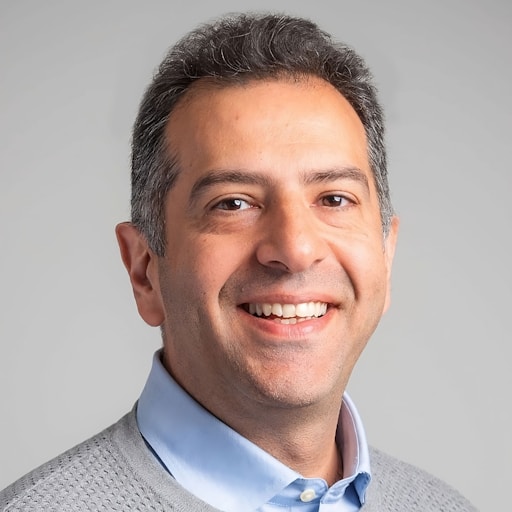
Travel journalist with twelve years covering nightlife, urban culture, and traveler safety across more than 40 countries. Background in cultural anthropology. Based between Lisbon and Berlin. Reads local press in English, Portuguese, Italian, Spanish, and working German. Best fit for stories on legal vs practiced realities, scam economics, and on-the-ground reporting in Southeast Asia, Latin America, and Western Europe.
Former U.S. immigration attorney with 31 years of international practice. Casework focused on cross-border employment authorization, consular processes, and how foreign criminal records intersect with U.S. admissibility. Reads foreign legal codes professionally. Best fit for stories on prostitution statutes, tourism regulation, the gap between written law and enforcement, and consular implications for travelers detained abroad.
Use any of these on attribution. If you need a quote tailored to a specific city, statute, or angle, email the press address below with your deadline and we'll usually respond within 24 hours.
Legality across borders
“Thailand's adult industry is technically illegal, but enforcement against consenting adults in the tourist zones is effectively non-existent. The 1996 Prevention and Suppression of Prostitution Act is still on the books; what's changed is how police use it. They focus on trafficking and underage cases, not on bar fines or go-go venues. A crackdown is always politically possible, but day-to-day it functions as a tolerated economy.”
“Germany operates one of the most regulated frameworks in the world. Since the 2002 Prostitutionsgesetz and the 2017 Prostituiertenschutzgesetz, workers register, undergo mandatory health counseling, and have access to social insurance. For travelers that means licensed venues are clearly identifiable and operating outside the system is what carries real legal exposure, not the activity itself.”
“Amsterdam's De Wallen is often misunderstood abroad. The Netherlands legalized brothels in 2000, but the city has since closed roughly a third of the window units and tightened licensing under Project 1012. The activity is still legal and regulated, but municipal policy is steadily shrinking the visible footprint.”
“Brazil's situation is the clearest example of a country where the act is legal but everything around it is criminal. There's no statute against selling sex, but pimping, brothel-keeping, and running an establishment all are. That gap is why most of the industry operates in a gray zone of termas, privés, and apartment-based work rather than openly licensed venues.”
“Colombia has had legalized adult work since the 1980s, with formal red-zones in Bogotá and Medellín. The framework is permissive on paper, but municipal enforcement varies block by block. A journalist writing about Medellín's Parque Lleras should be careful not to conflate the legal status with what the city government actually tolerates, those move on different timelines.”
“Across our 136-country dataset, the categories that matter are legal-regulated, legal-unregulated, semi-legal, illegal-tolerated, and illegal-and-enforced. Lumping these together as 'legal' or 'illegal' produces wrong reporting. The UAE and Thailand both fall under prohibition statutes, but the lived experience of those statutes is unrecognizable from one another.”
Safety for foreign travelers
“The most dangerous destinations for foreign men are not where you'd expect from the headlines. Our safety scoring puts Brazil, Colombia, the Philippines, Mexico, and the Dominican Republic in the higher-risk bracket, not because of violent crime targeting tourists specifically, but because of scam density, drink-spiking incidents, and night-time transport risk. Thailand, by contrast, scores moderate, the risk profile is mostly financial scams rather than personal violence.”
“Drink-spiking is the single most under-reported risk in nightlife travel. We see it pattern-match across Pattaya, Medellín, Rio, Bali, and parts of Cebu. The actor is rarely the venue, it's an opportunistic encounter outside the venue. The defensive measure is unromantic but works: don't accept drinks from strangers, don't leave your drink unattended, and budget for a known taxi or ride-share home from the start of the night.”
“Southeast Asia's scam patterns are remarkably consistent across cities. Bangkok, Manila, Phnom Penh, and Ho Chi Minh City all share the same template: inflated bills, gem-shop diversions, jet-ski deposit holds, and the menu-swap routine in beer bars. A traveler who studies the patterns from one city is largely prepared for the next.”
“Police corruption is the variable most foreign visitors underestimate. In jurisdictions like Cambodia and parts of Indonesia, the practical risk isn't the law itself, it's an officer using the law as a shakedown tool. Our country guides flag this where it's documented, but no traveler should assume that 'tolerated' means safe to behave casually around uniformed officers.”
“Japan and South Korea consistently score at the top end of safety for foreign men. Violent crime is rare, transport is reliable, and even the legally gray adult sectors operate with a stability you don't see in much of Southeast Asia. The trade-off is cost: a night out in Tokyo can run four times what an equivalent night costs in Bangkok.”
“UAE sits in a category of its own. The legal framework prohibits adult work and is actively enforced, with real prosecution risk including jail time and deportation. Yet our dataset rates it as physically safe and infrastructurally polished. Journalists covering Gulf nightlife should be careful not to confuse safety from street crime with safety from prosecution, they're orthogonal there.”
Economics and pricing
“Bangkok still sits at the budget end of the spectrum. A realistic full night in Sukhumvit, including bar drinks, lady drinks, and a bar fine, runs the equivalent of $40 to $80. That number has crept up over the past decade as the baht strengthened, but Thailand remains roughly half the price of Czechia and a quarter the price of Germany.”
“Hamburg and Frankfurt are the most expensive markets in our European dataset for what they offer. The FKK club model in Germany prices a full evening at €120 to €300 including entry, food, and drinks, with services priced separately on top. The price reflects the regulated infrastructure: health checks, licensing, insurance, and tax compliance all sit inside that number.”
“Pattaya breaks our cost model slightly. Walking Street's go-go bars charge near-Bangkok prices, but the soi-side beer bars and freelancer scene push the effective cost down to a $20-to-$40 night range, the cheapest in our entire dataset alongside Cambodia and parts of the Philippines.”
“Berlin is the exception inside the German market. The FKK clubs there charge less than Frankfurt's, and the city's legal-regulated framework coexists with a freelancer scene that operates at the lower-mid price band. A night out in Berlin runs $80 to $180, versus $150 to $350 in Frankfurt.”
“Cost transparency is one of the most concrete consumer-protection issues in this sector. In our dataset, the scam-density rating correlates directly with how non-transparent local pricing is. Bangkok venues that print prices on the menu have fewer disputes. Pattaya beer bars that hand-write a tab on a slip have many. That's not a coincidence, it's how the friction is engineered.”
“Prague's mid-tier position surprises some readers. Czechia is legal-unregulated rather than fully regulated, with venues operating in a long-tolerated gray zone. A full night runs $60 to $120, which puts it below Germany but well above Thailand. The price reflects the EU labor cost floor more than the legal framework.”
Cultural context
“German tourists dominate Thai nightlife districts because of a half-century of established flight routes, a working-class travel tradition built around southeast Asian winters, and a domestic regulated market that makes overseas travel feel comparatively casual. It's the same demographic that built Mallorca's reputation in the seventies, applied to a different geography.”
“Brazil's status as a nightlife capital is partly a structural product of its 1940s decriminalization of selling sex and partly cultural. Carnival, the strength of the samba and funk scenes, and a domestic tourist economy that grew up around bailes funk in Rio and clubs in Belo Horizonte all reinforce each other. It isn't a foreign-tourism product the way Pattaya is.”
“Japan's adult entertainment sector is the most culturally walled-off in our dataset. The 'no foreigners' policy at many traditional venues is real, it's documented, and it stems from a combination of language risk, regulatory exposure under the Anti-Prostitution Law, and decades of yakuza-adjacent ownership history. Tourists who don't speak Japanese will find most authentic venues closed to them.”
“Colombia's reputation has shifted significantly since 2010. The original draw was cost arbitrage and the post-Pablo-Escobar PR opening. What's developed since is a sophisticated, locally-owned termas economy in Medellín and an apartment-based gig economy in Bogotá. The on-the-ground reality is much closer to São Paulo's privés than to Bangkok's go-gos, despite how it's covered in foreign press.”
Quote requests
For quote requests, fact-checking, or interview bookings, email [email protected]. We respond within 24 hours during the working week. Please include your publication, deadline, and the angle you're working on so we can route the request to the right person.
For general inquiries that aren't on deadline, use the contact page. For background on our research process, see the methodology page.