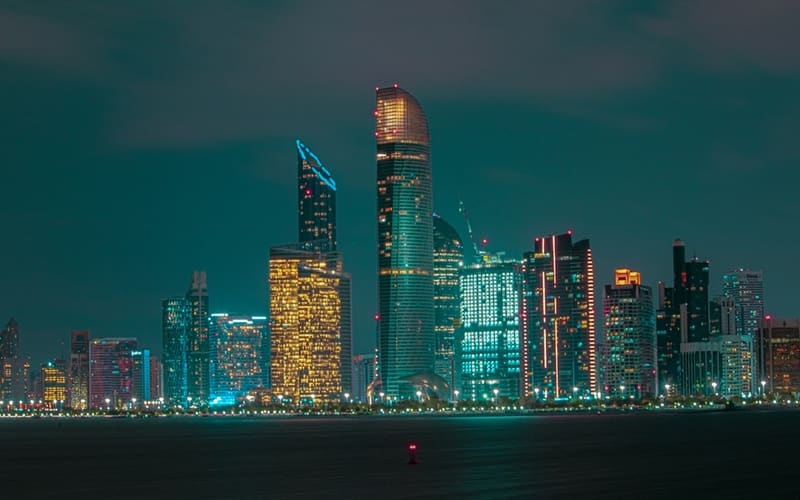

Where the Nightlife Is
Tap a district for venues, prices, and safety info
Corniche
4/5SafeGuide to Abu Dhabi's Corniche hotel bar scene: licensed lounges and nightclubs inside five-star waterfront hotels. Covers legal status, venue details, costs in AED, and what to expect.
5 nightlife spots listed
Yas Island
4/5SafeGuide to Yas Island nightlife in Abu Dhabi: licensed hotel bars at the W, Yas Viceroy, and Crowne Plaza, the Formula 1 race-week scene, and what's legal versus illegal in the UAE.
4 nightlife spots listed
District Map of Abu Dhabi
Pick a district to recenter the map and see hotels nearby.
Where to stay in Abu Dhabi
Compare hotels and rentals across the city's nightlife districts.
See places to stay and current pricesLegal Framework
Adult entertainment and prostitution are illegal throughout the United Arab Emirates, including Abu Dhabi, under Federal Law No. 3 of 1987 and subsequent amendments. There is no separate Abu Dhabi framework that relaxes these rules. Penalties run up to one year imprisonment for clients, with heavier sentences for organizers and facilitators. Deportation with a permanent entry ban follows any conviction for foreign nationals.
The law is federal, meaning it applies identically in all seven emirates. Abu Dhabi is the seat of the federal government, which adds an additional layer of political sensitivity to any enforcement activity here compared to more tourism-focused Dubai. The consequences of an arrest in Abu Dhabi are not materially different from Dubai, but the environment is less permissive in terms of what's tolerated publicly.
Alcohol itself is legal for non-Muslims in licensed venues only. This effectively means five-star hotel bars and restaurants operating under a hotel license. Abu Dhabi does not have the standalone licensed restaurant culture that some Western cities have. If a venue doesn't have a hotel address, it almost certainly can't serve alcohol legally.
Enforcement Reality
Abu Dhabi police conduct active enforcement operations, including undercover work in hotel venues and on digital platforms. The UAE's federal authorities treat solicitation as a serious crime, and tourist status provides no protection.
Smartphone communication is monitored. Platforms that appear private are not. Any digitally recorded solicitation can form the basis of a criminal charge. This is not a theoretical risk; prosecutions using digital evidence are documented in UAE court records and widely reported in local English-language media.
Hotel licensing does not create a protected zone for illegal activity. Hotels cooperate with police investigations, and venue staff have no obligation to protect guests who are observed engaging in or arranging illegal acts. Don't assume that the physical security of a five-star property insulates you from law enforcement.
Cultural Context
Abu Dhabi is the UAE's federal capital and home to the ruling Al Nahyan family. The emirate's cultural character reflects this role. Public spaces enforce Islamic norms more visibly than Dubai's tourist-heavy districts. Dress codes in malls, government buildings, and outdoor areas require covered shoulders and knees for both men and women.
Alcohol is served exclusively in hotels and a small number of licensed golf and yacht clubs. The transition between the hotel environment and public space is abrupt. What's acceptable in a hotel lounge is not acceptable on the Corniche boardwalk 50 meters outside the door.
Ramadan significantly reduces the nightlife scene. During the holy month, most hotel venues either close their alcohol service entirely or restrict it to indoor areas with no visibility from public space. Eating, drinking, or smoking publicly during daylight hours is a criminal offense for everyone, not just Muslims.
Abu Dhabi's expatriate community makes up roughly 80% of the population, but it's smaller and more professionally focused than Dubai's. Most expats are here for government, energy, or defense sector work. The social scene is quieter, more private, and less oriented toward the party-tourism model that Dubai has developed.
Dating Culture
Social life in Abu Dhabi follows the same broad rules as elsewhere in the UAE, with the local culture more conservative in practice. Unmarried cohabitation was decriminalized in 2022 for non-Muslims, but this applies to consensual private arrangements, not commercial activity. Public displays of affection remain inadvisable.
The dating scene among expats is real but happens quietly: workplace colleagues, social sports clubs, hotel bar regulars. Dating apps work and have a user base, though it's smaller than Dubai's. Tinder, Bumble, and Hinge are all accessible. The expat community skews toward professionals in their 30s and 40s with longer-term UAE placements, meaning the transient-visitor profile is less common here than in Dubai.
Gender dynamics are more traditional in Abu Dhabi's cultural context. Emirati women in public are rarely approachable for casual social interaction in the way that expat or tourist women might be in European cities. Respecting this boundary is not optional; persistent unwanted attention can be reported and acted on by police.
The Hotel Bar Scene
Abu Dhabi's nightlife is essentially a hotel bar circuit. It's not a substitute for Dubai and shouldn't be framed as one. The venues are excellent for what they are: expensive, well-run licensed hotel bars in world-class properties. They serve a population of business travelers, embassy staff, oil sector expats, and upscale tourists who want a drink in a safe, legal, well-managed environment.
The Corniche waterfront has the densest cluster: the St. Regis, Sofitel Corniche, and Le Royal Meridien each have multiple licensed venues. Yas Island, built around the Formula 1 Abu Dhabi Grand Prix circuit, has a separate cluster centered on the W Abu Dhabi and Yas Viceroy. The two areas have different characters: the Corniche scene is more local and residential, while Yas Island draws more international visitors during race weeks and major events.
Expect to spend significantly. Beer at a five-star hotel bar runs AED 55-90. A cocktail is AED 80-140. Table service with bottle minimums at club venues can reach AED 1,000-3,000. These are London or New York prices in a city with comparable infrastructure costs.
Safety Considerations
Abu Dhabi is one of the safest cities in the world for personal security. Violent crime is extremely rare. Theft is uncommon. The risks for visitors are legal, not physical:
- Zero blood alcohol tolerance for driving. Any alcohol plus driving equals arrest
- Public intoxication is a criminal offense, not a civil matter
- Photography of people without consent, particularly women, can lead to arrest
- Social media posts critical of the UAE, its rulers, or Islam are prosecutable offenses
- Drug possession carries severe mandatory sentences including the death penalty for trafficking quantities
Save 999 (police) and your embassy's emergency number in your phone before going out.
Get the Legal Status PDF, 50 countries
Newsletter signup coming soon. Check back shortly.
Flights to Abu Dhabi
Compare prices across airlines. Filter by stops, time, and cabin.
Airport transfer to Abu Dhabi
Pre-booked transfers cost about the same as a metered taxi but cut out the airport queue, the meter argument, and the "no English" routine that takes some drivers to the wrong address. Fixed price quoted before booking, driver tracks your flight, waits with a name sign at arrivals.
Book a KiwiTaxi transferFrequently Asked Questions
Related Guides
Corniche
Guide to Abu Dhabi's Corniche hotel bar scene: licensed lounges and nightclubs inside five-star waterfront hotels. Covers legal status, venue details, costs in AED, and what to expect.
Read guideYas Island
Guide to Yas Island nightlife in Abu Dhabi: licensed hotel bars at the W, Yas Viceroy, and Crowne Plaza, the Formula 1 race-week scene, and what's legal versus illegal in the UAE.
Read guideWas this guide helpful?