La Rambla
Legal, Unregulated3/5ModerateDistrict guide to La Rambla in Barcelona, covering the famous boulevard, safety, pickpocketing risks, and practical tips for navigating Barcelona's most visited street.

Where to stay near La Rambla
Hotels walking distance from the venues on this page.
See places to stay and current pricesNightlife Picks
Bars, clubs, and lounges in the area
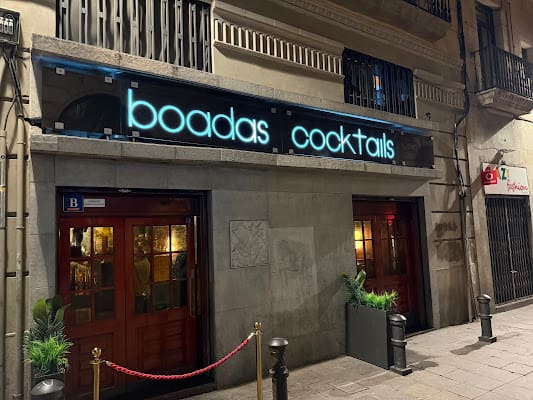
Boadas Cocktails
Tiny Art Deco cocktail bar opened in 1933, one block off La Rambla. The founder trained under the head bartender at Havana's La Floridita. Classic cocktails made by bartenders in white jackets. Standing room only. Skip the tourist bars on La Rambla and come here instead.
Carrer dels Tallers 1, 08001 Barcelona
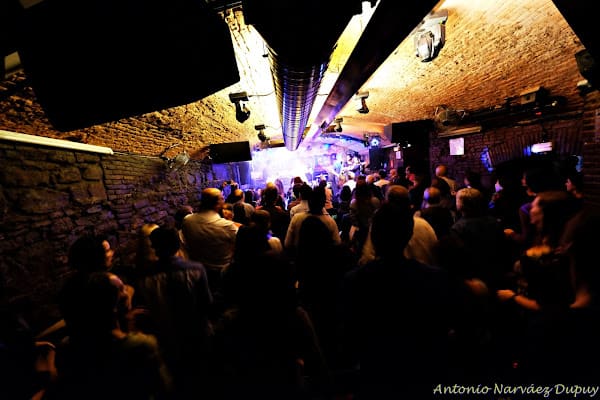
Jamboree
Underground jazz and dance club on Placa Reial, just off La Rambla. Live jazz concerts in the early evening; the space converts to a dance club after midnight. The vaulted stone cellar setting adds atmosphere. Entry EUR 10-15.
Plaça Reial 17, 08002 Barcelona
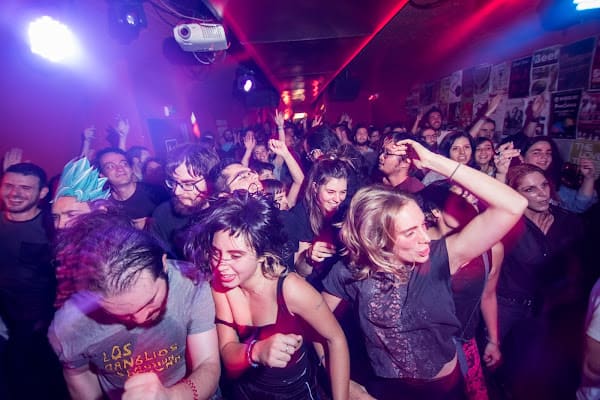
Sidecar Factory Club
Long-running live music venue and club on Placa Reial. Hosts indie, rock, and electronic acts in a basement space. The programming is consistently good and draws a local crowd despite the tourist-heavy location.
Plaça Reial 7, 08002 Barcelona
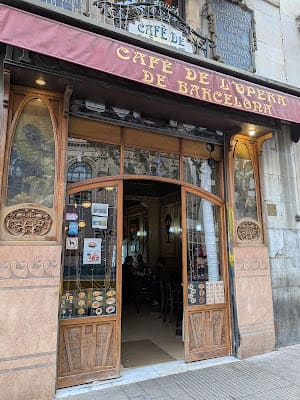
Cafe de l'Opera
Grand cafe across from the Liceu opera house, operating since 1929. High ceilings, mirrors, and an atmosphere that belongs to another era. Good for a single drink and people-watching from the terrace, though prices reflect the prime location.
La Rambla 74, 08002 Barcelona
Tarantos
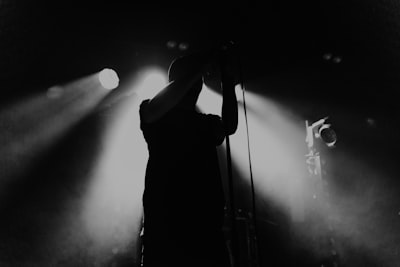
Flamenco venue in the Placa Reial arcades offering short, intense shows several times nightly. At EUR 15-17 per show, it's one of Barcelona's most accessible introductions to live flamenco. The performers rotate but quality stays consistent.
Plaça Reial 17, 08002 Barcelona
Polaroid Bar
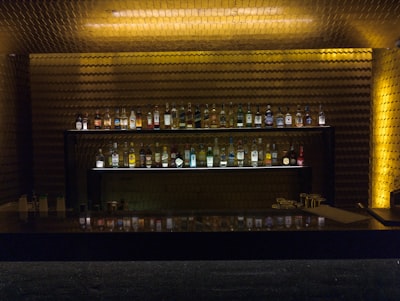
Retro-themed bar near Placa Reial decorated with vintage toys, movie posters, and pop culture memorabilia from the 1980s and 1990s. Cheap drinks by Barcelona standards and a fun, unpretentious crowd.
Carrer dels Còdols 29, 08002 Barcelona
Ocana
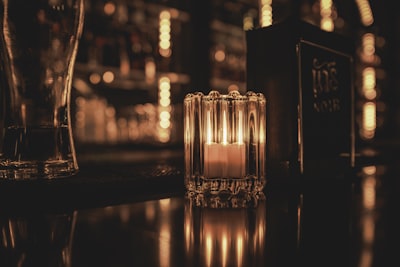
Multi-level bar and restaurant occupying a prime corner of Placa Reial. The ground floor cafe serves cocktails with a view of the square. The basement bar hosts DJ sessions on weekends. The terrace is one of the best people-watching spots in Barcelona.
Plaça Reial 13, 08002 Barcelona
Glaciar Bar
Corner bar at the entrance to Placa Reial with a large outdoor terrace. Nothing fancy, but the location is ideal for watching the square fill up as the evening progresses. Beer and sangria at reasonable prices for the area.
Plaça Reial 3, 08002 Barcelona
Harlem Jazz Club
Small basement venue on Carrer de la Comtessa de Sobradiel hosting live jazz, blues, and world music nightly. Shows start at 10 PM with a second set around midnight. Cover EUR 8-12. The intimate setting puts you within arm's reach of the performers.
Carrer de la Comtessa de Sobradiel 8, 08002 Barcelona
Overview and Location
La Rambla is Barcelona's central nervous system, a 1.2-kilometer pedestrian boulevard cutting through the old city from Placa de Catalunya (the city's main square) to the Columbus Monument overlooking the port. Over 78 million people walk this street annually, making it one of the most trafficked pedestrian streets in Europe.
Prices confirmed through direct visits in March 2026.
The boulevard is technically five connected sections, each with its own historical name: Rambla de Canaletes (at the top, with the famous drinking fountain), Rambla dels Estudis, Rambla de Sant Josep (passing La Boqueria market), Rambla dels Caputxins (passing the Liceu opera house), and Rambla de Santa Monica (the lower section approaching the port). Locals sometimes say "Las Ramblas" (plural) for this reason, though "La Rambla" (singular) is equally correct.
For nightlife purposes, La Rambla functions more as a corridor between neighborhoods than as a destination in itself. The street connects the Gothic Quarter (east) to El Raval (west), with Placa Reial (a colonnade-enclosed square just east of La Rambla) serving as the one genuinely good nightlife spot directly on the boulevard. The Rambla's own bars and restaurants are overwhelmingly tourist traps with inflated prices and mediocre food.
What La Rambla does provide, unavoidably, is context. Understanding the street helps you navigate Barcelona's nightlife geography and, critically, helps you avoid its most persistent hazard: pickpockets.
Legal Status
La Rambla is a public thoroughfare with no specific adult entertainment activity. Barcelona's civic ordinances on street-based sex work apply to designated zones, which don't include La Rambla itself. The street's relevance to this guide is geographic (it borders El Raval) and practical (almost every visitor passes through it).
Costs and Pricing
If you eat and drink on La Rambla itself, you're paying a tourist tax of 50-100% above normal Barcelona prices. Here's what that looks like:
On La Rambla. Beer EUR 5-7, cocktails EUR 12-18, a plate of paella EUR 16-25 (often microwaved), a coffee EUR 3-4.50. The restaurants with photos of their food displayed outside are the worst offenders. Cafe de l'Opera is the one exception: it's pricey, but the atmosphere and history justify a single drink.
One block off La Rambla. Beer EUR 2.50-4, cocktails EUR 8-12, tapas EUR 4-8, coffee EUR 1.50-2.50. The price difference is immediate and dramatic. Boadas Cocktails, literally one block off La Rambla on Carrer dels Tallers, serves better drinks than anything on the boulevard at lower prices.
Placa Reial. The bars and restaurants on this beautiful colonnade square charge a premium, but less than La Rambla proper. More importantly, Jamboree and Sidecar Factory Club in the square's arcades are legitimate nightlife venues with real programming. Club entry EUR 10-15.
La Boqueria market. Barcelona's most famous food market, accessed from the Rambla de Sant Josep section. Fresh fruit smoothies cost EUR 2-3. Tapas portions at market stalls run EUR 4-10. The market is crowded and touristy (especially near the entrance) but still worth visiting for the produce and the energy. Go early (before 11 AM) to avoid the worst crowds. The bars at the back of the market are better value than those near the entrance.
Street-Level Detail
Rambla de Canaletes (top section). Starts at Placa de Catalunya. The Font de Canaletes drinking fountain is here; legend says that anyone who drinks from it will return to Barcelona. FC Barcelona fans gather here to celebrate championships. The energy at the top is commercial: international chains, souvenir shops, and crowds flowing from the metro station.
Rambla dels Estudis / Rambla de Sant Josep (upper-middle). La Boqueria market's main entrance is on the right (west) side. The flower stalls that once defined this stretch have thinned but still exist. Palau de la Virreina, an 18th-century palace, houses a cultural exhibition space. The foot traffic is densest through this section.
Rambla dels Caputxins (lower-middle). The Liceu opera house (Gran Teatre del Liceu) sits on the west side. Cafe de l'Opera is directly opposite. The entrance to Placa Reial is through an archway on the east side; this is the best nightlife spot adjacent to La Rambla. Jamboree jazz club and Sidecar are here. Street performers cluster around the Liceu area.
Rambla de Santa Monica (lower section). The boulevard widens as it approaches the port. The Centre d'Art Santa Monica (free contemporary art space) is on the west side. Moog nightclub is just off the bottom of La Rambla to the west. The port area opens up at the Columbus Monument, with waterfront bars and restaurants.
Placa Reial. Though technically not on La Rambla but just steps east, this 19th-century arcaded square is the one genuinely worthwhile nightlife destination in the immediate area. The square's lampposts were designed by a young Antoni Gaudi. Jamboree, Sidecar, and several bar-restaurants with outdoor terraces line the arcades. The square attracts a mix of tourists and locals and feels enclosed and atmospheric in a way that La Rambla's open boulevard doesn't.
Safety
La Rambla's safety profile is paradoxical: it's simultaneously one of Barcelona's safest streets for violent crime and one of its worst for property crime.
Pickpocketing. This is professional, organized, and relentless. Teams of 3-5 skilled thieves work the full length of La Rambla from morning to late night. Techniques include:
- The "found ring" or "dropped money" distraction
- Fake petition boards that distract while a partner lifts your wallet
- Bumping or jostling in crowd surges
- Phone snatching from hands or cafe tables (including by people on motorbikes)
- The "helpful" stranger who points out a stain on your clothes while a partner empties your pockets
Practical defense:
- Keep your phone in a front pocket, not your hand. Never place it on a cafe table
- Carry a minimal wallet with one card and limited cash. Leave everything else at your accommodation
- Use a money belt for your passport and extra cash
- If someone bumps into you, immediately check your pockets
- Decline all unsolicited interactions from strangers: petitions, questions, offers of help
- Bags should be cross-body or in front of you, never on your back or slung over one shoulder
Other safety notes:
- Violent crime targeting tourists is rare on La Rambla itself. The 2017 terrorist attack was a horrific exception, not a pattern
- The lower Rambla near the port gets quieter late at night, but the Columbus Monument area has camera coverage and occasional police presence
- The streets connecting La Rambla to lower El Raval (west side, below the Liceu) get rougher after midnight
- Emergency number 112. Mossos d'Esquadra (Catalonia's police) and Guardia Urbana (Barcelona's local police) both patrol La Rambla
Cultural Context
La Rambla occupies a strange position in Barcelona's identity. Locals avoid it. The joke is that the only Catalans on La Rambla are the pickpockets. And yet the street remains Barcelona's most recognizable landmark, its most visited address, and an essential part of the city's self-image. When FC Barcelona wins a title, fans don't celebrate in some local bar; they flood La Rambla and the Font de Canaletes.
The boulevard was originally a seasonal riverbed (rambla comes from the Arabic "ramla," meaning sand). It was paved over in the 18th century and became the city's social promenade. Through the 19th and early 20th centuries, it was where Barcelona's bourgeoisie walked, artists performed, and the city's cultural life played out. That social function has been replaced by mass tourism, but the physical infrastructure remains beautiful: the plane trees, the mosaic pavement (designed by Joan Miro near the Liceu), and the surrounding architecture.
Understanding La Rambla as a transit corridor rather than a destination improves the experience. Walk the length once to see it, note the Boqueria market and Placa Reial as stopping points, then use the street as a navigation reference rather than a place to spend time and money.
Scam Warnings
Petition board distraction. People approach with a clipboard asking you to sign a petition (often claiming it's for deaf awareness or similar causes). While you read the board, a partner picks your pocket from behind. Never stop for clipboard petitions on La Rambla.
Shell games (trileros). Three-cup monte setups appear along La Rambla. The "winners" are planted accomplices. You cannot win. The crowd around the game includes pickpockets targeting distracted spectators.
Restaurant touts. People on La Rambla invite you into nearby restaurants with promises of deals or free drinks. These restaurants charge tourist prices for low-quality food. Choose restaurants yourself by walking off La Rambla and reading posted menus.
"Free" flamenco or shows. Touts near La Rambla offer "free" or "discounted" entry to flamenco shows or other entertainment. These are either clip joints (where you'll be overcharged for drinks) or genuinely bad tourist shows at full price. Book flamenco through reputable venues with online reviews.
Fake lottery tickets. Occasionally, people sell "winning" lottery tickets at a discount. They're fake.
Nearby Areas
El Raval. Immediately west of La Rambla. Barcelona's grittiest and most culturally interesting neighborhood. See the El Raval district guide.
Gothic Quarter (Barri Gotic). Immediately east. Medieval streets, the Cathedral, and tourist-friendly bars. More polished than El Raval, more expensive, but safe and well-trafficked.
Born / El Born. Northeast, past the Gothic Quarter. Cocktail bars, wine bars, and a more intimate nightlife scene in medieval streets. One of Barcelona's best social neighborhoods.
Poble Sec. Southwest, past El Raval across Avinguda del Paral.lel. Pintxos bars on Carrer Blai and Sala Apolo club. See the Poble Sec district guide.
Meeting People Near La Rambla
La Rambla itself is the wrong place for genuine social interaction. The pace is too fast, the environment too transactional, and most people are tourists in transit.
Placa Reial is better. The outdoor terraces encourage sitting and talking, and the evening crowd includes locals heading to Jamboree or Sidecar. Better still: walk two minutes into El Raval's upper section (Carrer de Joaquin Costa) or east into the Born for bars where conversations actually happen. For a complete overview of Barcelona's social scene, see the Barcelona city guide.
Best Times
- Morning (before 11 AM) is the best time to visit La Boqueria market before tourist crowds peak
- Early evening (6-8 PM) La Rambla is pleasant for a walk when the light softens and the temperature drops
- Placa Reial comes alive from 9 PM, with club nights at Jamboree and Sidecar starting around 11 PM and peaking after midnight
- Late night (after 1 AM) the lower Rambla quiets down. Upper Rambla near Placa de Catalunya retains foot traffic later
- Avoid the midday period in summer (12-4 PM) when the heat, crowds, and pickpocket density peak simultaneously
- La Merce (late September) and Sant Joan (June 23) bring massive crowds and festival energy to La Rambla and surrounding squares
What Not to Do
- Do not eat at restaurants on La Rambla. Walk one block in any direction for better food at half the price
- Do not stop for petition boards, shell games, or people handing you flowers or bracelets
- Do not put your phone on a table at a terrace cafe
- Do not carry a backpack on your back while walking. Wear it in front if you must bring one
- Do not take photos of your credit card, passport, or other documents while on the street. Snatch theft targets visible valuables
- Do not assume someone is genuinely asking for help. Unsolicited approaches from strangers on La Rambla are almost always a scam or a distraction
- Do not follow touts to restaurants, shows, or clubs. Any venue that needs to recruit customers on La Rambla isn't good enough to attract them normally
Get the Legal Status PDF, 50 countries
Newsletter signup coming soon. Check back shortly.
Related Guides
Barcelona Overview
City guide to adult nightlife in Barcelona, covering El Raval, safety, tourist scams, and the cultural context of Spain's most-visited city.
Read guideEl Raval
District guide to El Raval in Barcelona, covering the historic Barrio Chino, safety, nightlife venues, and practical tips for Barcelona's grittiest neighborhood.
Read guidePoble Sec
District guide to Poble Sec in Barcelona, covering Carrer Blai's pintxos bars, Sala Apolo, and practical tips for Barcelona's best local nightlife neighborhood.
Read guideFrequently Asked Questions
Was this guide helpful?