District Guides
Click through for street-level detail
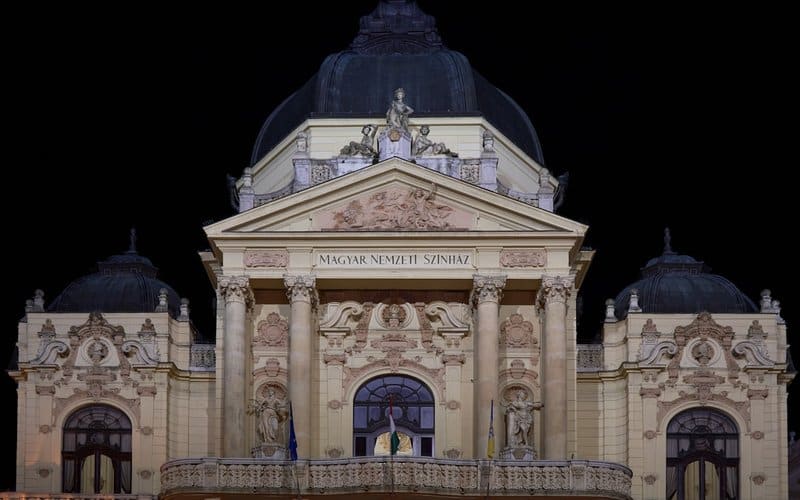
Belváros (Pécs)
4/5SafeDistrict guide to Belváros in Pécs, covering the bar and café scene around Széchenyi tér, the main square. Practical info on venues, prices, and what to expect.
6 nightlife spots listed
Zsolnay Cultural Quarter
4/5SafeDistrict guide to the Zsolnay Cultural Quarter in Pécs, a converted porcelain factory complex with gallery spaces, café-bars, and evening events. Practical info on venues and what to expect.
4 nightlife spots listed
District Map of Pécs
Pick a district to recenter the map and see hotels nearby.
Where to stay in Pécs
Compare hotels and rentals across the city's nightlife districts.
See places to stay and current pricesOverview
Pécs sits in the foothills of the Mecsek mountains in southern Hungary, about 30 kilometers north of the Croatian border. With roughly 140,000 residents and a university that enrolls around 30,000 students, it's Hungary's fifth-largest city and one of the country's more livable provincial centers. The Mecsek range shelters the city from the north, giving it a warmer, drier climate than most of Hungary and the kind of outdoor café culture you'd expect somewhere further south.
Conditions verified through local sources in May 2026.
The city holds layers that take time to read. Ottoman mosques converted into Catholic churches. A UNESCO Early Christian Necropolis running under the old town. Zsolnay porcelain tiles on buildings across the region. When Pécs held the European Capital of Culture title in 2010, it renovated significant infrastructure, including the Zsolnay Cultural Quarter, and the investment left the city better equipped for evening activity than most Hungarian towns of comparable size.
The nightlife is not comparable to Budapest. It's not meant to be. What Pécs offers is a genuine student-bar scene at honest prices, a walkable historic center where evenings move at a relaxed pace, and the kind of social environment where conversations start easily.
Legal Framework
Hungary's adult entertainment laws operate at the national level, which means the regulatory framework that governs Budapest also applies in Pécs. Government Decree 1999/169, passed in 1999, permits registered adults over 18 to engage in individual sex work within designated tolerance zones. Pimping, brothel operation, and trafficking are criminal offenses under the Hungarian Criminal Code.
The practical situation in Pécs is simpler than the legislation suggests: there is no meaningful adult entertainment industry here. No tolerance zones have been designated, no organized adult venue scene exists, and the city attracts no sex tourism infrastructure. Visitors focused on adult entertainment will not find it in Pécs. The nightlife is bars, wine venues, café-bars, and the occasional live music spot.
Enforcement Reality
Police in Pécs deal primarily with public order, traffic enforcement, and the low-level friction that comes with a large student population in a mid-sized city. The national regulatory gap on tolerance zones applies here in theory but has no practical consequence because the industry the zones were meant to manage doesn't exist in Pécs.
Weekend evenings around Széchenyi tér see foot patrols, mainly for public order purposes. The student population keeps the center active on Thursday and Friday nights during the academic year, and the police presence reflects that. Visitors have no reason to anticipate legal complications from normal nightlife activity in Pécs.
Cultural Context
Pécs is a genuinely multi-layered city by Hungarian provincial standards. The University of Pécs is one of Hungary's oldest continuous academic institutions, with a medical school founded in 1367. The university presence means the city skews younger than its population numbers suggest, and it imports students from across Hungary, from neighboring countries with Hungarian-speaking populations, and from international programs.
The Ottoman period left physical traces that no other Hungarian city can match. The Mosque of Pasha Qasim on the main square, now the Pécs Inner City Parish Church, is the most visible example. The city has absorbed that history without fetishizing it, which gives the main square an unusual layered quality: the mosque-church anchors one end, contemporary terraces run along the pedestrian streets, and students move between them without particularly noticing the historical weight beneath their feet.
Southern Hungarian culture carries mild Balkan and Croatian influences from centuries of border proximity. The food leans toward red paprika and heavier stews. The pace is slightly slower than Budapest. Locals in Pécs have a reputation for being more relaxed and less guarded with strangers than the capital, which holds in practice during evenings at the main square bars.
Dating Culture
Pécs dating culture sits between Budapest's cosmopolitan looseness and the more traditional norms of the Hungarian countryside. The university population creates a significant cohort of 18-to-30-year-olds with attitudes toward dating that track closely with what you'd find in any mid-sized European university city: apps are normal, meeting in bars is accepted, and relationships don't require elaborate courtship structures to get started.
Outside the student scene, expectations tilt more traditional. Men are generally expected to initiate and pay on first dates. Moving from casual socializing to something more intentional takes more deliberate effort than in Budapest.
Tinder has a user base in Pécs, but it's thin compared to the capital. Matches exist and conversations happen, but the active-user density is lower. Badoo picks up some of what Tinder misses. The honest recommendation: if meeting people is the goal, spending evenings at the bars around Széchenyi tér produces better results than waiting for app matches to materialize.
The bar scene is accessible for English-speaking visitors. University students generally speak workable English, and the city sees enough foreign students through exchange programs that a foreign accent doesn't mark you as unusual. A few words of Hungarian go a long way. "Szia" for hello, "köszönöm" for thank you, and ordering your beer with the name of what you want rather than pointing at the tap earns goodwill.
Key Areas
Belváros (Inner City) is where most of the after-dark activity in Pécs concentrates. The pedestrian streets around Széchenyi tér hold bar terraces, wine bars, and café-bars that stay active from late afternoon. The main square itself, anchored by the mosque-church and the Pécs City Hall, functions as a social meeting point. On warm evenings, the outdoor terraces fill from around 5 PM and stay lively until midnight or later.
Zsolnay Cultural Quarter sits about a kilometer northeast of the main square on the site of the former Zsolnay porcelain factory. The complex was redeveloped for the 2010 European Capital of Culture, converting industrial buildings into gallery spaces, cultural venues, and café-bars. The atmosphere is more arts-focused than the Belváros terraces, and the evening crowd tends to skew slightly older and more local.
Safety
Pécs is safe. This is one of the lower-risk nightlife environments you'll find in Hungary. The center is compact, the main squares are well-lit, and the student population that drives the bar scene generally creates an active rather than threatening atmosphere.
- Currency is the usual Hungarian consideration: forint runs about 390-400 HUF to 1 EUR. Know the conversion before you spend
- Bolt operates in Pécs and covers late-night transport reliably. Local taxi company Pécs Taxi is reachable at +36 72 333-333 if needed
- The train station area is quiet at night. Don't linger there after midnight
- Pickpocketing in crowded bars is possible but uncommon compared to Budapest tourist zones
- Bolt for any trip over 15 minutes at night. The center is walkable but outlying neighborhoods are not
Emergency: dial 112. Police at 107. Hospital: +36 72 507-900.
Getting Around
Pécs's center is small enough to cover on foot. From the train station to Széchenyi tér is about 12 minutes walking north along Bajcsy-Zsilinszky utca and the surrounding streets. The Zsolnay Quarter is about a 15-minute walk from the main square.
- Walking: Most of Belváros is reachable in under 20 minutes from the center on foot
- Bolt: Functions reliably in Pécs for trips outside the walking zone
- Pécs Taxi: +36 72 333-333. Useful if Bolt has surge pricing
- Bus: Pécs has a city bus network but most nightlife venues are in the walkable center
Practical Notes
Beer prices in Pécs run 800 to 1,200 HUF in most bars. Cocktails at mid-range venues sit around 1,800 to 2,800 HUF. Wine by the glass at the better wine bars costs 1,200 to 2,200 HUF depending on the pour. Entry fees are rare and usually below 1,500 HUF for live music events.
The academic calendar shapes the city's rhythm. September through May is when Pécs is fully alive at night. June through August is quieter, though not dead. The Pécs Days festival in late September marks the start of the academic year and briefly turns the city center into one continuous street party.
Hungarian-language menus are standard at smaller venues. Most student-oriented bars have staff who can handle English orders. At the wine bars and more upscale café-bars, English service is more reliable.
Get the Legal Status PDF, 50 countries
Newsletter signup coming soon. Check back shortly.
Flights to Pécs
Compare prices across airlines. Filter by stops, time, and cabin.
Airport transfer to Pécs
Pre-booked transfers cost about the same as a metered taxi but cut out the airport queue, the meter argument, and the "no English" routine that takes some drivers to the wrong address. Fixed price quoted before booking, driver tracks your flight, waits with a name sign at arrivals.
Book a KiwiTaxi transferFrequently Asked Questions
Related Guides
Belváros (Pécs)
District guide to Belváros in Pécs, covering the bar and café scene around Széchenyi tér, the main square. Practical info on venues, prices, and what to expect.
Read guideZsolnay Cultural Quarter
District guide to the Zsolnay Cultural Quarter in Pécs, a converted porcelain factory complex with gallery spaces, café-bars, and evening events. Practical info on venues and what to expect.
Read guideWas this guide helpful?