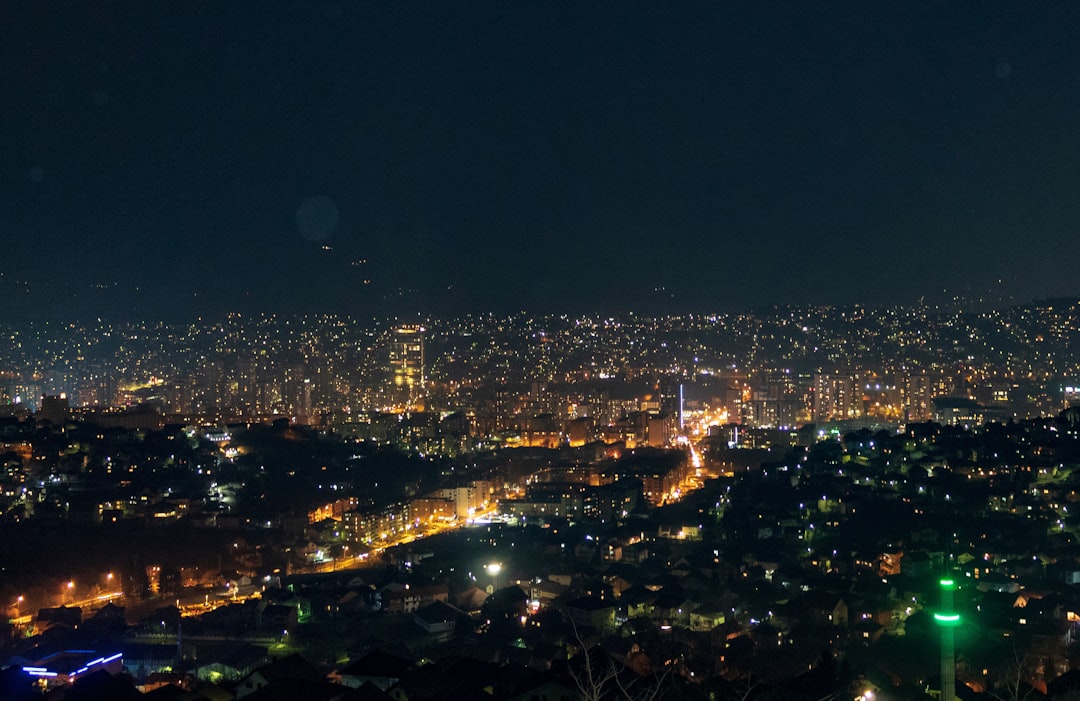

Where the Nightlife Is
Tap a district for venues, prices, and safety info
Bascarsija
3/5ModerateDistrict guide to Bascarsija in Sarajevo, the Ottoman old town with rooftop bars, traditional kafanas, and live music venues tucked into 500-year-old buildings.
5 nightlife spots listed
Ferhadija
3/5ModerateDistrict guide to Ferhadija in Sarajevo, the modern pedestrian boulevard where cocktail bars, clubs, and late-night venues line a walkable strip from the old town to Marijin Dvor.
5 nightlife spots listed
District Map of Sarajevo
Pick a district to recenter the map and see hotels nearby.
Where to stay in Sarajevo
Compare hotels and rentals across the city's nightlife districts.
See places to stay and current pricesOverview
Sarajevo sits in a narrow valley along the Miljacka river, hemmed in by mountains that still bear scars from the 1992-1995 siege. The city's geography concentrates nightlife into a tight east-west corridor running from the Ottoman old town of Bascarsija through the Austro-Hungarian district along Ferhadija street. You can walk the entire nightlife zone in 20 minutes.
Our team walked every district covered here.
The population of around 420,000 supports a compact but genuine bar scene. Sarajevo doesn't have mega-clubs or a red-light district. What it has is atmosphere. Drinking Bosnian coffee in a 500-year-old courtyard at 11 PM, then walking five minutes to a cocktail bar playing deep house, then ending at a rakija joint where strangers become friends by 2 AM. The city rewards those who let the night unfold rather than chasing a specific scene.
Legal Context
Prostitution is illegal in both entities that make up Bosnia and Herzegovina. In practice, Sarajevo's nightlife operates freely within the bounds of normal entertainment licensing. Police don't interfere with bars, clubs, or social venues. Enforcement targets organized operations and trafficking, not nightlife establishments or their patrons.
For visitors, the practical reality is simple. Sarajevo's nightlife is social and organic. There's no formal adult entertainment district. Meeting people happens through the city's cafe culture, bar scene, and the natural sociability that Bosnians bring to their evenings out.
Key Areas
Bascarsija is the Ottoman old town, a compact maze of cobblestoned streets centered on Sebilj fountain. The nightlife here mixes traditional Bosnian cafes, rooftop bars with minaret views, and live music venues tucked into buildings that predate the Austro-Hungarian era. It's atmospheric and tourist-friendly, with the cheapest prices in the city.
Ferhadija runs west from Bascarsija as a pedestrian boulevard lined with modern bars, cocktail lounges, and late-night spots. The crowd skews younger and more fashionable than the old town. This strip comes alive after 10 PM on weekends with bar-hoppers moving between venues just meters apart.
Vilsonovo Setaliste is the tree-lined boulevard south of the center, home to several larger clubs and music venues. It's where Sarajevo goes when it wants to dance rather than drink. The walk from Ferhadija takes about 15 minutes.
Safety
Sarajevo is safe by Balkan standards, with some specific considerations worth knowing.
- Petty theft happens in crowded bars and on trams but isn't widespread. Keep valuables in front pockets
- Landmines from the 1992-1995 war still exist in the hills and outskirts around the city. Never leave marked paths when hiking or exploring outside the urban core
- Taxi meters should always be running. The flag drop is 1.50 BAM with about 1 BAM per kilometer. Use apps when possible
- Drink spiking is rare but reported. Standard precautions apply
- Religious sites require respectful behavior and appropriate dress. This includes the old town area during prayer times
Emergency services: 112 (universal). Police speak limited English; your hotel reception is your best resource if you need to communicate with authorities.
Cultural Norms
Bosnians are famously hospitable. Offering and accepting coffee or rakija is a social bond, and declining can feel like a rejection. You don't need to finish every glass, but accepting the first pour is good etiquette.
Dress codes in Sarajevo are relaxed. The old town is casual. Ferhadija bars expect smart casual on weekend nights, nothing formal. Sarajevans dress well but practically. Nobody expects designer labels.
Tipping 10% is standard at restaurants. At bars, rounding up to the nearest mark is appreciated. Cash is king in Bascarsija; most Ferhadija venues accept cards. ATMs are easy to find throughout the center.
The city's multicultural identity matters. Sarajevo prides itself on coexistence. Showing respect for all three major religious communities (Bosniak Muslim, Serb Orthodox, Croat Catholic) is baseline expectation, not political correctness.
Getting Around
- Walking: Central Sarajevo is compact and walkable. Bascarsija to Ferhadija is a 10-minute stroll. The entire nightlife corridor fits within a 2-kilometer stretch
- Trams: Lines 1, 3, and 5 run along the main east-west axis. Service ends around 11:30 PM. Single tickets cost 1.80 BAM from kiosks, 2 BAM from the driver
- Taxis: Flag drop 1.50 BAM, roughly 1 BAM per kilometer. Cammeo and other apps work in Sarajevo for reliable service
- Parking: Free street parking after 5 PM in most central zones. Garages near Ferhadija charge 2-3 BAM per hour
Get the Legal Status PDF, 50 countries
Newsletter signup coming soon. Check back shortly.
Flights to Sarajevo
Compare prices across airlines. Filter by stops, time, and cabin.
Airport transfer to Sarajevo
Pre-booked transfers cost about the same as a metered taxi but cut out the airport queue, the meter argument, and the "no English" routine that takes some drivers to the wrong address. Fixed price quoted before booking, driver tracks your flight, waits with a name sign at arrivals.
Book a KiwiTaxi transferFrequently Asked Questions
Related Guides
Bascarsija
District guide to Bascarsija in Sarajevo, the Ottoman old town with rooftop bars, traditional kafanas, and live music venues tucked into 500-year-old buildings.
Read guideFerhadija
District guide to Ferhadija in Sarajevo, the modern pedestrian boulevard where cocktail bars, clubs, and late-night venues line a walkable strip from the old town to Marijin Dvor.
Read guideWas this guide helpful?