
Entertainment Districts
Pick a neighborhood to start exploring
Centro / Pichincha
3/5ModerateDistrict guide to Centro and Pichincha in Rosario, the city's main bar and nightclub zone centered on Calle Pichincha and the downtown grid.
6 nightlife spots listed
Puerto Norte
3/5ModerateDistrict guide to Puerto Norte in Rosario, the redeveloped waterfront zone with upscale clubs, riverside bars, and costanera nightlife along the Paraná river.
5 nightlife spots listed
District Map of Rosario
Pick a district to recenter the map and see hotels nearby.
Where to stay in Rosario
Compare hotels and rentals across the city's nightlife districts.
See places to stay and current pricesOverview
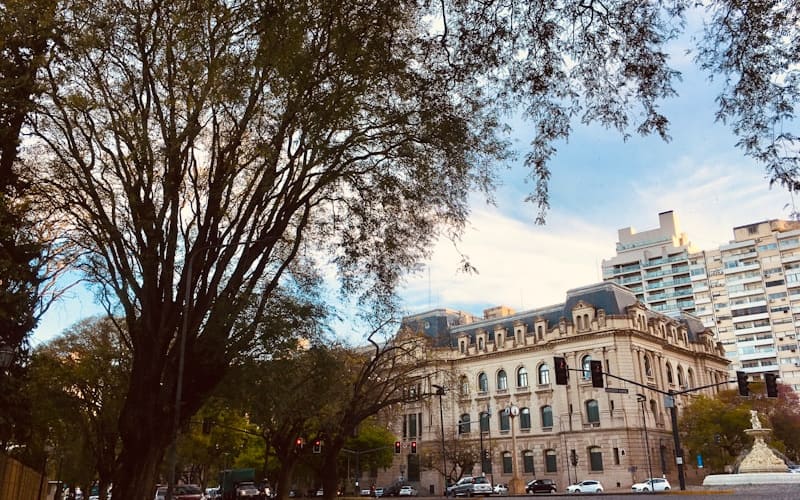
Rosario is Argentina's third-largest city, home to roughly 1.4 million people in the greater metropolitan area. It sits on the western bank of the Paraná river in Santa Fe Province, about 300 kilometers northwest of Buenos Aires. The city built its wealth on grain exports in the late 19th century, and that prosperity left behind an architectural legacy of ornate French and Belgian-influenced buildings that still define the city center. Today, the same central streets that housed commodity brokerages and banks are lined with bars, restaurants, and nightlife venues.
Our field team last visited Rosario in April 2026.
Two facts define Rosario's international identity. Ernesto "Che" Guevara was born here on June 14, 1928. Lionel Messi grew up in the city before leaving for Spain at age 13. Both are claimed with quiet pride by locals, though neither connection is the primary reason people visit. What draws visitors is the affordable, sociable nightlife, the riverfront costanera, and the distinctly relaxed pace compared to the capital.
The Universidad Nacional de Rosario enrolls over 80,000 students across its faculties, and Rosario's population skews young. The university presence is felt in the nightlife, the cafe culture, and the political atmosphere of the city, which has historically leaned leftward and has a tradition of strong labor organizing.
Legal Framework
Rosario falls under the same federal legal structure as the rest of Argentina. Individual sex work between consenting adults isn't prohibited under federal law, but Argentina's Law 26.364 and the strengthened Law 26.842 criminalize trafficking, pimping, procuring, and profiting from another person's sex work. Penalties include prison sentences of up to 15 years, and enforcement of these provisions has intensified at the federal level in recent years.
Santa Fe Province maintains its own contravention code, which restricts public solicitation. The city of Rosario applies these provincial rules through its municipal code, and enforcement by city and provincial police varies depending on current political priorities and neighborhood complaints. Organized venues operating in gray areas tend to do so discreetly, and the landscape of "whiskerias" and "privados" common elsewhere in Argentina exists here but is not concentrated in tourist areas.
Foreigners are subject to exactly the same laws as Argentine citizens. The distinction is that consular assistance, while useful for legal representation and communication, provides no protection from prosecution.
Enforcement Reality
Rosario's security situation adds a layer of context that doesn't apply to Buenos Aires or Cordoba. The city has experienced sustained narcotrafficking violence since the mid-2010s, with a significant escalation around 2022 and 2023. Shootings targeted at gang rivals, witnesses, and business owners in certain neighborhoods created national headlines and prompted federal security interventions. The Empalme Graneros, La Granada, and other peripheral neighborhoods are genuine no-go zones for tourists.
The Centro, Pichincha, Puerto Norte, and costanera nightlife areas are a different reality. These are the tourist and entertainment zones, with regular police presence and relatively low exposure to the gang violence concentrated in peripheral neighborhoods. A visitor spending their time in these areas faces risks comparable to any moderately sized Argentine city: petty theft, occasional scams, and the general risks of late-night nightlife in a South American city.
Rosario's police force has faced documented corruption issues, including personnel linked to criminal networks. Street-level interactions with police in nightlife zones are generally unremarkable, but trusting them unconditionally with a complaint would be naive.
Cultural Context
Rosario has a personality distinct from Buenos Aires. The city lacks the capital's cultural self-importance and tends toward a more working-class, practical identity. Rosarinos are warm but less performance-oriented than Portenos, and the social atmosphere in bars and clubs is more relaxed and less image-conscious.
The city has strong Italian immigrant roots, particularly from Piedmont and Lombardy, and this heritage shows up in the food culture and in family structures. The Belgian architectural influence from the commercial boom years is visible throughout the city center, giving parts of Rosario a visual similarity to early 20th-century European port cities.
Football is a genuine obsession here, not just a social reference. Rosario has two competing clubs, Rosario Central and Newell's Old Boys, and the rivalry divides families and neighborhoods. Both clubs have produced major international players, and Messi's association with Newell's Old Boys youth academy gives the club a particular international profile. If you arrive during a derby weekend, the city's energy shifts noticeably.
Dating Culture
Social life in Rosario operates on Argentine rhythms. Evening gatherings start late, dinner isn't before 9:30 PM, and clubs don't fill until 2 or 3 AM. The previa, a pre-gathering at someone's apartment or a casual bar before heading to clubs, is standard practice among the student population. Showing up to a club at midnight means standing in a largely empty room for an hour.
Rosarinas tend to be approachable and socially confident. Physical affection in public is entirely normal, and the standard greeting is a single kiss on the cheek regardless of how well you know the person. Spanish is the working language of social life here, and while some younger residents in university circles speak some English, it won't carry you far. Basic conversational Spanish opens significantly more doors.
The economic situation shapes some dynamics. Argentina's persistent inflation and currency volatility mean that foreign currency carries real purchasing power advantages, and this reality enters into social calculations for some people. Don't be oblivious to it, but don't assume every friendly interaction has a transactional dimension either.
Rosario's dating app scene mirrors the national pattern: Tinder dominates, Bumble has a following among younger professional women, and Happn sees use in the denser neighborhoods. Writing your profile in Spanish, even imperfect Spanish, will increase matches noticeably.
Safety
Rosario requires a more calibrated safety approach than most Argentine cities, not because tourist zones are uniquely dangerous, but because the general security situation in certain neighborhoods is serious enough to warrant extra attention to where you're going.
Practical precautions:
- Stay in the Centro, Pichincha, Puerto Norte, and costanera nightlife zones. Don't wander into unfamiliar residential neighborhoods at night
- Use Uber, Cabify, or DiDi for all transport after midnight. Don't hail taxis on the street
- Phone snatching by motorcycle is a real risk in all Argentine cities, including Rosario. Keep your phone in an inside pocket when walking
- Don't carry your real passport; a photocopy is sufficient for most situations
- Save the emergency number (911) and your accommodation address in your phone before going out
- The costanera is well-lit and patrolled on weekend nights, but isolated stretches exist between the main clubs. Don't walk alone along darker sections
Counterfeit peso notes remain a risk when exchanging money informally. Argentina's informal exchange market has narrowed since recent policy changes, but the risk of receiving fake bills hasn't disappeared entirely. Exchange at your hotel or through a recommended exchange house rather than on the street.
Getting Around
- Airport: Rosario's Islas Malvinas International Airport (ROS) handles daily flights to and from Buenos Aires (45 minutes) and some regional connections. The airport is about 12 kilometers northwest of the city center; taxis and ride-hailing apps take about 20 minutes
- Buses from Buenos Aires: Long-distance buses connect Rosario to Buenos Aires in roughly 4 hours via the Ruta Nacional 9. The Terminal de Ómnibus is centrally located near the costanera
- Uber / Cabify / DiDi: All operate in Rosario and are the standard for safe late-night transport between nightlife areas
- Walking: Centro and Pichincha are walkable, and moving between the main bar streets on foot is common earlier in the evening. After 2 AM, use apps rather than walking unfamiliar routes
What Not to Do
- Don't wander into peripheral neighborhoods away from the tourist zones
- Don't exchange money with people on the street
- Don't display expensive phones or cameras while walking
- Don't arrive at a club before 1:30 AM; the real crowd arrives after 2 AM
- Don't leave drinks unattended at any venue
- Don't engage with anyone who appears underage; Argentine law treats this with extreme severity
- Don't assume that Argentine time is an exaggeration; everything genuinely runs 30 to 60 minutes late
Sources
Get the Legal Status PDF, 50 countries
Newsletter signup coming soon. Check back shortly.
Flights to Rosario
Compare prices across airlines. Filter by stops, time, and cabin.
Airport transfer to Rosario
Pre-booked transfers cost about the same as a metered taxi but cut out the airport queue, the meter argument, and the "no English" routine that takes some drivers to the wrong address. Fixed price quoted before booking, driver tracks your flight, waits with a name sign at arrivals.
Book a KiwiTaxi transferFrequently Asked Questions
Related Guides
Centro / Pichincha
District guide to Centro and Pichincha in Rosario, the city's main bar and nightclub zone centered on Calle Pichincha and the downtown grid.
Read guidePuerto Norte
District guide to Puerto Norte in Rosario, the redeveloped waterfront zone with upscale clubs, riverside bars, and costanera nightlife along the Paraná river.
Read guideWas this guide helpful?