
District Guides
Click through for street-level detail
IT Park
3/5ModerateGuide to Cebu IT Park in Lahug, the BPO-driven nightlife hub with sports bars, craft cocktails, and an expat-leaning crowd. Pricing, safety, and venues.
9 nightlife spots listed
Mactan
3/5ModerateGuide to Mactan Island nightlife in Cebu, covering resort beach clubs, hotel bars, and the contained scene around Lapu-Lapu City. Pricing and safety.
8 nightlife spots listed
Mango Avenue
2/5RiskyGuide to Mango Avenue in Cebu, the city's main nightlife strip with KTV bars, dance clubs, and Mango Square venues. Pricing, safety, and venue list.
10 nightlife spots listed
District Map of Cebu
Pick a district to recenter the map and see hotels nearby.
Where to stay in Cebu
Compare hotels and rentals across the city's nightlife districts.
See places to stay and current pricesOverview
Cebu is the Philippines' second-largest metropolitan area and the commercial center of the Visayas region. About 2.8 million people live in Metro Cebu, which covers Cebu City, Mandaue, Lapu-Lapu on Mactan Island, and several smaller municipalities. The city sits on a long, narrow strip between mountains and sea, with the airport on the adjacent island of Mactan connected by two bridges.
This guide draws on direct visits during 2025 and 2026.
For foreign visitors, Cebu offers a calmer, more navigable alternative to Manila. The nightlife scene is real but smaller, less polished than P. Burgos in Makati, and noticeably more affordable than anywhere in Metro Manila. Foreign visitors tend to come for diving on the surrounding islands, business in the BPO sector, or a stop on a wider Philippines trip. The adult entertainment scene operates on the same illegal-but-tolerated model as the rest of the country, with KTV bars, clubs, and a smaller go-go presence concentrated in two main areas.
Legal Context
Prostitution is criminalized under the Revised Penal Code. The Anti-Trafficking in Persons Act of 2003 adds heavy penalties for trafficking-related offenses. These laws apply in Cebu the same way they apply across the rest of the country.
In practice, the city's entertainment industry runs through licensed bars, KTV lounges, and clubs. Workers are employed as guest relations officers (GROs) or entertainers. The bar fine system exists in some venues, though it's less standardized than on Fields Avenue in Angeles City. Most arrangements at Cebu KTV bars are negotiated privately between customer and worker, with the venue collecting drink and room revenue.
Cebu City's local government conducts periodic inspections, and high-profile raids happen during national enforcement campaigns. After the COVID-19 closures, several older Mango Square venues either closed permanently or shifted to a tamer format. The scene has recovered but at a smaller scale than the pre-2020 era.
Key Areas
Mango Avenue, officially General Maxilom Avenue, runs through central Cebu City and is the historical core of the nightlife scene. The strip has dance clubs, KTV lounges, beer bars, and a handful of go-go-style venues. The Mango Square complex sits at one end of the strip and houses several of the city's busiest clubs. This area attracts both local Filipinos and international visitors, with prices that stay well below Manila levels.
IT Park in the Lahug district is the newer hub, built around the call center and outsourcing industry that employs tens of thousands of young Filipinos on night shifts. The bars, pubs, and restaurants here cater to BPO workers, expats, and a steady professional crowd. The scene is cleaner, more polished, and pricier than Mango Avenue. It's the area where you'll find expat-leaning sports bars and cocktail venues rather than KTV lounges.
Mactan is the island east of mainland Cebu, connected by the Marcelo Fernan Bridge and the older Mactan-Mandaue Bridge. It's home to the international airport, Lapu-Lapu City, and most of the region's beachfront resorts. The nightlife here is contained inside resort properties and a few standalone beach clubs. The format is cocktails, DJ sets, and dinner service, not the explicit scene found on the mainland.
Safety
Cebu sits in the same risk tier as Manila for foreign visitors. The threats are similar: petty theft, phone snatching, scams, and occasional violent crime in poorer districts. The good news is that Cebu's tourist-facing zones are more compact and easier to navigate than Manila's sprawl.
The streets immediately around Mango Avenue feel busier and rougher than IT Park. Phone snatching from passing motorbikes happens regularly along Osmeña Boulevard and the side streets feeding into Mango. Use Grab for trips between venues even when distances look walkable on a map. Pickpocketing is a real risk in crowded jeepneys and around Colon Street.
The Philippine National Police maintain a tourist assistance line. Save it before you arrive. Use cash for small purchases and keep most of your money in your hotel safe. Don't pull out an expensive phone on the street for navigation; check your route inside a venue or in a Grab car.
Cultural Norms
Cebuano culture sits inside the broader Filipino framework but has its own dialect and identity. Cebuano (Bisaya) is the local language; Tagalog is understood but less commonly spoken on the street. English is widely used in business, government, and tourism, so language barriers are minimal for English-speaking visitors.
The concept of "hiya," meaning shame or social face, runs through every interaction. Public arguments, loud complaints, or aggressive bargaining will mark you as someone to avoid. The "amor propio" idea, a sense of personal dignity, means people may agree to something to avoid confrontation rather than because they actually mean it. Read tone and body language, not just words.
Filipino time is real. Most things start 30 to 60 minutes late. Don't show up exactly on the hour to a bar or expect a Grab driver to arrive in five minutes during rush hour. The relaxed pace is part of the culture; pushing back against it just creates friction.
Religious observance matters here. Cebu is heavily Catholic, and Holy Week, Christmas, and the Sinulog Festival in January are major events that reshape the city's rhythm. Many bars close or run reduced hours during Holy Week. The Sinulog Festival in mid-January, on the other hand, is the busiest party week of the year.
Social Scene
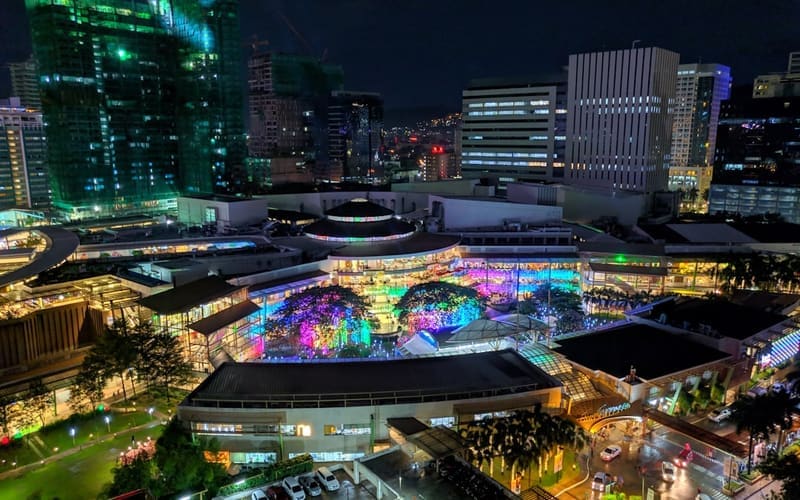
Outside the dedicated nightlife strips, Cebu has a healthy social scene anchored by malls, cafes, and a growing craft cocktail culture. Ayala Center Cebu and SM City Cebu function as social hubs the same way they do across the country, with coffee shops, restaurants, and casual dining drawing a mix of locals and expats throughout the day. Meeting at a Starbucks in Ayala is a standard first-date format in Cebu and reads as both safer and more neutral than meeting at a bar.
Crossroads in Banilad and The Walk in IT Park host bars and restaurants oriented toward young professionals. The Crossroads scene is more upscale and pulls a slightly older crowd than IT Park. Sugbo Mercado, an outdoor food market in IT Park, runs Thursday through Sunday and draws a mixed local-and-foreigner crowd.
The expat community in Cebu is smaller than Manila's but well-established, with most foreigners working in BPO, diving, education, or running small businesses. Facebook groups like "Cebu Expats" are active. The English teaching scene at academies catering to Korean and Japanese students provides another social network, especially around Mabolo and Banilad.
Dating Apps
Tinder works in Cebu and has the largest user base of any dating app in the city. Coverage drops off quickly outside Cebu City proper, but inside the metro area you'll find plenty of matches. The user base mixes locals, expats, and English students from Korea and Japan.
Bumble has a smaller but more selective user base. It tends to draw working professionals, BPO workers on night shifts, and English-speaking Filipinas comfortable with international interactions.
Filipino Cupid (now part of the Cupid Media network) is the Filipino-specific platform. It draws users genuinely seeking relationships with foreigners. The age range skews older than Tinder and the conversations move toward serious topics faster. Pay attention to clear red flags: requests for money, photos that look professionally shot, or pressure to move off the app immediately.
PinaLove is another Filipino-oriented app with a similar profile. Both Filipino Cupid and PinaLove have free tiers, but message limits push most users toward paid memberships.
Most app conversations in Cebu move to first meetings within two or three days. The format is usually coffee at Ayala Center or dinner at a casual restaurant. Going straight to a club on a first meeting is uncommon and reads as forward.
Scam Warnings
The "friendly stranger" drink spiking scam: A friendly local approaches you in a public space and invites you for drinks or food at a "nice place" they know. Your drink is spiked, and you wake up later with your wallet, phone, and watch gone. This works the same way it does in Manila and remains the single most common scam targeting foreign men in Cebu. Don't accept food or drink invitations from people you've just met on the street.
Inflated KTV bills: A worker joins your room and orders drinks without your explicit approval. Other workers cycle through. The bill at the end is several times what you expected. Set a clear room rate and drink budget with the mamasan before you start, and confirm each drink order yourself.
The motorbike phone snatch: Two men on a scooter ride past you, the passenger grabs your phone or bag, and they're gone in seconds. This happens most on the side streets feeding into Mango Avenue and along Osmeña Boulevard. Keep your phone in your pocket when walking.
ATM skimming and shoulder surfing: Use ATMs inside banks during the day, not standalone machines at convenience stores. Cover the keypad when entering your PIN.
The fake police shakedown: Plainclothes officers claim you've committed an offense and demand cash to make it go away. Genuine officers won't ask for cash on the spot. Ask to be taken to the nearest police station and call your embassy if pressured.
Best Times
Cebu has a dry season from December through April and a wet season the rest of the year. December through April is the high season, with the best weather and the largest crowds.
The Sinulog Festival in the third week of January is the city's biggest event, a religious procession honoring the Santo Niño that morphs into a week-long street party. Hotel rates double and the nightlife runs flat-out. Book accommodation months in advance for Sinulog week.
Holy Week in March or April brings widespread bar closures and a quieter atmosphere across the city. Many smaller venues shut entirely from Maundy Thursday through Easter Sunday. Christmas and New Year are busy but more family-oriented than nightlife-focused.
The wet season from June through November is quieter, with intermittent typhoons that can disrupt travel. The bars stay open, but you're trading lower crowds for less reliable weather.
Thursday through Saturday are the peak nightlife nights. Mango Avenue clubs run busy weekly schedules from Wednesday onward. IT Park has more even traffic across the week because of the BPO night shift rotation.
Getting Around
Grab is the safest and most reliable way to move around Cebu at night. The app works the same way as in Manila. Wait times can stretch to 15 to 20 minutes on Friday and Saturday nights, especially near Mango Square. Fares from IT Park to Mango Avenue typically run 120 to 200 PHP.
Jeepneys are Cebu's iconic shared minibuses, with fixed routes and a flat fare of 13 PHP for the first four kilometers. They're cheap and reliable during the day but confusing for first-time visitors and not recommended at night. Pickpocketing happens regularly inside crowded jeepneys.
Taxis are metered and reasonably priced, but Grab is more transparent and avoids the small disputes that taxi drivers sometimes try. The minimum fare is 40 PHP, with subsequent charges based on distance and waiting time.
Tricycles and motorcycle taxis (habal-habal) operate in some neighborhoods but are uncommon in the central nightlife zones. They're more practical for short hops in residential areas.
Walking between venues inside IT Park or inside the Mango Square complex is fine. Walking on the broader streets at night is not recommended, even short distances. Use Grab.
What Not to Do
- Do not walk to or from Mango Avenue at night; use Grab for every trip
- Do not accept food, drinks, or invitations from strangers in public spaces
- Do not get into unmarked vehicles or unmetered taxis
- Do not carry your passport on a night out; carry a clear photocopy and leave the original in your hotel safe
- Do not display expensive electronics or jewelry on the street
- Do not get involved with drugs of any kind; Philippine drug laws carry severe penalties including life imprisonment for some offenses
- Do not engage with anyone who appears underage; Philippine law enforcement takes trafficking offenses seriously and penalties are severe
- Do not photograph workers or customers inside venues without explicit permission
- Do not argue loudly over a bill; ask to see the line-by-line breakdown and resolve disputes calmly with the manager
- Do not assume Cebu's smaller scale means less risk; the same scams from Manila operate here
Get the Legal Status PDF, 50 countries
Newsletter signup coming soon. Check back shortly.
Bookable nightlife experiences in Cebu
Curated tours and shows from verified operators. Skip-the-line entry, bilingual guides, and fixed prices booked online.
Flights to Cebu
Compare prices across airlines. Filter by stops, time, and cabin.
Airport transfer to Cebu
Pre-booked transfers cost about the same as a metered taxi but cut out the airport queue, the meter argument, and the "no English" routine that takes some drivers to the wrong address. Fixed price quoted before booking, driver tracks your flight, waits with a name sign at arrivals.
Book a KiwiTaxi transferFrequently Asked Questions
Related Guides
IT Park
Guide to Cebu IT Park in Lahug, the BPO-driven nightlife hub with sports bars, craft cocktails, and an expat-leaning crowd. Pricing, safety, and venues.
Read guideMactan
Guide to Mactan Island nightlife in Cebu, covering resort beach clubs, hotel bars, and the contained scene around Lapu-Lapu City. Pricing and safety.
Read guideMango Avenue
Guide to Mango Avenue in Cebu, the city's main nightlife strip with KTV bars, dance clubs, and Mango Square venues. Pricing, safety, and venue list.
Read guideWas this guide helpful?