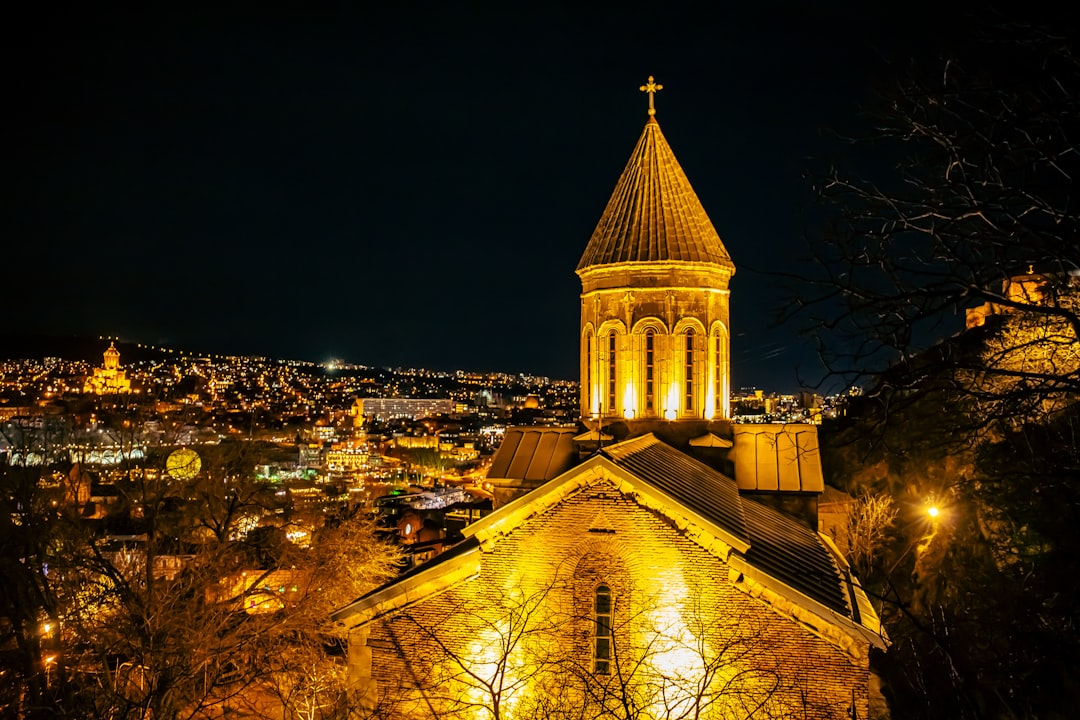

Areas Worth Visiting
Each neighborhood has its own character
Aghmashenebeli
4/5SafeDistrict guide to Aghmashenebeli Avenue in Tbilisi, covering the emerging wine bar scene, live music venues, and nightlife along the city's renovated southern boulevard.
5 nightlife spots listed
Rustaveli
4/5SafeDistrict guide to Rustaveli Avenue and surrounding streets in Tbilisi, covering the main nightlife strip, clubs, cocktail bars, and practical details.
6 nightlife spots listed
District Map of Tbilisi
Pick a district to recenter the map and see hotels nearby.
Where to stay in Tbilisi
Compare hotels and rentals across the city's nightlife districts.
See places to stay and current pricesOverview
Tbilisi is a city of 1.1 million people wedged into a valley along the Mtkvari River, with the Caucasus foothills pressing in on both sides. The Old Town climbs steep hillsides beneath the Narikala Fortress, while Soviet-era apartment blocks and modern glass towers compete for space along the river. It's a city of sharp contrasts.
Our team walked every district covered here.
The nightlife scene punches above its weight. Bassiani, built inside a Soviet swimming pool beneath a football stadium, put Tbilisi on the global electronic music map around 2014. Since then, a network of clubs, bars, and underground venues has developed that draws DJs and music tourists from across Europe. The conventional nightlife along Rustaveli Avenue and in the Old Town offers something different: wine bars pouring from Georgia's 8,000-year winemaking tradition, cocktail spots, and restaurants that stay open until the early hours.
Legal Context
Georgian law prohibits prostitution. Fines range from GEL 500 to GEL 2,000 for those caught. Tbilisi police prioritize drug enforcement and violent crime over adult services, but periodic sweeps of known areas do occur. Online platforms face occasional crackdowns.
The club scene operates legally and is fiercely protective of its reputation. Venues like Bassiani have explicit anti-harassment policies and take security seriously. Door selection at top clubs screens for behavior, not just appearance.
Drug laws are strict. Georgia imposes heavy fines and potential imprisonment for possession. Police have been known to conduct drug tests at club exits. This is real, not theoretical.
Key Areas
Rustaveli Avenue. Tbilisi's main boulevard runs from Freedom Square northwest through the city center. Bars, restaurants, and a handful of clubs line the avenue and its side streets. This is the most accessible nightlife zone for visitors.
Aghmashenebeli Avenue. South of the river, this renovated 19th-century street has become Tbilisi's emerging nightlife corridor. Wine bars, craft beer spots, live music venues, and restaurants fill the ground floors of restored buildings. The atmosphere is more relaxed than Rustaveli.
Old Town (Kala). The winding streets beneath Narikala Fortress contain wine cellars, tourist restaurants, and a few hidden bars. The sulfur bath district (Abanotubani) is nearby. More atmospheric than party-focused.
Club District (Mtkvari Riverbank). Bassiani, Khidi, and Mtkvarze cluster near the river, south of the Old Town. This is where the electronic music scene lives. The area is industrial and not particularly inviting during the day, but transforms on weekend nights.
Safety
Tbilisi is remarkably safe. The crime rate dropped dramatically after the Rose Revolution reforms in the 2000s, and the city maintains one of the lower violent crime rates among European capitals.
- Street crime against tourists is uncommon. Standard precautions apply: don't flash expensive items, stay aware in crowded areas
- Stray dogs are everywhere. They're mostly tagged and vaccinated by the city, but they roam in packs at night. They rarely bite but can be intimidating
- Drug enforcement is aggressive. Police have conducted operations near clubs. Do not buy or carry any substances
- The club scene has its own security culture. Bassiani and Khidi have strict door policies that screen out aggressive or intoxicated individuals. This makes the interior safer than many European equivalents
- Tbilisi taxi drivers are generally honest, but use Bolt or Yandex Go to avoid fare disputes
- Emergency number: 112
Cultural Norms
Tbilisi exists in tension between its progressive club culture and Georgia's conservative Orthodox mainstream. A few practical notes:
- Public displays of affection draw attention outside the city center. Holding hands is fine on Rustaveli; kissing in residential areas generates stares
- The club scene is explicitly LGBTQ+ tolerant, but this tolerance does not extend to Georgian society at large. Discretion outside club spaces is advisable
- Georgians are intensely hospitable. Accepting a drink or toast is culturally expected. Refusing can cause offense. Pace yourself
- Supra (traditional feasts) follow strict toasting protocols led by a tamada (toastmaster). If invited to one, follow the tamada's lead and drink when toasts are called
- Dress codes at clubs vary. Bassiani enforces a dark, club-appropriate dress code. Wine bars on Aghmashenebeli are casual
- Tipping 10% at restaurants is appreciated but not expected. Round up taxi fares
Social Scene
Wine bars are the social backbone of Tbilisi's nightlife. Georgia claims to be the birthplace of wine, and the tradition runs deep. Bars specializing in natural and qvevri (clay amphora) wines line Aghmashenebeli and the Old Town. A glass costs GEL 8-20 ($3-7.40). These are conversation-friendly environments where meeting locals happens naturally.
The club scene peaks on Friday and Saturday nights, with doors opening around midnight and the floor filling by 2 AM. Sunday morning sessions at Bassiani are a local institution. The crowd is young, international, and music-focused.
Cafes and co-working spaces have multiplied across Tbilisi as the digital nomad population has grown. Fabrika, a converted Soviet sewing factory, operates as a hostel, co-working space, and social hub with bars and food vendors in its courtyard. It's one of the easiest places to meet other travelers.
The expat community is small but active. InterNations and Meetup groups organize regular events. Language exchange meetups happen weekly at various bars.
Transportation
- Metro: Two lines cover the main areas. GEL 1 ($0.37) per ride with a rechargeable card. Runs until midnight
- Bolt and Yandex Go: The standard ride-hailing options. Cheap by European standards. A cross-city trip costs GEL 5-15 ($1.85-5.55)
- Marshrutkas (minibuses): Cover routes the metro doesn't. GEL 0.50-1. Crowded and confusing for visitors but functional
- Walking: The center is compact. Rustaveli Avenue to Aghmashenebeli is a 20-minute walk across the river. The Old Town involves steep hills
- Cable car: A tourist-oriented gondola runs from Rike Park to Narikala Fortress. GEL 2.50 ($0.93)
Best Times to Visit
Tbilisi's nightlife runs year-round, but the seasons shape the experience.
- May through October: Warm weather opens rooftop bars and outdoor terraces. The city is at its most atmospheric
- Summer (June through August): Peak tourist season. Clubs and bars are busiest. Temperatures hit 35-40°C, making underground clubs uncomfortably hot
- Autumn (September through October): Wine harvest season. The best time for wine-focused nightlife. Temperatures are comfortable and crowds thin
- Winter (December through February): Cold but the indoor scene stays strong. Club nights continue without interruption. Fewer tourists means a more local crowd
What Not to Do
- Do not buy or carry drugs. Georgian drug enforcement is aggressive and penalties are severe
- Do not get visibly drunk in residential areas. Tbilisi's center tolerates it; neighborhoods outside the core do not
- Do not photograph inside clubs without explicit permission. Bassiani and Khidi ban phones on the dance floor
- Do not argue with door staff at clubs. The selection process is final. Walk away and try another night
- Do not assume Tbilisi's progressive club culture reflects Georgian society broadly. Behave conservatively outside nightlife areas
- Do not leave drinks unattended at tourist-oriented bars
- Do not walk alone through poorly lit areas near the river after 3 AM
Get the Legal Status PDF, 50 countries
Newsletter signup coming soon. Check back shortly.
Flights to Tbilisi
Compare prices across airlines. Filter by stops, time, and cabin.
Airport transfer to Tbilisi
Pre-booked transfers cost about the same as a metered taxi but cut out the airport queue, the meter argument, and the "no English" routine that takes some drivers to the wrong address. Fixed price quoted before booking, driver tracks your flight, waits with a name sign at arrivals.
Book a KiwiTaxi transferRelated Guides
Aghmashenebeli
District guide to Aghmashenebeli Avenue in Tbilisi, covering the emerging wine bar scene, live music venues, and nightlife along the city's renovated southern boulevard.
Read guideRustaveli
District guide to Rustaveli Avenue and surrounding streets in Tbilisi, covering the main nightlife strip, clubs, cocktail bars, and practical details.
Read guideFrequently Asked Questions
Was this guide helpful?