District Guides
Click through for street-level detail
El Peñón
3/5ModerateGuide to El Peñón in Cali, the riverside bohemian neighborhood with cocktail bars, salsa bars, and bar-crawl-friendly nightlife.
9 nightlife spots listed
Granada
3/5ModerateGuide to Granada in Cali, the upscale Avenida 9 Norte nightlife strip with cocktail bars, restaurants, and boutique hotels.
9 nightlife spots listed
Menga
3/5ModerateGuide to Menga, Cali's legendary salsa club zone north of the city with mega-discotecas, salsotecas, and late-night dance venues.
10 nightlife spots listed
District Map of Cali
Pick a district to recenter the map and see hotels nearby.
Where to stay in Cali
Compare hotels and rentals across the city's nightlife districts.
See places to stay and current pricesCali, officially Santiago de Cali, sits in the Cauca River valley in southwestern Colombia, two and a half hours by plane from Bogotá and the country's third-largest city with around 2.3 million people. The city is hot, low-altitude, and famous worldwide as the salsa capital. Nightlife here is built around dance in a way that no other Colombian city matches, with clubs running orchestras, dance schools graduating world champions, and entire neighborhoods organized around where you go to dance on which night of the week.
Overview
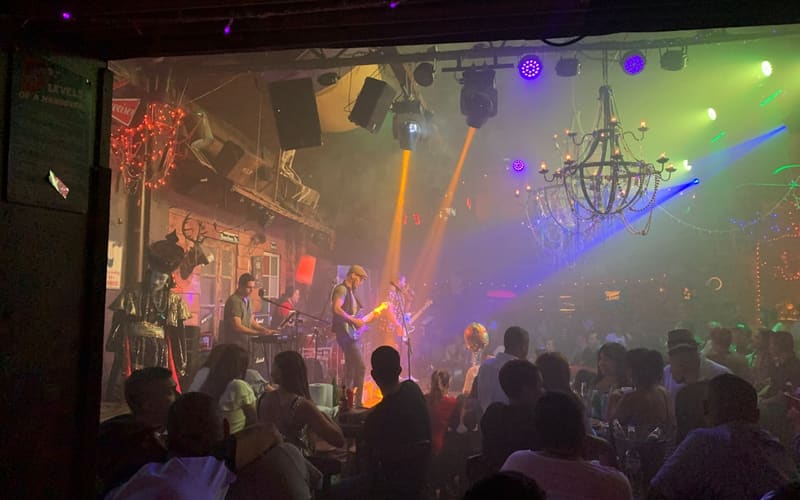
Salsa is not a tourist novelty in Cali; it is the social currency of the city. Most Caleños learn basic steps as children, and the level of casual dancing in a random neighborhood bar would qualify as a professional showcase elsewhere. The local style, salsa caleña, is faster than Cuban or Puerto Rican variants, with rapid footwork and minimal upper-body movement. Visitors arrive expecting a party scene similar to Medellín or Cartagena and discover something different: a music-and-movement culture where dancing well matters more than how much you spend.
Three nightlife zones organize the city. Menga, north of the metropolitan core in the municipality of Yumbo, holds the legendary salsotecas and large discotecas that draw serious dancers. Granada along Avenida 9 Norte is the upscale gastronomic and bar strip favored by international visitors and affluent locals. El Peñón along the Cali River concentrates bohemian cocktail bars, salsa bars, and the city's hippest hostels. Outside these zones, San Fernando hosts the salsa institution Tin Tin Deo, and Juanchito east of the city remains the late-night salsa endpoint for committed dancers.
Cali is significantly cheaper than Bogotá or Medellín. A full night of drinks and cover at a typical salsoteca runs 50,000-80,000 COP, well under half what the same evening costs in the capital. Hotel prices in Granada and El Peñón sit at roughly 60-70% of comparable Medellín neighborhoods, and a sit-down dinner with wine rarely exceeds 80,000 COP per person outside the highest-end restaurants.
Legal Context
Adult sex work between consenting adults is legal in Colombia, with municipal regulations defining tolerance zones, health-check requirements, and registration procedures. Cali follows the national framework with one designated zone, Avenida Sexta near the historic center, where street-based work is permitted under defined hours and behavior rules. Outside that zone, sex work continues informally in some bars and apartments but operates in legal gray areas.
Pimping, third-party profiting, trafficking, and any commercial activity involving minors are felonies carrying prison terms of 14-25 years. Colombian law treats foreign offenders identically to citizens, and the Fiscalía has expanded enforcement against international sex tourism over the past five years. Anyone soliciting or transacting with a person under 18, knowingly or not, faces 14-25 years and immediate deportation after sentence.
The mainstream nightlife scene that this guide covers operates under conventional commercial licensing. Bars, salsotecas, and discotecas have liquor licenses, fire-code occupancy limits, and closing hours typically capped at 3 AM. Some Menga and Juanchito venues secure special permits running until 6 AM. Drugs remain illegal; small personal-use quantities of cocaine or marijuana are decriminalized but not legal, and possession in clubs gets you removed and questioned by police if you are caught.
Key Areas
Granada (Avenida 9 Norte). The upscale strip running roughly between Calle 14 Norte and Calle 21 Norte, lined with international restaurants, cocktail bars, gastropubs, and boutique hotels. Bourbon St. Pub, Faró Granada, and DR. JONES anchor the cocktail-and-dinner scene. Crowd skews 25-45, mixed Colombian and international, with English commonly spoken at the higher-end venues.
Menga. A nightlife strip in the municipality of Yumbo, ten minutes north of central Cali by car, concentrated along Avenida 6 Norte and the surrounding streets near the Yumbo border. The zone holds the city's largest discotecas and salsotecas, including Zaperoco Bar, Praga Menga, and various crossover clubs. Late-license venues run until 6 AM. This is where the salsa-obsessed crowd heads for serious dancing.
El Peñón. The bohemian, riverside neighborhood between San Antonio and the Cali River, two minutes from downtown. Cobblestone streets fill with cocktail bars, salsa bars, and restaurants drawing a mixed crowd of artists, students, and foreign visitors. Absenta, Penelope Martini, and Amores Sospechosos define the cocktail scene, while bar crawls cycle through the strip on Friday and Saturday nights.
San Antonio, the historic hill neighborhood next to El Peñón, holds Escoces Nightclub and a handful of cocktail bars but functions more as a bohemian afternoon zone than a late-night strip. San Fernando, south of San Antonio, hosts Tin Tin Deo and a few other classic salsa bars. Juanchito, east of the city on the way to Palmira, contains Changó and other legendary salsotecas but requires a 30-minute ride and is best treated as a destination, not a casual stop.
Safety
Cali ranks higher on Colombia's violent-crime indices than Bogotá or Medellín. The city has seen reductions in homicide since 2020 but remains a place where street awareness matters. The nightlife zones described above are policed, lit, and generally safe inside their commercial boundaries. The risks come at the edges: walking between venues at 3 AM, accepting drinks from strangers, or hailing a street taxi after midnight.
Scopolamine, locally called burundanga, is the main drugging risk. It is delivered through a drink, a cigarette, or even on a business card or phone screen, and victims become compliant and amnesiac for hours. Never accept drinks, cigarettes, or paper items from strangers. Open your own beer at the bar. Stay near friends; lone foreigners are the prime target.
Drink spiking with sedatives is also reported, particularly at high-traffic bars in Granada and El Peñón. Symptoms come on faster than alcohol and feel different from intoxication. If you notice unexpected dizziness, slurring, or confusion, get to security, ask for water, and call your accommodation. Do not leave with anyone who appeared after the symptoms started.
Pickpocketing is constant in any crowded setting. Carry only the cash you plan to spend, one card, and your phone. Leave passports and reserve cards in the hotel safe. Phones disappear from back pockets, table edges, and bar tops; keep yours in a front pocket or zipped bag at all times.
Cultural Norms
Salsa etiquette governs how foreigners are received in Cali nightlife. You do not need to dance well, but you need to behave correctly. Watch before joining. Stand at the edge of the floor for a song or two, observe the rotation, and only ask for a dance once you understand the space. Locals will teach you; aggressive or showy beginners get politely refused.
When you ask someone to dance, the standard phrase is "¿Bailas?" with an open hand. A refusal is not personal. Thanks at the end of the song, "gracias por el baile," is required. Two songs is the conventional length; three is a sign of strong interest. Walking away mid-song is considered rude.
Dress code in Granada and El Peñón is neat-casual to smart-casual. Long trousers and a clean shirt or polo for men; women dress up. Menga and Juanchito are more flexible; jeans and a button shirt work everywhere. Avoid open-toe sandals on the dance floor anywhere; toes get crushed.
English is spoken in Granada and at the major El Peñón bars, but not in Menga, Juanchito, or San Fernando. Basic Spanish phrases for ordering drinks, paying the bill, and exchanging pleasantries will dramatically improve your reception. Caleños are warm to visitors who show interest in their culture and impatient with tourists who treat the city as a backdrop.
Social Scene
Meeting locals through nightlife is easier in Cali than in most Colombian cities, partly because the salsa floor is itself a social mechanism. Strangers ask each other to dance, conversation happens between songs, and the structure prevents the awkward approach that defines bar-based dating elsewhere. Foreigners who can dance even passably find the social barrier almost nonexistent.
The dance schools (Salsa Pura, Sondeluz, Manicero) run group lessons in the afternoon and socials in the evening. Many students go directly from class to Tin Tin Deo or Zaperoco to apply what they learned. Signing up for a week of classes is the single most efficient way to meet locals in Cali.
Granada and El Peñón work for non-dancers but operate more like Medellín or Bogotá: bars where conversation and drinks come first. Spanish helps; without it the social ceiling is lower.
Dating Apps
Tinder, Bumble, and Hinge work in Cali. Match volume is lower than in Bogotá or Medellín but the conversion rate, meaning matches who actually meet up, is higher. Profiles are mostly in Spanish; English-only profiles get fewer matches.
The local app Latinamericancupid (the rebranded ColombianCupid) has a sizable Cali user base. Expect a higher rate of professional escorts and gold-diggers than on Tinder, especially in age ranges 22-30. Vet seriously before agreeing to meet.
Avoid sending money, sending phone credit, or transferring funds to anyone you have not met in person. This is the most common scam vector in Cali, with elaborate stories about emergencies or transport problems being a near-universal opening.
Scam Warnings
Drink-bill manipulation. Some bars in El Peñón and Granada add items to the tab when the bill arrives, especially when foreigners are part of the group. Ask for the bill itemized, check each line, and refuse anything you did not order.
Counterfeit notes. The 50,000 and 100,000 COP notes are the most commonly faked. Check the security strip and feel of the paper before accepting change at any small venue or street stall.
"Friendly girl" team scams. A friendly woman approaches in a bar, conversation flows, she invites you to another venue with friends, and the bill at the second location is wildly inflated, with security blocking the exit until you pay. The pattern repeats across Granada, El Peñón, and Avenida Sexta. Refuse all invitations to leave your venue with new acquaintances.
Taxi overcharging. Drivers turn off meters and demand 50,000-80,000 COP for rides that should cost 12,000-18,000. Use Uber, Cabify, InDriver, or DiDi exclusively at night. Yellow cabs flagged on the street are the highest-risk option.
Fake police. People in semi-uniform stop foreigners and ask for ID and a "fine" for some imagined infraction. Real Colombian National Police carry visible badges and patrol in pairs from marked vehicles. Demand to be taken to the nearest station before paying anything.
Best Times
The Feria de Cali, December 25-30, is the city's annual salsa festival and the busiest week of the year. The Salsódromo parade on December 25 brings 5,000 dancers down Avenida Pasoancho. Hotel prices triple, every venue runs at capacity, and book everything four months ahead. The energy is exceptional; the logistics are difficult.
The World Salsa Festival, typically mid-September, draws international dancers and professional troupes. The week is intense but less chaotic than Feria. Hotels run at premium rates but availability is better.
July through September is the dry season and the most comfortable time to visit weather-wise. Daytime temperatures sit around 30°C; nights drop to 20-22°C. April and October-November bring the rainy season; afternoons get heavy thunderstorms, but nightlife is unaffected.
Thursday is the unofficial start of the salsa week. Tin Tin Deo, Zaperoco, and most major salsotecas run live music on Thursdays. Friday and Saturday are the biggest dancefloor nights. Sunday afternoon and evening are surprisingly active; many salsa bars run "tardeadas" from 4 PM to midnight.
Getting Around
Uber, Cabify, InDriver, and DiDi all operate in Cali. Uber works fluidly in the central nightlife areas and in Menga. InDriver is the cheapest option and lets you negotiate the fare with the driver. Cabify is slightly more expensive but the cars are nicer. Average fare within central Cali is 10,000-18,000 COP; from Granada or El Peñón to Menga runs 18,000-28,000 COP.
The MIO bus system covers most of the city with dedicated lanes. It is safe and efficient during the day but should not be used after dark. Service ends around 11 PM and the night buses (MIO Cable) have a higher robbery rate than ride share.
Do not use street taxis at night. The yellow taxis are technically legal but have no GPS tracking on the passenger side, no electronic payment record, and a long history of robbery setups in Cali specifically. App-based rides leave a trail and use registered drivers.
Cali's airport, Alfonso Bonilla Aragón (CLO), sits 16 km north of the city near Palmira. A ride from the airport to Granada or El Peñón runs 65,000-90,000 COP by Uber and takes 25-45 minutes depending on traffic. The bright-yellow airport taxis at the terminal are roughly the same price but require negotiation in Spanish.
What Not to Do
Do not flag street taxis after 9 PM. Use the app, every time, even for a five-block ride.
Do not bring your passport to a club. A photocopy or photo on your phone is sufficient for ID checks. Lost passports in Cali are time-consuming to replace.
Do not pull out your phone or wallet on the street between venues. Move from door to door inside the ride share, especially in Menga and on Avenida Sexta.
Do not accept drinks from strangers or partially open bottles from anyone other than the bartender. Burundanga delivery through opened bottles is documented.
Do not engage with sex workers near Avenida Sexta after midnight unless you fully understand the legal and personal risks. The zone is policed but scams, robbery setups, and dangerous third parties operate around its edges.
Do not try to outdance the locals on a crowded floor. Caleños appreciate humility and patience. Showy moves in a packed salsoteca mark you as a beginner and shrink your dance partners.
Do not skip basic Spanish. Outside Granada and the high-end El Peñón venues, English will not get you a drink, a taxi, or a dance.
Do not assume Cali is dangerous because of its reputation. The nightlife zones described in this guide are policed, well-lit, and routinely safe for foreign visitors who use ride share and avoid obvious mistakes. The city rewards travelers who respect it; it punishes those who do not.
Get the Legal Status PDF, 50 countries
Newsletter signup coming soon. Check back shortly.
Flights to Cali
Compare prices across airlines. Filter by stops, time, and cabin.
Airport transfer to Cali
Pre-booked transfers cost about the same as a metered taxi but cut out the airport queue, the meter argument, and the "no English" routine that takes some drivers to the wrong address. Fixed price quoted before booking, driver tracks your flight, waits with a name sign at arrivals.
Book a KiwiTaxi transferFrequently Asked Questions
Related Guides
El Peñón
Guide to El Peñón in Cali, the riverside bohemian neighborhood with cocktail bars, salsa bars, and bar-crawl-friendly nightlife.
Read guideGranada
Guide to Granada in Cali, the upscale Avenida 9 Norte nightlife strip with cocktail bars, restaurants, and boutique hotels.
Read guideMenga
Guide to Menga, Cali's legendary salsa club zone north of the city with mega-discotecas, salsotecas, and late-night dance venues.
Read guideWas this guide helpful?