The Key Neighborhoods
Detailed guides for every area
District Map of Bandar Seri Begawan
Pick a district to recenter the map and see hotels nearby.
Where to stay in Bandar Seri Begawan
Compare hotels and rentals across the city's nightlife districts.
See places to stay and current pricesOverview
Bandar Seri Begawan is a small capital city of roughly 100,000 people, clean and quiet by any standard. The golden domes of the Omar Ali Saifuddien Mosque dominate the skyline, and the pace of life reflects the country's conservative, family-oriented values. By 9 PM on most nights, the city is winding down.
Local contacts verified current conditions for this guide.
There are no bars. There are no nightclubs. This is not an exaggeration or a simplification. Brunei's nationwide alcohol ban means the entire commercial drinking infrastructure that defines nightlife in most countries simply doesn't exist here. What BSB offers instead is a food-focused evening culture built around night markets, cafes, and late-closing restaurants.
Legal Context
Alcohol cannot be sold anywhere in Brunei. Non-Muslim visitors can bring in limited personal supplies through customs, but consumption must happen in private. Hotels cannot serve alcohol. Restaurants cannot serve alcohol. This applies to every establishment in the city without exception.
Sharia law governs public behavior. During Ramadan, eating or drinking anything in public during daylight hours is a punishable offense for everyone, not just Muslims. Dress codes are conservative year-round, and public behavior is expected to be modest and respectful.
Key Areas
Gadong. The main commercial district and the closest thing BSB has to a nightlife area. The Gadong Night Market operates nightly from around 4 PM to 10 PM, selling local food at reasonable prices. Several cafes and restaurants in the area stay open until 10 or 11 PM, making this the default evening destination for both locals and visitors.
Kampong Ayer. The world's largest water village, home to around 30,000 people in stilt houses over the Brunei River. Not a nightlife destination, but worth visiting in the early evening for the atmosphere. Water taxis from the city center cost BND 1-2 (USD 0.75-1.50 / EUR 0.70-1.40).
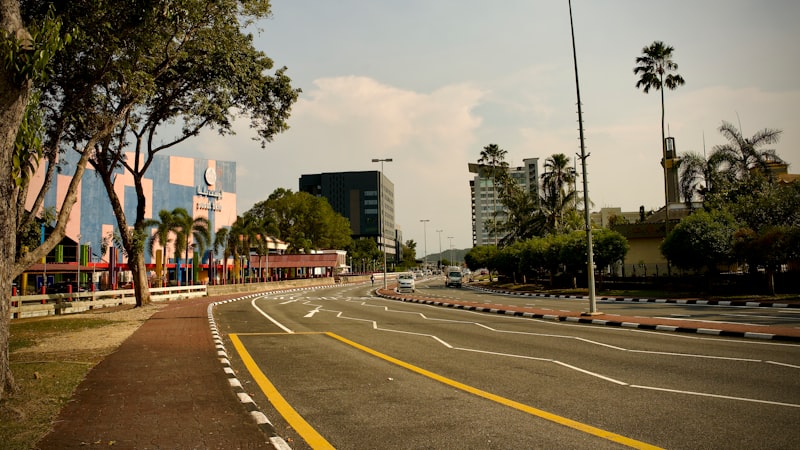
City Center Waterfront. The promenade along the Brunei River near the Omar Ali Saifuddien Mosque is popular for evening walks. A few restaurants and cafes face the water. It's quiet, scenic, and safe at any hour.
Safety
Bandar Seri Begawan may be the safest capital city in Southeast Asia. Crime against tourists is almost unheard of.
- Streets are safe to walk at any hour, including for solo women
- Police are approachable and most speak English
- Medical facilities are modern; the RIPAS Hospital provides free emergency care to everyone
- Traffic is orderly and pedestrian infrastructure is decent
- There are no known scams targeting tourists in the city
The only risk is cultural: breaking local laws around alcohol, public behavior, or religious customs. These are enforced and the consequences are real.
Cultural Context
Evening social life in BSB centers on food. Families and friend groups gather at restaurants, food courts, and the night market. Coffee culture is strong, with local kopi shops and international-style cafes both popular. Conversations happen over teh tarik (pulled tea) and kueh (local sweets), not cocktails.
Friday is the holy day and many businesses close or operate on reduced hours. Thursday evening effectively functions as the start of the weekend, and the Gadong Night Market is busiest on Thursday and Saturday nights.
Practical Information
- Currency: Brunei Dollar (BND), interchangeable with Singapore Dollar
- Getting around: Taxis are not metered; agree on prices before riding. The city is small enough to walk between most central areas. No ride-hailing apps operate reliably
- Language: Malay is official; English is widely spoken, especially in commercial areas
- Climate: Hot and humid year-round, 24-32C. Evening temperatures provide some relief but expect to sweat
- Dress code: Cover shoulders and knees in public spaces. More conservative near mosques
- Best time to visit: Avoid Ramadan unless you're prepared for daytime fasting restrictions. The dry season (February to April) is most comfortable
Get the Legal Status PDF, 50 countries
Newsletter signup coming soon. Check back shortly.
Flights to Bandar Seri Begawan
Compare prices across airlines. Filter by stops, time, and cabin.
Airport transfer to Bandar Seri Begawan
Pre-booked transfers cost about the same as a metered taxi but cut out the airport queue, the meter argument, and the "no English" routine that takes some drivers to the wrong address. Fixed price quoted before booking, driver tracks your flight, waits with a name sign at arrivals.
Book a KiwiTaxi transferFrequently Asked Questions
Was this guide helpful?